 |
|
Welcome back to In The Room. I’m Dylan Byers.
|
|
Tonight, we go behind the scenes of Jeff Zucker and Sheikh Mansour’s eleventh-hour drive to wrest control of The Telegraph, despite opposition from rival bidders, conservative ministers, regulators, and even some of the paper’s own journalists. Plus, more news and notes on the various motivations at play in this potentially game-changing debt-for-equity swap.
But first…
- Andrew Ross Sorkin has just wrapped up another historic DealBook Summit, truly the benchmark for all business conferences. (I make it a point to attend every year, save for years such as this, when it conflicts with my son’s birthday.) Top talkers coming out of today’s event: Elon Musk telling advertisers who boycott Twitter/X, including Bob Iger: “Go fuck yourself,” even if it kills the company; Iger denying his earlier claim that Disney might sell ABC and other linear assets; David Zaslav suggesting that Chris Licht, also in the audience, might one day return to Warner Bros. Discovery; and Jamie Dimon urging other business leaders to “help Nikki Haley.” In any event, a genuine moment of appreciation here for Andrew and the DealBook team in doing what they do, and for doing it all in a single day.
- I’ve learned that Pelosi’s former comms chief Drew Hammill is among those vying for the CNN chief communications officer job, and that he’s been spotted at the network’s D.C. bureau. The sighting has raised some eyebrows in the newsroom, given Hammill’s mixed reputation with Hill reporters. Puck subscribers might remember him as the guy who aggressively disparaged my colleague Tara Palmeri for breaking the very accurate news that Pelosi was going to step down as speaker of the House. It’s a certain brand of P.R., no doubt, though not one I’d associate with the civilized tone of the Mark Thompson era.
|
|
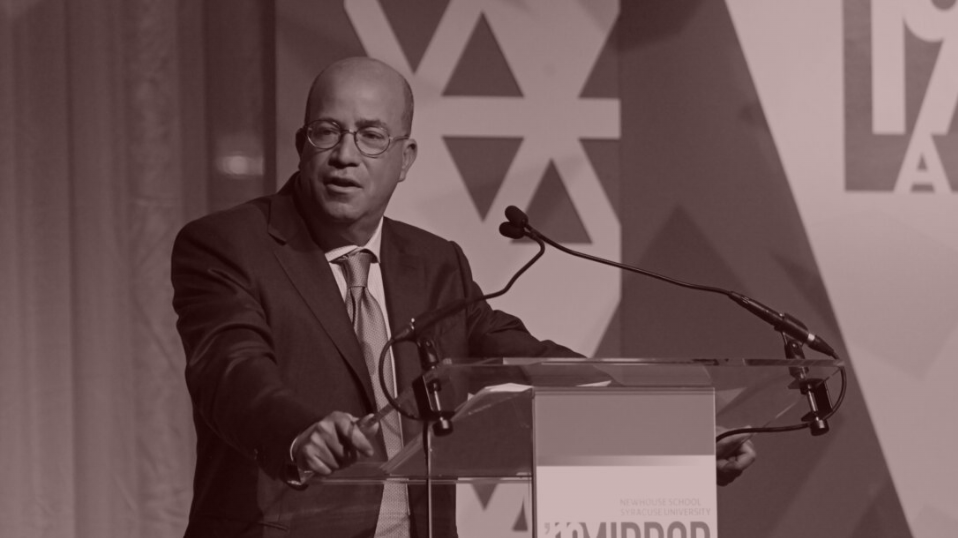
Zucker in Deal Heat
|
|
The C.E.O. of RedBird IMI took a romp through London Town—holding court at the Berkeley, making bold declarations about editorial independence, meeting with associates, winning hearts and minds—to try to bring home the fund’s acquisition of The Telegraph.
|
|
|
|
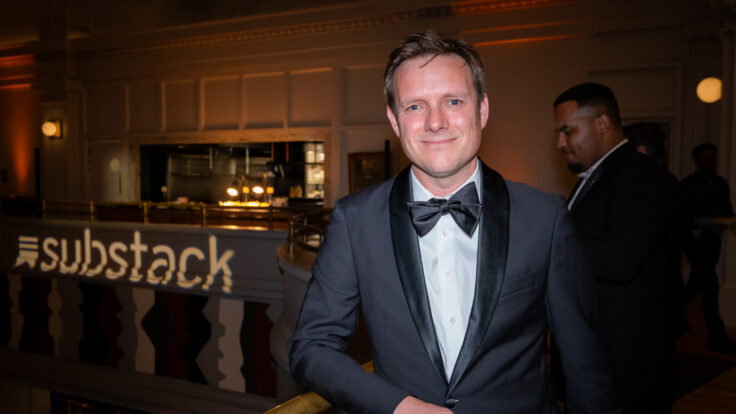
| Earlier this week, on a brief but imperative trip to London, Jeff Zucker ventured a few blocks south of his elegant hotel in Knightsbridge to the Belgravia residence of Mike McTighe, the chairman overseeing Lloyds Banking Group’s sale of The Telegraph and The Spectator. As I wrote last week, Zucker, now the C.E.O. of Abu Dhabi-backed joint investment vehicle RedBird IMI, recently engineered a $1.4 billion debt-for-equity deal designed to give him control of both the highly influential Tory broadsheet and the prestigious conservative magazine.
It seemed like a fabulous deal for Lloyds and the Barclay family—and RedBird, too. (As my partner Bill Cohan recently noted, RedBird has valued the assets at $760 million, or 10x EBITDA, and IMI is footing the delta.) The only wrinkle, of course, is that Zucker’s bid was backed in large part by Sheikh Mansour bin Zayed Al Nahyan, the vice president and deputy prime minister of the United Arab Emirates, and RedBird IMI’s largest investor. The specter of a foreign buyer—particularly from a Gulf state—elicited significant (and probably predictable) distress and agitation from rival bidders, conservative ministers, regulators, and journalists (including some very audible voices inside The Telegraph, itself). Indeed, Tory MPs have even pressed Rishi Sunak’s national security tsar to block the bid.
During his trip to London, meeting with Telegraph leadership and holding court at a back table in the Collins Room, Zucker was attempting to assuage those concerns ahead of what promises to be a tumultuous 48-hour period that may well decide the fate of The Telegraph and The Spectator. On Wednesday, Lloyds gave U.K. media secretary Lucy Frazer the requisite 48 hours’ notice of its intention to set the RedBird IMI transaction in motion—first, by facilitating Zucker and Mansour’s settlement of the $1.4 billion debt incurred by the Barclay family, then by transferring ownership of the media assets to RedBird IMI.
But at some point in those 48 hours, likely as early as Thursday morning, Frazer is expected to issue a public interest intervention notice (or “PIIN”), after which she will conduct a review of the deal. And just how Frazer chooses to intervene—whether by suspending repayment of the debt or merely suspending the transfer of ownership—should provide greater clarity on where this deal is headed. In short, if she allows the debt payment to proceed and merely suspends the transfer of ownership, it’s all the more likely she’s merely delaying, rather than jettisoning, the deal. |
|
|
| In the meantime, the best Zucker can do is try to shift the narrative. Thus, the trip to McTighe’s house, where the former CNN chief sat for an interview with The Telegraph’s business editor. In a lengthy discussion, he repeatedly stressed his commitment to the paper’s editorial independence and sought to convince a wary and suspicious audience to trust him with one of their most storied institutions. “I would resign if Abu Dhabi interfered,” Zucker said.
Zucker also said that, as a legal matter, Sheikh Mansour’s IMI had no influence over any of his investments: “They are there at the entrance making the investment and at the exit.” To Zucker’s acolytes, it was as full-throated and unambiguous a rejoinder as possible. To critics and rival bidders, it was an absurd appeal for trust from a man most Tories mainly know as the guy who went to war with Trump.
The next day, Zucker met with The Telegraph’s editorial leadership and received a mixed reception. There is, it seems, a significant cohort of the paper’s rank and file that adheres to the views of their colleague Sir Charles Moore, the columnist and former editor—described by one source as “the patron saint of The Telegraph”—who recently wrote in the paper’s own pages that the company “should not be controlled by a foreign power.” (Moore may have a valid point, but loyal readers also know well that newsrooms are not without sanctimony…)
Yet there is still another group, including some members of the leadership, who believe Zucker and RedBird IMI represent the best hope for a long-underinvested-in paper to grow its digital business and expand overseas. On Wednesday, former Justice secretary and Telegraph columnist Brandon Lewis wrote that criticisms of Zucker’s bid were overblown, misguided, and “being quietly whipped up by others... with vested interests in rival bids.” Since Zucker had shown a commitment to editorial independence and commercial success throughout his career, Lewis wrote, wasn’t it “prudent” to anticipate he’d manage The Telegraph the same way? |
|
|
| Lewis was at least right to draw attention to the pearl-clutching cacophony surrounding Zucker’s bid, especially from those “who want to claim the prize for themselves.” As is always the case, a more sober assessment reveals more nuance.
On the one hand, it’s impossible to separate Zucker’s bid from the broader ambitions of Abu Dhabi, which has been building a portfolio of media assets, including CNN Business Arabic and stakes in Sky News Arabia and Euronews, to enhance its already significant influence in business, sports, and entertainment across the globe. But the soft-power benefits conferred by that ownership need not necessarily influence the editorial integrity of either brand; it might be enough for Sheikh Mansour to know that he’ll have stronger lines of communication with the Tories, including the current and future prime ministers.
At the same time, it might be worth adhering to the law of parsimony here: This is also a corporate acquisition by a veteran media executive who 1) is an operator at heart; 2) really, really misses running a media company; 3) doesn’t have any better investment options available to him in a world where David Zaslav isn’t selling CNN; and 4) recognizes that, with the right digital strategy, an already profitable and influential British newspaper might serve as a springboard to a larger international media business.
Going further, it’s likely that Zucker also sees what his rival bidders see: that there is a wide opening in the U.S. for a serious, right-inflected media brand positioned somewhere in between The Wall Street Journal and Fox News, a chasm that could only become more valuable in a post-Murdoch world, if the other kids outvote Lachlan and sell. There might even be an opportunity to acquire some of those assets, which could be easily financed by Abu Dhabi’s seemingly limitless wealth.
And, on that note, Zucker likely assumes what the broader international business community assumes: Gulf foreign investments in media, entertainment, and technology, while somewhat controversial now, are likely to be wholly normalized in a matter of years. There was a time not so long ago when Brits rejected the idea of Gulf ownership in the Premier League, of course, and then Sheikh Mansour bought Man City. A decade or so later, M.B.S. bought Newcastle.
In any event, as of today, many Tories aren’t comfortable with the idea of foreign ownership of their newspaper, and perhaps that stands to reason. The other day, a source sent me this famous line from the short-lived ’80s comedy Yes, Prime Minister, in which Paul Eddington’s character explains the readership of London’s myriad papers. (Those familiar with the quote will note the absence of the punchline about The Sun, which I’ll omit for decency.)
“The Daily Mirror is read by people who think they run the country,” the line goes. “The Guardian is read by people who think they ought to run the country; The Times is read by the people who actually do run the country; The Daily Mail is read by the wives of the people who run the country; The Financial Times is read by people who own the country; the Morning Star is read by people who think the country ought to be run by another country; and The Daily Telegraph is read by people who think it is.” |
|
|
|
| FOUR STORIES WE’RE TALKING ABOUT |
 |
|
 |
| Haley’s Comet |
| On the anxieties of the G.O.P. megadonor class. |
| TEDDY SCHLEIFER |
|
 |
|
 |
| Biden’s Woes |
| Why can’t POTUS sell the strong economy? |
| PETER HAMBY |
|
|
|

|
 |
|
|
|
Need help? Review our FAQs
page or contact
us for assistance. For brand partnerships, email ads@puck.news.
|
|
You received this email because you signed up to receive emails from Puck, or as part of your Puck account associated with . To stop receiving this newsletter and/or manage all your email preferences, click here.
|
|
Puck is published by Heat Media LLC. 227 W 17th St New York, NY 10011.
|
|
|
|