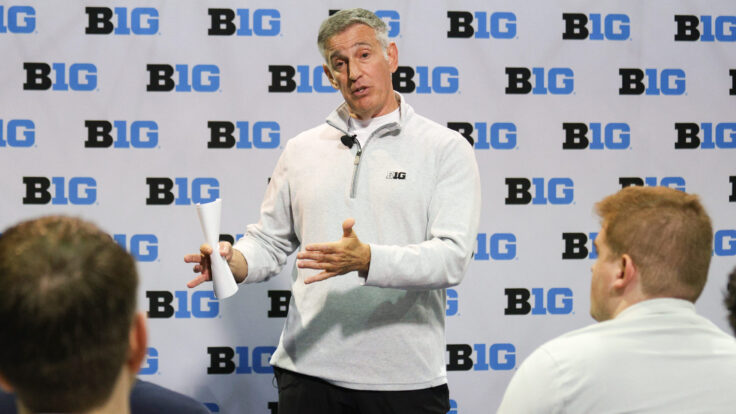
Welcome back to The Varsity. I’m John Ourand, writing from the upfronts inside the Robert A. Iger Building near the mouth of the Holland Tunnel. During today’s conclave, ESPN’s top executives detailed plans for the launch of their direct-to-consumer service later this year. Iger was here before the presser, but left before Marchand arrived with my chilled, crisp (never tart) sancerre. ( Have the car ready at 6:30 p.m. on the dot, Andrew, this isn’t a Burmese rail station!)
Anyway, ESPN unveiled its pricing for the service that it’s calling… ESPN. (I’d make fun of those knuckleheads, but the geniuses at Puck decided to name the podcast associated with The Varsity… The Varsity. Maybe Jon Kelly should start serving Marchand his sancerre.) Lo and behold, the pricing is $29.99 per month, or $35.99 per month for a bundle that also includes Disney+ and Hulu. Meanwhile, there was zero mention of launch date, or partners, though ESPN chairman Jimmy Pitaro said that he’s having conversations with a bunch of folks, including leagues and distributors. Oh, and he mentioned that negotiations regarding taking over the NFL’s media assets—a topic discussed with some frequency in these parts—remain ongoing.
Of course, it’s big news that ESPN is taking its cable channels direct-to-consumer. Same with Fox, which has announced plans for Fox One to launch later this year. After all, ESPN and Fox have been vocal about trying to preserve the integrity of their cable businesses, but these launches became inevitable after Paramount and Comcast unleashed Paramount+ and Peacock, making their most popular programming available outside the bundle. In recent years, both Paramount and Comcast had little trouble renewing their distribution deals, so there wasn’t much incentive for ESPN and Fox to not follow suit.
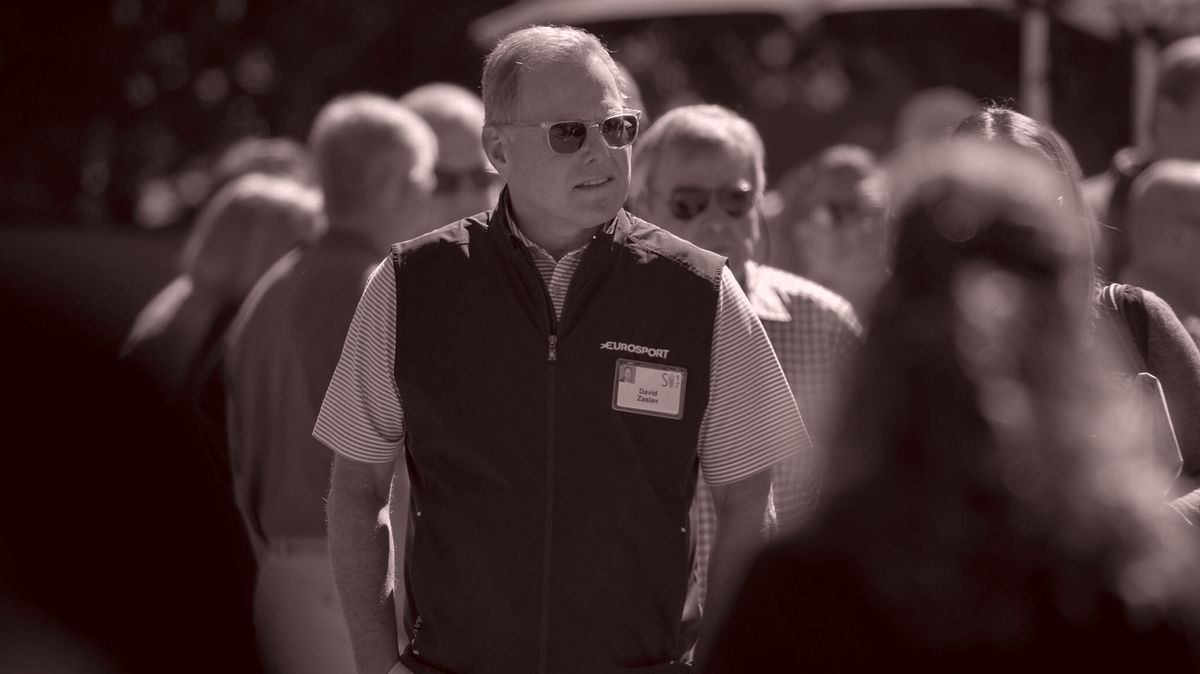
As you all know, tonight is our weekly Inner Circle edition of The Varsity, and Julia Alexander has yet another characteristically brilliant story—an on-point analysis of David Zaslav’s evolving sports strategy at WBD. This piece, like all of Julia’s fantastic work, is only available to Inner Circle subscribers, so click here to upgrade. It’s plenty cheaper than a subscription to ESPN.
Now here’s Julia…
|
Stat of the Week: 21 Percent
|
|
That’s the percentage increase in audience engagement with advertisements during live content (streaming and linear) versus on-demand programming, according to NBCUniversal ad chief Mark Marshall. “Live,” he said at the company upfront on Monday morning, has become an increasingly important part of NBCU’s offering across Peacock and linear—“70 percent of all programming across NBC.” As sports continue to gain outsize importance for audience growth and retention, I expect we’ll see Paramount, Disney, and Warner Bros. Discovery similarly tout the benefits of “live” in their pitches. Congrats to NBC for getting there first.
|
Trend I’m Watching: More Exclusive One-Offs
|
|
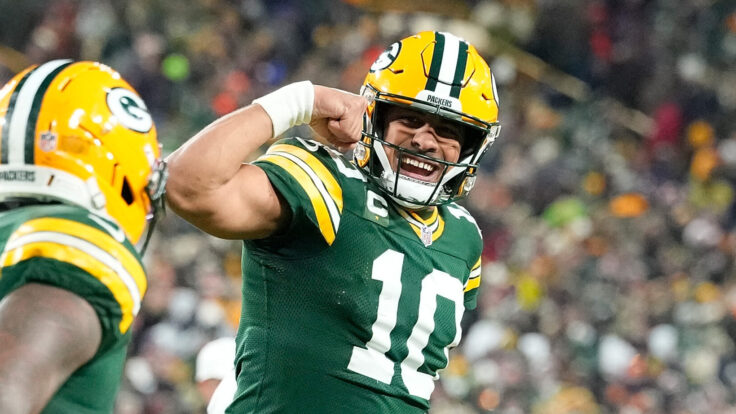
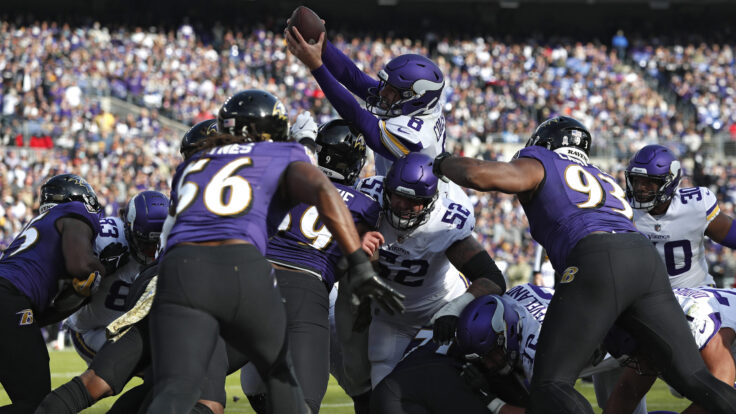
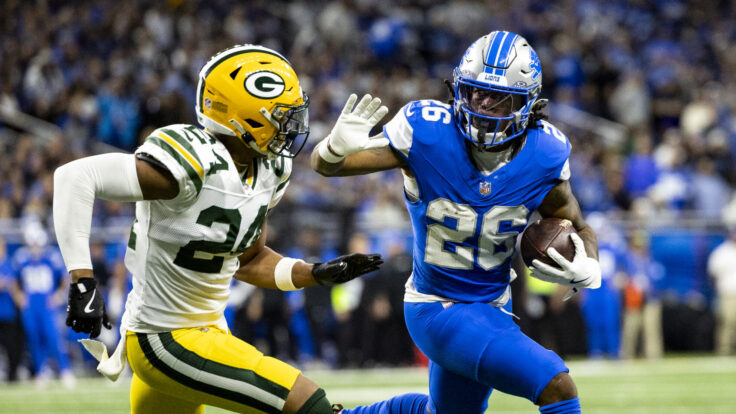
Despite the risk of frustrating viewers, who may need to put in extra work to find the games, the NFL isn’t shying away from turning regular season games into one-off events. I’m referring to the ongoing partnership with Netflix for two exclusive Christmas Day games, Peacock’s latest exclusive matchup, and now YouTube’s broadcast of the Chargers-Chiefs season opener in Brazil. For the past two decades, it has been extremely easy for audiences to find, and view, NFL games: All you needed were the broadcasters and ESPN. Now, as the NFL tests the boundaries of its growth, and further experiments with streaming’s ability to deliver crisp broadcasts to massive audiences, the league seems ready to give up that ease of discovery in exchange for collecting more data about how people watch live events. Only a league this big—and this secure in its ability to drive audiences to wherever the games are—would even be open to disrupting audience expectations to this degree. But the NFL can do what it wants, and usually does.
|
- Does ESPN+ still matter?: As John outlined above, ESPN is actually, really in its streaming era. Flagship is now just ESPN, and ESPN+ is… what, exactly? Nothing about ESPN+ ever made sense. Live ESPN programming wasn’t available on the service, not even coveted events like Monday Night Football, which led many to dub the O.T.T. platform “ESPN Minus.” Disney has noted that there are more than 24 million subscribers to the service, but it accounts for less than 1 percent of all viewing time on TVs in the United States, as evidenced by its absence from Nielsen’s monthly Gauge reports.Perhaps it’s best to think of ESPN+ as a byproduct of another era, when doe-eyed executives imagined the number of streaming services customers would sign up for was “infinity”—and that streaming, in its own way, would be a simulacrum of the cable experience. It didn’t work out that way.
- NBC’s “second-screen” solution: The notion of having to “reinvent” sports viewing seems odd considering it’s one of the few types of programming that people are still willing to pay for, but that’s one of the themes emanating from this week’s upfronts. Peacock’s answer to what overpaid consultants like to call “the second-screen experience”—keeping fans engaged beyond just the game on their TV while TikTok and Instagram constantly beckon—is a strange, bingo-like game dubbed ScoreCard. In the game, viewers can choose a card “based on a team or theme, and then earn points depending on what happens during the game.” According to the promotional material, there will even be a season-long leaderboard for dedicated players. Sounds like a terrible gimmick to me, especially since far juicier alternatives are available in the gambling space, and one that Peacock will likely sunset in two years, if not sooner. But hey, all power to the people trying to get kids to spend less time on TikTok.
- Fox’s patience pays off: I can’t believe I continue to say this, but Fox seems to just get it. Fox, of course, was one of the few major mediacos that didn’t launch a multibillion-dollar streaming service just to appease fourth-year Wall Street analysts. Instead, Fox doubled down on linear, and it seems to have paid off. Cable revenue was up 11 percent year over year in the first quarter, with affiliate fees increasing by 3 percent. Fox also announced that Fox News had attracted more than 200 new or returning advertisers—including major, blue chip companies—since Trump’s inauguration.And now, finally, Fox is launching Fox One, a place for cord-cutters who still want access to its news, entertainment programming, and, most importantly, sports. But unlike Peacock’s big scale play, or Disney’s attempt to rebuild its linear empire in streaming, Fox One isn’t being touted by C.E.O. Lachlan Murdoch as the great replacement for the company’s main business. It’s a fly trap that Murdoch hopes will sweeten the deal for further partnerships down the line. Having access to the NFL, big college football games, and playoff baseball will certainly help.
|
|
And now, on to the main event…
|
|
|
|
As Versant prepares for liftoff and David Zaslav prepares his own SpinCo, the prenup between sports leagues and cable companies is being renegotiated on the fly. And while cable will no longer vie for the largest packages, there is a path forward for a new strategy.
|
|
|
Late last week, just days before NBCUniversal tried to sell a roomful of advertisers on Versant, the company’s new name for its cable network spinout, CNBC reported that Warner Bros. Discovery C.E.O. David Zaslav was finally getting serious about his own, similar breakup—the parameters of which my partner Dylan Byers previewed last December. Now, as then, relegating these once very-profitable assets to their own bin of unappealing leftovers kind of makes sense. And while WBD and NBCU executives will be quick to argue that these moves will unlock growth at both halves of the former whole, the truth is that they set up the remaincos for success while leaving the spun-off assets to survive, or not, on their own and out of view.
After all, pay TV shed another 5 million subscribers last year—about 7.1 percent of their remaining customer base—while the top five streaming services gained 15 million subscribers, and grew their profit to a collective $5 billion, per analyst and Wondery founder Hernan Lopez.
Sports, of course, also prop up what remains of cable by keeping affiliate partners interested, advertisers spending, and audiences engaged. And even if cable partnerships are less appealing to major sports leagues, which are increasingly focused on a blend of streamers and broadcasters, the cable guys need to get creative with the hand they’ve been dealt. Versant head Mark Lazarus has been clear about the importance of sports to his strategy. Though Versant won’t pursue major league rights, there are opportunities to lean into what’s worked for networks like the Golf Channel, and to secure digital assets to help move the linear business forward. I’m sure you’ve heard Laz discuss the Golf Channel’s ownership of Golf Now, a scheduling app that helps golfers book rounds, displays course maps, and alerts users to upcoming Golf Channel broadcasts. It’s a clever tool, but—forgive me—a long putt.
Notably, the market is paying attention to the maneuvers of Zaz, who has been seated courtside aplenty during this Knicks playoff run—the denouement of TNT’s four-decade relationship with the NBA. And while MoffettNathanson expects WBD to lose around $1.1 billion a year in advertising due to the expiration of its NBA deal, the debt-burdened company is still saving $2 billion a year on sports rights. And distributors haven’t given his channels a haircut on fees, either.
After losing the NBA, Zaz—like Laz—seems to understand the power of niche content at a time when fragmented audiences either seek out the biggest of big events (the NFL, the Eras Tour) or niche interests (tennis, horse racing). Mediacos that can tap into less popular sports with dedicated audiences willing to pay for live content, and ancillary products (like Tee Time, perhaps) can increase the profit margins on those sports. The challenge in these spin-off scenarios is nailing the balancing act.
|
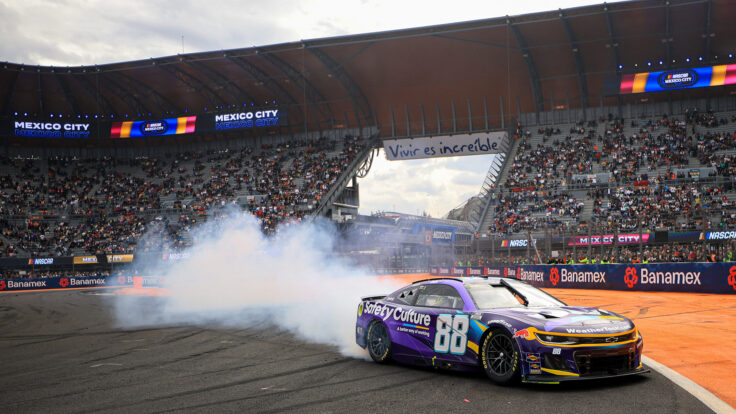
WBD has so far been able to cobble together a collection of just-good-enough rights: the French Open, the NHL, some NASCAR races, some college football games. All of these events are also available to Max subscribers, so the investment is spread out across the company’s P&L. League partners know their content will also be available to stream to 56 million Max viewers—not just the dwindling number of pay TV customers, who have to opt in to those channels. But what happens when Zaz sets his cable nets adrift, presumably with some of the company’s $34 billion in debt? Well, that’s a more complicated picture.
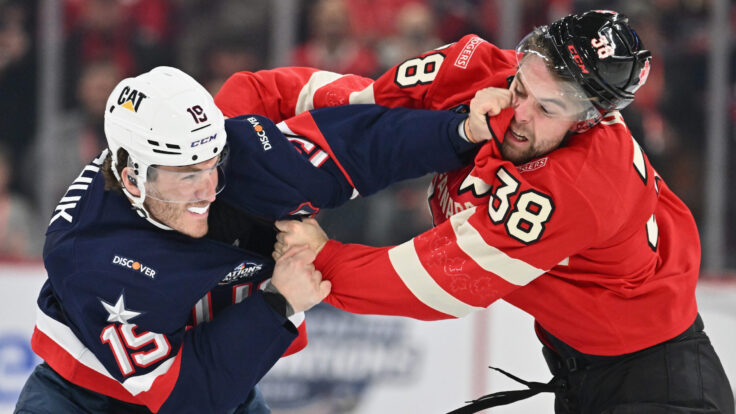
WBD’s best sports assets, based on viewership and advertising interest, are the NHL, the French Open, and college football. The NHL will bring 72 games to TNT and Turner Sports between September and May, including the Stanley Cup Final beginning next year. The league’s recent results have been mixed. Between the new 4 Nations Face-Off tournament, which drew the largest audience ever for a non-Olympic hockey game, and Alexander Ovechkin breaking Gretzky’s career goals record, hockey is having a moment. On the other hand, regular season viewership dropped 12 percent year over year, with even more depressing numbers for local broadcasts. (Ratings for Chicago Blackhawks games cratered by nearly 80 percent, though there were some mitigating circumstances.)
Viewership for the French Open, meanwhile, has hovered around 1.4 million (about the same as an NBA game), with 5 percent of Americans in 2024 saying they were extremely interested in following the tournament, and 10 percent saying they were somewhat interested, per YouGov. But tennis viewership trends aren’t encouraging. Viewership for the U.S. Open was down 17 percent in 2023 from the previous year, and fell an additional 7 percent in 2024, likely the result of a generational shift in the men’s game and the end of the Serena era. As for college football: Although TNT won’t have access to the most popular games (the Big Ten, the SEC, etcetera), a new five-year deal for some College Football Playoff and Mountain West games should give TNT at least a bit of a boost in the fall.
Again, these assets blend together just fine on streaming. But the portfolio would create a challenge for an orphaned WBD spinco. College football title game ratings were down 12 percent year over year, in large part because of the fragmented cable ecosystem. Top leagues will be increasingly disinclined to negotiate deals with esoteric cable partners. So what just-good-enough rights will move the needle for Laz and whoever ends up running Zazant? Lazarus’s Versant strategy hints at taking bites out of the apple with MLB rights, whose Sunday package of games is on the table after a standstill with ESPN. But tonnage, the MLB’s primary benefit in cable’s heyday, doesn’t apply when the games are spread out across several partners. How valuable is a one-off baseball game to a linear product people
are fleeing?
|
|
Neither Versant, nor whatever Warner Bros. Discovery’s spinco winds up being called, will have the leverage to secure major sports rights, but they can own more of a fan’s journey within the leagues they pursue. Here’s an example: Overall excitement around tennis is growing in the United States, despite the fact that viewership is down because of fragmentation. Perhaps WBD’s cable nets should acquire the Tennis Channel and its D.T.C. product to put the company at the center of all things tennis, amplifying its French Open rights. Maybe the company can crib from Lazarus’s golf strategy and buy an app like iOnCourt, which helps users schedule matches and creates a local leaderboard, engaging tennis fans as players as well as spectators. Since WBD would own the entire chain, they could monetize each step of the journey.
Obviously, none of this would make up for the loss in pay TV customers, or generate an NBA level of ad revenue, but those are unrealistic expectations. The U.K.’s ITV increased overall revenue by 15 percent by leaning more into YouTube through a combination of library programming and originals. Recent U.S. court rulings regarding App Store offerings that feature subscriptions or in-app purchases should provide financial opportunities for entertainment, betting, and sports apps. If you’re going to go all in on more-niche sports—WBD is also investing in snowboarding and winter sports abroad—why not lean into the abundance of opportunities to reach consumers, centralize the experience, and build loyalty?
|
|
Thanks, Julia, that was great. See you all on Thursday.
John
|
|
|
|
Puck sports correspondent John Ourand and a rotating cast of industry insiders take you inside the executive suites and owners boxes where the decisions that shape the entire sports business are made. You’ll hear interviews with players, network execs, and everyone in between. The Varsity is an extension of John’s private email for Puck by the same name. New episodes publish every Wednesday and Sunday.
|
|
|
|
Ace media reporter Dylan Byers brings readers into the C-suite as he chronicles the biggest stories in the industry: the future of cable news in the streaming era, the transformation of legacy publishers, the tech giants remaking the market, and all the egos involved.
|
|
|
Need help? Review our FAQ page or contact us for assistance. For brand partnerships, email ads@puck.news.
You received this email because you signed up to receive emails from Puck, or as part of your Puck account associated with . To stop receiving this newsletter and/or manage all your email preferences, click here.
|
|
Puck is published by Heat Media LLC. 107 Greenwich St, New York, NY 10006
|
|
|
|