Greetings from Menlo Park, where I’ve just arrived at the
Paley International Council Summit, and welcome back to In the Room. If you have any burning questions for YouTube C.E.O. Neal Mohan, let me know.
Meanwhile, congrats to NBC on a characteristically pleasant (compliment!) kickoff to their new NBA era. I was at the Lakers–Warriors game last night and spied Donna
Langley wandering the concourse at halftime, presumably still wondering if NBC overpaid for all this. (I take the long view, which is to say, way too
soon to tell.) The O.K.C.–Houston game, which ran to double overtime, is an example of the asset at its best. As for the Lakers, well…
In tonight’s issue, news and notes on David Ellison’s plan to wrest control of WBD now that David Zaslav has taken it to market. Despite Zaz’s efforts, there seems to be plenty of momentum around Paramount, but getting to the goal line will require increased bids and work—which is where Makan
Delrahim comes in. I have much more on the logic behind his hire below.
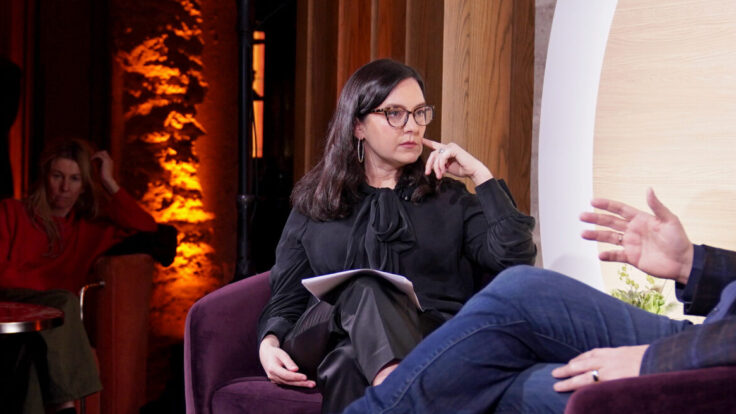
🍸 Plus, on the latest edition of The Grill Room, Sarah Longwell, publisher of The Bulwark, joined me for a wide-ranging conversation on the evolution of their 7-year-old, never-Trump media company, and what Bari Weiss’s $150 million sale of The Free Press portends for their own exit options. Follow The Grill Room on
Apple, Spotify, or wherever you prefer to listen.
Mentioned in this issue: David Zaslav, David
Ellison, Makan Delrahim, Meredith Kopit Levien, Michael Wolff, Melania Trump, Brian Roberts, Greg Peters, and many more…
Let’s get started… |
-
Paramount layoffs: While David Ellison tries to play the angles on his next deal, Paramount is preparing to initiate the long-anticipated layoffs required to fulfill his promise of $2 billion in cost savings. The cuts will start going into effect on October 27, I’m told, and will affect more than 2,000 employees across the company—including as many as 100 layoffs at CBS News, as I recently noted. This is good news for shareholders, terrible news for those affected, and
a reminder that it’s always hard to play Hollywood savior while also trying to optimize for efficiencies. If and when David does get WBD, there will be still more efficiencies to come, too.
|
|
|
A MESSAGE FROM OUR SPONSOR |
Brand protection at the speed of culture. When it comes to the fast-moving world of social media, yesterday’s context can become today’s controversy. As platforms evolve, keeping your brand safe demands protection that moves just as fast. Zefr empowers brand leaders with the control, transparency, and insights to maintain media quality and
consistency across evolving social platforms, ensuring your message aligns with your brand values, no matter what’s trending. Stay one step ahead with Zefr. Test Zefr |
|
|
- NYT TV, cont’d: The New York Times app has rolled out a new TikTok- or Reels-like feature called Watch, which allows users to experience Times video journalism in the ubiquitous thumb-flick manner to which we’ve all grown accustomed. This is yet another step toward the Times’s more video-centric future, which I previewed in early
September, and which Times Co. C.E.O. Meredith Kopit Levien discussed at length with my partner Julia Alexander and me on a recent episode of The Grill Room. The Times’s investments here underline just how vulnerable traditional video-first news orgs (CNN, NBC, etcetera) are now that digital distribution and
consumer habits have leveled the playing field. On the other hand, as with ESPN’s “Verts,” it’s not clear how much product features like this will matter given that consumers tend to interact with this content on social platforms rather than within any one media brand’s walled garden.
- Wolff bites back: Michael Wolff, the pugnacious media industry journalist and Trump chronicler—and my former mentor, a lifetime ago—sued first lady
Melania Trump after her lawyers threatened to sue him for $1 billion for allegedly defamatory remarks that linked her to Jeffrey Epstein. Wolff’s suit, filed in state Supreme Court in Manhattan, argues that Melania is violating anti-SLAPP laws, which are intended in part to prevent the powerful from silencing or intimidating their critics. It will be interesting to see how this plays out…
- And
finally… I like this New Yorker cartoon.
|
|
|
Now that David Zaslav has finally admitted Warner Bros. Discovery is
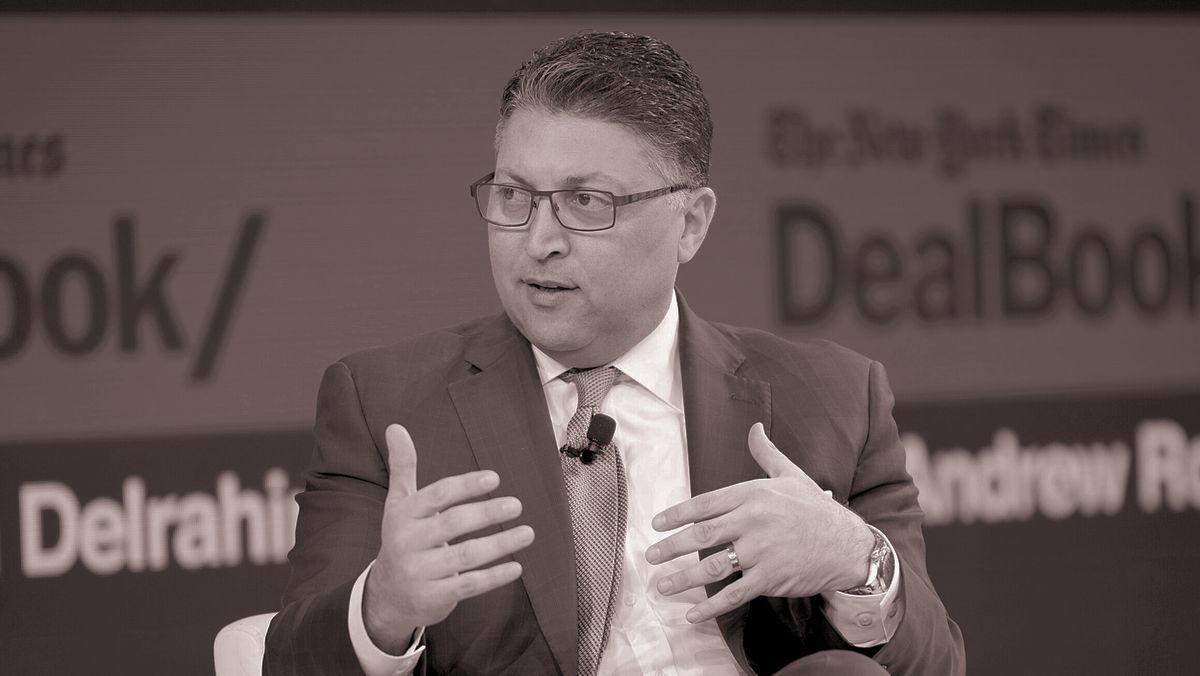
for sale, the Ellisons will lean on Paramount’s newly recruited chief legal officer, Makan Delrahim, to potentially articulate their antitrust talking points. |
|
|
At long last, David Zaslav has officially put Warner Bros.
Discovery up for sale—or, you know, initiated “a review of strategic alternatives to maximize shareholder value” amid “unsolicited interest” from “multiple parties.” Of course, WBD has really been on the block since Zaz announced his intention to split the company in two, and especially since Skydance’s David Ellison first expressed interest in folding the whole thing into his burgeoning media portfolio. To date, Ellison has made three offers, the most recent and
highest of which came in at $23.50 a share, which Zaz rebuffed earlier this week. On Tuesday, he opted to canvass the rest of the field instead.
The Zaz endgame is pretty clear: sell to the highest bidder. And with Ellison still hovering below $25 a share, Zaz and the board will now try to convince shareholders that they can do better by selling each company post-split. As my partner Bill Cohan notes this week with typical prescience: “The nearly unanimous support of the
Wall Street analyst community for Zaz’s split-up plan—at least while the Ellisons are in the low 20s—is significant. Not only will it inform Zaz’s board of directors and its bankers, it will also give WBD shareholders the backbone to stick with his process.” The ideal target for Zaz & Co., it seems, is closer to $30 a share.
That said, the promise of a post-split auction presumes demand beyond Paramount. At present, both Comcast and Netflix remain interested in the stand-alone Warner
Bros. Streaming and Studios business, per sources familiar. Amazon is said to be in the exploratory stage, which essentially translates to due diligence. No one I’ve spoken to expects Apple or any other suitors to make a real offer. So it increasingly feels like the best-case scenario for Zaz is a Paramount vs. Comcast vs. Netflix or Amazon bidding war, versus the possibility that he proceeds with the split and then reinitiates this rodeo once again. But even that presumes that
Comcast’s Brian Roberts isn’t merely trying to drive up the WBD price tag for Paramount, as he did to Disney with Fox; that Netflix co-C.E.O. Greg Peters is merely being strategic by repeatedly shooting down M&A speculation in public; and that Amazon will come to the table. Hard tea
leaves. |
|
|
A MESSAGE FROM OUR SPONSOR |
Brand protection at the speed of culture. When it comes to the fast-moving world of social media, yesterday’s context can become today’s controversy. As platforms evolve, keeping your brand safe demands protection that moves just as fast. Zefr empowers brand leaders with the control, transparency, and insights to maintain media quality and
consistency across evolving social platforms, ensuring your message aligns with your brand values, no matter what’s trending. Stay one step ahead with Zefr. Test Zefr |
|
|
In any event, now that Zaz is betting on such an outcome, the Ellisons have
to move to Phase 2 of the takeover strategy, which requires selling WBD shareholders on a different narrative and ever-so-subtly poisoning the waters for the competition. This is an area where the Ellisons’ decision last month to hire veteran antitrust guru Makan Delrahim as Paramount’s chief legal officer could be advantageous. (Indeed, they were likely looking around this corner when they hired him.) Delrahim, who led the Justice Department’s reviews of the Disney–Fox and
Discovery–Scripps mergers, as well as the D.O.J.’s effort to block the AT&T–Time Warner deal, won’t merely guide the Ellisons through their own regulatory hurdles—he’ll also be able to highlight all the potential regulatory and political hurdles facing the competition.
The principal point Delrahim is likely to make is that Comcast faces greater regulatory scrutiny than Paramount because of concerns around vertical integration—after all, he made a similar argument against the AT&T–Time
Warner deal during Trump I. The conventional wisdom on the Paramount side is that, just as Trump may be happy to reward the Ellisons given their close ties, he’d be reluctant to reward NBCUniversal in light of his feelings toward Roberts and how he’s been covered by NBC News and MSNBC.
The argument against a Netflix or an Amazon—again, assuming either intends to go the distance—may prove harder, but will center on scale. Netflix already has more than 300 million global subscribers, Amazon
Prime around 250 million. A combined Paramount and WBD would get PSKY to 200 million at best, assuming minimal overlap. One conceit of the Ellisons’ grand strategy is that they’re saving the old Hollywood studios by keeping them competitive with the tech giants—albeit while they’re preparing to lay off 2,000 employees at Paramount later this month and aiming to consolidate two of Hollywood’s last remaining studios. Their argument will thus center on the idea that a competitive Paramount
Skydance is better for the industry and consumers than a world dominated by a small handful of tech platforms.
In essence, Paramount is positioning itself as the safest bet for shareholders: the cleanest regulatory path, the most politically palatable deal partner, and the one actually fighting on behalf of Hollywood. Obviously, that argument would be a lot more compelling if the Ellisons ponied up more than $25 a share—which they can do, even if they don’t necessarily
want to. Their play, of course, is to get the asset they want for the lowest possible price, which may require some creative thinking. In the course of my conversations this week, the most interesting piece of advice anyone offered the Ellisons was this: Call Zaz’s bluff, drop your offer, and watch what happens to the stock. |
|
|
Join Emmy Award-winning journalist Peter Hamby, along with the team of expert journalists at Puck, as they let you
in on the conversations insiders are having across the four corners of power in America: Wall Street, Washington, Silicon Valley, and Hollywood. Presented in partnership with Audacy, new episodes publish daily, Monday through Friday. |
|
|
A professional-grade rundown on the business of sports from John Ourand, the industry’s preeminent journalist,
covering the leagues, players, agencies, media deals, and the egos fueling it all. |
|
|
Need help? Review our FAQ page or contact us for assistance. For brand partnerships, email ads@puck.news. You received this email because you signed up to receive emails from Puck, or as part of your Puck account associated with {{customer.email}}. To stop receiving this newsletter and/or manage all your email preferences, click here. |
Puck is published by Heat Media LLC. 107 Greenwich St, New York, NY 10006
|
|
|
|