 |
|
|
|
Give The Gift of Puck
|
|
Puck members can now spread the holiday cheer by giving the gift of Puck to friends, family, or co-workers with an exclusive 25% off code (HOLIDAYGIFT).
|
|
|
|
|
|
Welcome back to In The Room. I’m Dylan Byers.
|
|
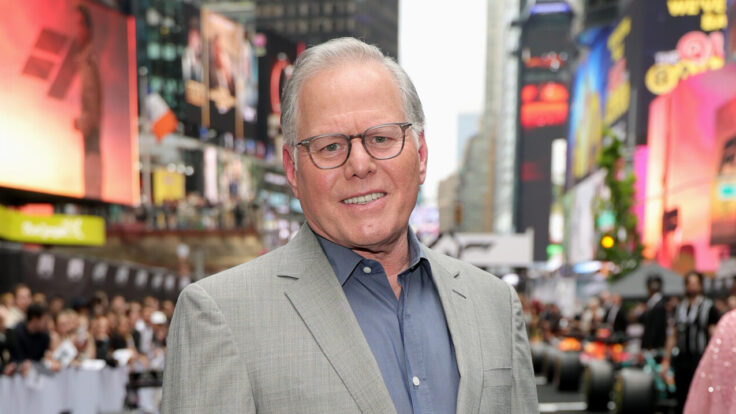
In tonight’s email, news and notes on David Zaslav and Bob Bakish’s ParaWBD summit. Plus, fresh reporting on the impending collision at The Washington Post between its activist guild and incoming C.E.O. Will Lewis, whose history in the Murdoch machine has once again come under scrutiny.
But first…
🏈 Puck takes the field… The incomparable John Ourand is joining Puck, where he will launch a new vertical covering his bailiwick, the business of sports. Ourand set the gold standard for this beat throughout his 18-year run at Sports Business Journal, and news of his free agency signing has been a topic du jour at most mediacos this week. Anyone who hasn’t yet joined the waitlist for his forthcoming private email can do so here.
🏛️ Scoop: Punchbowl poaches Postie… Punchbowl, the congressional news start-up launched by Jake Sherman, Anna Palmer and other fellow Politico alumni/ae, has poached Dave Clarke from The Washington Post, per sources familiar. Clarke, a former Congress and White House editor, most recently ran the Post’s newsletter business, which was effectively disbanded amid the recent staff cuts, and never properly resourced. He’ll now run Punchbowl’s policy coverage.
|
 |
| Zazmount Global & WaPo Gridlock |
| News and notes on the biggest stories roiling the industry: the Zaz-Shari deal possibilities and Will Lewis’s arrival at the union-torn, money-losing Washington Post. |
|
|
|
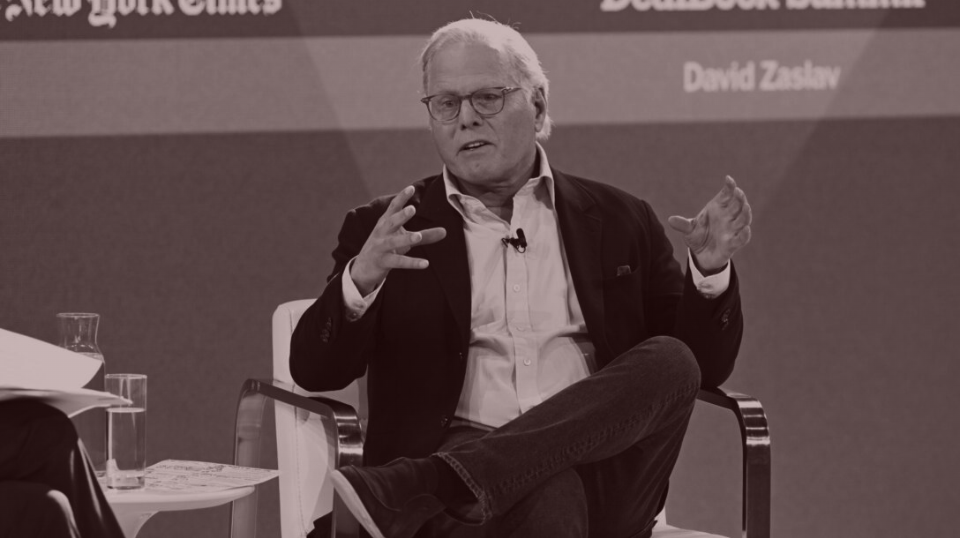
| Back in October, sources close to David Zaslav told me that Warner Bros. Discovery might make a move on Shari Redstone’s Paramount Global, an acquisition that would give Zaz’s mediaco new synergy opportunities, greater reach in streaming, additional franchise I.P., highly coveted NFL rights, and a chance to unite a number of assets, like CNN with CBS News—all at a pivotal moment when debt-saddled legacy media giants are fighting a sink-or-swim battle for scale. But any deal would happen a ways down the line, these sources cautioned: certainly after April 2024, the trigger date for WBD to pursue further deals according to the rules of the Reverse Morris Trust framework wherein WBD was conceived—and possibly not until 2025, once the company gleaned a better read on the regulatory environment. In the weeks that followed, both Zaz and John Malone seemed to acknowledge their interest.
Of course, a lot has happened since then. Most importantly, Paramount’s ever-declining market cap is now hovering around just $10 billion, and Shari’s own eagerness for a deal appears to have grown. Earlier this month, my partner Matt Belloni broke the news that Skydance’s David Ellison and RedBird Capital’s Gerry Cardinale were also thinking about acquiring a majority stake in its parentco, National Amusements Inc.—news that sent Paramount’s shares surging nearly 15 percent. And on Wednesday evening, Axios’ Sara Fischer reported that Zaz met with Paramount C.E.O. Bob Bakish “to discuss a possible merger,” as well.
The most recent meeting took place over lunch in Bakish’s New York office, according to sources close to both parties, though there’s some disagreement over whether deal talk was the raison d'être or merely a topic that came up amid a more anodyne check-in. In any event, the interest on both sides is very real. It’s clear from the readouts I got that Zaz and his strategy chief, Bruce Campbell, have at least gone far enough to determine the financing for this deal—how to rationalize the acquisition given that WBD is already saddled with $43 billion in debt, etcetera—while Bakish clearly has the green light from Shari to create a market. Indeed, the aforementioned Skydance-RedBird talks may have forced Zaz to move faster than previously planned. (On that note, read my partner Bill Cohan’s hot-off-the-presses piece about how the Cardinale-Ellison structure is a poison-pill-ridden disaster in the making.)
All that said, if there is one thing both sides do agree on here, it’s that these discussions are still in the very early stages. Would WBD come in at the topco level or Paramount? What divestitures would have to be made? There are a zillion questions to be answered. And of course, Zaz & Co. will still have to contend with interest from Ellison and Cardinale, among other suitors.
A combination of WBD and Paramount, even with a sale of various cable assets, would offer Zaz a true gem in many ways. Not only would it combine all sorts of prestige assets and I.P., but it would create a fantasy debt relief puzzle for him and C.F.O. Gunnar Wiedenfels to embark upon. Zaz, after all, may love Hollywood, but his truest skill has always been as an effective and lean operator (outside of assuring his own compensation). And a putative combined ParaWBD would offer him not only the chance to be Tom Cruise’s boss, but also untold M&A and monetization opportunities to service the mind-numbing debt. And that may be the sort of challenge that he arrived in L.A. to conquer.
Deals of this magnitude aren’t simply financial—-they’re also emotional. Zaz can likely offer Shari something that Ellison and Cardinale would not, such as a board seat, and the chance to remain relevant in the industry while remaining umbilically connected to her father’s life’s work. It may be very early, sure, but it also might just make sense. And Zaz’s handmade franken-empire building—the work of a former lawyer, like Sumner—may remind the Redstones of the origins of their own fortune. |
|
|
| On Wednesday morning, two weeks after staging a dramatic 24-hour walkout, some 30-odd members of the Washington Post Guild sat in on the paper’s daily editorial meeting to protest the latest perceived slight in their still ongoing contract negotiations. Earlier that morning, interim C.E.O. Patty Stonesifer had sent an email to the guild warning them that certain incentives in the latest offer, including a $500 ratification bonus for each guild member, would be withdrawn if the union failed to sign by year’s end. Stonesifer’s email clarified that this was the Post’s “best and final offer”—indeed, the best offer that the company had made in decades—despite a financial predicament that had already necessitated the culling of 240 staff. (Yes, Jeff Bezos may be one of the richest men on Earth, but he didn’t get there by letting his companies lose $100 million a year.)
Obviously, the guild saw it differently. It billed this demonstration as an “occupation,” for the obvious P.R. reasons, though it appears to have been far more civil. Members waited until the end of the meeting to voice their frustrations, which they did respectfully for about 10 minutes or so, and then Post leadership went about its day. Nevertheless, the demonstration, which also included homebound guild members joining via Zoom and Slack, reiterated just how depressing the state of affairs has become at the former House of Bradlee. The union’s latest efforts are “totally futile,” one guild-represented staffer told me after the meeting. “Sign the fucking contract and let’s move on.”
The Post is facing myriad challenges heading into 2024, which, in light of tectonic historical developments—pivotal wars abroad, volatile domestic tensions, the specter of Trump 2.0—stands to be an extremely consequential year for the news media. The burden of meeting these challenges will fall on Will Lewis, who formally takes the reins as publisher and C.E.O. next month. His greatest challenge will be avoiding another $100 million revenue shortfall, a task complicated by a still-soft ad market, ongoing subscriber churn, and the lack of any real selling point beyond politics and policy coverage—which, requisite parenthetical, the Post continues to do quite well, but everyone else (Politico, The Times, etcetera) does, too.
Another task, on that note, is the question of editorial leadership: As I’ve reported, and despite Lewis’s early intimations to the contrary, Sally Buzbee’s future as executive editor, now and certainly post-November, remains an open question. Frankly, given the lack of innovation and dwindling morale at the organization, it’d be almost impossible to see how Lewis could retain her for the long term. Under Marty Baron, the Post competed with the Times. Now it seems to have drifted toward the same complacency that led a frustrated and aggrieved Jim VandeHei and John Harris to quit the joint and start Politico, changing the face of the industry in the process. After all, you can’t blame all the Post’s woes on Fred Ryan. |
|
|
| All that said, the most immediate of Lewis’s challenges may be more pedestrian, as evidenced by the guild’s implacability. A truism of the Post, and indeed of most newsrooms in this era, is that you can’t really run the place if you don’t have the support of the room. Sure, it’s Bezos’s paper, and he can pick whomever he wants to be in charge, but his decision to dislodge Ryan highlights the necessity of assuaging the rank and file. Indeed, Ryan’s gravest sins may have been his financial mismanagement and lack of strategic vision, but his downfall was precipitated at least in part by his very palpable tensions with the journalists under his watch. The infamous video in which he stormed out of a town hall meeting as he declared, “I’m not going to turn this town hall into a grievance session for the guild,” was perhaps the most obvious sign that he wasn’t long for his corner office.
Lewis appears to understand the importance of placating staff. In his first weeks on the job, I’m told, he will formally invite all of his new charges to essentially form their own grievance session, voicing their feelings and frustrations about the editorial product, the workplace experience, and so on. It’s an exercise in self-inflicted torture likely to test the stiffness of the British upper lip. But the logic here, of course, is that such an exercise will better ingratiate him with the staff while providing a crash course in the internal politics of the place.
Inevitably, Lewis will field a fair share of questions about his own past as a lieutenant in Rupert Murdoch’s media empire, which has once again come under scrutiny. On Wednesday, NPR’s David Folkenflik published a lengthy report drawing attention to recent lawsuits in which lawyers for Prince Harry and Hugh Grant—British royalty, each in their own way—depict Lewis as the architect of Murdoch’s effort to cover up criminal activity during the News of the World phone-hacking scandal. These and similar accusations have followed Lewis for years, and while he has categorically denied the accusations as “untrue,” he has also declined to discuss the specifics about his role on Murdoch’s management standards committee. (Surely, the lawyers crossed those Ts.) “I took a view very early on that I’m never going to talk about it,” he told the Post last month, after getting the top job.
At the very least, it seems notable that Bezos and Stonesifer are entrusting the paper to someone who stands accused of orchestrating a massive coverup by the likes of Prince Harry and Hugh Grant. And, by the same token, it’s not hard to see a scenario in which a liberal, activist staff hellbent on getting its way tries to use that history to exact revenge on an employer they’re already dissatisfied with. In any event, the burden on Lewis is now that much greater.
Nevertheless, who knows how much Post staff will care about these allegations. Mark Thompson had to deal with his own adjacency to a scandal when he inherited the Times, and the newsroom eventually cleared him and enjoyed the growth ride. No doubt, this generation of Posties are more preoccupied with their own compensation and work-from-home guarantees, too. It will be Lewis’ job to also motivate them to turn around the paper they love. |
|
|
|
|
FOUR STORIES WE’RE TALKING ABOUT
|

|
P+/-
|
|
What is Paramount Global actually worth?
|
|
JULIA ALEXANDER
|
|

|
Kingdom Koum
|
|
On Nikki Haley’s $10 million man.
|
|
TEDDY SCHLEIFER
|
|

|
|

|
|
|
|

|
 |
|
|
|
Need help? Review our FAQs
page or contact
us for assistance. For brand partnerships, email ads@puck.news.
|
|
You received this email because you signed up to receive emails from Puck, or as part of your Puck account associated with . To stop receiving this newsletter and/or manage all your email preferences, click here.
|
|
Puck is published by Heat Media LLC. 227 W 17th St New York, NY 10011.
|
|
|
|