 |
 |
|
Welcome back to The Varsity, my twice-weekly private email on the egos, front offices, and executive teams driving the business of sports. Happy Dan Hurley Day to all who celebrate.
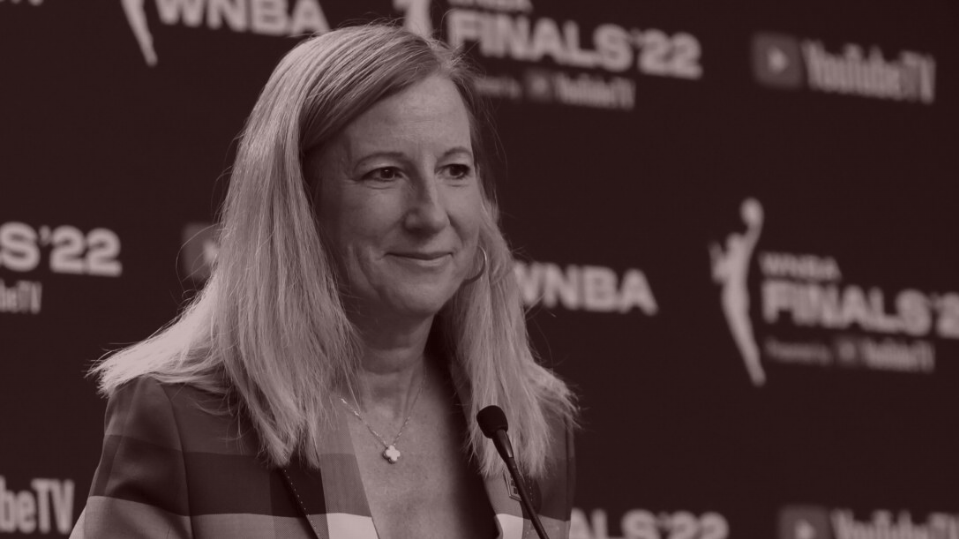
Today’s issue includes my in-depth interview with WNBA commissioner Cathy Engelbert. We discussed the league’s “existential” 2020 season, its slow build to the current Caitlinsanity, and how she’s deploying a recent $75 million capital raise. Engelbert, who used to run Deloitte, is a thoughtful and talented exec, and I’m sure you will learn a lot from this interview.
Okay, here’s your polite twice-weekly reminder to stop forwarding this email to your friends and minions! Unless you want Fritz, Puck’s email concierge, to start spamming you with Marchand’s pointillist self-portraits.
Let’s get to it…
|
| The Starting Five: French Open Edition |
|
- WBD’s French Open connection: My spies spotted David Zaslav, TNT Sports C.E.O. Luis Silberwasser, and Turner Sports chief content officer Craig Barry at Roland-Garros over the weekend, putting the finishing touches on WBD’s deal to secure French Open rights for the next 10 years. Brian Steinberg scooped the news Friday afternoon, and the official announcement will come tomorrow.
The deal starts next year, and will feature TNT as the primary TV channel, with matches on TBS and Max, too. Notably, Warner Bros. Discovery has a three-decade-long relationship with Roland-Garros through Eurosport, the continental sports channel that Discovery acquired in 2015. Viewers can expect some corporate synergies, such as sharing talent and production.
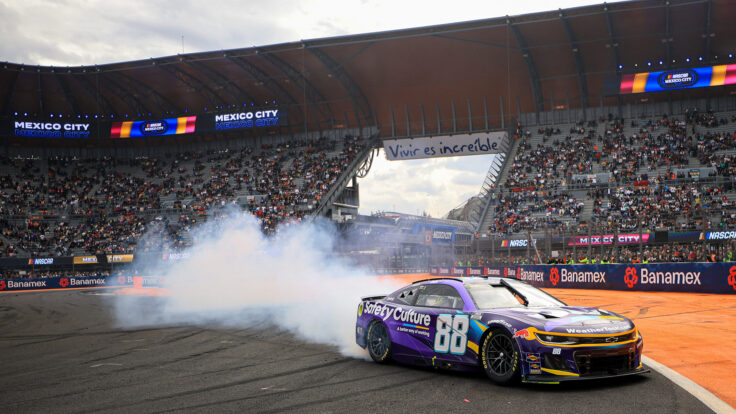
This tennis deal, as well as WBD’s College Football Playoff licensing arrangement inked last month, sure seem like insurance policies for when the company loses out on the NBA auction. But these recent packages also jibe with Zaz’s larger strategy of investing in sports rights—in addition to its CFP deal, WBD signed a NASCAR deal about six months ago, started carrying the NHL in 2021, and U.S. Soccer men’s and women’s games last year—as a way to ensure that cable and satellite companies continue paying top dollar for TNT and TBS. It’s also noteworthy that Venu—formerly known as Spulu, the Disney-Fox-WBD mega-streamer—will now carry all four tennis majors.
Meanwhile, WBD executives still hold out hope that they will be able to use the company’s now-Varsity-famous matching rights to stay in business with the NBA. And the idea of a small fourth package with rights culled from the regional sports networks—while still a long shot—remains on the table. Good luck!
- The Tennis Channel blues: Just a couple years ago, the Tennis Channel was the toast of the sports media world. It had the rights to three of the four majors (Wimbledon was the lone holdout), and it leveraged parentco Sinclair’s distribution to hit peak penetration of 70 million households. Now, Tennis Channel is the poster child for everything that’s gone wrong with the cable bundle.
Eight years after it bought Tennis Channel for $350 million, Sinclair has been looking to offload the network, which has dropped below 40 million homes. Now that Warner Bros. Discovery has picked up the rights to the French Open, the channel has officially been shut out of the majors. It lost the U.S. Open, in 2015, and the Australian Open, in 2022—both to ESPN.
The channel still boasts ATP and WTA rights, not to mention the Laver Cup, Davis Cup, and the Billie Jean King Cup. And it certainly will cover the French in the same way it covers the other majors: With a studio show on sight and plenty of highlights. But losing the French will certainly negatively impact Sinclair’s sale price.
- Nothing to see here!: Adam Silver took 14 questions at his press conference before Game 1 of the NBA Finals on Thursday (16 including follow-ups), and to nobody’s surprise, reporters seemed most interested in the league’s media deals. Silver fielded four questions on the deals, more than any other topic. His most interesting answer: “Traditional cable, it’s not going away, but it’s continuing to decrease. And then streaming platforms are seeing accelerated growth, particularly around premium live sports.” The upshot is that we’re still one or two weeks away from signed contracts.
The NBA commissioner also fielded two questions on the WNBA and Caitlin Clark, and two more on league ownership issues. But I’m always intrigued by the list of questions at these kinds of commissioner press conferences—not only by what’s asked, but also by what’s not asked. I was more than a little surprised that Silver didn’t entertain any questions about gambling issues, especially considering he was the first commissioner to go public with his support for sports betting, a full decade ago. After all, it was just a couple of months back that he banned the Raptors’ Jontay Porter for wagering on his own games.
- Sunday Ticket trial: The question of whether the NFL controlled the price that DirecTV charged for Sunday Ticket loomed large during the first day of testimony involving former NFL Network impresario Steve Bornstein and Pats owner Robert Kraft in the important class-action lawsuit. My partner Eriq Gardner reports that Kraft’s deposition was played at the trial. He testified that the league wanted to keep Sunday Ticket prices high, and they weren’t as concerned with keeping subscriber numbers up.
But Bornstein, who ran the NFL’s media division, said the league had no control over what DirecTV charged customers, per Courthouse News Service. “We basically agreed to give up the right to set the price,” Bornstein testified. Later, in response to the allegation that the NFL’s Sunday afternoon broadcasters, CBS and Fox, wanted to keep viewers from flocking to Sunday Ticket, he said: “We were trying to balance all of our partners’ concerns. … We tried to thread the needle carefully and make everybody happy. There was a lot of give-and-take.”
- Shari’s final twist: Make sure you read this Bill Cohan piece on the final stages of the Paramount negotiations between Shari Redstone and David Ellison/Gerry Cardinale. The upshot: “It’s entirely possible, after all they’ve given and given, that David and Gerry are at their breaking point with this majority-of-the-minority vote mishegas. I get it. But take it from a veteran M&A banker: They should give in to Shari on this one final deal point. It will be good for both of them, and the final test of the seaworthiness of their relaunched vessel.”
This comes as WSJ reports that Edgar Bronfman is considering a bid backed by Bain Capital, and Hollywood producer Steven Paul is securing financing to bid on National Amusements. This saga may never end…
|
 |
| Caitlinsanity: A Pre-History |
| A very candid chat with Cathy Engelbert, the former Deloitte C.E.O. who became the commissioner of the WNBA in 2019. |
|
|
|
| I went over to a college buddy’s house last night to watch Game 2 of the NBA Finals. And at some point during the second quarter, my friend offered his opinion on USA Basketball’s controversial decision to leave Caitlin Clark off the Olympics roster. He thought it was an abject mistake—a view consistent with much of the punditocracy, who want to see Clark rewarded for her impact on the sport, even if her WNBA debut has not matched the hype. On the bright side, I reminded him, Clark’s impact on the sport has been profound in ways both quantifiable (the WNBA set attendance and TV records in May) and cultural. To wit: I can’t remember the last time a women’s basketball roster omission became national news.
To get a deeper sense of how Caitlinsanity has reshaped the league, I sat down last week with WNBA commissioner Cathy Engelbert after a BofA Securities event in Montauk. USA Basketball hadn’t yet announced its decision to keep Clark off the roster, but our conversation came a couple days after the Chicago Sky’s Chennedy Carter committed a flagrant foul on the Indiana rookie—a debatable cheap shot that catalyzed a lot of heated conversations among the First Take set about the role of race and sexual orientation in the league. Was Clark, who is white and straight, the beneficiary of privilege in a league that is racially and sexually diverse? Anyway, agree or disagree, the hard foul and its aftermath was the latest sign that the WNBA had ascended to a new level of cultural relevance.
I asked Engelbert, the former C.E.O. of Deloitte, for her thoughts on the nonstop chatter surrounding the league, including Pat McAfee recently calling Clark a “white bitch.” (McAfee has since apologized.) Engelbert was pragmatic. “We’re now part of sports culture. We brought in so many new fans this year that haven’t watched a game and haven’t attended a game,” she said. “But being in the mainstream conversation is a good thing. This is what comes with being a growth stock, being a league that people are paying attention to, bringing new fans into the funnel.”
The challenge, she went on, now lies in retaining those new fans. “A lot of people are frustrated with the style of play because they’re not used to it,” she explained. “We have the elite of the elite—the fastest, the biggest, strongest, the best players in the world. We want sportsmanship—we want everything that should go with the game. But all of the conversations around the edginess of it—that’s not necessarily a bad thing.” Here is the entirety of our conversation, lightly edited for clarity. |
|
A MESSAGE FROM OUR SPONSOR
|
 |
| New AI-tailored content experiences
Sports media rights holders face new challenges as the way fans consume content continues to change. There is an increase in focus on short-form content, multiple viewing platforms, and various viewing formats.
WSC Sports, a trusted partner to the NBA, LaLiga, Big Ten Network, Bleacher Report and 460+ other sports organizations, recently announced the release of three new products that empower sports organizations in meeting the changes desired by fans:
- AI-powered content management and creation with expanded support of all types of content including both in and around the game content (press conferences, interviews, fan reactions, arrivals, etc.).
- Vertical content experience in the right holders’ O&O app including stories, vertical swipeable video feeds, polls, and quizzes.
- Expansion of media rights owners’ reach delivered through fully controlled access to pre-agreed, third-party sports properties generating new traffic, exposure, and revenue streams.
|
|
|
|
|
| John Ourand: Why is the WNBA seeing such a growth in popularity right now? Is it simplistic to credit only Caitlin Clark?
Cathy Engelbert: It’s the confluence of a variety of positive elements. Start with a high-level quality of play. After we did the last collective bargaining agreement, we opened up free agency. We had a huge free agent system that created two superteams last year—at least that was how they were dubbed by the media—in Vegas and New York. They met in the Commissioner’s Cup, New York won. They met in the Finals, Vegas won. There’s a rivalry.
Then there are generational players with the rookie class coming into the WNBA. They have big brands, and big followings. Angel Reese has way more social media followers than any current WNBA player, and so does Caitlin. Then to have the draft we had, and to have the viewership peak at 3.1 million, was great. We also benefit from the college game and the rivalries that were built there.
Disney is putting more of your games on ABC, and ESPN is giving your games better windows. CBS signed a deal a couple of months ago to carry eight games on its broadcast network. Viewership has to increase when you get those broadcast windows, right?
There was a little of If you build it, they will come. It all started in our 25th season three years ago—we had like 15 or 16 games. We just started our 28th season and ESPN stepped up to show 25 of our games on the Disney networks. And then CBS gave us eight windows this year. Broadcast windows matter a lot. When we’re on broadcast networks, we draw really well. We get a lifestyle viewer, too—those who aren’t necessarily sitting around just watching sports all day.
So it seems like steady growth that just exploded this year…
We had an existential season in 2020. We wouldn’t be around if we didn’t have it. If we’re out of the sports landscape for 20 months—and we have no media money, no corporate partners, no gate for the owners—we probably would have had a bunch of teams fold. There would have been no league for Angel and Caitlin and Kamilla [Cardoso] and Rickea [Jackson] to enter into. So I truly believe that was existential. That gave us the opportunity to raise that [$75 million in] capital in February 2022, deployed against a digital transformation and a lot of other things that made this league ready for this moment. |
|
|
|
|
| How difficult was it to raise capital coming out of the pandemic?
We started with a pitch deck to investors for our capital raise. We were oversubscribed. We probably could have raised double or triple. But you also have to have a strategy to deploy it over a three- to five-year period to give those investors a return. And this is where my business background comes in handy. At the time we said, okay, $75 million is about the right number to raise to drive the momentum of the league. I did not know that we would meet this moment so soon—I thought it would be in two more years—but we’ll take it. Our investors are extremely happy with what’s going on. When you invest, when you can hire human capital—especially in marketing and digital and engineering and D.T.C.—and you grow a business, you can return that to your shareholders.
How did you decide where that money should get invested?
I was involved in a lot of crises in my Deloitte career. When it comes to crises, your weaknesses all get amplified. But it’s also time to fix a bunch of stuff, and that’s what happened during the pandemic—we fixed a bunch of stuff. I inherited one marketing person when I came into the league in July 2019. Now we have 25. We’re still building; we’re hiring engineers and social media people.
I’m interested in your point that the WNBA is benefitting from the growing popularity of college basketball.
Many of the top N.I.L. wage-earners last year were women athletes. It’s a signal of things to come. Look at all the generational players coming over the next couple of years, like Juju Watkins, Hannah Hidalgo, Kiki Rice, Paige Bueckers. We have an enormous opportunity to take this even to a bigger level.
What can you do to capitalize on this momentum?
It’s about continued storytelling. It’s about marketing. It’s about building rivalries…
With all due respect, how do you, as commissioner, build rivalries?
You create a free agency system and you market around rivalries. Now, maybe, Chicago and Indiana can be a new rivalry. They play two more times in the next two weeks, and already people are focusing on that. The two superteams in New York and Las Vegas got created out of a rivalry. Seattle’s free agency moves might get coupled with a rivalry. We can help create rivalries through storytelling and marketing.
What has held those rivalries back?
When it comes to the NFL, fan loyalties are with the teams. In the NBA, loyalties are with teams and players. With the WNBA, it has been with the league. The WNBA has stood for the power of women. We needed to drop it down to the teams and the players.
We love the strength of the WNBA brand and the idea that it stands for the power of women. But the loyalty and why you watch sports is for players and teams. That’s what we’ve been doing. All our marketing is now not the league; it teams and players—and it’s paying off. |
|
|
| “I read your story on the planned Chicago Sports Network for the Blackhawks, Bulls, and White Sox. I would be remiss if I didn’t point out a key component that your story missed: All the games from the three teams would be free and over-the-air as part of a digital O.T.A. channel. I know a couple of teams have already done this model, but Chicago certainly is the biggest market by far.” —A sports business veteran
“My early prediction for the next UFC deal: ‘A’ package, including PPVs, stays with ESPN, and a ‘B’ package goes to either (in order) Netflix, Turner, or Amazon. I’d lean Netflix getting the ‘B’ package, but I truly think Turner makes an aggressive push to obtain content for not just cable, but Max. With the NBA plans ironed out, talks should heat up greatly this summer for UFC rights and should be interesting to follow. I wouldn’t be surprised if they expand their schedule greatly.” —A sports business executive
“Are you rethinking your ’Mavs in six’ call??” —A media executive
[Ed note: This is exhibit A for why I don’t gamble.] |
|
|
See you Thursday,
John |
|
|
|
| FOUR STORIES WE’RE TALKING ABOUT |
 |
|
 |
|
 |
|
 |
| License to Will |
| Uncovering the dueling narratives at the Washington Post. |
| DYLAN BYERS |
|
|
|

|
 |
|
|
|
Need help? Review our FAQs
page or contact
us for assistance. For brand partnerships, email ads@puck.news.
|
|
You received this email because you signed up to receive emails from Puck, or as part of your Puck account associated with . To stop receiving this newsletter and/or manage all your email preferences, click here.
|
|
Puck is published by Heat Media LLC. 227 W 17th St New York, NY 10011.
|
|
|
|