 |
|
Happy Friday, and welcome back to In The Room.
|
|
Greetings from Los Angeles. On Thursday, I joined my colleague Peter Hamby on The Powers That Be pod to discuss Jeff Bezos' WaPo C.E.O. search and examine what the New York Times’s Gaza hospital reporting screw-up tells us about their business ambitions. (Hint: It has something to do with CNN.) If you haven’t had a chance to listen yet, you can do so here.
In tonight’s email, more of our continuing live coverage of Bezos’s impending Post announcement, and some tea-leaf reading on his latest missive to staff. Plus, some informed speculation on the media M&A landscape, and what Hollywood’s inevitable consolidation could mean for CNN, CBS News, and the rest of the TV news industry. And stick around for some weekend reading recommendations down below.
|
|
|
| On Thursday, Jeff Bezos sent an email to the Washington Post staff noting, as I’d reported a day earlier, that he’d been meeting with the paper’s business and editorial leaders—a visit that comes as Bezos concludes the very final stages of selecting either Josh Steiner or Will Lewis as the Post’s next publisher and C.E.O. In his very brief note, Bezos reiterated his commitment to the company and stressed the importance of returning to profitability: “If we work hard to understand our readers (and what they value) and keep producing the caliber of reporting I had the pleasure of reviewing with the teams this week,” he wrote, “I know we’ll again find financial success.”
Post staff were reasonably excited and, of course, star struck by Bezos’ visit and his optimistic reassurances. But the note also confirmed exactly what I noted about his near-term ambitions for the paper: The goal for now seems to be profitability, not greatness. In journalism, the best overtures to employees usually come in the form of a call to arms, with inspiring rhetoric about the team’s unrivaled talent and its mission to be the best in the field. Historically, an emphasis on profit and financial success isn’t the sort of thing that lights a fire in the hearts of reporters, underpaid as they often are, and motivated by scoops and bylines and beating the competition.
For what it’s worth, I would argue that journalists should be excited about the profitability and financial success of their companies, and far more engaged with the metrics that, you know, make it possible for them to do their jobs and reap the rewards (it’s certainly the operating model here at Puck). Nevertheless, it wouldn’t hurt to couch the P&L talk with a little Patton or Churchill. This isn’t the Albuquerque Journal or the Sun Sentinel, after all. It’s the Washington Post.
That said, Bezos’ measured email tone was probably a more accurate measure of his business character than his previous chest-thumping comments about the Post one day outpacing the Times as the paper of record. Indeed, as I’ve noted before, this is a captive investment for one of the world’s wealthiest men. He’ll do what he wants, which presumably means making it profitable and figuring out where it can grow. And, of course, that journey begins with whomever he chooses to run the operation, Steiner or Lewis. I’ll let you know when the white smoke flies…. |
|
|
| Of all the C.E.O.s, media moguls and other masters of the universe who attend Herb Allen’s annual Sun Valley confab each July, no one seems to venture into the resort town’s main cafe, nor have better banter with the baristas, than Shari Redstone. Watching the Paramount Global chair come in and out, often multiple times a day, I inevitably feel a reporter’s impulse to approach, greet, and then diplomatically pose the most pertinent question I can—which, in Shari’s case, is always a variation on the same query: “When are you going to sell?” or, “Who are you going to sell to?” Alas, I usually resist, because after my first overture several years ago, we sort of came to a mutual understanding that she didn’t have the answers to those questions, and that, even if she did, she certainly wasn’t going to tell me.
In any case, the inevitability of a Paramount sale is something Shari’s fellow media executives have taken for granted since she seized the reins of CBS and Viacom from her father Sumner, in 2019, and combined the two companies into Paramount Global. Alas, Shari thought that consolidation was likely the best way to move the asset, but it turns out that she may have to sell off some parts, first. Paramount sold Simon & Schuster over the summer and is at least exploring the sale of a majority stake in BET. As CNBC’s Alex Sherman reported just this week, Shari “is open to a merger or selling the company at the right price, according to people familiar with her thinking... and she has been open to it for several years.”
And at this point, of course, how can she not be? Paramount’s market value is now hovering just above $7 billion—that’s a mere fifth of what CBS alone was worth a decade ago. As my colleague Bill Cohan noted in August, there may be no exit available to Shari because, in this acutely challenged media environment—linear decline, streaming losses, rising interest rates, etcetera—there’s not really any compelling strategic need for anyone to acquire it. And if you thought the challenges were acute in August, they’re obviously more acute now. Sherman suggests Redstone may have missed her window: “Market conditions have made a transformative transaction difficult at best and highly unlikely at worst,” he noted.
Sherman’s story re-ignited a guessing game in the media. In recent days, I’ve started to hear some intriguing scuttlebutt from industry insiders that Warner Bros. Discovery might pursue an acquisition of Paramount—not now, but perhaps in a year or so, once market conditions have cooled (fingers crossed) and the presidential election has given everyone a clear understanding of the regulatory environment. This would be a much smaller merger—and far less climactic—than the WBD-NBCUniversal tie up that many have long anticipated (and which still remains very possible). But it would certainly be easier, cheaper, and cleaner. Among other things, Brian Roberts is a notoriously difficult person to negotiate with, and has long exhibited a preternatural unwillingness to cede control of his assets.
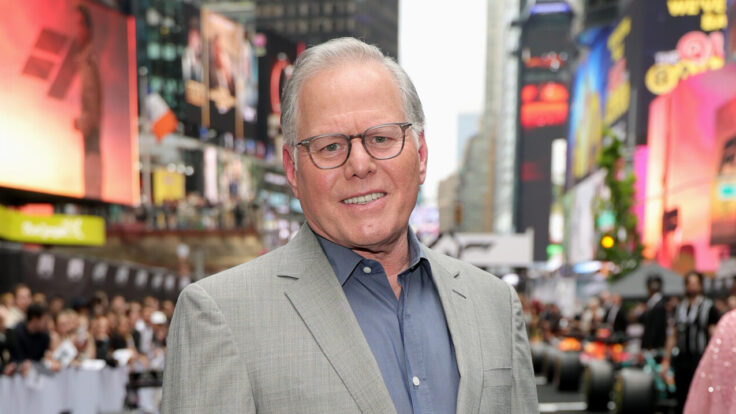
A WBD-Paramount tie up doesn’t provide David Zaslav with a ton of additional scale, nor a particularly robust streaming service. It also makes any subsequent WBD-NBCU tie up all that much harder. Still, there are factors that could help rationalize the move at the right price. First, it would give WBD rights to the NFL, the all-important linear asset, as it seeks to build up its sports business on both linear and streaming. (WBD would also take full ownership of March Madness, which it now splits with Paramount.) WBD would also fold Paramount’s entertainment library and Paramount+ into Max, combine Warner Bros. and Paramount Pictures, and no doubt identify billions in savings and synergies along the way. (Somehow, the savings afforded by these mergers rarely equate to increased shareholder value, but no matter, I guess.) |
| The News Division Collateral |
|
| One of the more intriguing storylines of a WBD-Paramount merger would be the unification of CNN and CBS News, two news organizations that have in fact been in on-again, off-again talks for more than two decades. The advantages for both sides here are pretty straightforward: CNN has the cable and digital real estate, the international business, and the vast global newsgathering infrastructure, while CBS News has the broadcast reach and 60 Minutes, the most popular show in television news. The most immediate hurdle is that CBS News is unionized while CNN is not, which gives the latter a major cost advantage.
Historically, talks between CNN and CBS News have also fallen apart over questions of editorial control, though it seems that a combined CNN-CBS News would now quite obviously fall to Mark Thompson, provided he succeeds in his stewardship of Zaz’s cable network. And, of course, this makes everything more convenient for Anderson Cooper, who already does dual duty at CNN and 60.
In the current environment, a CNN tie-up may be the best outcome a broadcast news network can hope for, other than the security NBC News derives from being part of Brian Roberts’ multinational telecom conglomerate. In any event, it’s certainly more promising than whatever future awaits ABC News once Disney divests its linear assets.
Nearly four months after Bob Iger first publicized his willingness to sell ABC in Sun Valley, Disney still has yet to determine a buyer. I’m reliably told there’s been little progress since Bloomberg revealed that there had been “exploratory talks” with Nexstar Media over the summer, and that Byron Allen had made his quixotic $10 billion offer. But such suitors provide a glimpse into just how harsh life might be outside the Magic Kingdom, without the Disney patina and marketing machine, and explain the low-lying anxiety that has gripped ABC News in recent months. No one from the house of Barbara, Peter and Diane wants to end up in Perry Sook’s local stations portfolio, not least the well-heeled GMA anchors. Of course, Sook probably wouldn't pay their eight-figure salaries anyway.
It is perhaps ironic that ABC News has arrived at such dim prospects. For the last decade, the network has been the dominant player in its field from a ratings perspective, with both the number-one morning show and nightly news broadcast. But those metrics are now almost entirely irrelevant to the industry’s digital and streaming future, and can’t insulate the division from the broader transformation of the linear business that, as I reported recently, will almost certainly necessitate further staff cuts. The real problem is that Disney never pursued a sustainable model for ABC News in the post-linear landscape. And amid all the broader macroeconomic forces, and Disney’s dismal circumstances, it no longer seems like it wants to. |
|
|
And now, some weekend reads….
- In Variety, Jason Kilar, the former WarnerMedia chief and one-time Hulu C.E.O., urges the major Hollywood players to join forces and create a scaled streaming service to rival Netflix.
- At the Post, Will Oremus & Co. go behind the scenes of Elon Musk’s X, which is hemorrhaging advertisers and revenue amid a drift into right-wing conspiracy and misinformation.
- At the Times, Meghan Twohey investigates Adidas’s willingness to tolerate Kanye West’s misconduct—and overtly antisemitic statements—for the sake of profit.
- And at the Atlantic, Conor Friedersdorf writes the email that college presidents should have sent to students about the Israel-Hamas War.
Have a great weekend. |
|
|
|
| FOUR STORIES WE’RE TALKING ABOUT |
 |
|
 |
|
 |
|
 |
| SVB Confessions |
| A former executive on the bank’s unorthodox culture. |
| WILLIAM D. COHAN |
|
|
|

|
 |
|
|
|
Need help? Review our FAQs
page or contact
us for assistance. For brand partnerships, email ads@puck.news.
|
|
You received this email because you signed up to receive emails from Puck, or as part of your Puck account associated with . To stop receiving this newsletter and/or manage all your email preferences, click here.
|
|
Puck is published by Heat Media LLC. 227 W 17th St New York, NY 10011.
|
|
|
|