Welcome back to The Varsity. I’m John Ourand, back in D.C. after a
great couple of days in jolly old England. Yes, I skipped the dinner with Trump and King Charles (next time, guys!) for Mark Shapiro and Gerry Cardinale’s IMG x RedBird Summit. In today’s issue, I empty my notebook on the dish from the Cotswolds: an update on the Formula 1 media rights negotiations, some NFL news, and the latest on YouTube’s football fantasies.
🚨 Pod alert: Fresh off of negotiating a surprising
media rights deal with Augusta National, Amazon’s head of sports partnerships, Charlie Neiman, joins the Varsity podcast this Sunday. He’ll explain how the deal came together and offer insights into Amazon’s integration of A.I. into sports production. Also, make sure to listen to yesterday’s episode: Mark Shapiro,
president of WME Group and TKO, talked about YouTube’s live sports strategies and offered a clear-eyed view of how the marketplace is expected to evolve. (Disclosure: WME represents Puck.)
Before we get started, you’d be insane if you didn’t take advantage of Puck’s fourth anniversary offer. We’re offering a 20 percent discount on Inner Circle upgrades, which is the only way you can access Julia Alexander’s must-read pieces in The Varsity every Tuesday. We’re also offering new subscribers a rare discount on an annual membership. Do you want to spend incrementally more to essentially guarantee yourself a promotion at work, or risk falling behind for good? Upgrade now!
Okay, let’s get to
it… |
Player of
the Week: Charlie Neiman
|
It takes a lot for Augusta National to bring in a new media partner. The Masters made
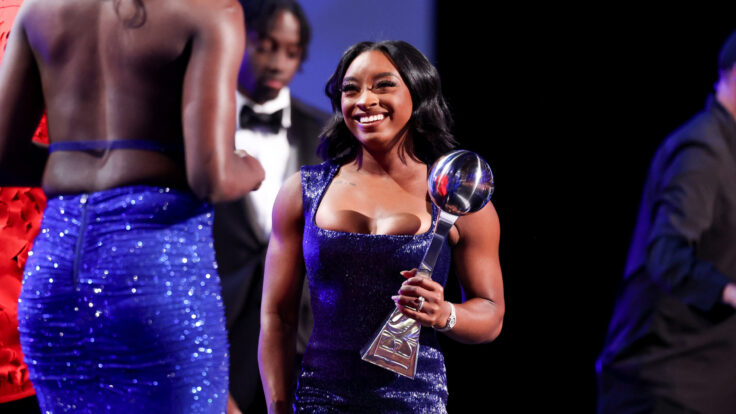
its television debut way back in 1956 on CBS. The network has broadcast every Masters since then, and completely owned the event until 1982, when an upstart cable channel called USA Network began carrying the Thursday and Friday rounds—a relationship it maintained until 2008, when ESPN took over the cable package. So when Charlie Neiman, Amazon’s head of sports partnerships, pulled off the Amazon Prime deal that was announced this week, there were golf claps all around. |
Down to
the J.V.: Tom Brady
|
Let’s agree that the NFL’s “Brady Rules” were ridiculous. Keeping Tom Brady, the
Fox analyst and minority owner of the Raiders, away from production meetings with coaches and players was pointless—NFL coaches were not about to divulge their game plans to broadcast talent, not even the GOAT. Indeed, the rules were so ineffective that the NFL put them on ice this season. But Brady’s dual role as a minority owner–broadcaster once again became an issue after he was spotted in the Raiders’ coaches booth on Monday night. Still, those Brady Rules will stay on the shelf. |
|
|
A MESSAGE FROM OUR SPONSOR |
PERFORMANCE UNLEASHED
Agile, powerful, iconic. The Range Rover Sport is a dynamic SUV with a distinct
take on sporting luxury.
EXPLORE |
|
|
- The NFL’s local story: Local TV ratings from the NFL’s Week 2 are always interesting, and often reveal red flags for markets with soft viewership. It’s important not to draw overtly broad conclusions, but there are two markets that look worrisome—and both are big ones.
Let’s start in Chicago: The 0–2 Bears saw the biggest drop-off from Week 1. Of course, some falloff was expected: The Week 1 loss was a close game on a Monday night, while the Week 2 loss was a
blowout in the early Sunday window. But local ratings dropped from 27.57 to 17.33, which is more than I expected. New York is really screwed. The 0–2 Jets fell from a Week 1 local rating of 6.5 in the Aaron Rodgers grudge match against the Steelers to a 4.47 local rating in Week 2 against the Bills, which looked like an R.S.N. baseball number. (Both Jets games were in the early Sunday window.) With both teams destined for long seasons, these numbers will be
fascinating to watch.
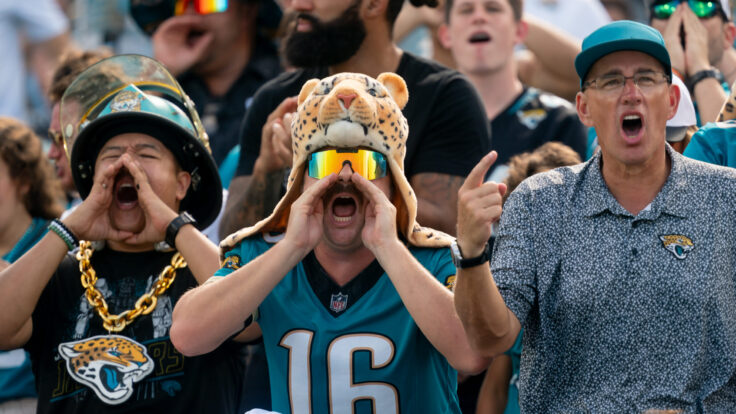
On the opposite end of the spectrum, the league is seeing surprising strength in Jacksonville. The Jaguars posted the largest increase from Week 1 to Week 2, with both games in the 1 p.m. window. A Week 1 win over the Panthers earned a 17.5 local rating in the Jacksonville D.M.A., and a Week 2 loss to the Bengals earned a 21.91 local rating. - An F1-Apple deal update: It’s been more than two months since that strategic leak
indicating that Apple and Formula 1 were close to a deal. Since then, talks have remained largely private—nothing’s been announced, signed contracts are nowhere in sight, etcetera. But sources have confirmed for me that the deal is happening. The holdup has come from some persnickety deal points, like carving out international streaming rights and reaching consensus on the tech advancements Apple plans to use for its productions.
Liberty Media president and C.E.O. Derek
Chang addressed his company’s negotiations without actually mentioning Apple at the IMG x RedBird Summit this week, noting that he’s most interested in collaborating with companies that will invest in the sport. “As we think about it, your ability in the U.S. to have a media partner that can also influence what happens globally is important, too, because of the global nature of [F1],” he said.
Chang referenced his past life running NBA China—the league’s largest foreign market,
to be sure, but one that only contributed 5 percent of revenue. “From a Formula 1 standpoint, the U.S. is one of many markets. It’s an important market because of its size. And it’s an important market because, historically, we haven’t penetrated it well. But we have more recently, with the races [in U.S. markets], with shows like Drive to Survive, with the movie, the sponsorships, the licensing deals. … This is almost a 360 sort of concept in terms of how we’re trying to reach into
that market, and, of course, the media deal is part of that.” - YouTube’s NFL play: By now, we all know that 18.5 million U.S. viewers and 1.2 million global fans tuned in for YouTube’s first NFL broadcast, on September 5, from São Paulo, Brazil. And while YouTube executives have attested that they were happy with those numbers, Justin Connolly took the enthusiasm to a new level in the Cotswolds. YouTube’s global head of
media and sports, who recently and infamously changed out his Disney jersey, said that YouTube saw increased engagement on football content across the board—from NFL creators to Sunday Ticket, which is offered exclusively on YouTube TV. “We loved being in that Friday window, especially ahead of the Sunday opening when we are a Sunday Ticket rights-holder,” Connolly said. “We will continue to look at ways where we can create this sort of virtuous cycle of creator content that lives
around the NFL, the rights that we license on Sunday Ticket, and the ability to elevate an event for the kickoff of the season.”
YouTube executives were relieved they didn’t run into any technical problems or buffering issues with such a big audience. “It was really a test case for the platform and the stability of the platform to do live at scale,” Connolly said. - Fight night with Dana White for $350,000: When Endeavor bought On Location from
the NFL five years ago, the hospitality provider essentially focused on selling Super Bowl experiences to corporate brands and high-net-worth individuals. Fans gained entry to parties, events, and field access before and after the game––something that WME Group and TKO president Mark Shapiro called money-can’t-buy types of experiences.
On Location, now run by TKO, has been upping the ante ever since in order to keep pace with fans’ willingness to pay exorbitant sums for
Instagrammable experiences. Speaking at the IMG x RedBird Summit, Mark said, “Imagine saying to Roger Goodell 10 years ago, or [Paul] Tagliabue 20 years before that, ‘Okay, now after the cheerleaders run out at the Super Bowl, but before the players, we’re going to have a golf cart come out onto the field—just a quick little dipsy doo, with 10 people drinking in concealed containers, and screaming, and yelling, and then they peel off to
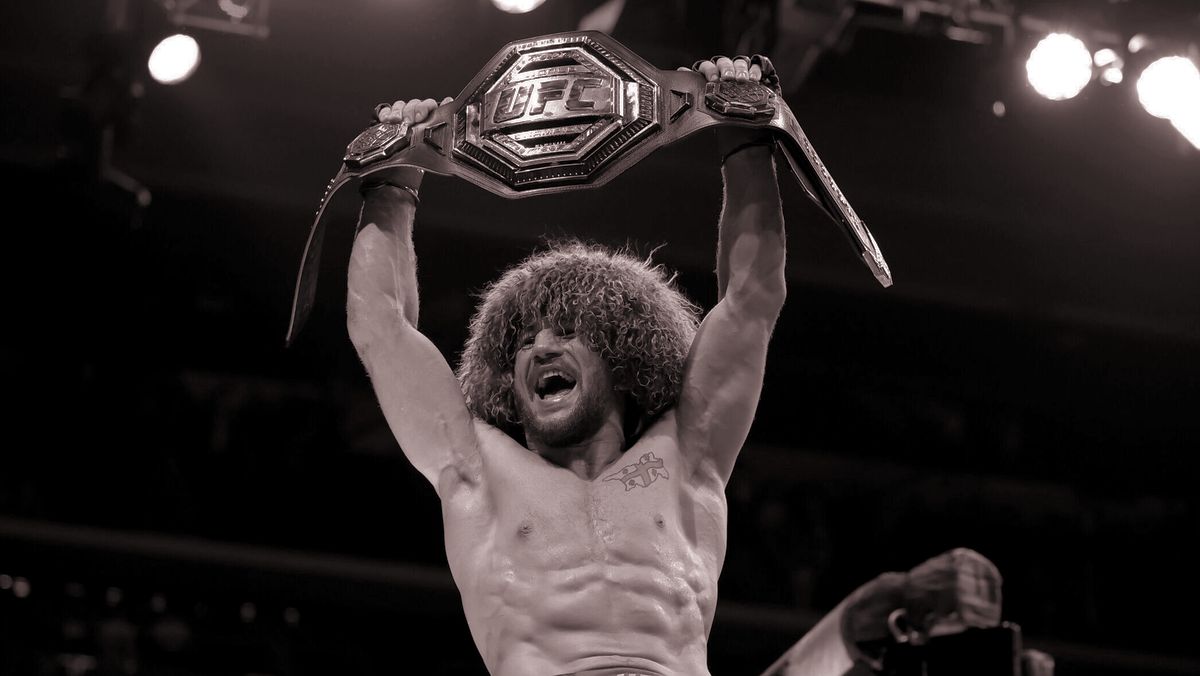
the sideline. And for that, they’re each going to pay $85,000.’ I’m barely exaggerating. And with that is going to come the ticket, food, travel. Guess what? That’s happening now at the Super Bowl. It’s not just sitting on the 50-yard line, eating and drinking. You get to take a picture of the Super Bowl trophy, and go on the field after the game, where the winning players are onstage. Yes, that’s happening. It’s sitting right next to Dana White for three fights of a UFC fight
card for $350,000.” - Bill Cohan on Paramount’s WBD play: In his can’t-miss private email, Dry Powder, where he expertly covers the power and personalities on Wall Street, my Puck partner Bill Cohan gamed out Warner Bros. Discovery C.E.O. David Zaslav’s options in
light of Paramount’s unsolicited bid for his company. In short, he could sell now or try to entice another bidder after splitting up the company next year. “Netflix might be interested in Zaz’s streaming & studios business, which would be split off from the mothership under the plan that will take effect next April,” Bill wrote. “But Zaz would need to convince his board and WBD shareholders that there would be more value coming from the split than from the Ellisons [right now].
… That’s a tough argument, especially given the increase in the WBD stock.”
Bill continued: “In any case, it’s going to be a rough process for Zaz, even with his M&A street cred and his hopes to gin up a serious auction. ‘No investor we have talked to believes WBD C.E.O. David Zaslav and the WBD Board of Directors could vote no on a Paramount bid, assuming a $20+ [per share] offer, with the vast majority in cash (leveraging the Ellison family fortune),’ Rich Greenfield
wrote on Monday. He doesn’t even think Comcast or Disney or Fox can compete with Larry Ellison. … Yes, Rich conceded that there was a post-split bidding war argument. And, of course, he noted that Zaz does visibly love his Polo Lounge status. ‘We simply do not believe Zaslav wants to sell now and give up one of the most coveted jobs in Hollywood, especially when he feels he is on the cusp of unlocking shareholder value through the split,’ Rich continued. ‘Not to mention,
Zaslav’s belief that while it has taken time for his management changes to positively impact studio results, it is finally starting to happen.’ But, in the end, Rich knows what has to happen here, assuming the Ellisons are serious. ‘Take the money and run,’ he concluded. He’s not wrong.”
|
|
|
Even with Netflix, YouTube, and Amazon dangling global deals, TKO is betting on
its in-house partner IMG and U.S. cash. |
|
|
When TKO was marketing its UFC rights this year, the streamers naturally showed a lot of interest.
After all, UFC represents the sweet spot of the modern sports media market—it’s eventized, not subject to rainouts or other vagaries, and satisfies the erogenous zones of the political zeitgeist. Unsurprisingly, Netflix, YouTube, and Amazon showed interest and offered something that the legacy players couldn’t—a single, all-encompassing deal that would extend UFC’s brand around the world.
Globalized streaming services have been differentiating themselves for years, especially
with top leagues. The NBA is partnering with Amazon, in part, to leverage the unbordered hegemony of Prime. Yes, the NFL ostensibly likes the notion of broadcasting football to Americans on a national holiday when many are hungover or lingering through food comas, but it also partnered with Netflix for its Christmas games on account of the company’s worldly reach. And leagues are tempted by these international deals not only for the audience development capacity, but also because one major or
overall deal with a global streamer can eliminate the costs and tedious time obligations of negotiating foreign rights deals in individual countries or territories. Imagine all the lawyers and BA executives they no longer need. |
|
|
A MESSAGE FROM OUR SPONSOR |
PERFORMANCE UNLEASHED
Agile, powerful, iconic. The Range Rover Sport is a dynamic SUV with a distinct
take on sporting luxury.
EXPLORE |
|
|
But TKO may be in a different boat, and demurred when those streamers made their pitch for UFC
rights. Yes, it obviously helped that David Ellison and Paramount eventually offered a seven-year, $7.7 billion deal for U.S. rights alone—too good for UFC to refuse. But TKO also had confidence that IMG, its portfolio company with deep experience negotiating international deals, could secure significantly more revenue by managing those regional negotiations internally. “Philosophically, the key to global distribution is localization,” said Hillary
Mandel, a senior IMG executive, speaking at this week’s IMG x RedBird Summit. “That’s where most properties have seen growth, so it feels more difficult to put your property on one platform to go and cover the world.” |
The internationalization of the U.S. sports economy was very much the topic du jour at the IMG x RedBird Summit in the Cotswolds. Perhaps it’s because executives were marooned in the English countryside, or maybe it was on account of the fact that F1, the internationalist racing series, is finally closing in on its Apple TV+ deal. Either way, days of panels and fireside chats revealed that various companies in the ecosystem are considering the opportunities through competing perspectives.
Indeed, as the sports media market balkanizes, executives are quick to point out that there are
many royal roads—and each league and platform often has a slightly different priority based on their business model. Justin Connolly, YouTube’s global head of media and sports, made the case that properties without IMG’s international sales experience would be more likely to pursue a global strategy with a U.S.-based streamer. Of course, he was talking his own book (it’s a conference, people!), but various trend lines do point in that direction, particularly when
looking a decade out. At that point, though, the question will be whether the world’s largest streamers are willing to pay more than the legacy companies that view sports as an existential programming issue. “That’s a decision that the rights-holder ultimately has to make. But if they wanted to turn on a global rights solution, there are ways to do that today that didn’t exist 10 years ago,” he said.
The market for U.S. sports rights has become so mature that it drives the business
abroad. WME Group and TKO president Mark Shapiro, Mandel’s big boss, pointed to the growth of the English Premier League, which NBC has through the 2027-28 season. (U.S. mediacos are already eyeing the renewal…) NBC’s EPL coverage boosted the growth of other soccer events, like the Euros and World Cup. Would it make sense for one media company to hoover up all these rights? Domestically? Internationally? As my partner Julia Alexander has pointed out
ceaselessly, each mediaco has its own objective—tonnage versus events; churn alleviation versus advertising—and the result is that the viewing experience reflects the splinterization of the rights marketplace. But, whatever, the money is flowing all around, at least for now. “Having said that, we have a billion TKO fans, and the majority of those fans are outside the U.S. The majority of our economics are in the U.S., but outside is where our superfandom is,” Shapiro said, clearly comfortable in
his decision to take a guaranteed domestic check and hunt for foreign dowries.
WWE president Nick Khan highlighted the potential for growth in international markets, noting that when he learned Salt Lake City was paying TKO around $3 million to host an event, he realized WWE was leaving money on the table. (Khan also works for Shapiro.) “I looked at our current WrestleMania deal, and we were getting around $150,000 for WrestleMania, and what I call ‘posters around the
city’—otherwise known as value-in-kind,” Khan said. “So we got an economic impact report, and got into the subsidy business.”
Since then, WWE has held events in Cardiff, Wales; London; and Paris, with Italy on deck for next year, and then Riyadh, Saudi Arabia, for WrestleMania in 2027. But scheduling remains a hurdle because of the discrepancies with all the different time zones. “The bottom line is you’re never going to get a time zone that works for everybody,” Shapiro said. “One of my
biggest mistakes at ESPN, when we first got the NBA [China], was convincing David Stern and Adam Silver that we had to move the NBA Finals earlier. The 9:06 p.m. starts were killing us. … We went back to 8:30, and we got pummeled in the ratings. When you start talking about events being global in nature, it just gets even harder on the time zones. But you have to adjust.” |
On cord-cutting: “I’m 43 and grew up on Long Island with only an antenna on the
roof of my parents’ house. I didn’t have cable until my college dorm room. So in my lifetime, I’ve watched sports via antenna exclusively, then cable exclusively, then satellite exclusively, then cable again, and now streaming exclusively (just canceled YouTube TV in favor of stand-alone apps). I watched Giants–Cowboys this weekend like I have since I was a child, but I did it on Fox One. I think keeping sports on broadcast ensures both reach and youth, as it allows it to be delivered
by all three methods (broadcast, cable/satellite, apps) and get the most eyeballs possible.” —A Varsity subscriber
On Man United’s financial woes: “I think the Glazers care about the club, but this isn’t the NFL, where the draft can save you. They bled the asset dry, appointed non-football admin people to run the football side of things, and let the infrastructure age badly, something Sir Jim Ratcliffe is hoping to address. Still, United
remains the biggest name in town. Turn on any sports channel, read any news, listen to the radio or podcasts—incredible amounts of time and negativity are spent on the club. The Cowboys comparison always feels lazy to me, as Jerry Jones courts publicity more aggressively, and the Glazers hate the attention (one of the reasons they were happy for the investment). I am stunned there was not more interest in the club, because the path to a $10 billion valuation is there and can be
achieved sustainably with the right plan, and it’s still one of the crown jewels in the sporting world.” —A British Varsity subscriber
On Jimmy Kimmel: “What has happened to Bob Iger?” —A journalist |
Have a great weekend. See you Monday.
John |
|
|
Finally, a media podcast about what’s actually happening in the media—not the oversanitized,
legal-and-standards-approved version you read online. Join Dylan Byers, Puck’s veteran media reporter, as he sits down with TV personalities, moguls, pundits, and industry executives for raw, honest, sometimes salacious conversations about the business of media and its biggest egos. New episodes publish every Tuesday and Friday. |
|
|
An essential, insider-friendly Hollywood tip sheet from Matthew Belloni, who spent 14 years in the trenches at
The Hollywood Reporter and five before that practicing entertainment law. What I’m Hearing also features veteran Hollywood journalist Kim Masters, as well as a special companion email from Eriq Gardner, focused on entertainment law, and weekly box office analysis from Scott Mendelson. |
|
|
Need help? Review our FAQ page or contact us for assistance. For brand partnerships, email ads@puck.news. You received this email because you signed up to receive emails from Puck, or as part of your Puck account associated with {{customer.email}}. To stop receiving this newsletter and/or manage all your email preferences, click here. |
Puck is published by Heat Media LLC. 107 Greenwich St, New York, NY 10006
|
|
|
|