{{ 'now' | timezone: 'America/New_York' | date: '%b %d, %Y' }} |
|
|
Greetings from Los Angeles and welcome back to In the Room.
In tonight’s issue,
news and notes on Jim Bankoff’s potential plan to spin off the Vox Media Podcast Network, and what it reveals about the industry’s broader transition from titles to talent-based franchises. Speaking of which, what does this pivot mean for New York? Plus, some observations on Michael Wolff, Mathias Döpfner, and the latest BBC drama.
🍸 On the latest edition of The Grill Room, Puck’s resident A.I. expert,
Ian Krietzberg, joined me to size up the transformative technology’s takeover of the media business—how it’s rewiring audiences, destabilizing trust, and threatening to drown the news in algorithmic sludge. The good news: He also argued that exclusive content and credibility are the key to survival. Follow The Grill Room on Apple,
Spotify, or wherever you prefer to listen.
Mentioned in this issue: Brian Roberts, David Ellison, Jim Bankoff, Michael Wolff, Mathias Döpfner, Mike Bloomberg,
Mike Cavanagh, Jay Penske, Pam Wasserstein, Esther Perel, Kara and Scott, and many more…
Let’s get started… |
- The Wolff at Trump’s door: My old boss Michael Wolff has found himself near the center of the Trump-Epstein drama thanks to a pair of emails released by House Democrats on Wednesday. In one 2019 missive, Epstein told Wolff that Trump “knew about the girls” and asked Ghislaine Maxwell “to stop.” In an earlier exchange, during the night of a 2015 Republican primary debate, Wolff warned Epstein that CNN was
“planning to ask Trump tonight about his relationship with you—either on air or in scrum afterwards.”
In response, Epstein floated the idea of crafting a retort for Trump. Wolff, however, offered countermanding advice. “I think you should let him hang himself,” he emailed. “If he says he hasn’t been on the plane or to the house, then that gives you a valuable P.R. and political currency” that could be used to “hang him” later or “save him, generating a debt.” On the other hand, Wolff
added, “it is possible that, when asked, he’ll say Jeffrey is a great guy and has gotten a raw deal and is a victim of political correctness, which is to be outlawed in a Trump regime.” (Wolff addressed the emails in an Instagram video on Wednesday but did not comment on his own correspondence with Epstein. White House press secretary Karoline Leavitt dismissed the
“selectively leaked emails” as an attempt to “smear” the president.)
Wolff isn’t the only journalist implicated here. In another tranche of emails, then-New York Times journalist Landon Thomas Jr. appeared to tip Epstein off to an investigation that another journalist had been conducting into his history. In another email, Epstein asked Thomas whether he “would ... like [photos] of donald and girls in bikinis in my kitchen.” (Thomas has yet to
address the emails.) - So much drama at the BBC: BBC director general Tim Davie and BBC News chief Deborah Turness resigned this week after a leaked memo alleged that the British broadcaster had deceptively edited Trump’s January 6 speech for a documentary that aired last October. The president has now threatened to sue the BBC for $1 billion, which has given this the appearance of another 60
Minutes–style editing scandal. But, as the Times’s Mark Landler has noted, the turmoil is really a byproduct of the U.K.’s own combative politics: Like NPR in the U.S., the publicly funded BBC is “a perennial football in Britain’s political contests.”
There is some business intrigue here, too. In order to offset revenue declines
in the U.K., where the broadcaster is supported by a diminishing number of households, Davie had been championing an ambitious subscription strategy in the U.S. Earlier this year, the BBC launched its first-ever U.S. paywalled video service. Setting aside the viability of that plan, the BBC at least had the advantage of being widely perceived by Americans as among the most trustworthy news sources. This scandal, and Trump’s subsequent attacks, threaten to upend that legacy at a moment when the
BBC needs U.S. audiences more than ever. Maybe this is a turnaround job for Mark Thompson whenever he decides to leave CNN. - Döpfner dreams: While on the topic, Axel Springer C.E.O. Mathias Döpfner has “mused privately … about buying CNN if it is eventually spun out from Warner Bros. Discovery,” per Semafor’s Max Tani. “He has also said he is interested in buying Bloomberg Media if it is decoupled from
Bloomberg’s financial information business when founder Michael Bloomberg exits the company.” Tani added that Axel Springer’s “top target internally is The Wall Street Journal, should the company ever be able to pry it out of News Corp’s hands.” Those are… very different acquisition targets that would require different playbooks! And also a lot of money that the company would presumably have to raise from the private-credit markets. But, hey,
a guy can dream. Good luck to him.
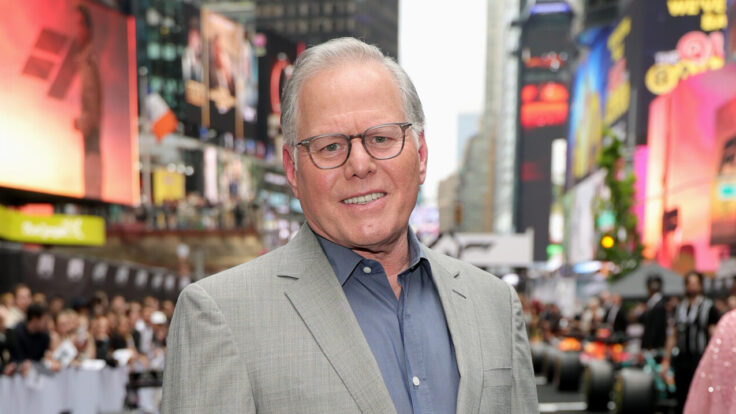
- And finally… This week marked David Ellison’s inaugural earnings call as chairman and C.E.O. of Paramount Skydance. As my partner Bill Cohan observed in his latest excellent issue of Dry Powder, the younger Ellison displayed a veteran facility with
corporate pablum and deflection and a little deal-heat jujitsu. “There’s no must-haves for us,” Ellison said when pressed on PSKY’s very public courtship of Warner Bros. Discovery. As Bill noted, the remark was imbued with deal implications and negotiating brinkmanship, given that he has already made three failed bids for WBD. “We really look at this as buy versus build, and we absolutely have the ability to build to get to where we want to go,” Ellison continued. “We believe we can achieve our
goals with our creative content engines.”
As for M&A, Ellison said, “Everything for us is going to tie back to: Does it accelerate those three core principles? For us, we’re fortunate that we have the balance sheet to be able to be opportunistic when we think that M&A will accelerate our goals. But we’re also long-term disciplined owner-operators.” In reality, Bill wrote, this is “an elaborate game of M&A poker, with the requisite bluffs. Zaz is meeting with Comcast executives,
undoubtedly hoping to gin up interest from Brian Roberts and Mike Cavanagh,” for whom WBD is beginning to look like a must-have. “And what better way to make the Ellisons antsy than by making it known that Zaz and Brian Roberts are talking, and that Brian has hired both Goldman Sachs and Morgan Stanley to advise him on a possible deal?” [Read More]
As always, make sure you never miss an issue of Dry Powder. Add it to your inbox here.
|
|
|
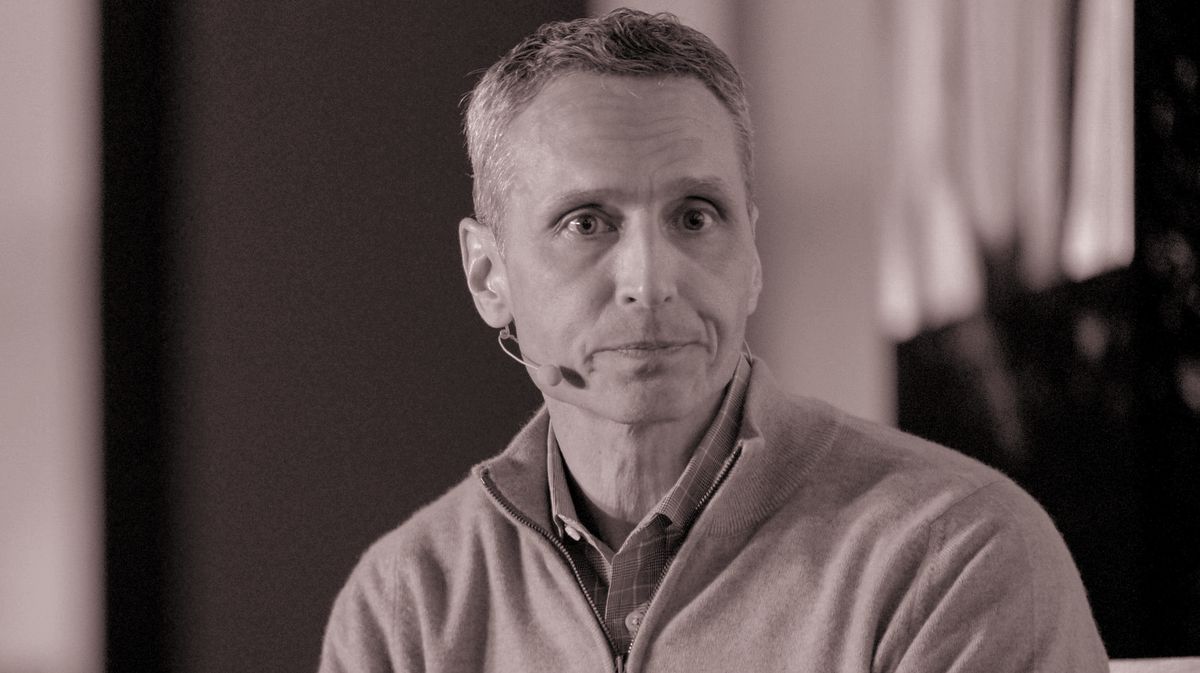
Jim Bankoff is considering a spinoff of Vox’s faster-growing podcast network from
its legacy publishing business. While it makes economic sense-ish, what does it mean for the future of brands like SB Nation, The Verge, and… New York? |
|
|
A few months ago, I invited Vox Media C.E.O. Jim Bankoff on my podcast, The
Grill Room, to hear his vision for the future of his once-trailblazing company. A decade earlier, of course, Vox had achieved a $1 billion valuation as part of the generation of traffic- and scale-driven media startups. Alas, the balloon eventually and famously deflated: Vice went bankrupt; BuzzFeed is currently valued below $40 million on
the public market. And, hell, they’re doing a lot better than the rest. The Huffington Post is now a subsidiary of BuzzFeed. Remember Mic? PandoDaily? It was a Wild West of eager V.C.s and opportunistic entrepreneurs, and no one made real money besides Henry Blodget.
But Bankoff was always considered the adult in the room during the digital media era, and often for good reason. He was a far more competent C.E.O. than Shane Smith or
Jonah Peretti, and he managed to acquire and build a portfolio of solid mid-market brands—some of which, like The Verge and Vox, generated real market momentum. The company’s 2019 acquisition of New York magazine and its own portfolio of digital sub-brands signaled that he was committed to try to build out the sort of Time Inc. for the consumer internet era that he’d promised his investors. Subsequent, slightly head-scratching deals followed: Punch and Group
Nine, which moved The Dodo under Vox rule. And yet no executive engineering can outrun secular economics. In 2023, Bankoff sold a 20 percent stake in Vox to Jay Penske’s Penske Media Corporation that valued the company at half its high-water mark.
It now seems like Vox Media might finally be coming to the end of that road—or at least to a juncture that will fundamentally alter its business and identity. Throughout our conversation, Bankoff repeatedly touted the Vox Media
Podcast Network as the company’s central growth engine. The podcast business was “on fire,” he told me, and was a “more lasting and durable medium … than social or even websites at this stage.”
At the time, I took note of Bankoff’s vibe shift, which jibed with his recent sale of Polygon, one of his portfolio brands. This week, Axios’s Sara Fischer broke the news that Bankoff and the Vox board have discussed spinning off their podcast network entirely and separating it
from the publishing business. Those discussions, which sources confirmed, could affect all aspects of Vox’s business, from Pam Wasserstein’s New York to Kara and Scott’s Pivot podcast.
Bankoff’s own pivot reflects a renewed surge of interest in the podcasting space—especially amid the growth of video podcasting on YouTube and Spotify, and new appetite from major players like Netflix—as well as a broader transformation of
the business toward talent-based franchises. (Ahem.) Bankoff told me that Vox could offer talent a full suite of services, from distribution to advertising, events, subscriptions, and even commerce and merchandise. This may revolve primarily around podcasts, but Bankoff thinks of the future business as “an A.P.I. stack that [creators] can plug into.” |
However it’s defined, this stand-alone business would certainly be valued at a higher growth
multiple than the declining publishing entity. As one media banker explained to me, it would also offer Bankoff a much more appealing universe of potential buyers. Meanwhile, sources said Penske is already interested in taking the publishing assets off of Bankoff’s hands and adding them to a portfolio of once-august brands that includes Rolling Stone, Variety, The Hollywood Reporter, SXSW, and Dick Clark Productions. (Penske Media did not comment.)
This split
may indeed be the best-possible exit for Vox, though there are reasons to be dubious about how it plays out on both fronts. The current frothiness around podcasting and talent-based franchises is driven in part by the appeal of low overhead—give a couple talking heads some mics and computers, and you can potentially build a massively lucrative advertising and events business. The trouble is that, much like the magazine industry itself, even hit podcasts rarely generate the profit
margins that can subsidize a broader slate of less-popular shows. Also, it’s worth noting, hits are the exception in the podcasting industry, not the rule.
As it stands, even Vox’s marquee talents—Kara and Scott, Esther Perel, etcetera—still exist in that liminal space between niche stardom and true celebrity. That’s fine for their own personal economics, but it’s not enough to sustain the lesser-rated podcasts hosted by the likes of, say, Preet
Bharara or Andy Roddick, or especially a Cynthia Graber or Nilay Patel. Bankoff has structured his talent deals to incentivize performance: In May, he re-signed Kara and Scott to a four-year deal that entitles them to 70 percent of their revenues with no money upfront. Not only does this cap Vox’s potential upside, but it also doesn’t solve for the broader portfolio challenge.
As for the publishing business, well… one need only
look at Penske’s existing titles to get a sense of the trajectory a magazine like New York might take under his watch. New York can still punch above its weight to achieve some vestige of the cultural power it once had under Clay Felker and then revived in the storied Adam Moss years—defining the city and its inhabitants in a piece about, say, the “West Village Girls.” Alas, in an era of hyperspecialized media fragmentation and increasingly
rare monocultural eruptions, New York might be both too niche and not niche enough. In any event, if Rolling Stone or THR are any guide, one imagines that a PMC-owned New York would drift further still from its place in the media firmament.
Are you depressed yet? Don’t be! Indeed, the Bankoff spin is probably more evidence for his reputation as a clear-eyed executive. He presumably took a nice chunk off the table during the $200 million capital raise
from NBCU in 2015, and isn’t incentivized to extend the journey any longer. You might even imagine that he could stick around to help the spin and then hand the podcasting business over to Ryan Pauley, Vox’s president of revenue and growth, who has been considered future C.E.O. material and will then get his shot at a liquidity event.
In so many ways, the Vox journey embodies the complex, shape-shifting, and schizophrenic brief history of the digital media industry—the
decade-long journey from unicorn status to acquirer to Penske target and splitco. And you’ve got to give Bankoff credit for staying in the game. |
|
|
A professional-grade rundown on the business of sports from John Ourand, the industry’s preeminent journalist,
covering the leagues, players, agencies, media deals, and the egos fueling it all. |
|
|
Puck founding partner Matt Belloni takes you inside the business of Hollywood, using exclusive reporting and insight
to explain the backstories on everything from Marvel movies to the streaming wars. |
|
|
Need help? Review our FAQ page or contact us for assistance. For brand partnerships, email ads@puck.news. You received this email because you
signed up to receive emails from Puck, or as part of your Puck account associated with {{customer.email}}. To stop receiving this newsletter and/or manage all your email preferences, click here. |
Puck is published by Heat Media LLC. 107 Greenwich St., New York, NY 10006 |
|
|
|