|

|
|
Welcome back to In the Room, I’m Dylan Byers.
|
|
Tonight, we go behind the scenes of Will Lewis’s inaugural address to the Post newsroom, as well as the internal deliberations over Sally Buzbee’s fate as executive editor—a subject my colleague Peter Hamby and I will expound upon in tomorrow’s edition of The Powers That Be podcast. Plus, some notes on Disney, Iger, and the irrepressible Kevin Mayer.
|
|
When Will Met Sally
|
|
News and notes on Will Lewis’s maiden voyage at the Post and Kevin Mayer’s return to the podium.
|
|
|
|
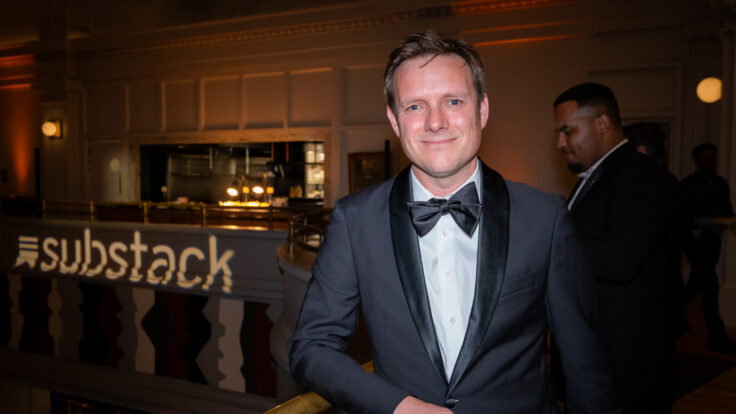
| Will Lewis, the newly appointed publisher and C.E.O. of The Washington Post, was midway into his inaugural meeting with staff on Monday when he was asked by one employee if he could reverse the company’s recent decision to cut 240 jobs, or roughly 10 percent of the workforce. The question alone seemed to evidence significant rank-and-file indifference to the business considerations of the for-profit, privately owned company. After all, the Post is suffering from $100 million in annual losses after years of editorial ennui and financial mismanagement. Lewis’s first order of business, as mandated by his new boss Jeff Bezos, is to return the company to profitability.
With admirable frankness, made more palatable by his British timbre, Lewis said that no, he could not undo the cuts. Later in the conversation, he emphasized the point by clarifying that he was “supportive of the actions that are being taken.” He continued: “They are painful, but I’m supportive of it.”
The exchange was indicative of the challenges Lewis will face as he seeks to restore “swagger” (his word, borrowed from Bezos) to a paper that started churning subscribers, hemorrhaging ad revenue and scaring off talent almost from the moment that Donald Trump and Marty Baron left their respective offices, in Q1 2021. Lewis did a lot to ingratiate himself with his new staff: He spoke about his love of journalism, and family, and was by all accounts charming, enthusiastic and mostly straightforward (there are certain aspects of his history under Murdoch he’d rather not elaborate on). |
|
A MESSAGE FROM OUR SPONSOR
|

|
The National Association of Blacks in Criminal Justice strongly opposes the Biden Administration’s proposed ban on menthol cigarettes. The unintended consequences of the ban, including higher incarceration rates and increased police interactions, will be disproportionately borne by people of color. Law enforcement resources and justice systems are already at a breaking point and the ban will only add to the strain. As an organization dedicated to improving the administration of criminal justice, we know the menthol bad is simply bad policy. Consumer education and health care are key to reducing smoking rates - not criminalization. We urge you to join us in telling the Biden Administration to stop the menthol ban. Learn more.
|
|
|
| But he certainly left no ambiguity about the challenges ahead: “We’re not in a place that we want to be in, and we need to get to that place as fast as we can,” Lewis told staff. “I think we’ll all feel a lot better, particularly with regard to the independence of our journalism, when we’re a self-sustaining company.”
Of course, the most important factor in the Post’s turnaround effort will be the strength of its editorial product. Last month, around the time I first identified Lewis as one of two finalists for the position—and, subsequently, as the presumptive C.E.O.—I noted that one of the most important questions facing the next chief executive would be deciding whether to appoint a new executive editor. Sally Buzbee, the Associated Press veteran who took over for Baron in 2021, has long been described by colleagues as a collegial editor and a great partner, but many Post sources also say she lacks the vision, heft, and leadership qualities required to restore the paper to greatness. And that has become all the more clear to people now that she is no longer able to blame the paper’s woes on former C.E.O. Fred Ryan (which she did frequently).
In private meetings, both Bezos and Patty Stonesifer, the interim C.E.O. who led the executive search, have intimated that Buzbee’s future at the paper is an open question, sources who spoke with them said. Bezos’s first order of business was to identify a new publisher and C.E.O. who could presumably make that decision for him. In an ideal scenario, Bezos and Stonesifer hoped a more amicable publisher-editor relationship could buoy Buzbee’s leadership of the newsroom; in a worst-case, Buzbee could be delicately offboarded and replaced with a new editor of the C.E.O.’s choosing (following the customary Bezos meet-and-greet in Kalorama).
But there are no illusions at the highest levels about her responsibility for the cratering digital traffic and dismal engagement, not all of which can be blamed on Ryan or broader trends in post-Trump news avoidance. The Post’s growing lethargy is an increasingly open topic in media circles, much like the decline of Vanity Fair after Graydon Carter’s retirement from the perch years ago.
In an interview with the Post, Lewis described himself as “a huge fan” of Buzbee, whom he knew from his role as a board director at the Associated Press. He also said he was “100 percent” committed to her remaining in the job. And yet, that note of support may also contain elements of a dodge. Even if he did decide to move on, it’s almost impossible to fathom that Lewis would move to replace Buzbee until after the 2024 election anyway, unless he were to bring back a Kevin Merida type who already knows the Post inside and out. (Asked about Buzbee’s future at the paper, a Post spokesperson referred me to Lewis’s comments.)
Lewis, after all, is a seasoned media pro, not an Al Haig-style leader. The tone and tenor of his introductory meet-and-greet with the newsroom is likely a harbinger of what’s to come from a results-driven, high-E.Q. chief executive, who knows firsthand how the newsroom rumor mill works: He’s going to dig in, learn the business’s challenges, and figure out what he needs to do to solve them before even turning to editorial. (He’ll have his hands full.) So Lewis’s full-throated commitment to Buzbee, while sincere for the time being, might have a statute of limitations.
Lewis does not officially start until January, and like all new media C.E.O.s, he will be afforded some time to familiarize himself with the furniture. “My plan is to arrive and for us to together craft an extremely exciting way forward,” he said, “but I have to get to know you all to validate some early thinking and to hear your thoughts.” In the meantime, Lewis’s chief preoccupation will be on profitability, or “monetizing our world-class content,” as he put it, because “we don’t give people enough opportunities to give us money for our journalism.” |
|
|
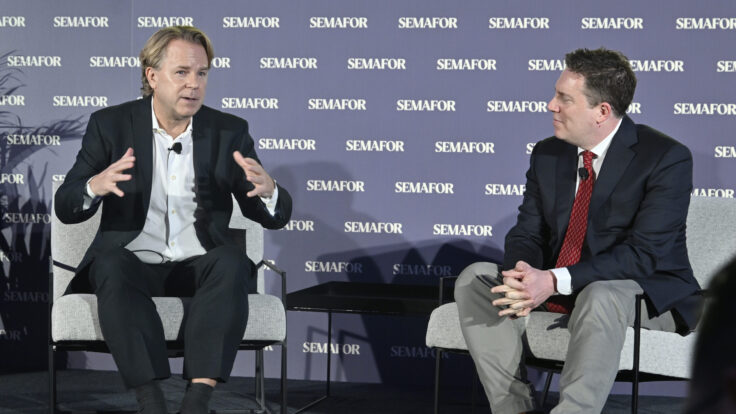
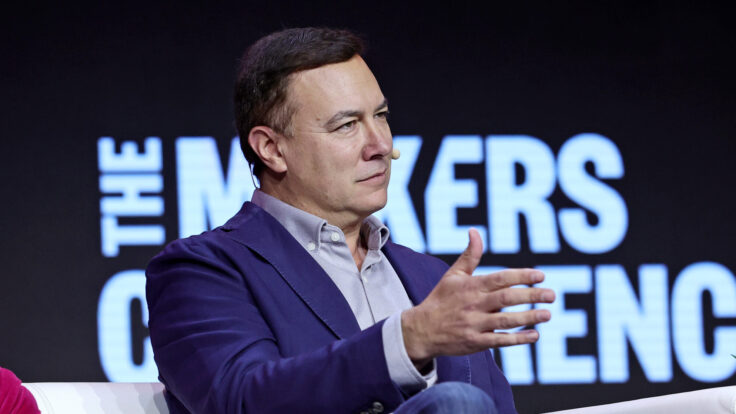
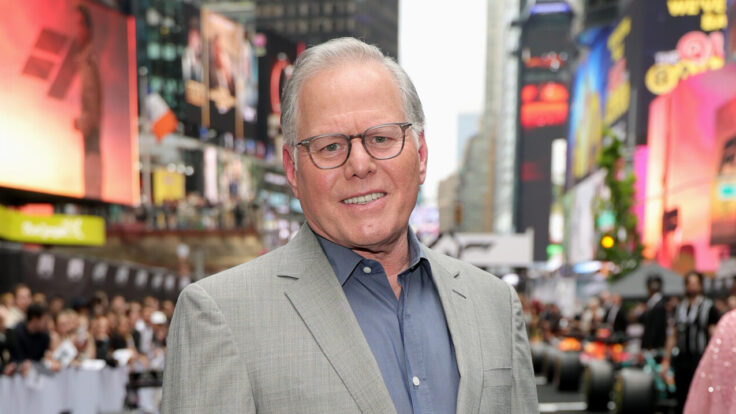
| On Tuesday, one day before Bob Iger announced some desperately needed positive quarterly earnings, his friend Kevin Mayer took the stage at the Yahoo! Finance Invest conference to wax poetic on the myriad challenges facing Disney, where Mayer currently serves as a “strategic adviser,” presumptive dealmaker and, presumably, therapist. Part of the reason for Mayer’s return, as I reported in August, was Iger’s longing for the former brain trust that supported him during his exalted first run atop the company. “He needed part of his team back,” Mayer said on Tuesday, confirming as much.
Mayer didn’t say much else that was altogether surprising. He reiterated Iger’s commitment to ESPN, which is showing impressive growth and engagement; confirmed that the rest of Disney’s linear channels are likely to be spun off or sold; and defended Iger as a disciplined and strategic C.E.O. who will weather this turbulence and “pick a great successor”—though Mayer demurred when asked whether that successor would be him. But his very presence onstage was a reminder of the unpredictable twists that his career has taken in the past few years as he has toggled from ascendant Disney executive to, briefly, the C.E.O. of TikTok, then a Blackstone mini-roll-up baron, and now back to ascendant-ish Disney adviser. |
|
|
| I’ve said it before, but one of the great mysteries of Mayer and Tom Staggs’ return to Disney is that it was allowed to happen at all. The two Disney alumni and prospective heirs to Iger’s throne are, of course, cofounders and co-C.E.O.s of Candle, a Blackstone-backed media company that owns Reese Witherspoon’s Hello Sunshine and René Rechtman’s Moonbug, among other assets. Why Blackstone was okay with the Candle team breaking from their duties to assist the competition at Disney, effectively letting its equitized portfolio company leaders offer advice outside its walls, is a question that continues to perplex the crowd at Craig’s and the Disney Rotunda. Mayer is also a co-founder and managing partner at Smash Capital, a late-stage tech investment firm, and until recently was chairman at DAZN.
All these companies are operating in the same or adjacent spaces. Moreover, one doesn’t usually see a “strategic adviser” or consultant go onstage to talk about what his or her clients are up to while simultaneously floating the sale of his own media company to private equity. “Who knows,” Mayer joked, “maybe KKR owns us in three years.”
On some level, all this is a testament to the irrepressibility of a remarkably hardworking and productive media executive who only knows one speed: pedal to the metal. Many would-be Disney C.E.O.s have ventured off into the relative obscurity of lucrative side hustles and passion projects. Mayer has kept himself not just at the center of the media conversation—TikTok, DAZN, Candle, etcetera—but also at the very center of the company he ostensibly left behind, speaking publicly on its behalf, and at least in the mix for succession. And all without falling out of the good graces of Steve Schwarzman and Jon Gray, even as Candle’s own performance comes under greater scrutiny. On Monday, Bloomberg reported that Candle’s earnings were expected to come in 50 percent below forecasts.
What remains elusive is Mayer’s endgame. He obviously has remarkable energy and wants to stay in the mix, and he obviously wants the money required to afford the lifestyle to which he has become accustomed. But one also gets the sense that he’s pursuing unfinished business—that he still resents being passed over for Bob Chapek, and that he’s looking for a way back to power, to Iger’s approval, and to the ultimate brass ring. |
|
|
|
| FOUR STORIES WE’RE TALKING ABOUT |
|
|
|

|
 |
|
|
|
Need help? Review our FAQs
page or contact
us for assistance. For brand partnerships, email ads@puck.news.
|
|
You received this email because you signed up to receive emails from Puck, or as part of your Puck account associated with . To stop receiving this newsletter and/or manage all your email preferences, click here.
|
|
Puck is published by Heat Media LLC. 227 W 17th St New York, NY 10011.
|
|
|
|