 |
 |
|
Greetings from Los Angeles, and welcome back to In the Room, my twice-weekly private email on the media and media people. The Grill Room, my new media podcast, debuts on Tuesday. I’m delighted to announce that the inaugural guests are veteran newsman Brian Williams and executive producer Jonathan Wald, who are hard at work priming Amazon’s first-ever Election Night special—an idea the duo conceived of eight months ago over chicken parm at Elio’s. We taped our conversation just before I sent this email, and it’s one you won’t want to miss. Follow The Grill Room on Spotify, Apple, or wherever you get your podcasts.
In tonight’s email, news and notes on the angst, anxiety and finger-pointing consuming the news media as the nation careens toward another historic and razor-close presidential election. The furor over The Washington Post and the Los Angeles Times’ non-endorsements may be warranted, but the true source of agita may be the growing irrelevance of the papers themselves.
Also mentioned in this email: Will Lewis, Ryan Struyk, Charlamagne tha God, Jeff Bezos, Anderson Cooper, Diana Miller, Patrick Soon-Shiong, Mariel Garza, Matt Rivera, Marty Baron, A.G. Sulzberger, and many more…
But first…
- Playbook’s next Playbook: As I reported earlier this week, Politico is finalizing its search for a new “executive producer” to oversee its Playbook franchise and ostensibly run it like a morning show. I’m now told that the candidates under consideration include Ryan Struyk, a senior producer on CNN’s State of the Union; Diana Miller, a former CBS This Morning executive producer; and Matt Rivera, the director of editorial operations at NBC’s Meet the Press.
- CBS News winnowing, cont’d: CBS News talent chief Alison Pepper has announced that she will leave the network after the election, citing “the seismic shifts facing our organization.” Her duties will now pass to Laurie Orlando, the S.V.P. of talent strategy. There’s no drama here, necessarily—Laurie was C.E.O. Wendy McMahon’s preferred talent wrangler—but it is a harbinger of further staff reductions. In light of those “seismic shifts” Pepper mentioned, CBS News increasingly will need to rely on fewer people to do more work.
|
 |
| Washington on the Verge of a Nervous Breakdown |
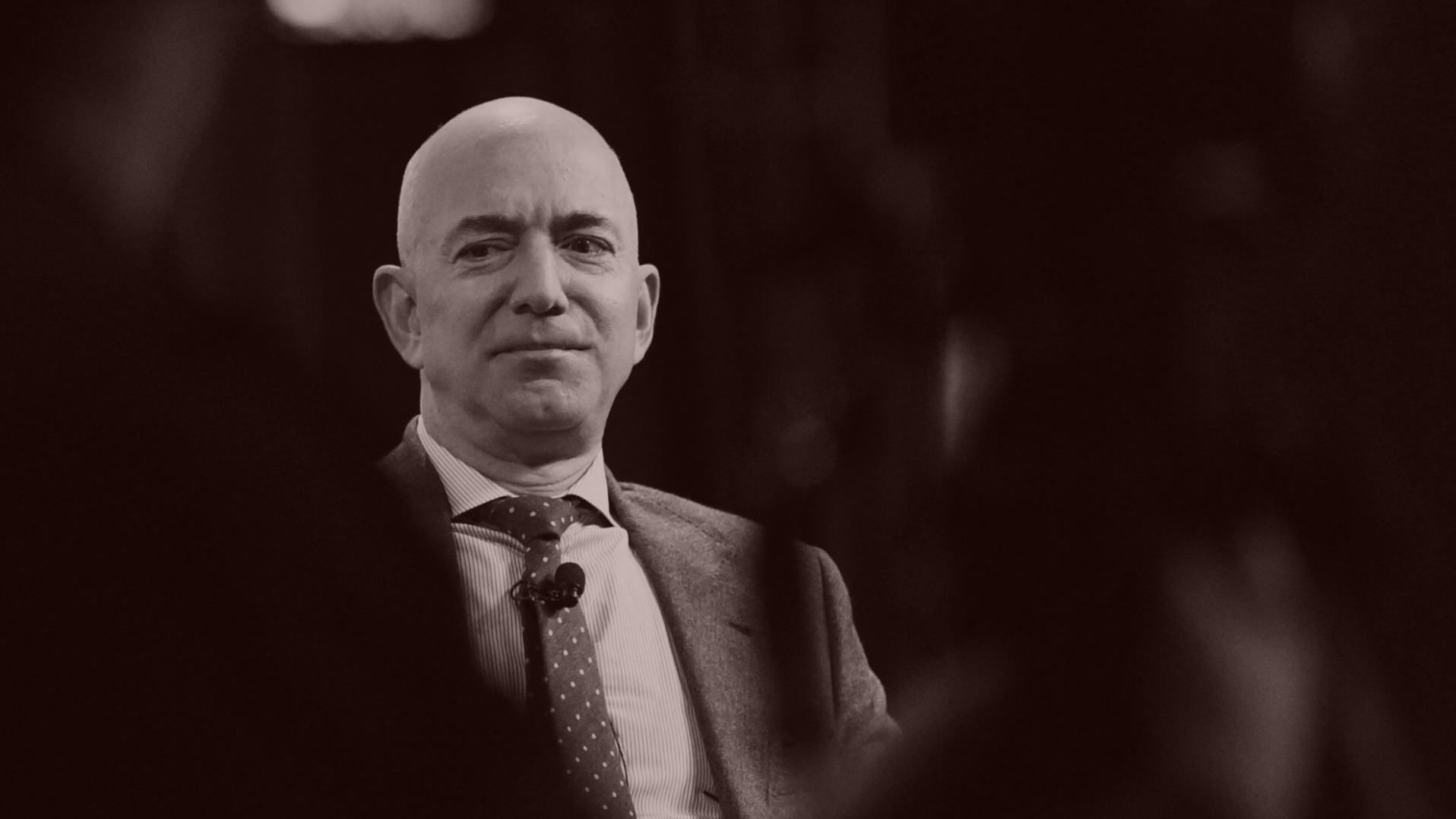
| The decisions by Jeff Bezos and Patrick Soon-Shiong to spike endorsements of Kamala Harris has created an uproar inside The Washington Post and LA Times, respectively. Is this a genuine gripe, an assault on democracy, or simply the latest grievance consuming a legacy media industry mad as hell and unwilling to take it any longer? |
|
|
|
| On Thursday night, less than 300 hours before the polls were set to close on this historic, highly consequential, infinitesimally close presidential election, Charlamagne tha God was on CNN with Anderson Cooper, castigating the host and his network for not spending more time “talking about Donald Trump being a fascist.” Taken aback, Cooper countered that he and CNN covered Trump’s various anti-democratic threats every night. “I don’t feel like you have enough conversations about it,” Charlamagne protested. “I feel like I’ve heard more on this network about ‘Is Kamala Harris Black?’ than I do about Donald Trump being a fascist.”
“Honestly, that’s bullshit,” Anderson shot back, with notable candor. “To say that we’re sitting around discussing ‘Is Kamala Harris Black?’” Charlamagne then interjected: “Oh, I’ve seen those roundtable discussions a lot. Now that’s bullshit, for you to say that you all don’t have those conversations.” |
|
A MESSAGE FROM OUR SPONSOR
|
 |
| With the 2024 election around the corner, the risks to brand reputation including misalignment with misinformation or sensitive political content are higher than ever.
In a recent study, one finding showed consensus that brand adjacency to political misinformation is deemed inappropriate, including from 83% of left-leaning, 76% of moderates, and 74% of right-leaning study participants.
When it comes to your brand, maintaining consumer confidence and driving trust during major political events is crucial. Zefr offers AI-powered technology built specifically for dynamic social media environments that is designed to proactively safeguard your brand — especially during current events and breaking news cycles.
Learn more about Zefr and download the full study in partnership with MAGNA Media Trials to understand the brand risks today. |
|
|
| The exchange—a rare instance of halfway-decent primetime cable TV, frankly—epitomized the broader bedwetting vibes and rising frustration among Democrats and never-Trumpers who are panicking and pre-grieving over an election that, as of Friday, is a statistical dead heat: tied at 48 percent per the latest New York Times-Siena poll; tied at 47 percent per the latest CNN poll. Cognizant that Trump might very well win this thing, the anxious and angry are starting to point the finger at legacy media institutions in a manner recalling the liberal furor over the Times’s incessant front-page coverage of Hillary Clinton’s email server in 2016.
Indeed, on Thursday, the Times itself was compelled to respond to a report from liberal watchdog Media Matters alleging that it and other news organizations had given “dramatically less attention” to the federal criminal indictment of Trump relating to January 6 than it had to Clinton’s emails. A Times spokesperson sent an extremely detailed email to Semafor, noting, among other data points, that while it has published “300 news and opinion articles about Hillary Clinton’s server and emails since 2015,” it has already published “more than 2,600 online and print articles, visual investigations, audio and other multimedia journalism” about the fallout from January 6.
Of course, nothing has inspired so much moral outrage on the left, and among journalists themselves, as this week’s decisions by The Washington Post and the Los Angeles Times to forgo the decades-long tradition of endorsing a presidential candidate. In each case, I’m told, the decision was made by the respective billionaire owners of the newspapers, Jeff Bezos and Patrick Soon-Shiong, which has led to broad suspicion that they were preemptively capitulating to Trump in order to protect their own personal or business interests—or neutering their editorial boards in order to position their companies to advertisers and audiences as at least vaguely centrist. Bezos’s Amazon has highly lucrative government contracts, after all, and, in a stroke of particularly bad timing, Trump met with executives from Bezos’s aerospace company, Blue Origin, on Friday. Soon-Shiong once sought an appointment as Trump’s healthcare czar and has other business interests pending federal regulatory review.
At the Post, C.E.O. Will Lewis framed the endorsement decision as a return to the paper’s roots, noting that prior to the 1976 Gerald Ford-Jimmy Carter election, the paper did not regularly endorse candidates. This rationale left many Post journalists, already pissed after a summer of discontent, feeling gaslit and irate, especially given that the paper’s editorial board had already drafted an endorsement of Harris. It also reignited their latent anxieties about Lewis’s moral compass dating back to the scrutiny over his role in the Murdoch phone-hacking scandal. (Bezos is not commenting on the decision.) Meanwhile, the LA Times, which had also been prepared to endorse Harris, offered no explanation for its decision, though Soon-Shiong made a feeble attempt to blame his own editorial board for not drafting a factual analysis of the candidates’ respective policies.
In any event, the decisions led to thousands of subscriber cancellations at both papers, caused a furor in the newsrooms, and even inspired high-level resignations. Post editor-at-large Robert Kagan, the author of a 2023 editorial warning about an inevitable Trump dictatorship, resigned in protest, as did LA Times editorial editor Mariel Garza, who said the decision to forgo an endorsement made her paper look “craven and hypocritical.”
Meanwhile, eight of the Post’s editorial columnists described their paper’s decision as an “abandonment of the fundamental editorial convictions of the newspaper.” The paper’s storied former executive editor Marty Baron accused his alma mater, in turgid prose, of “cowardice, with democracy as its casualty,” and “disturbing spinelessness at an institution famed for courage.” |
|
|
| On some level, the outrage over endorsement-gate stems from broader frustrations with the self-imposed limitations of institutions like The New York Times, the left’s belief that passive-voice headlines whitewash Trump’s behavior, endemic both-sidesism tends toward false equivalence, and the view from nowhere disguises a multitude of sins. At the same time, the preemptive finger-pointing taking place in and around the media right now hints at a deeper and more profound anxiety about its own growing irrelevance at a time of not just political disruption, but also media fragmentation. It almost goes without saying that the endorsements of the Washington Post and Los Angeles Times editorial boards have exactly no bearing on the outcome of the presidential election.
Now, that obviously doesn’t mean they should abdicate their commitment to serving as pillars of the Fourth Estate, which, in the case of Trump, often forces journalists to make editorial judgments outside their comfort zone. Nor does it negate the significance of what appears to be a troubling trend toward self-censorship even before the election. But it does belie the unavoidably waning influence these once august institutions have with the broader electorate. Alas, all this furor over coverage and endorsements is taking place within an industry whose professional class has already lost its audience—and whose age-old internal structures seem increasingly outdated. |
|
|
| Based on the most recent ratings, the audience for Cooper and Charlamagne’s contretemps was almost certainly between 600,000 and 700,000 total viewers, a population roughly equivalent to the District of Columbia itself, though certainly far older (only one-fifth of Cooper’s audience is below the age of 55). If it was any higher, that was probably due to Charlamagne, whose influence today is so significant that both CNN and MSNBC recently decided to preempt their own programs in order to simulcast his podcast interview with Harris. Regardless of CNN’s ambitions to prioritize its digital business, the fact that its average primetime audience right now is around half a million people, despite the fact that we are just days away from the aforementioned historic and highly consequential election, is a much more profound story of our time than two aborted editorials.
Meanwhile, after years of hemorrhaging subscribers and revenue, The Washington Post has added just 4,000 net new subscribers in an election year, which is peanuts for a media company of that scale. To paraphrase Lewis’s own indelicate diagnosis of his paper’s problems, people are not reading their stuff. Of course, the Los Angeles Times is in even worse shape, with a mere 500,000 digital subscribers. Of course, both papers now have even fewer subscribers, since at least 1,600 and at least 2,000 have reportedly canceled their Post and LA Times subscriptions, respectively. These are tolerable losses, of course, but they highlight the diminutive nature of their audiences in the first place.
The New York Times, by contrast, is seen as the great success story of the media industry, given its transformation into a multifaceted news and lifestyle and games and recipes platform, as well as its ability to keep breaking news at an impressive clip. But, in the era of hyper-fragmentation, even the nation’s “paper of record” is really just the paper of record for the well-educated, mostly liberal elite who are overwhelmingly inclined to vote against Trump—which explains in part why both Biden and Harris decided to forgo the customary sit-down with the paper’s editorial board, much to the consternation of A.G. Sulzberger.
Obviously, the broad polarization of American politics, and certainly Trump’s own demonization of the media, plays a significant role in all of this. At the same time, the media itself bears some responsibility for becoming so insular and self-obsessed that it missed the memo on its own waning influence, and how little the latest Atlantic cover or the rantings of Joe and Mika—or, yes, a newspaper’s endorsement—matter to an electorate busy listening to Joe Rogan or Alex Cooper or Charlamagne, or scrolling through TikTok or Instagram, or, more to the point, not paying attention at all.
Forget whether the Post and the LA Times made appropriate or shameful decisions here, the reality is that neither successfully innovated to the point where such a decision might have actually mattered. “This self-righteous, self-obsessed, self-important B.S. is what’s killing the very institutions these people claim to be fighting to protect,” one top media executive told me Friday. “Their buildings are burning down and they’re pissing into the fire, warning America will melt if it can’t learn about a lame newspaper endorsement.”
On Friday, while discussing the Washington Post and Los Angeles Times’ decisions to forgo an endorsement, a colleague proffered that this was “the downside of billionaires saving newspapers.” Perhaps, but the real downside was that they never actually saved the institutions in the first place. |
|
|
|
| FOUR STORIES WE’RE TALKING ABOUT |
 |
| A Fashion Scandal |
| On the caustic rivalry between Les Wexner and Mike Jeffries. |
| LAUREN SHERMAN |
|
 |
|
 |
|
 |
|
|
|

|
 |
|
|
|
Need help? Review our FAQs
page or contact
us for assistance. For brand partnerships, email ads@puck.news.
|
|
You received this email because you signed up to receive emails from Puck, or as part of your Puck account associated with . To stop receiving this newsletter and/or manage all your email preferences, click here.
|
|
Puck is published by Heat Media LLC. 227 W 17th St New York, NY 10011.
|
|
|
|