{{ 'now' | timezone: 'America/New_York' | date: '%b %d, %Y' }} |
|
|
|
Greetings from Seattle, and welcome back to In the Room. Congratulations to Rajasthan
Royals investors Lachlan Murdoch and Gerry Cardinale on the $1.6 billion sale of their Indian Premier League cricket team, which netted Lachlan a—wait for it—92x return.
I’m headed to the San Juan Islands for the next week or so, but don’t worry: I’ll still be in your
inbox.
In tonight’s issue, highlights from my conversation this week with Attorneys General Rob Bonta and Raúl Torrez at the Common Sense Media Summit in San Francisco. On the cusp of landmark child-safety rulings in Los Angeles and Santa Fe, the A.G.s addressed the addictive power of social media, the myriad lawsuits against these companies, the harmful effects of the platforms on children, the challenges of regulation, and more.
🎙️ For those who
would prefer to listen to the discussion, follow The Grill Room on Apple, Spotify, or wherever you prefer to listen.
Also
mentioned in this issue: David Ellison, Mark Zuckerberg, Mark Lazarus, Jim Bankoff, Kara & Scott, Esther Perel, Brené Brown, Matt Viser, Marianne Levine, and more… |
- Laz circles Vox: Versant C.E.O. Mark Lazarus is eyeing a possible acquisition of the Vox Media podcast network, part of his ongoing effort to diversify the cable company, per the Times. Versant is one of several suitors for the network, which includes Kara Swisher and Scott
Galloway’s Pivot and Prof G Markets, as well as Esther Perel and Brené Brown, all of whom would conceivably start showing up more often on MS NOW. In all, Vox Media produces about 40 pods, but a half-dozen or so comprise the core of the business—namely, the Kara & Scott Cinematic Universe.
Makes sense… in some ways: Versant already has a stake in Vox Media, which it got in the NBCU divorce. And as you
know, Vox C.E.O. Jim Bankoff has been eyeing a spinoff of the podcast network for some time. Presumably the stand-alone business, which does mid-high eight figures in top-line and is quite profitable, would fetch a higher growth multiple than the declining publishing entity, which is likely to interest only the vultures such as Ziff Davis.
(Penske Media Corporation, a powerful minority investor, has signaled interest in the publishing assets.) Meanwhile, Versant has capital and is highly motivated to make deals, having already acquired Free TV Networks and INDY Cinema Group.
But does Laz, a lifelong media executive who is now finally in the big seat, want to fork over some $250 million for low-eight-figure EBITDA? Is the future of MS NOW really going to be Kara and Scott on a Webex? And will this sort of deal satisfy
long-term cap table denizens who are looking for a responsible exit? Honestly, the answer to all of these questions might be yes—in some cases, resoundingly so.
This could be the best-possible exit for Vox—and for Bankoff. As I’ve noted before, Jim presumably took a nice chunk off the table during the $200 million capital raise from NBCU in 2015, and he certainly isn’t incentivized to extend the journey any longer. Some of that motivation may be apparent in the telekinesis required for
the Times to report, as it did today, that “Versant is one of multiple suitors in talks to buy the network.” - Speaking of…: You may have heard that Kara pledged to leave CNN once David Ellison closed his acquisition of Warner Bros. Discovery. “They have no interest in journalism,” she said at a recent media event. “I refuse to work for an organization that doesn’t respect journalists.” I’m sure the Ellisons could give two shits
what Kara thinks about them, but it still doesn’t reflect well on their efforts to finesse the CNN–CBS News takeover. Anyway, if the Versant-Vox deal does go through, she’ll likely find a home on MS.
- Post exodus, cont’d: Reporters are still leaving The Washington Post for greener pastures. White House bureau chief Matt Viser is joining The Atlantic, a safe haven for many Post alumni. Immigration
reporter Marianne Levine is decamping to The Wall Street Journal. More to come here, I’m sure.
- And finally…: Ryan Murphy’s Love Story, based on J.F.K. Jr. and Carolyn Bessette, is driving up the price for old issues of George.
|
27 Percent: The decline in paid subscribers to Business Insider over the last
three years, which has brought the sub base to just 135,000, per Oliver Darcy. Perhaps this is the rejoinder to the P.R. rep that protested
my description of their business as “a mess” earlier this week. “What mess?” they asked. This mess!
And now, the main event… |
|
|
|
An important, and frankly disturbing, conversation from Jim Steyer’s Common Sense
Media Summit with the attorneys general of New Mexico and California, where landmark cases against Meta and YouTube may presage social media’s Big Tobacco moment. |
|
|
|
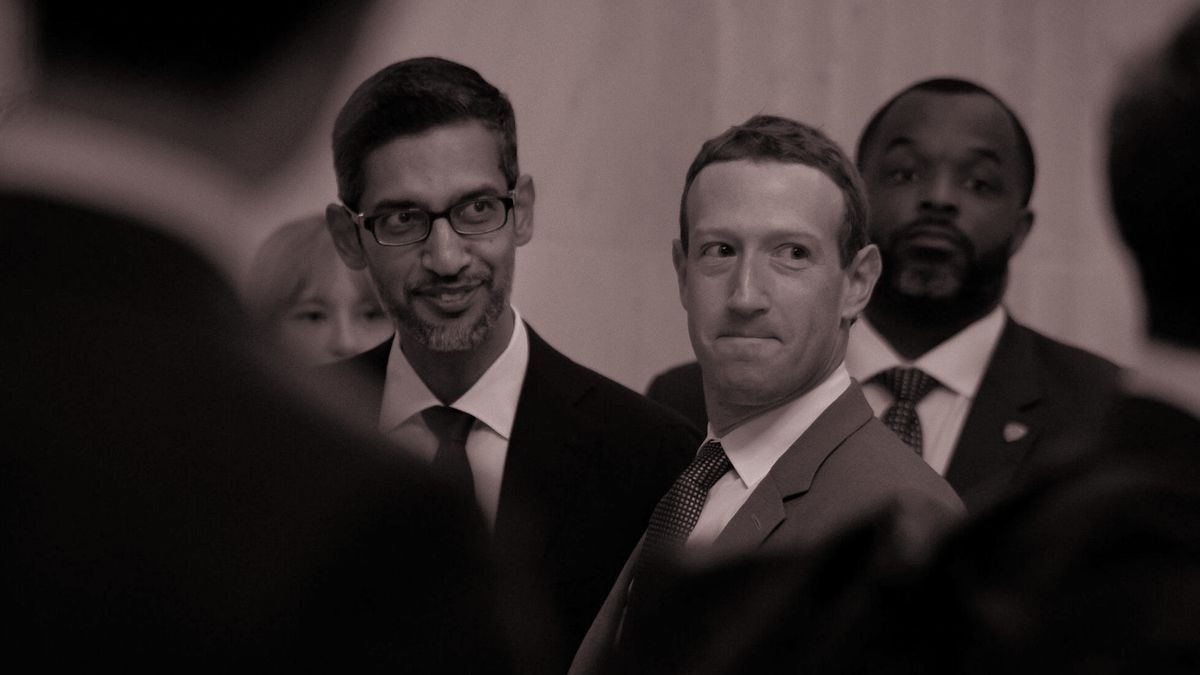
This week, Mark Zuckerberg found himself on the receiving end of double-barreled
jury rulings in California and New Mexico that penalized the social media giant for harming young users. The landmark cases could set a precedent for holding tech giants accountable for personal injury, and may potentially signal new momentum in the effort to regulate Big Tech.
In Los Angeles, a panel sided with a young plaintiff who argued that Meta and YouTube engineered their products to be addictive, effectively hooking her with the now-familiar arsenal of infinite scrolls
and algorithmic nudges. And in Santa Fe, another jury found Meta liable under state law for failing to protect children from sexual predators on its platforms.
The financial penalties are minuscule for the tech firms, of course—$6 million in damages for the L.A. plaintiff, a $375 million fine for violation of consumer protection laws in New Mexico—but lawmakers and legal experts
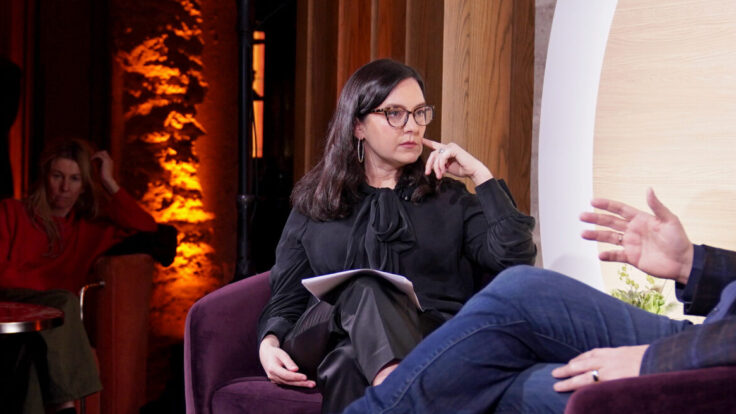
believe the precedents could be significant. On Tuesday, hours before these rulings came down, I interviewed California Attorney General Rob Bonta and New Mexico Attorney General Raúl Torrez at the Common Sense Media Summit in San Francisco. The A.G.s likened the major social platforms to the tobacco industry,
arguing that they design features to maximize addictive engagement even while they are aware of mental health harms to children. They also discussed their legal efforts against Meta, Google, TikTok, and others, and the legislative frameworks required to overcome Big Tech’s formidable legal and lobbying power. Herewith, the highlights of our conversation, edited for clarity and brevity… |
“We
Know This Can Hurt Young People”
|
Dylan Byers: Let’s start with the big question, which is the
headline of our panel: Is social media about to have its “Big Tobacco” moment?
Rob Bonta: I think so. There are definitely similarities. We’ve launched a number of different lawsuits in a multi-state fashion against some of the biggest social media platforms—Meta, TikTok. Some of our investigation and research show tobacco-company-like moments.
We have access to internal documents that show knowledge of the harms to children from
a lot of the features that the social media platforms use. Whether it be things like infinite scroll, autoplay, beeps and alerts, beauty filters, likes, or ephemeral content, their goal is to maximize frequency and duration of use and to focus in large part on children. They have internal studies where they acknowledge the mental health harms to kids, oftentimes to girls and young women. There are times where we see debates about, “We know this can hurt young people, this can hurt girls. Do we
still continue with it?” And it gets greenlit by the top, highest-level executives.
One thing that gives me hope about these cases is that they are bipartisan, largely. There are Republicans and Democrats, A.G.s working across the nation. When it comes to the Meta case, I think nearly every state has sued for the mental health harms to kids. So in a world where we are increasingly more partisan, we still agree on protecting kids from the mental health harms of social media
platforms.
Attorney General Torrez, when I go on YouTube, when I go on Instagram, is that my new cigarette? Am I doing myself harm?
Raúl Torrez: In very simple terms, this is a known, addictive product that has been intentionally designed and marketed to children. The harms that the companies have known about for years, which Rob laid out, are not publicly disclosed to people. It’s in the
misrepresentations and the lack of transparency and disclosures around those known harms that I think really draws that analogy between an earlier era of high-impact, consumer-based litigation. |
I think when Big Tech looks at you, they see overreach and censorship. I think their view
would be that you’re addressing “fringe cases,” and they would say social media is fundamentally a force for good. So how do you sort of balance your efforts against the inevitability of social media going forward?
Torrez: I don’t think most parents understand that when they hand a device over to a 10-year-old or a 12-year-old and they think, “Well, I’m on Instagram or I’m on Facebook, how bad could this be?” There’s no warning label
that pops up and says, “Hey, Mom, Dad, did you know that this increases the risk of suicide? Do you know that this increases the risk of self-harm? Do you know that this actually could enable real-world exploitation of your child? If you agree to assume all of these risks, please say yes before you do that.”
It’s an extreme demonstration, but I have been with too many families who have either lost a child or who have had a child victimized in the real world. For me, this is an
unacceptable level of risk given what we know these companies are capable of. Because I believe them a lot of times when they say, “Look at all the things we can do.” If it’s true that you can do all of those things, then you can certainly make these spaces safe for people. You can make the investment.
But when you look at the litigation, time and again, internal safety specialists would say, “This could lead to this harm.” By their own estimate, half a million kids a day are subjected to
some form of sexual exploitation or sexual harassment on their platforms. Half a million every day. These aren’t fringe cases. But it’s something that can be fixed. If you can fix those things and create safe spaces and enable community and creativity, we should do that. But it requires adults to set the rules and the boundaries for reasonable, ethical business practices. That’s what this is all about.
Bonta: I’ll just add, you know, by the position we have in our office and the
cases that we bring, we’re not anti–social media platforms. We’re not anti-business. We’re pro-kid. We’re anti–harm to kids. We’re anti–business practices that hurt kids. I don’t dispute that social media platforms are with us for the long term. They have incredible upside value. They can connect people across time and distance. For folks who feel alone and are looking for a community, they can find one. They have a lot of positive impacts… Like any technology, there’s a huge upside and there’s
a huge downside. We’re focused on making sure that the downside—to the extent it hurts kids and provides other harms—gets addressed, and that changes going forward.
There has been discussion about federal preemption—the federal government stripping A.G.s like you of some of that power to bring these cases. Just briefly, is that something that either of you are concerned about or that we should be concerned
about?
Torrez: Well, I think we should all be concerned when billionaires show up in D.C. with bags of cash and give the president what he wants and expect something in return that places our communities and our kids at risk. I don’t think the American people are going to abide by that. I don’t think the jurors who consider these cases are going to be tolerant of that kind of behavior. But it’s something that we have to be mindful
of.
Bonta: When it comes to regulating A.I. and regulating social media platforms, I am against federal preemption. I think that the federal government could and should create a floor of protection above which states can move if they wish to provide additional protections. The idea that the federal government is going to preempt, in the A.I. space or in the social media platform space, and occupy the field—what they are likely to do is nothing and then prohibit states from doing
anything.
This is a place where more watchdogs on the block is better. More entities, including states who have a job and a duty to look out for the health, safety, and welfare of their people, should be fully engaged and doing our part as well. So my hope is that instead of preemption, Congress and the federal government create a floor of protections, and then states can do more as they see fit. |
|
|
|
A professional-grade rundown on the business of sports from John Ourand, the industry’s preeminent journalist,
covering the leagues, players, agencies, media deals, and the egos fueling it all. |
|
|
|
Join Puck’s chief political columnist, John Heilemann, as he roams the corridors of power and influence in America on
this twice-weekly interview show, taking you beyond the headlines with the people who shape our culture: icons and up-and-comers, incumbents and insurgents, moguls and machers in the overlapping worlds of politics, entertainment, tech, business, sports, media, and beyond. The conversations are rich and revealing, unrehearsed and unexpected… and reliably impolitic. A Puck-Audacy joint, new episodes drop every Wednesday and Friday. |
|
|
|
Need help? Review our FAQ page or contact us for assistance. For brand partnerships, email ads@puck.news. You received this email because you
signed up to receive emails from Puck, or as part of your Puck account associated with {{customer.email}}. To stop receiving this newsletter and/or manage all your email preferences, click here. |
Puck is published by Heat Media LLC. 107 Greenwich St., New York, NY 10006 |
|
|
|
|