Welcome back to In the Room, and greetings from Ojai, where everything is positively idyllic, so long as you don’t look at your phone or your portfolio. Not great news for the media industry, either: In a sustained downturn, marketing and advertising budgets are usually the first to go.
On the bright side, we’re heading into a divine week of sports: the Final Four, Japanese Grand Prix, Monte Carlo Masters, and the Masters. Speaking of, I’m delighted to share that my partner John Ourand is expanding The Varsity, his essential private
email on the sports business, to a third day, available exclusively to Inner Circle subscribers. Julia Alexander will be contributing her insights on the streaming industry and how it’s remaking the sports landscape. Sign up here, or prepare to be replaced by a younger, smarter, and less well-paid employee in the near future.
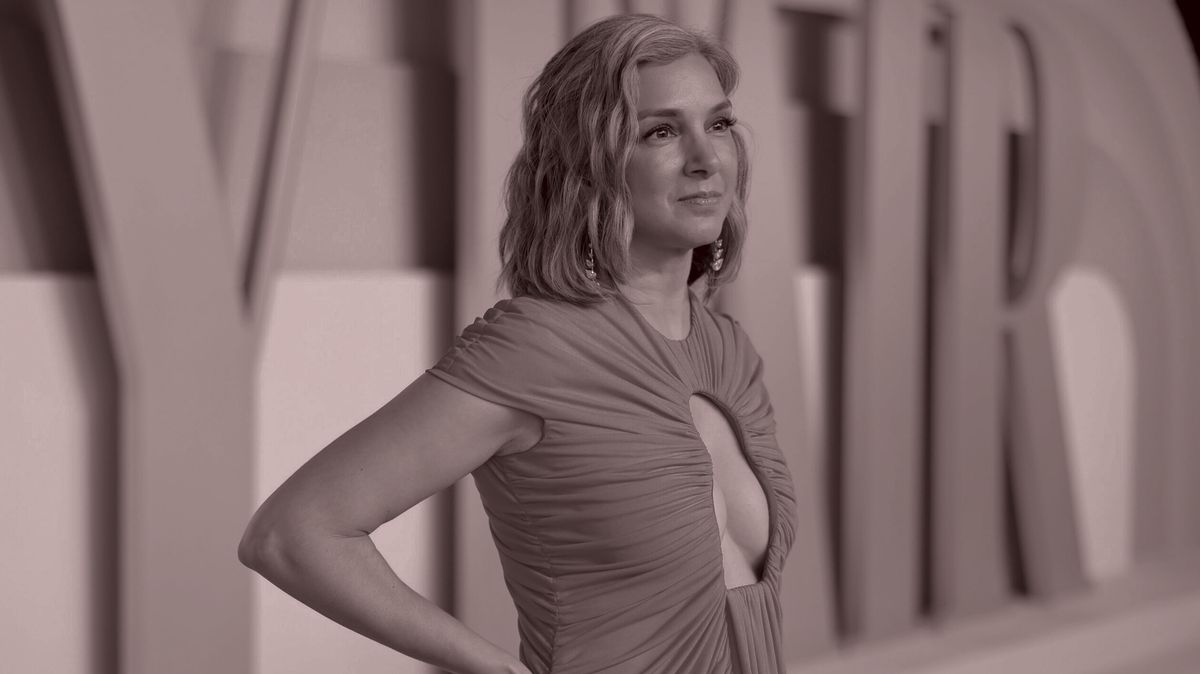
In today’s issue of In the Room, we go inside One World Trade, where long-embattled Vanity Fair editor Radhika Jones is finally “stepping down,” triumphantly declaring that she’s accomplished her mission and wants to avoid “staying too long at the party.” But what did she accomplish, and where was the party? Some five years ago, I recall chasing a rumor that Jones was on her way out. And, in many ways, her tenure extended beyond what anyone could have fathomed when she took over for Graydon Carter. But is it too late to turn that brand around? I’ll dig in below…
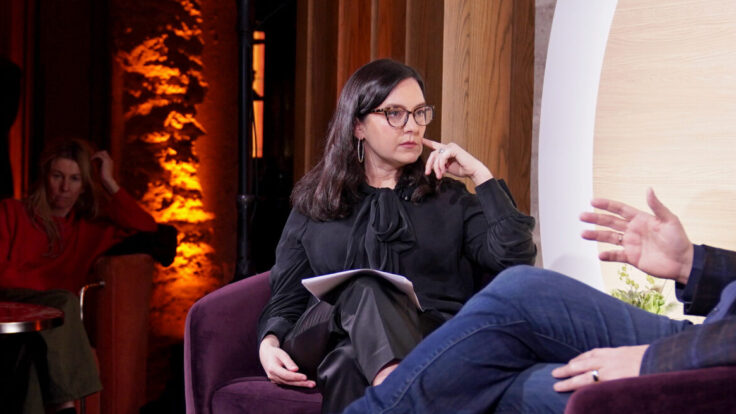
🍸 On today’s edition of The Grill Room, my new yapping partner Julia Alexander joins me for a wide-ranging symposium on the state of the media industry: the future of TikTok, Meta’s UFC play, the Radhika exit, the impact of A.I., and how Trump’s trade war is ricocheting through the advertising market. Follow The Grill Room on Apple, Spotify, or wherever you prefer to listen.
Let’s get started…
|
- TikTok, ticktock…: President Trump has once again extended the deadline for a TikTok sale to mid-June, giving himself more time to consider bids from Oracle, Amazon, AppLovin, and others. No surprises here, but it sure accentuates the complexities of this deal.
- Zuck goes to Washington: Mark Zuckerberg is the mystery buyer behind a 15,000-square-foot mansion in Washington’s Woodland Normanstone neighborhood, which he recently purchased for $23 million, per Politico. In a statement, a Meta spokesperson said Mark and his wife, Priscilla Chan, purchased the home to “allow Mark to spend more time there as Meta continues the work on policy issues related to American technology leadership.”The home is just a mile north of the one Jeff Bezos bought in Kalorama for $23 million, in 2016, and just around the corner from the beaux arts mansion that Peter Thiel bought for $13 million in 2021. As Politico’s Michael Schaffer notes, “an out-of-town C.E.O.’s Washington abode isn’t about having a place to sleep during occasional trips to the capital—it’s more like a personal embassy to the administration, a physical embodiment of the good relations between a certain class of corporate titan and the government of the United States.”
- The Post’s C.T.O. office: Vineet Khosla, the Washington Post’s chief technology officer, has announced the creation of a new “Office of the C.T.O.,” which is intended to streamline the paper’s investment in B2B technology by overseeing both the consumer and product engineering teams, as well as Arc XP, the money-losing software service that the Post explored selling just a couple years ago. As a result, 25 people will be laid off from the Post’s technology team.
|
|
|
|
News and notes on Radhika Jones’s departure from Vanity Fair.
|
|
|
|
In January of 2018, just a few weeks after Radhika Jones began her unlikely appointment as editor of Vanity Fair and was still feeling her way into Graydon Carter’s once-august throne, I flew to New York for an introductory engagement and diplomatic overture. (At the time, I covered the media for CNN.) After ascending the heights of One World Trade—Condé Nast’s downsized home after grander piles at 4 Times Square and 350 Madison—I was let out on the 41st floor and escorted to a vast corner office with floor-to-ceiling windows and a grand bespoke curvilinear tan wooden desk. The office had been designed for Graydon by his architect, Basil Walter, and it alone probably would have been more than enough to lure Radhika from her sleepy former job in the New York Times books department.
We talked a lot about the office, and the sweeping views of the Hudson and New York Harbor, and then I asked the questions that ostensibly justified my visit: What was her vision? What did she intend to do
with the magazine? How did she hope to make her mark? I suppose you can’t expect a newly minted editor to have all those answers right away, much less to share them with someone she’s just met—and a reporter, no less—but I was nevertheless struck by her answer: “What do you think I should do?” she asked.
The response stuck with me as an emblem of the short, enigmatic, and hasty search that produced her appointment. At the time, Condé Nast executives couldn’t quite ponder VF without Graydon, and a number of batshit crazy names had been suggested—Richard Plepler, Jon Stewart, etcetera—at the outset. David Remnick had been involved, but his role was always overstated. (David is too smart to put his neck out for another editor.) Anyway, Jones wasn’t the sort of person who’d been dreaming of editing Vanity Fair for long stretches. She seemed as surprised by her appointment as everyone else, and ideas for what to do with the joint were quite literally still dawning on her. Her desk often carried old copies of the magazine so she could study up.
Shortly after our meeting, Radhika was relocated to a smaller, windowless interior office on the 27th floor, which seemed more commensurate with her stature and the diminution of the brand. Graydon was a historic talent whose style and sensibility matched the towering coif of his Robert Risko caricature—very much a star of the society that he and his writers chronicled for a quarter-century. His own predecessor, Tina Brown, had transformed the magazine into a culture-defining paragon of journalism, making herself the symbol of the industry’s golden age in the process. From the start, Radhika seemed like a mismatched inheritor of this pedigree.
When she was appointed by Anna Wintour, both Condé Nast and the media tried to play up the contrast between Jones and Carter. In this narrative, Jones was younger and primed to remake the brand for a new generation. And yet these weren’t quite the relevant distinctions. As Carter has recounted in his fittingly timed memoir, When the Going Was Good, he was a middle-class kid from the provinces of Canada who descended upon New York with a Moss Hart–style affection for the high points of American culture—Hollywood, the literary world, bohemia, the Kennedys, the scandals and fashions of the wealthy. Jones, for her part, had gone to private school in Greenwich, customarily dropped her Harvard degree into conversations, received a PhD in English, and highlighted her time in the musty warrens of The Paris Review. If Graydon was a bon vivant, she was a bookworm.
Anyway, even years after our initial meeting, she never quite articulated her thesis for the magazine. Yes, her Vanity Fair would be younger and more diverse, and she deserves ample credit for that. But she never learned the financial equation that Carter had mastered during his era. In the simplest form, he recognized that Hollywood studios needed editorial vessels to promote their slates, and that the fashion houses would spend tens of millions in advertising in exchange for fashion credits in celebrity shoots—and this financial alchemy would afford him the budget to create the muscular long-form journalism that attracted the cosmopolitan readership that made it all
work. This machinery led to around $200 million in annual domestic revenue at Vanity Fair’s peak, and a brand that seemed on par with far larger entities, like HBO.
If Carter’s tenure was known for the Hollywood issue, the New Establishment List, the Oscar party, the Deep Throat exposé, the Jennifer Aniston interview, the anti-Bush reportage, the Suri Cruise disclosure, and the big Caitlyn Jenner reveal, among other highlights, the Jones tenure was about… trying to do more with less, while also complaining about the excesses of the Carter era. Vanity Fair covers started to feature illustrations or stock photography. The VF Summit was deprecated. Star journalists vanished.
In her exit memo, Jones characterized the era differently. On Thursday, she announced that she had made the “difficult decision” to leave Vanity Fair later this spring. She credited herself with accomplishing
virtually all of the goals she’d set for the magazine seven years earlier, and called Vanity Fair a “thriving modern publication” with a robust social media presence, studio business, “powerhouse” video department, and “an epic party machine.” “Those of you who know me well know that I can be a little restless, once a mission is accomplished,” she wrote. “And I have always had a horror of staying too long at the party.”
|
When the Going Wasn’t Good Enough
|
|
Jones’s strange fit at VF was an open secret from the moment she arrived. Weeks before her start date, she attended a holiday party thrown by VF publisher Chris Mitchell and hung out in the corner shyly, only reluctantly introducing herself to junior employees. (She would exhibit similar wallflower tendencies toward the celebrities at her inaugural Oscar party, which I observed firsthand.) Her initial introduction to the staff was a stilted affair—former Condé Nast C.E.O. Bob Sauerberg was no toastmaster himself—that resulted in the whole fox tights fiasco. She then laid off a large part of Carter’s brain trust and slogged through the hard work of replacing them with employees at half their salary.
It didn’t take long for the cruel Condé Nast whisper circuit to kick into high gear. It didn’t help that former company president Pam Drucker Mann doubted Jones’s commercial chops. Her decision to put Lena Waithe on the cover of her inaugural issue may have garnered controversy, but the real affront was that the product itself became so irrelevant to the culture that no one seemed to care. Indeed, even the Oscar party has lost its luster, and now serves as a mid-station for a photo op on the way to more exclusive and enjoyable parties.
Jones obviously had to manage through a fair amount of needless bullshit: countless reorganizations, only some of which were successful; the industry’s broadening malaise; a C.E.O. transition, Covid, etcetera. And, to be sure, the industry’s downfall
was already well underway when Graydon left. But Radhika’s insecurity and lack of vision seemed to dramatically accelerate the decline. And, unfortunately, it fit a larger pattern at Condé Nast. Ever since she moved into her corporate role as artistic director, Anna Wintour has had a difficult time locating talent to replace its once legendary editors. The Graydon-to-Radhika delta is probably about the same as the Cindi Leive-to-Sam Barry ratio or the Linda Wells-to-Michelle Lee decline, though it certainly hits a lot harder at a historic title like Vanity Fair. This era has been ending for a generation, of course, but it didn’t have to go out quite like this.
|
|
|
|
Puck fashion correspondent Lauren Sherman and a rotating cast of industry insiders take you deep behind the scenes of this multitrillion-dollar biz, from creative director switcheroos to M&A drama, D.T.C. downfalls, and magazine mishaps. Fashion People is an extension of Line Sheet, Lauren’s private email for Puck, where she tracks what’s happening beyond the press releases in fashion, beauty, and media. New episodes publish every Tuesday and Friday.
|
|
|
|
A professional-grade rundown on the business of sports from John Ourand, the industry’s preeminent journalist, covering the leagues, players, agencies, media deals, and the egos fueling it all.
|
|
|
Need help? Review our FAQ page or contact us for assistance. For brand partnerships, email ads@puck.news.
You received this email because you signed up to receive emails from Puck, or as part of your Puck account associated with . To stop receiving this newsletter and/or manage all your email preferences, click here.
|
|
Puck is published by Heat Media LLC. 107 Greenwich St, New York, NY 10006
|
|
|
|