Welcome back to The Varsity, our thrice-weekly private email on the ups, downs, and outs of the sports media business. I hope you all celebrated your moms properly yesterday. Me? I took an early-morning train to New York for upfronts week—wherein network and streaming executives gather in Manhattan to announce their lineups and throw lavish parties in the hopes of getting advertisers to spend their money. Look out for Marchand by the guacamole bar.
🚨 Pod alert: On Tuesday morning, ESPN will host reporters at its Manhattan HQ to show off the network’s planned direct-to-consumer service. Later that afternoon, Axios media reporter Sara Fischer will break down the scuttlebutt for the Varsity podcast. Also, make sure you listen to my recent conversation with Optimum Sports chief investment officer Jeremy Carey, who previewed the macroeconomic impacts on the ad market. More on this below.
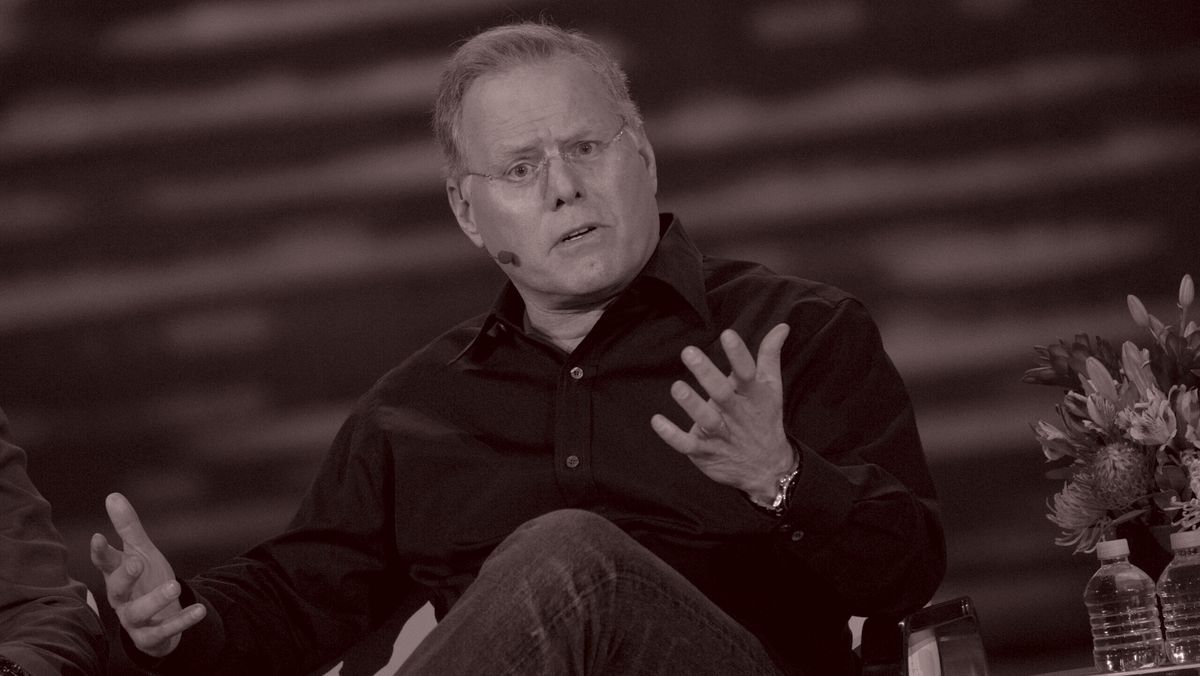
🚨🚨 Reminder: Julia Alexander will share her characteristically excellent, data-driven insights in tomorrow’s Inner Circle edition of The Varsity. In particular, she’ll be conveying her analysis of David Zaslav’s evolving sports strategy. Remember, Julia’s work is only available to Inner Circle subscribers. Click here to upgrade.
Let’s get to it…
|
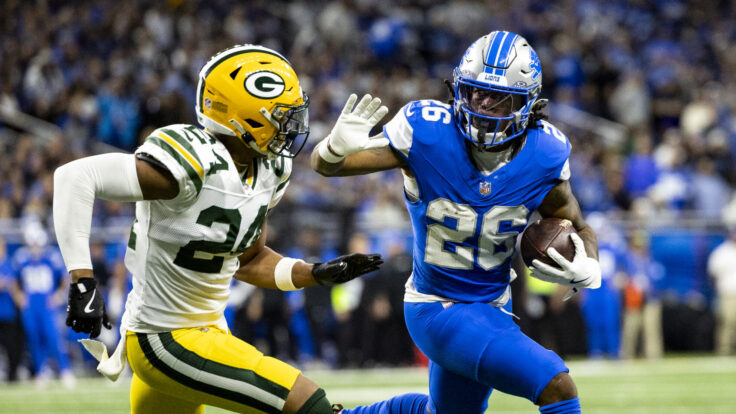
- It’s the NFL’s world: One of the leitmotifs of this year’s upfronts is the extent to which the TV business has morphed into the live sports business—and, in particular, a business unit of the NFL. The league is ubiquitous this year. This morning, NBC announced its opening night Cowboys-Eagles game, and an exclusive Week 17 game for Peacock. This afternoon, both Fox and Amazon announced some of their games. And tomorrow, it’s ESPN’s turn, followed by CBS and Netflix. At YouTube’s event, on Wednesday, Roger Goodell will be onstage as the streamer unveils its plan to carry its first-ever live NFL contest on the first Friday night of the season. (It’s probably Chiefs-Chargers.) The league will subsequently unveil its full schedule Wednesday night. The sports media business has long marveled at the NFL’s unique ability to develop tentpole events in the offseason, like a three-day NFL Draft or NFL Combine. Now, it’s stretched its schedule release across three days and has become an important part of upfronts week.
- The NBA Upfront: “It’s great to be at the NBA upfront… I mean, the NBC upfront,” Jimmy Fallon joked this morning onstage at Radio City Music Hall. It was a good line—and like most good jokes, it rang true. The network spent more time on its $2.5 billion-per-year baby this morning than the Super Bowl and Winter Olympics combined, and leaned hard into ’90s nostalgia—back when Ahmad Rashad and Marv Albert were in their heyday and John Tesh’s catchy muzak jingle, “Roundball Rock,” seemed inescapable. “NBC’s golden era of NBA coverage,” as Mike Tirico put it during the event. Moments later, of course, the network played a taped message from Michael Jordan announcing that he’d be a special contributor for NBC’s league coverage—the true apex of ’90s nostalgia. Specifics on M.J.’s role are scarce, but don’t expect him to be in the studio every week. I’m told that longtime exec Jon Miller, president of acquisitions and partnerships, worked on this deal for months. The two have a relationship that goes back to M.J.’s playing days.The network then trotted out Tesh to lead an orchestra in a rendition of “Roundball Rock.” NBC also announced it will use A.I. to re-create the voice of the late Jim Fagan, who used to narrate the NBA on NBC segments, for promotional spots. “We’re all grateful to Jim’s family for working with us to honor his legacy,” said Tirico. If only the linear business could turn back the clock to the ’90s, too. Fallon, meanwhile, is surely hoping the network’s NBA coverage will provide the substantial lead-in ratings boost that ABC’s Monday Night Football gives Kimmel.
- More upfront notes: ESPN is getting back into business with former SportsCenter host Rich Eisen, who left the network 22 years ago to join NFL Network. ESPN plans to stream The Rich Eisen Show on its D.T.C. service this fall, in a deal that has similar contours to ESPN’s pact with Pat McAfee: The network will shoulder few upfront costs in exchange for little, if any, say in the programming. Meanwhile, Eisen will continue to host GameDay on NFL Network.Meanwhile, ESPN also announced that it had re-signed Chris Berman through 2029. Back in October, Berman told me that he wanted to stick with ESPN for another five years to make it an even 50 at the network, saying, “We have a Super Bowl in a couple years. I would like to think they’ll keep me around for that, whatever that means—maybe the exact same capacity.” He got his wish today.
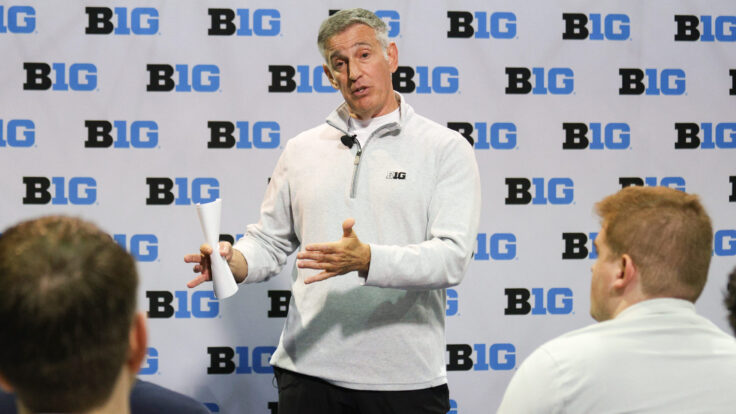
- The N.I.L. high-school equation: Jeremy Carey, Optimum Sports’ chief investment officer, recently said that he expects high school to experience the next major wave of investment and industry activity—for better or worse. “You know what’s going on in the college space right now?” Carey told me on a recent episode of the Varsity podcast. “You’ve got thousands of guys in the transfer portal moving all over the place. You’ve got college coaches saying they’re not even going to recruit high-school seniors. But Name, Image, and Likeness applies to high-school athletes, too. You’ve got some real superstars right now in the high-school space. You also have a consolidation of talent happening where kids are getting a free education to join powerhouse high-school teams.”Carey continued: “I’m a little torn on it, but I think the value of it moving forward is something we’ve got a close eye on. I’m not sure that anyone has really cracked the code. It’s going to evolve. But for a high-school kid right now, you’re talking about the 1 percent of the 1 percent that actually have value in the space. There’s a lot of risk there, too, obviously, going in at that level. We have not necessarily gone in at that level, in terms of specific N.I.L. deals. There are obviously brands that we work with that play in the high-school space from a supportive role. But in terms of using it more along the lines of athlete endorsement, I’m not saying we’re not going to go there. But, you know…”
- Netflix plays its Beyoncé card: My Puck partner Matt Belloni had a great item in his must-read private email, What I’m Hearing, about how Netflix is breaking several norms by trying to get an Emmy nomination for Beyoncé’s NFL Christmas Day halftime special. Here’s Matt…“[Netflix] invited about 100 TV Academy members to an F.Y.C. event at SoFi Stadium… which happened to be hosting an actual Beyoncé concert. You won’t believe this, but in addition to being treated to a discussion of the 13-minute special with producer Jesse Collins and others, attendees were invited to stay in a catered suite to enjoy the full concert. Rival campaigners are already crying foul, but Netflix says organizers got the Academy’s blessing that the event didn’t violate campaign rules. Note to Fox, which aired the Super Bowl: Halftime performer Kendrick Lamar is playing SoFi over Memorial Day weekend—right before Emmy voting begins.”
|
|
Now, some of the flavor of the upfronts…
|
|
|
|
Live sports may be the last programming category coveted by both linear networks and streamers equally, but given the miasma of confusion on tariffs and the economy, not even the NBA and NFL can get advertisers to throw caution to the wind.
|
|
|
|
It didn’t take long for the T-word to make an appearance at the upfronts, which kicked off on Monday with NBC’s presentation at Radio City Music Hall. “This morning, as part of our show, we actually solved all of the tariff issues,” joked NBC’s ad chief Mark Marshall. He was alluding, of course, to this morning’s announcement of a reset in the trade war ignited by Trump’s 145 percent tariff on Chinese goods. But the “issues” Marshall noted have likely come up in every conversation between ad buyers and network ad sellers since Trump implemented the bevy of global tariffs at the beginning of April: Advertisers badly want to buy into sports, but have been wary of making commitments too early for all the obvious reasons. What if the U.S. detonates the “pause”? Or those beautiful deals never manifest?
Only a day into the annual, weeklong group grope, it’s already been a fascinating upfronts. Sports, which used to be an afterthought, have now become the main attraction—the thing that networks, in particular, are building their pitches around. And yet, we’re also getting some confirmation of what many predicted weeks ago in the miasma of post-“Liberation Day” confusion: As the world’s largest companies scramble to reforecast their revenue, and map out the full impact of the levies on their supply chains and balance sheets, they’re also becoming more circumspect regarding their advertising and marketing budgets. And even though the networks and streamers are spending the week hawking their wares, and plying everyone with booze, most buyers can’t move with speed or confidence.
Heading into the upfront selling season, the specter of the unknown cast a pall over the market. “In all the years of doing this, I don’t think we’ve ever had to play armchair economist as much as this year,” said Jeremy Carey, Optimum Sports’ chief investment officer, ahead of the festivities. “[While] there’s been some fluctuation in terms of market strength over the years, like with the pandemic,” he acknowledged, the current uncertainty over supply chains and consumer confidence has made it hard to concoct a long-term strategy. “There’s a core understanding of just how reliant we are on imports from certain parts of the world,” Carey continued.
The uncertainty has unequivocally added to the stress on old-school linear networks, which have long been dealing with streaming companies eating their lunch. (Networks reported a slight revenue drop during last year’s upfronts, while streamers posted increases well into the double digits.) Naturally, networks have tried to counteract skepticism by focusing on top sports—the NFL, college football, and the NBA—and a pitch that dawdling clients will get locked out of prime advertising positions.
Networks are focusing, in particular, on the record revenue produced by properties like the Super Bowl and College Football Playoff. “What we’re seeing is actually a potential for even more advertising supply as programming schedules get reorganized and sports gets placed into higher viewership moments,” Carey said. “But there’s this reality looming. What’s unique about it is that we haven’t seen what the true impact is going to be.”
Neither ad buyers nor ad sales executives pretend to know how the tariffs (or the threat of tariffs) will affect the economy in the fall. And so all the uncertainty is leading ad buyers to demand more flexibility from the networks. “We have to figure out ways to work together to build flexibility into this, because the alternative of just sitting and waiting it out, it’s not beneficial to either side,” Carey said. “You could say, We think this thing’s going to fall apart. Let’s sit on the sideline and then just try and gobble it up if the market does fall apart. But then there needs to be a level of strategy and build-out that goes into this.”
|
On a potential MLB salary cap: “On the Varsity podcast, Jeff Passan said, ‘If the Dodgers win the championship, and become the first team since the 2000 Yankees to do it in consecutive seasons, it’s going to be a real problem for MLB.’ This is an insane comment. The most popular team in the second-largest market, with the sport’s only global superstar, on a monthlong championship run is a problem for the sport? Baseball has its best cultural cachet in 20 years, aided by a Yankees-Dodgers World Series. Ratings are up! Attendance is up! This is what will get you a better national TV deal in 2028, not a salary cap that saves Bruce Sherman or Bob Nutting the embarrassment of the product they’re putting on the field.” — A media executive
More on a potential MLB salary cap: “MLB’s real issue is a class of crappy owners at the bottom doing nothing or actively trying to not spend money; make them pay, or make having a perennial bottom-feeder less profitable, and the sport will be better off.” — A journalist
Correction: “The NBA launched its channel in 1999 as NBA.com TV, not NBA.com.” — A marketing and sales executive
|
|
|
|
Join Emmy Award-winning journalist Peter Hamby, along with the team of expert journalists at Puck, as they let you in on the conversations insiders are having across the four corners of power in America: Wall Street, Washington, Silicon Valley, and Hollywood. Presented in partnership with Audacy, new episodes publish daily, Monday through Friday.
|
|
|
|
Ace media reporter Dylan Byers brings readers into the C-suite as he chronicles the biggest stories in the industry: the future of cable news in the streaming era, the transformation of legacy publishers, the tech giants remaking the market, and all the egos involved.
|
|
|
Need help? Review our FAQ page or contact us for assistance. For brand partnerships, email ads@puck.news.
You received this email because you signed up to receive emails from Puck, or as part of your Puck account associated with . To stop receiving this newsletter and/or manage all your email preferences, click here.
|
|
Puck is published by Heat Media LLC. 107 Greenwich St, New York, NY 10006
|
|
|
|