 |
|
Welcome back to In The Room. I’m Dylan Byers.
|
|
In tonight’s email, we check in on Tucker Carlson and his attempt to defy the laws of the creator economy via a $9-a-month streaming service. Sure, television is in decline, but is it even remotely possible to recapture his old level of influence in this hyper-nichified digital landscape? And if a modern-day Father Coughlin can’t do it, can anyone?
But first…
🎁 Tis’ the Season… Puck’s third-annual Guide to Mirth & Merriment has arrived, and this year we’ve invited some V.I.P. pals—Gwyneth, Don Lemon, Mickey Drexler, Lena Waithe, etcetera—to join us in sharing what they’re wearing, reading, drinking, and gifting in 2023. (Don’s favorite travel accessory: “a friend with a private plane.”) Give it a gander.
🍸 Plus: You’ll gather from this list that I take particular care in my cocktail program during this time of year. So, here’s my gift to you: If you’re looking for a new fireside libation, or recommendations for a special bottle to gift at the White Elephant, shoot me a note and I’ll play cocktail concierge.
Now, on to the news…
🏛️ BPI Goes International: The Washington in-crowd, in particular, will be interested to know that Bully Pulpit Interactive, the ubiquitous D.C.-based public affairs firm founded by Andrew Bleeker and Ben Coffey Clark, has made its first international acquisition. The firm is acquiring BOLDT, a European consultancy with offices in Berlin, Brussels, and London, among other cities. BPI, which will rebrand as Bully Pulpit International, will now operate with more than 250 team members in six offices across 10 cities. A decade ago, BPI first muscled up through a merger with Ben LaBolt and Robert Gibbs’ Incite Agency. LaBolt became a partner before returning to the White House as Biden’s communications director.
🇬🇧 Lord Zucker’s Telegraph Chase: Meanwhile, in London, today marks the deadline for supporters and opponents of Jeff Zucker and Sheikh Mansour’s Telegraph bid to file their arguments with the U.K. communications regulator, Ofcom. Not surprisingly, several of the rival bidders have submitted opposing positions, I’m told, as have a number of Telegraph writers. There’s nothing to do now but wait until Ofcom delivers its recommendation to culture secretary Lucy Frazer next month. And even then, it’s possible the review could be extended up to six additional months.
📰 Joe Kahn’s Ivy League Blitz: Some readers have noticed that The New York Times has dedicated significant editorial resources and homepage real estate to the rise of antisemitism on elite college campuses and the ensuing debates over free speech. At least a dozen reporters have contributed to various aspects of this story, and the paper responded to the resignation of UPenn’s Liz Magill with a flood-the-zone strategy that even Zucker might envy. Of course, this story plays right into the Times’ wheelhouse: foreign affairs, the free speech debate, the Ivy League (from whence so many on the masthead came), all against the backdrop of a horrific war in the Middle East. And it’s certainly cocktail-party catnip for core Times subscribers.
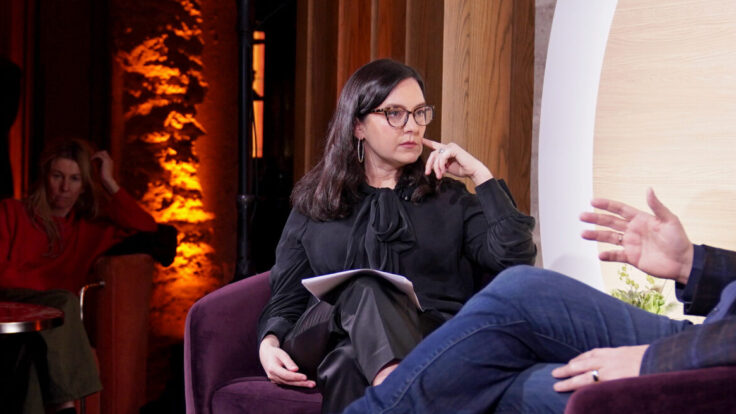
On Tuesday, I asked Times executive editor Joe Kahn to explain the thesis behind mobilizing the paper on this particular story: “It’s not every day that we have a story involving free speech and safety, student life and national politics, educators and big donors, foreign affairs and domestic passions, all playing out at a few of our leading universities,” Kahn told me. “So, yes, we have involved some of our best reporters on education, but also on politics, business, international affairs and in our D.C. bureau, to explore all the angles around these campus controversies.”
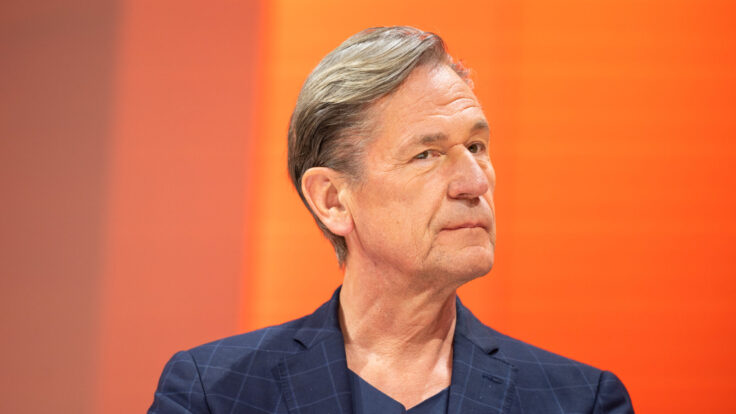
📺 Thompson Wants Trump: Donald Trump is returning to the campaign trail tonight with a rally in Iowa, the first stop on a weeklong tour through three of the early states. His return has forced news networks to once again grapple with how to cover the insurrectionist (and potentially fascist) Republican frontrunner. New CNN chief Mark Thompson has told staff the network shouldn't censor any candidate, and said on this morning’s 9 a.m. call that the shows must cover his rally. Some network sources have interpreted that as a sign that CNN will take at least part of Trump's speech live, which would be a departure from its recent posture of forgoing live speeches because of Trump's penchant for falsehoods and, as Jake Tapper put it, “potentially dangerous” statements.
🇸🇦 A Chris Licht Mea Culpa: Last week, I reported that former CNN chief Chris Licht had turned up at the Saudi Future Investment Initiative in Riyadh last month and, according to multiple sources in attendance, engaged in conversations with Saudi’s state-backed media group “about consulting on their tentative efforts to launch an international English-language news channel.” In the wake of that report, a representative for Licht reached out to inform me that Licht had never received my requests for comment. I had called and texted Licht at least four times on numbers that I’ve used to engage with him in the past, but it appears—taking them at their word here—that those numbers are no longer in use. My sincere apologies, Chris.
The aforementioned representative also asked for two corrections to the piece. First, he says that Licht was invited to the conference as a guest and did not attend “on his own dime,” which I have since confirmed (I regret the error). Second, he said that Licht “has never met or engaged in conversations with SRMG or anyone representing themselves as associated with the group”—a point that runs counter to what my sources told me, and, indeed, what additional sources who were present at FII have subsequently told me.
In any event, I trust no one knows the truth better than Licht himself, and so I put the following questions back to his representative: First, who paid for his trip to FII? “Chris is a private citizen and respectfully declines to name the parties who invited him and paid his expenses,” the representative said. Second, why did he attend the event? “It is not out of the ordinary for Chris to meet with business interests across the globe as he evaluates potential opportunities, and perhaps someday he will meet with SRMG,” the representative said. “But in this instance the conversations with SRMG never happened.”
Now, on to today’s main event…
|
 |
| The Tucker Rule |
| TCN, Tucker’s new $9-a-month streaming service, may portend the limits of the direct-to-consumer media economy—and suggest whether there is, indeed, life after cable stardom. |
|
|
|
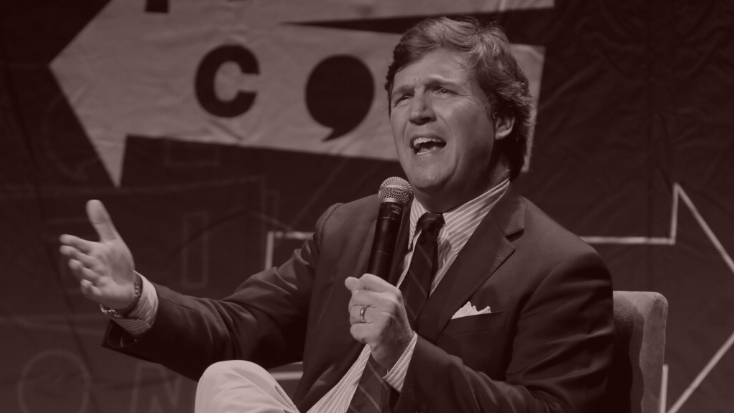
| This week, Tucker Carlson launched the long-anticipated Tucker Carlson Network, a streaming service that will allow him to monetize, at $9 a month, the nativist, right-wing, conspiratorial, antiestablishmentarianism-aroused news consumers for whom he remains a cultural leader, even after his defenestration from Fox News. The service will ostensibly feature multiple shows, films, an interview series, and a podcast. It will become the latest in a string of digital media startups founded by Fox alumni such as Glenn Beck, Bill O’Reilly, and Megyn Kelly after leaving the Murdoch kingdom.
The announcement of Tucker’s venture has been expected since June, when I broke the news that he was raising capital to launch a new media company. Even then, it was clear that his short-form video deal with Elon Musk’s Twitter/X was merely a relevance grab and top-of-funnel play in the service of bigger multichannel ambitions. “[X] doesn’t lend itself to putting a big library right in front of you on one page,” Tucker told Megyn this week on her SiriusXM show. Nor does it provide a reliable monetization strategy—a challenge exacerbated by X’s declining ad revenue, now down by at least 50 percent since Musk took over, per Bloomberg.
In October, Tucker and his longtime business partner, Neil Patel, secured $15 million in seed funding in a round led by Omeed Malik’s 1789 Capital, the self-described “anti-woke” V.C. firm—a relatively small amount of financing for a streaming network, but enough to get Tucker and his team of former Fox producers off the ground. The question now is how far they can or want to go: Are they trying to build a small but profitable business off a niche fan base—à la Kelly—or do they hope to go further and recapture the scale and impact that Tucker once had as the highest-rated anchor on cable news? And is it even possible to do that with a standalone subscription business?
Tucker seems to believe it is. “I think the two big lessons of the last few years are that streaming will dominate news, if it isn’t already, and that it’s essential to have some insulation from advertising pressure if you’re going to do it honestly,” he told me. (Of course, Tucker sparked more than his fair share of advertiser boycotts at Fox News, which no doubt dragged on the network’s ability to realize maximum profitability.)
But most media executives see an obvious ceiling to Tucker’s ambitions, with Beck, Megyn, and O’Reilly providing ample evidence of the limits to going it alone in the subscription-based creator economy. (Hell, even the Kardashians tried their hand at subscription services that they later shuttered when it became clear their legions of fans weren’t willing to shell out $3 a month.) Some of these figures have been able to build sustainable businesses, but none has managed to maintain anything close to the level of influence they had on television. “There are plenty of niche subscription services for razor blades and wine and cheese and steak and cookies that do good business, but they are not successes on the scale or impact of broadcast TV,” one such executive told me. “Can Tucker find a loyal audience to pay him? Yes. Can he re-create his impact on primetime on Fox News? Never.” |
|
|
| One of the ironies of Tucker’s timing, of course, is that he was a new-media guy back in the day, when he and Patel started The Daily Caller. And despite whatever success he achieved with that business, he likely learned that it’s hard to scale a digital media brand built around a single talent—even when that talent is himself. A second irony, of course, is that Tucker’s newmediaco, whether it works or not, highlights the dark genius of Murdoch and Roger Ailes. After all, the varying success rates of the post-Fox News gang suggests the economic power—and, perhaps, economic necessity—of bundling them together. Beck, O’Reilly, Tucker, and Kelly may have been stars, but they needed each other to create a scalable business. This is a lesson that Ben Shapiro and Jeremy Boreing’s The Daily Wire has embodied in this new direct-to-consumer age.
Sure, Tucker’s departure from Fox News has unequivocally weakened the network, which, despite being the most-watched channel on cable for eight consecutive years, is already muddling through the inexorable decline of cable and the biological clocks of its audience. Year over year, Fox News’s total day audience has declined by 18 percent, while the advertiser-relevant 25- to 54-year-old demographic has declined 34 percent. Every cable news network is experiencing similar downward pressure, of course, but none so acutely as Fox. In fact, Fox News is now on pace to register its lowest yearly demo numbers since before the Sept. 11 attacks, and its lowest total viewership numbers since before the election of Donald Trump.
With the decline of linear and the rise of digital media, it should theoretically be easier than ever for a marquee name like Tucker to capture the influence that was once exclusive to his former gatekeepers. Unfortunately for Tucker, and indeed for all members of the TV news diaspora, the means to do so remain elusive. In a world of increasingly niche news programming distributed on myriad platforms, there is no obvious path back into the hearts and minds of the mass market—and that’s especially true if you intend to charge people for whatever you’re selling. Cable news anchors may have been able to read their ratings, but perhaps few appreciated how much their financial success depended on their industry’s uniquely profitable business model, which charged people even when they never watched.
Tucker is entering a right-wing digital media space that’s already incredibly crowded by not only The Wire but also The Bulwark, Bari Weiss’s The Free Press, Beck’s The Blaze, and a zillion other options. Meanwhile, Fox News itself is laying the groundwork for its own digital pivot via the ancillary streaming service Fox Nation. Can the Tucker Carlson Network stand out in this space? It’s hardly a given.
Tucker, at least, has the advantage of being a zealot, which can be a convenient selling point in this crowded market. It’s far harder to foresee what options are available to someone like, say, Brian Williams—a multitalented, mass-market anchorman in the Brokaw mold, who has now become an anachronism in this balkanized landscape. Or, for that matter, someone like Don Lemon, a cable news primetime star who outgrew his seat only to find it might have become extinct. So, if there is indeed a life after cable stardom, it will take a guy like Tucker to figure it out. |
|
|
|
|
FOUR STORIES WE’RE TALKING ABOUT
|
|
|
|

|
 |
|
|
|
Need help? Review our FAQs
page or contact
us for assistance. For brand partnerships, email ads@puck.news.
|
|
You received this email because you signed up to receive emails from Puck, or as part of your Puck account associated with . To stop receiving this newsletter and/or manage all your email preferences, click here.
|
|
Puck is published by Heat Media LLC. 227 W 17th St New York, NY 10011.
|
|
|
|