 |
|
Happy Friday. Welcome back to In The Room.
|
|
Tonight, some informed observations on Silicon Valley’s TikTok calculus, Disney layoffs, and Politico and the Post’s global ambitions.
|
 |
| TikTok Schadenfreude, Iger’s Cuts, & D.C. Media Games |
| News and notes on the inside story in the media industry: what Silicon Valley billionaires want Washington regulators to do with TikTok in D.C., how Iger’s cuts are playing in Bristol and Manhattan, and updates from the Washington media carousel. |
|
|
|
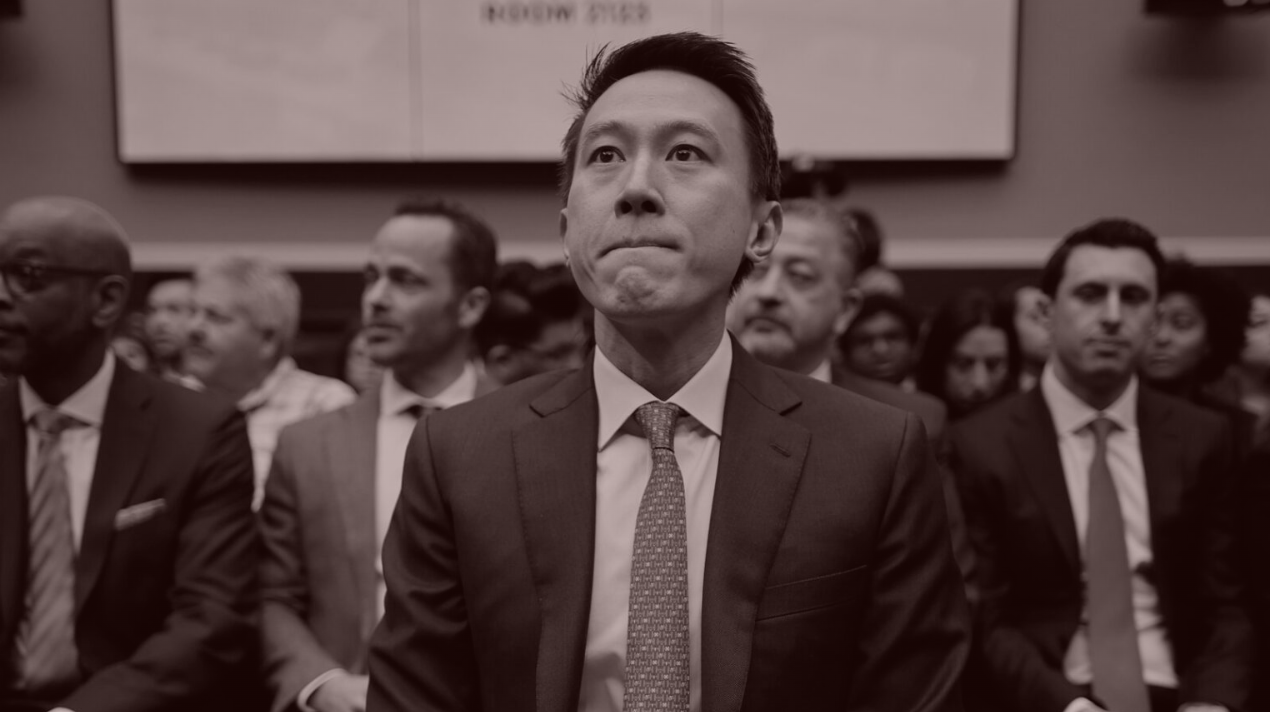
| On Thursday, as TikTok C.E.O. Shou Chew gamely withstood a drubbing from Republican and Democratic lawmakers alike—Chew was prepped by SKDK; reviews were mixed—a consensus emerged among some observers that the pressure on the Chinese-owned company was a boon to Meta, Google, Snap and other U.S. social media firms that saw their stock tick upward over the course of the hearing. The all-too-obvious reasoning here is that, in the event of a ban on TikTok, or a forced sale, or some other force majeure-ish event, its some 150 million U.S. users will return to, or spend more time on, apps like Instagram and Snapchat that have lost market share—and, frankly, Gen-Z cachet—to ByteDance’s juggernaut.
The true implications of U.S. pressure on TikTok are, of course, far more complicated, not least because the most likely outcome here is not a ban but a forced divestiture. In any event, most Silicon Valley executives that I speak with don’t see this as a zero-sum game. In the longer term, the pressure on TikTok has merely reignited larger concerns about data privacy and Washington’s ineptitude when it comes to regulating U.S. firms. And the deep-pocketed donors who oppose tech giants, and hold sway in Democratic circles, will likely exert more pressure to make sure that TikTok’s loss doesn’t result in Meta or Google’s win.
More broadly, and perhaps most importantly, the larger geopolitical tensions between China and the United States are only hastening the long-feared bifurcation of the internet—essentially a Western-run internet and a Chinese-run internet—that will make it harder for Silicon Valley firms to operate their businesses and may reduce the global TAM. Meta, Google, et al. do not want a scenario where countries start banning apps or forcing local ownership. It may give them a leg up on TikTok in the U.S. in the short term, but it will impose more limits on them globally over the long term.
This is not to say that Silicon Valley firms are rooting for TikTok, of course. It is widely seen as a national security threat and a potential propaganda tool for Beijing. Bloomberg News had the scoop on a recent dinner for VCs and lawmakers where Peter Thiel and others lamented TikTok’s rise over seared branzino. So, for the foreseeable future, it’s Chew’s time in the barrel. But that doesn’t mean Mark Zuckerberg and Sundar Pichai are necessarily happy about it. |
| The “People Who Eat at Their Desks” |
|
| Next week, ahead of its April 3 shareholder meeting, Disney will begin implementing long-anticipated staff cuts meant to help Bob Iger achieve $5.5 billion in cost savings and reduce the company’s debt. The impending layoffs, which will result in the elimination of 7,000 jobs, or 3 percent of the workforce, have hung like an anvil over the Magic Kingdom ever since Iger announced them in early February. Of course, Iger is hardly the only C.E.O. to pull the layoff lever in this uncertain economic moment—Amazon has laid off 27,000 employees in the last six months; Meta has laid off 21,000 employees in that time, and so on—but that’s hardly a comfort to folks on the ground, who, in calls and texts, describe feelings of fear, anxiety, and paralysis.
That the agita has been so prolonged is, perhaps, indicative of Iger’s balancing act in his second iteration as C.E.O.: He’s trying to finesse a grand corporate restructuring while simultaneously placating Wall Street. In his first iteration, the famously efficient and methodical Iger might have identified the cost target and enlisted his charges to draw up lists of names that would have been informed of their exit package within hours of the announcement. With Nelson Peltz breathing down his neck, Iger was forced to move a little faster, first announcing the target and then keeping people waiting as his team executed a plan. (One day after Iger announced the restructuring, Peltz ended his proxy fight.)
The cuts will affect nearly every part of Disney, including ESPN, now its own division in the company, and ABC News. Of course, both of these companies are trying to pivot their profitable but eroding businesses toward a post-linear TV future. In ESPN’s case, this means increasing investment in the streaming and digital business, all while being ever-more disciplined about rights spending and, indeed, overall spending. (One discouraging sign of the linear end times was the moment I realized that ESPN was calling the Australian Open not from Melbourne, but from Bristol.) ABC News’s future is even more uncertain, as both Good Morning America and World News Tonight—the two pillars of that business—have yet to demonstrate how they’ll adapt to streaming, if at all.
At the staff level, the anxiety is perhaps more deeply felt at ABC News than at ESPN. Jimmy Pitaro, now five years into his tenure at the helm of ESPN, has evidenced a deep understanding of who makes that organization work. At ABC News, as I’ve reported, many veteran staffers chafe at network president Kim Godwin’s leadership and feel that she’s out of touch with the newsroom. Now that layoffs are imminent, there’s concern that she might make the wrong cuts—not the on-air stars, of course, but to the circulatory system: the people who know where to send a satellite truck in a hurricane, where to station people for the arraignment of a former president, etcetera. As one ABC News veteran put it, “the news operation runs on people who eat at their desks,” and some fear that Godwin still doesn’t know many of those people’s names. |
|
|
| Finally, back in Washington, there were some notable developments at The Washington Post and Politico this week that signal how both of those newsrooms intend to realize their respective global ambitions. On Friday, Post C.E.O. Fred Ryan and executive editor Sally Buzbee announced the creation of fifteen new positions, mostly abroad, to expand the paper’s coverage of Ukraine, China, and beyond. It was a rare bit of good news to come out of the Post, which has recently been beset by revenue declines, subscriber churn, and an exodus of staff on both the business and editorial side. Chief Revenue Officer Joy Robbins, who left this week to become global chief advertising officer at the Times, was the latest notable figure to decamp for greener pastures. As for Ryan, his own fate at the company remains unclear. He hosted his annual St. Patrick’s Day party last week, and seemed, as one source put it, “happy as a clam.”
Politico’s move was perhaps even more notable. On Wednesday, the company announced the hire of Francesca Barber, a key member of the Times global growth team who will now serve as Politico’s executive director of global newsroom strategy. Her hire is a recruiting coup, and signals a significant leap forward in Politico’s effort to unite its Washington and Brussels operations while expanding into new markets, including California and London, under Axel rule. As I recently reported, Politico derives about 20 percent of its revenue from its European business. Presumably Barber’s appointment signals that they see more growth overseas, which aligns nicely with the ambitions of its new parentco.
One other interpretation of these moves? Fifteen years ago, Robert Allbritton, Jim VandeHei, John Harris, and Mike Allen had the singular notion that Washington D.C. was profoundly undercovered and mis-covered by existing and traditional media companies. Now, with the advent of Axios, Punchbowl, Semafor, Grid (R.I.P.), The Messenger, and probably a handful of other companies I can’t even remember, it is overcovered and the growth will come from abroad, just as it does in tech. |
|
|
|
| FOUR STORIES WE’RE TALKING ABOUT |
 |
| Hunter Goes Rogue |
| Inside Hunter Biden’s bifurcated P.R. campaign & Roe’s DeSantis alignment. |
| TARA PALMERI |
|
 |
| Netflix’s End State |
| Will streaming’s ideal economic state resemble old-fashioned TV? |
| MATTHEW BELLONI |
|
 |
|
 |
| Ron’s Soft Touch |
| On the perils of ignoring the MAGA elephant in the room. |
| TINA NGUYEN |
|
|
|

|
 |
|
|
|
Need help? Review our FAQs
page or contact
us for assistance. For brand partnerships, email ads@puck.news.
|
|
|
|
Puck is published by Heat Media LLC. 227 W 17th St New York, NY 10011.
|
|
|
|