 |
|
Good evening, and welcome back to In The Room. Tonight, a gut-check on Zaslav’s CNN at the one-year mark, with new reporting on what’s gone wrong and what’s coming next.
|
 |
| The Worldwide Leader in Zaz |
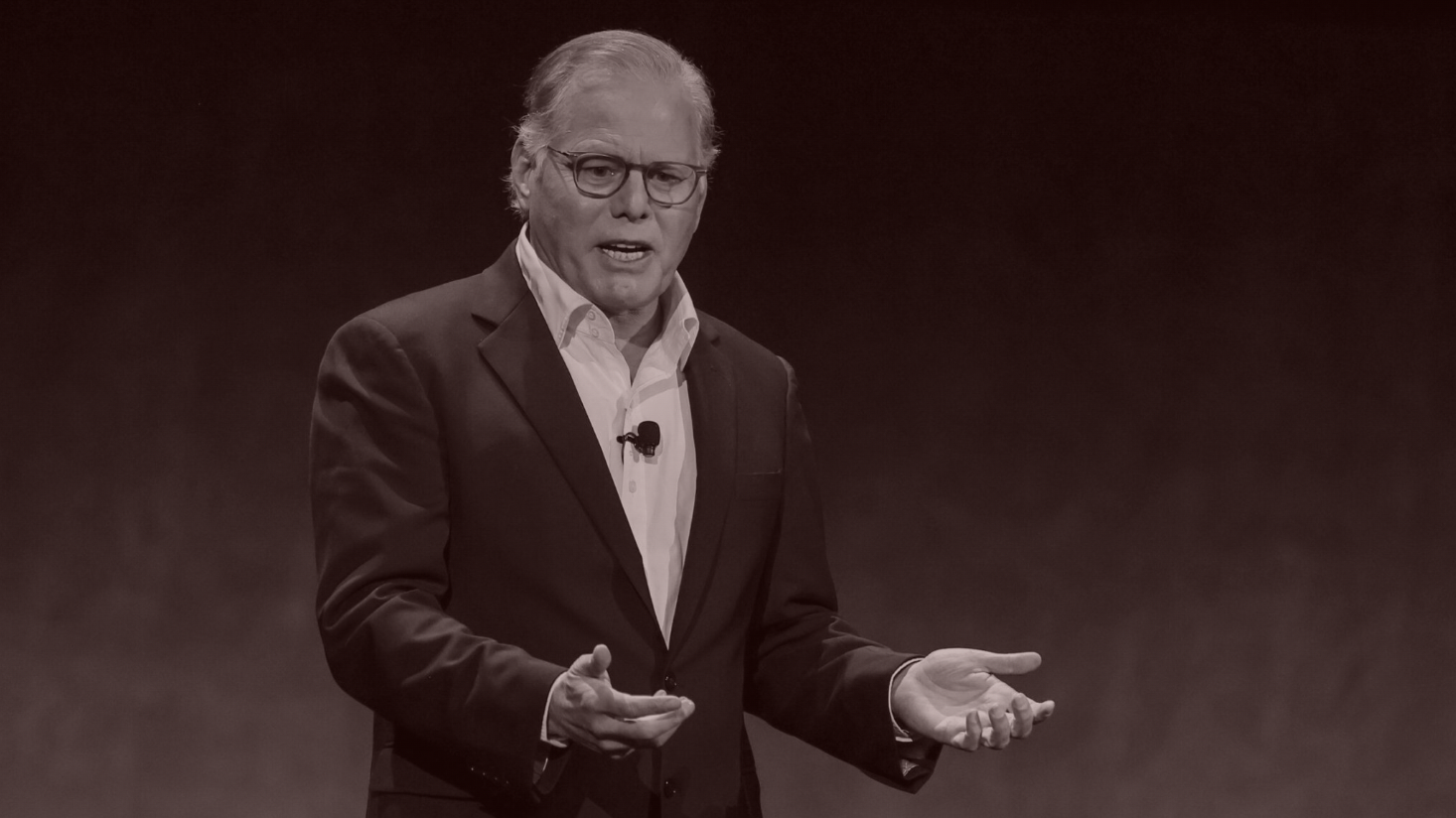
| It’s been a year since CNN has been under Zaz rule—a mixed bag of earnest repositioning and depolarization, to be sure, but also rough headlines, rougher ratings, and high-profile departures. Chris Licht’s post-Zuckerificarion wasn’t going to happen overnight, but how long will it take? |
|
|
|
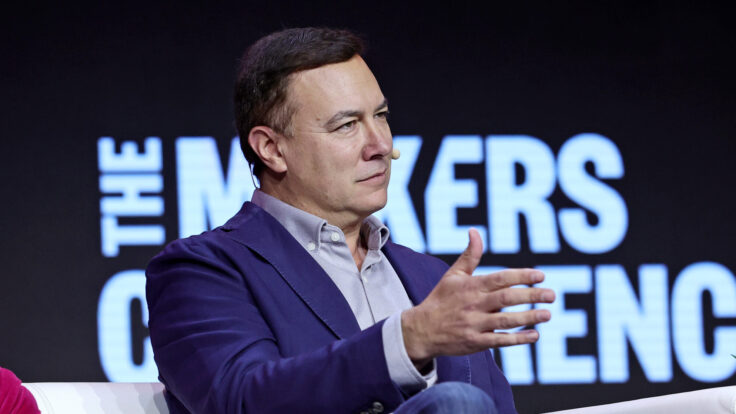
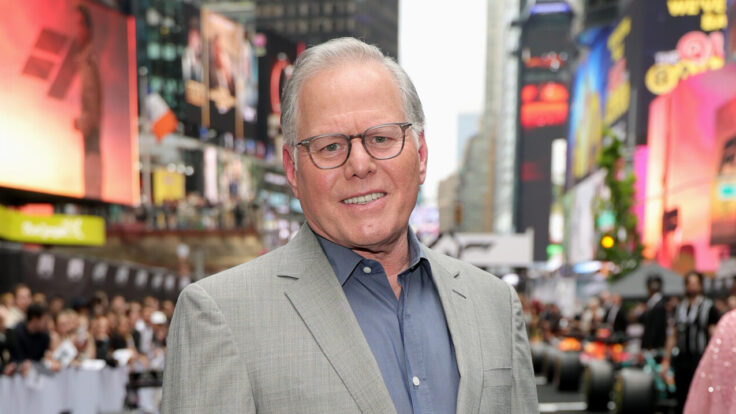
| Two years ago, shortly after David Zaslav engineered his $43 billion Discovery-WarnerMedia masterstroke and elevated himself to the rarefied stratosphere of legit media moguldom, he received some unsolicited advice from fellow traveler Brian Roberts, the chairman and chief executive of Comcast. As Zaslav would later recount to friends, Roberts had told him that the cable news business, with its partisan politics and outsized egos, could be a major distraction in the grand scheme of operationalizing his then-$200 billion market cap multinational telecom and media conglomerate. Cable news, so the story goes, accounted for a mere single-digit percentage point of overall revenue and a disproportionate amount of the company’s narrative and his executives’ anxiety. In time, Zaslav would embrace the line as his own, and add some playful embellishment: CNN was some 6 percent of his business, he would tell friends, and 90 percent of his headaches.
It’s a sentiment that many media executives can sympathize with, especially this week: Rupert Murdoch—spotted in the wilds of Manhattan on Tuesday, and looking quite healthy, by the way!—evicted his most influential star from Fox News due in part to his embrace of dangerous conspiracy theories and alleged vulgar missives about senior executives, which were apparently unearthed via litigation discovery. And Zaz himself has seen CNN’s heavily marketed new morning show self-immolate thanks to, depending on who you ask, Don Lemon’s petulance, bad chemistry among the co-hosts, or the programming shortcomings of his hand-picked lieutenant, Chris Licht.
Television news, after all, is an addictive and insanity-inducing business, and the headaches are the price of admission. The challenges that Bob Iger and Dana Walden have been forced to deal with at ABC News, or that Bob Bakish and George Cheeks face at CBS News, are quite familiar to readers of this column. Of course, Roberts this week found himself with a different and indeed more substantial headache: the eviction of NBCUniversal chief Jeff Shell due to his inappropriate relationship with a CNBC correspondent. (Though as my partner Bill Cohan noted in a brilliant putative deal analysis, published earlier today, Shell’s ouster might help facilitate a future WBD-NBCU alphabet soup conglomerate.)
Nevertheless, Zaslav has been dining out on Roberts’ advice, and with good reason. One year ago, Zaz installed Licht as chairman and C.E.O. of his historic news brand with a mandate to cut costs and re-center the network after its anti-Trump resistance era. Zaz’s thesis, in its most romantic articulation, was that CNN was embracing a “rendezvous with destiny” to serve as an impartial and nonpartisan global news organization, a home for Republicans and Democrats and independents alike to convene over their adoration for severe weather coverage and Michael Smerconish. (The latter’s respectful interview Tuesday night with MAGA firebrand Matt Gaetz was a source of significant pride for the leadership.)
Only Zaz knows his master plan with CNN: Is he contemplating a merger or a sale or a spin, or does he simply envision that CNN remains the reputational jewel of his portfolio forevermore, even if he expands WBD into a mega-conglomerate via M&A? Whatever the case, how many headaches can the guy stand? |
|
|
| Zaz’s “rendezvous with destiny” ambitions were noble, but the execution, at least so far, has left a lot to be desired. While Licht succeeded in Zaz’s ambitious P&L management—neutering CNN Films, laying off hundreds of employees, and streamlining dayside—his tack-to-the-middle editorial strategy has been administered inartfully, with seemingly ad hoc programming moves (the Tapper primetime experiment, the Don-to-the-morning gambit, whatever is going on at 10 p.m., etcetera) that have diminished CNN’s ratings to their lowest point in a decade, placing the network in third place behind MSNBC by all available metrics. Annual profits, which were north of a billion dollars in the Trump-Zucker era, fell to around $750 million in 2022. Licht has a $900 million profitability target this year, which he is not currently on track to hit.
Following Zucker was a titanic task, as was being the first executive to leap from the WBD fiscal trench. And few TV executives would be equipped to simultaneously please a powerful boss, a wounded staff, and millions of viewers all at once. Eggs were always going to be broken. In the grand scheme of Zaz’s empire, after all, some bad headlines and a few hundred million in lost revenue doesn’t necessarily mean all that much—so what if CNN makes $1 billion or $750 million, the thinking goes. And that’s true, in many ways.
But there are larger economic forces at play. The question arises in media circles, and arises quite often among those in Zaz’s milieu, over whether he should sell CNN. Warner Bros. Discovery still has some $45 billion in net debt hanging around its neck, some argue, and selling the news asset would instantly reduce that by about 20 percent, jumpstart the stock, and alleviate those headaches in the process. Plus, now might be the time: The lucrative sub fees that sustain CNN’s profits are likely a mere five or six years away from nosediving.
It’s probably a fever dream. Zaz has shown no indication that he intends to sell. He has spoken passionately about news’s essential value to the WBD portfolio, signaled a long term commitment to Licht and others, and even his mentor John Malone has said publicly that selling CNN would be “a coward’s way out.” Moreover, sources close to Zaz say he’s genuinely excited about owning a global news network, and is no more likely to sell CNN than Robert Kraft is likely to sell the Patriots. Lastly, as Bill noted in his piece, many on Wall Street believe that CNN would not create regulatory hurdles for certain future WBD deals. |
|
|
| Still, Zaz likely recognizes that it’d be preferable not to drive down the value of the brand any further, and Licht has presumably learned a thing or two about what works and what doesn’t. In the months ahead, he’s likely to return to a more consistent primetime programming strategy helmed by a star anchor at 9 p.m. The most obvious candidate for that role is Kaitlan Collins, a star correspondent with conservative bona fides that fit nicely into the broader CNN strategy of wooing conservatives back to the network. At 31, she is still getting comfortable as an anchor, but arguably that can be honed, or produced, as they say.
Of course, the move would open up yet another vacancy on the morning show, but with Lemon’s ouster that enterprise is due for another makeover anyway. Either way, despite the mornings-are-the-new-primetime pitch Licht used to lure Lemon to set his alarm for 3 a.m., the stakes there are decidedly lower.
If Licht moves fast enough, and if a Tucker-less Fox News continues its rightward drift, it’s not inconceivable that CNN could fulfill Zaz’s promise and establish itself as a reliable home for election season viewers who can’t tolerate Fox’s batshit crazy conspiracy theorism or MSNBC’s acquiescence to the more liberal wing of the Democratic party. (It’s way too early, but Fox’s ratings have taken a significant hit following Tucker’s ouster this week.) At their most partisan extremes, neither of these networks speak to the average American. Then again, the average American doesn’t watch cable news; septuagenarian party loyalists do. And therein lies the problem of trying to position a nonpartisan linear news business for long-term success in the digital age without a streaming strategy.
On the future-facing front, Licht is working on a much-needed UX overhaul of CNN’s website, helmed by former NowThis president Athan Stephanopoulos, which is expected to roll out later this year. Of course, if the long-standing popularity of hot mess CNN.com and the durability of Drudge Report and Daily Mail teach us anything, it’s that design alone—while clearly meaningful for Times and New Yorker tote bag-carrying aesthetes—isn’t necessarily the most essential ingredient. (Still, bring it on.)
Anyway, Licht certainly has some more runway in Zaz’s eyes, and can credibly make the case that his hands were both full and tied during his first six months with all the cost cuts and layoffs. But the slow-moving editorial overhaul, various programming failures and the staggeringly low ratings aren’t great for CNN’s reputation, nor Licht’s own.
Zaz and Licht have both preached patience, but there is also an argument against it. Even before CNN This Morning launched, I heard that there were signs that the Lemon-Poppy-Kaitlan ego competition wasn’t going to work, even if the network marketed it as a friendly breakfast show among genuine friends. Licht could have pulled the plug then, or when Lemon stepped in it with his Nikki Haley remarks, or when the Lemon narrative, fueled by tabloid and trade headlines both real and baseless, became too relentless to allow for the show’s repair.
Licht finally jettisoned Lemon this week—or rather, enlisted his deputies to tell his agent (Suzanne Scott called Tucker directly)—and Lemon blew the network up with a tweet that once again thrust CNN into the headlines for all the wrong reasons. In the meantime, Lemon hooked up with his friend and former colleague Allison Gollust, the one-time CNN executive and comms chief and Zucker’s romantic partner, bringing the long-standing tensions between the current and former administrations out from the shadows.
By every metric other than the amount of Republicans on air, or this new Gayle King & Charles Barkley-helmed weekly show that won’t launch until the fall, the trend lines for CNN are pointing down. Time will tell whether Licht admitted defeat on the morning show too late, or with just enough time to change course overall. But since this is cable news, that strange ersatz hybrid of journalism and entertainment, everyone will be watching: viewers, his newsroom, the industry, and Zaz. |
|
|
|
| FOUR STORIES WE’RE TALKING ABOUT |
 |
|
 |
|
 |
|
 |
| The RealReal Wars |
| P.E. vultures are circling the troubled consignment juggernaut. |
| LAUREN SHERMAN |
|
|
|

|
 |
|
|
|
Need help? Review our FAQs
page or contact
us for assistance. For brand partnerships, email ads@puck.news.
|
|
|
|
Puck is published by Heat Media LLC. 227 W 17th St New York, NY 10011.
|
|
|
|