 |
|
Greetings from New York, where I’m just stepping out of Andrew Ross Sorkin’s characteristically excellent DealBook Summit at Lincoln Center—great to see all of you—and, 10 blocks south, the good folks at Rockefeller Center are getting ready to light up the Christmas tree.
Fittingly, tonight’s edition of In the Room ventures inside 30 Rock, where Mark Lazarus’s plans for the NBCU cable channel “SpinCo” are coming into view and Rashida Jones is readying an exit. Then we head down to Washington, where Will Lewis is finally ready to reveal the next executive editor of The Washington Post.
🍸 On the latest edition of The Grill Room, former CNN Digital chief Andrew Morse joined me to discuss his new career as C.E.O. of The Atlanta Journal-Constitution, a Cox entity, where he’s attempting a miniaturized version of the old NYT digital innovation playbook at the local level. Plus, he offers some revelations on his disagreements with David Zaslav and Chris Licht, the unceremonious cancellation of CNN+, and the troubles afflicting the media landscape writ large. Follow The Grill Room on Apple, Spotify, or wherever you get your podcasts.
🎙️ Plus… if you want even more Washington Post content, I joined Peter Hamby on Puck’s flagship podcast, The Powers That Be, to talk about the impending announcement of the paper’s next executive editor. Listen here.
📞 Finally, a programming note for our Inner Circle members: Tomorrow at 4 p.m. ET, I’ll be hosting an off-the-record conversation about the latest convulsions and plotlines roiling the media landscape, with a focus on Comcast’s cable spinoff and what it means for MSNBC. Register here.
Now, let’s get started…
|
 |
| Rashida Revisionism & Will’s Editor-Hunting |
| News and notes on the yuletide fixations of legacy media and its stalwarts as corporate holiday party season beckons: Rashida Jones’ impending MSNBC exit, SpinCo spin, and the denouement of the Washington Post (first newsroom!) executive editor sweepstakes. |
|
|
|
| On Wednesday, at the New York Times DealBook Summit, Jeff Bezos hinted at some new innovations he had planned for The Washington Post, which, as Bezos acknowledged, “punches above its weight” when it comes to negative headlines. “We saved The Washington Post once, and we will save it again,” he said, noting that the paper had experienced six or seven years of profitability before falling into its current funk. How? “I have a bunch of ideas,” he said. “Stay tuned, we’ll see.”
In the more immediate future, as early as next week and certainly before the end of the year, Post C.E.O. Will Lewis will name an executive editor for the beleaguered mediaco—well, technically, the executive editor of the first newsroom, for those following along. (You can study up here if you need a refresher.) This, one hopes, will be the culmination of his long and tortured effort to appoint a permanent newsroom chief and move the storied D.C. institution beyond the woes of yet another year from hell: ongoing financial losses, rudderless strategy, staff uprisings, endorsement-gate, etcetera.
If you recall, the last time Lewis attempted an editorial restructuring, the feculence hit the fan. In June, he tried to appoint his old friend and Fleet Street veteran Rob Winnett to the position—while inelegantly trying to transition then-executive editor Sally Buzbee to the nebulous third newsroom, where she would oversee soft-focus, social-friendly content to grow the Post’s audience. Instead, Buzbee self-defenestrated, the staff turned on Lewis and Winnett over a litany of ethical concerns, real or perceived, and Winnett eventually opted to stay home in London. Amid all this, Lewis made an eleventh-hour appeal to Wall Street Journal veteran Matt Murray to steady the ship as the newsroom’s temporary leader.
In the process, Lewis also articulated a few unvarnished truths about the Post’s business: “Your audience has halved in recent years,” he told his journalists. “People are not reading your stuff. I can’t sugarcoat it anymore.” This memorable admonishment stressed the urgency of the Post’s challenges, but it also foreshadowed a new tone and tenor from the front office, and a new mandate for the notoriously disgruntled staff: Get with the program, or get out. Indeed, when the Post’s union protested Lewis’s recent return-to-office mandate, he told them he’d kindly accept the resignations of any W.F.H. dead-enders. And as I noted last month, neither he nor Bezos were terribly bothered by the departure of morally righteous journalists who protested the decision to forgo a presidential endorsement of Kamala Harris. As with any business transformation, they probably welcomed the turnover.
In a best-case scenario, Lewis would use the anointment of a new executive editor as an opportunity to further nudge the Post out of its era of inertia. This new leader would not merely be tasked with overseeing a newsroom, but also establishing a new mandate for the coverage, and, indeed, even a new identity for the paper itself—one divorced not just from the rudderlessness of the Buzbee era, but also from the “Democracy Dies in Darkness” posturing of the Baron era, and perhaps with a little less nostalgia for Bradlee and Graham and Woodward and Bernstein.
Presumably, this new mandate would align with Bezos’s own desire to restore the Post to its former place as the paper of record for official Washington and, as I’ve noted before, as an at least semi-nonpartisan organization servicing all Americans, rather than a regional edition of the Times political report servicing anxious liberals. At best, the Post might once again establish itself as a compelling and authoritative source on the culture of power and influence in Washington, with its finger on the pulse of not just the White House and Capitol Hill but also Cleveland Park and Kalorama. For now, Lewis would at least like someone who can inspire staff to come into the newsroom and file a little more often.
The challenge, of course, is finding that leader among a particularly limited talent pool of editors who are actually willing to inherit all the aforementioned challenges, and whose identity won’t establish a second theater of war. Earlier this fall, executive recruitment firm Spencer Stuart approached dozens of candidates on the Post’s behalf, including Times managing editor Carolyn Ryan, Cliff Levy, and other members of the Times masthead—the majority of whom did not engage in anything beyond preliminary talks. Levy, who now oversees the Times’s Athletic and Wirecutter, did engage beyond preliminary talks, and is among the handful of candidates who interviewed with Lewis and submitted memos outlining their near- and long-term visions for the newsroom. There are other external candidates as well, though I don’t yet have their names.
Meanwhile, as previously noted, there are two internal candidates vying for the position: Murray, the acting executive editor, and managing editor Matea Gold, herself a 12-year veteran of the paper. Both have their strengths and weaknesses—don’t we all—but, crucially, neither is seen as the kind of change agent that Lewis would presumably favor to lead the newsroom. Frankly, they’re just hometown Cliff Levy types—well-pedigreed and smart, yes and of course, but institutionalists without track records of innovation and risk-taking. Long before his current sinecure essentially serving as the Wirecutter and Athletic’s liaisons to the mothership, Levy ran the ill-fated NYT Now app project, where he liked to point out the novel quirk of a Times product saying “hello” to its readers. Like others, he’s a multi-Pulitzer winner who commands respect and has been promoted out of power.
Murray, who served as the Journal’s editor-in-chief when Lewis was its publisher, may be his preferred candidate of the two, but many in the newsroom are unsurprisingly said to favor their longtime colleague. And, alas, he may have to settle on one or the other. But, boy, would that seem like a waste of time and energy—and, frankly, a nonsensical conclusion to Lewis’s year of magical thinking. He arrived, after all, to bandage up a bleeding business, offer a compelling (if not entirely lucid) vision of its future, and signal significant forthcoming change. To do all that… and then somehow suggest that the leading candidate was in the building all along… would seem like a bizarre management decision. Why come up with a plan if you aren’t going to bring in someone to execute it? Seems like Lewis would have a hard time explaining that one to his boss. |
|
|
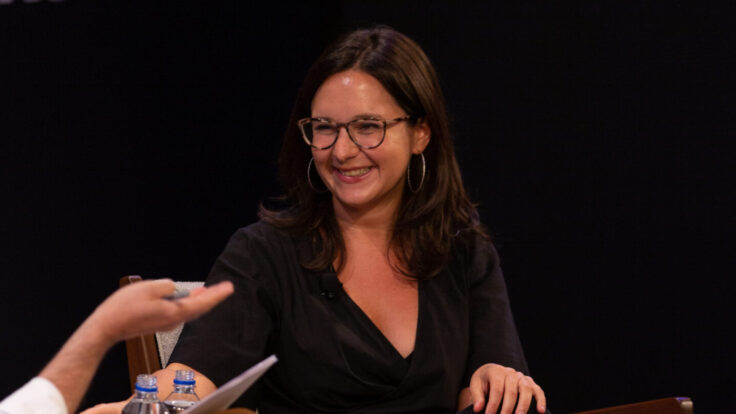
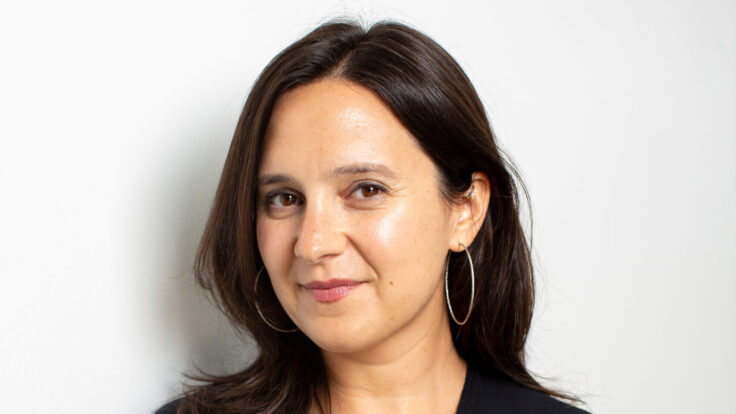
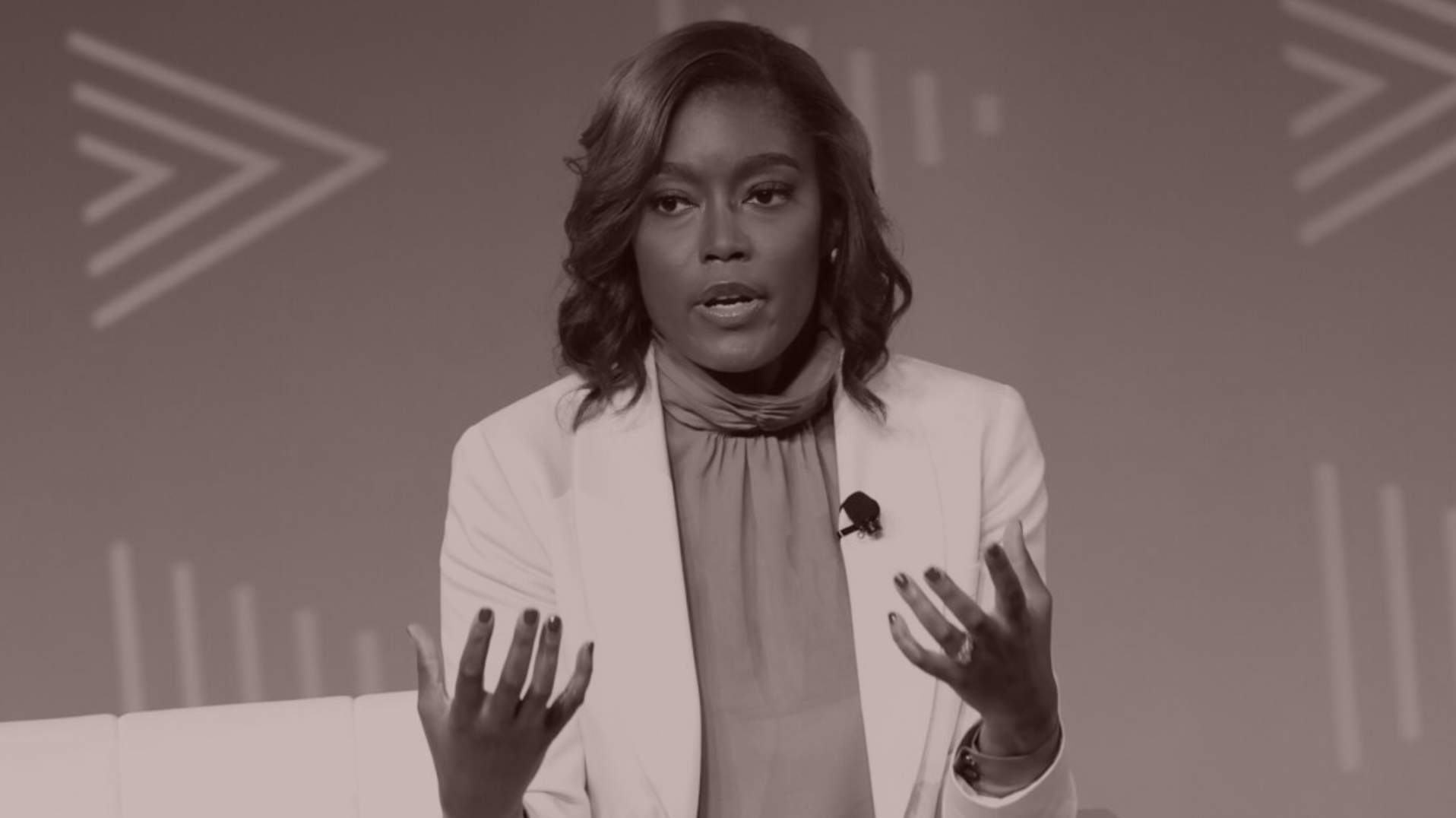
| On Tuesday night, shortly after NBCUniversal’s top brass, producers, talent, and handlers—even Lorne!—filtered out of the company’s annual holiday party at 30 Rock, Status’s Oliver Darcy reported that MSNBC president Rashida Jones was “mulling a departure” from the network. In Oliver’s recounting, Rashida had “completed a four-year run in which she successfully led the network to ratings highs,” “surpassed CNN in a number of viewership metrics,” “sought to establish a post-linear future for MSNBC,” “stayed out of the headlines,” and retained top talent, “most recently re-signing marquee host Rachel Maddow to a new deal earlier this fall.”
I love Oliver—seriously, he’s a friend—but her departure is less of a unilateral decision than a conscious uncoupling. Alas, her vision of a “post-linear future” for MSNBC sorta amounted to coughing up extraordinary paydays for Maddow and Scarborough and allowing them to run their respective fiefdoms unilaterally, all while benefiting from CNN’s unconditional forfeiture in the cable news wars. Meanwhile, Jones has hardly wielded the sort of authority or vision commensurate with her perch, and has been routinely disrespected along the way—whether it was the days-long Ronna McDaniel mutiny, or Joe and Mika’s recent rogue diplomatic mission to Mar-a-Lago. Also, for whatever it’s worth, the notion that Rashida re-signed Rachel is laughable: That’s a negotiation Mark Shapiro would have had with Jimmy Horowitz and Cesar Conde, whether or not Rashida was there at the end to sign the paper. Meanwhile, MSNBC has lost about half its audience since the election.
Anyway, Rashida didn’t have to see the writing on the wall since it was already articulated by Comcast’s decision to slough off its cable assets into the dreaded SpinCo, which portends a new and uncertain future for MSNBC. Meanwhile, her ambitions have always extended beyond her current position, as evidenced by her extracurricular gig as a fixture on the speaker circuit. And there is perhaps no better time to leave than now, when the growing irrelevance of cable news (excluding Fox) has become dramatically apparent to seemingly everyone outside of the network itself, and her own tenure can still be spun as if it were a command performance.
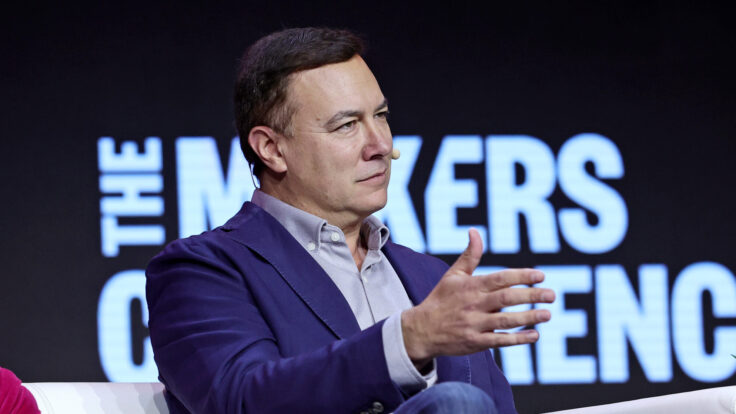
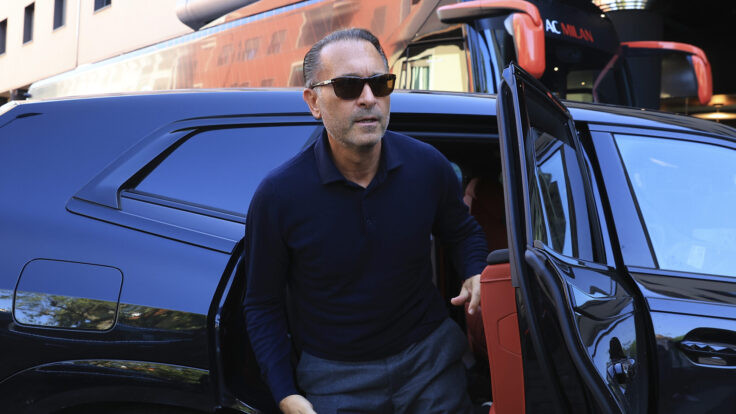
Speaking of: Comcast chief Mike Cavanagh and soon-to-be SpinCo C.E.O. Mark Lazarus are framing this separation of the cable assets as an opportunity for a new, well-capitalized, mostly debt-free, independent media entity to pursue new growth opportunities and even acquire other businesses and cable channels. And, indeed, that is what SpinCo may do in the next couple years. Maybe the company will use debt or private equity to finance the acquisition of other subprime media assets, like AMC or some of the underloved Turner networks. But it’s disingenuous for management to suggest to MSNBC employees that their network is in a stronger position after its own uncoupling from a $163 billion conglomerate.
The far more likely outcome, as I’ve noted before, is that SpinCo will be positioned for a sale to private equity when the tax burden lifts, two years after the spin goes into effect. And then the grinfuckers will really have at it, meticulously monetizing the decline curve. The notion that SpinCo can somehow avoid this fate because of all its positive cash flow skirts the fact that the cable business is in terminal decline, and there is no strategy in place to position the assets for a lucrative future in digital or streaming—at least not without making those assets much, much smaller.
But of course, even Laz’s career transition contains its own element of spin. His appointment atop SpinCo has been framed as a vote of confidence in the company’s future: Comcast wouldn’t put a talented executive in charge of SpinCo if it wasn’t serious about making it a success, the line goes. And, to be sure, Laz, a very talented executive, has an opportunity here to position himself for even bigger roles in the future if he manages the spinoff well and executes the eventual sale. (He’ll also almost certainly make a mint for himself.)
But it’s also important to remember that Laz ended up overseeing these assets because he lost the real battle for power at NBCUniversal to Donna Langley, as my partner Matt Belloni recently noted. Langley is even more well-revered by her superiors and charges, alike. So it’s less a “vote of confidence” in SpinCo than a consolation prize for a company veteran. |
|
|
|
| FOUR STORIES WE’RE TALKING ABOUT |
 |
|
 |
| Hegseth Blowback |
| Revealing Congress’s assessment of Trump’s cabinet noms. |
| ABBY LIVINGSTON |
|
 |
| Secret Gartenfeld |
| On Miami’s transformation into a contemporary art mecca. |
| MARION MANEKER |
|
 |
|
|
|

|
 |
|
|
|
Need help? Review our FAQs
page or contact
us for assistance. For brand partnerships, email ads@puck.news.
|
|
You received this email because you signed up to receive emails from Puck, or as part of your Puck account associated with . To stop receiving this newsletter and/or manage all your email preferences, click here.
|
|
Puck is published by Heat Media LLC. 227 W 17th St New York, NY 10011.
|
|
|
|