 |
|
Welcome back to In the Room. I’m Dylan Byers.
|
|
Greetings from Los Angeles. In tonight’s email, news and notes on two major developments in the media space: Michael Kassan’s defenestration from UTA over alleged egregious misuse of company funds—apparently the T&E policy doesn’t include paying off $500,000 in credit card debt—and Elon Musk’s abrupt decision to cancel Don Lemon’s contract after a very contentious interview. Lots of new details on both stories below.
🎾 In the meantime, I’m on my way to Indian Wells for the final stretch of the BNP Paribas Open. If you’re out in the desert, give a shout.
But first…
🇬🇧 Zucker’s bid vanquished: Jeff Zucker and Sheikh Mansour’s bid to acquire the Telegraph and Spectator has effectively been quashed following Prime Minister Rishi Sunak’s decision to introduce an amendment to ban foreign ownership, influence, or control of U.K. newspapers and periodicals. The new amendment is extremely comprehensive and, I’m told, will limit foreign ownership to a minority passive investment of less than ten percent. This effectively means that both the Tory broadsheet and the storied weekly magazine are all but off the table for RedBird IMI. In a statement, Allison Gollust, Zucker’s partner who now runs comms for RedBird IMI, said they were “extremely disappointed” by the government’s decision and evaluating “next steps.” It’s hard to see what those steps might be; this seems like an unequivocal victory for Tory opponents of the bid, and those who feared Gulf influence over their storied news outlets more broadly. Alas, it’s also a bummer for these entities, which need to go through the ringer once more.
What happens next is unclear, but the most likely scenario is that in due time the Telegraph and Spectator will return to auction. The leading bidders for the Telegraph will likely be Daily Mail owner Lord Rothermere and GB News owner Paul Marshall, who had been vying for the asset before Zucker launched his eleventh-hour debt-for-equity swap. Meanwhile, well-informed sources tell me the top bidders for the Spectator will probably include Rothermere, Rupert Murdoch, Czech business magnate Daniel Křetínský, and English hotelier Rocco Forte, among others.
🏔️ Paramount deal heat redux: Back in January, my partner Bill Cohan reported that Apollo had been in contact with Shari Redstone’s bankers to kick the tires on a Paramount (or National Amusements) acquisition. In February, they reportedly backed off. Now, in March, they’re reportedly back in the mix. Meanwhile, the David Ellison-RedBird-KKR consortium continues to evaluate a deal. So, what will happen? It’s impossible to say; everything is speculative and most leaks are being placed strategically. (Follow them far enough, and they get really speculative—former NBCUniversal C.E.O.s Jeff Shell and Jeff Zucker are now both tied in with Gerry Cardinale’s RedBird, and people love to wonder whether one of them might end up running some version of Paramount…) In any event, my money is with Bill, who noted that “the real deals are most often kept quiet as long as possible,” without “breadcrumbs in the media along the way.” (When you’re done with this email, check your inbox for Bill’s latest, which has more on the Apollo-Paramount chatter, as well as our man Zaz).
🏢 Meanwhile…: I’ve been told that Paramount is moving closer to selling the CBS Broadcast Center on West 57th Street, the company’s primary East Coast production center and headquarters of CBS News. CBS President and C.E.O. George Cheeks first hinted at a possible sale of the block-long building last year. Now I’m told that Paramount, which had initially been in talks with about ten suitors, has narrowed the field down to five.
And now, on to the main event…
|
|
|
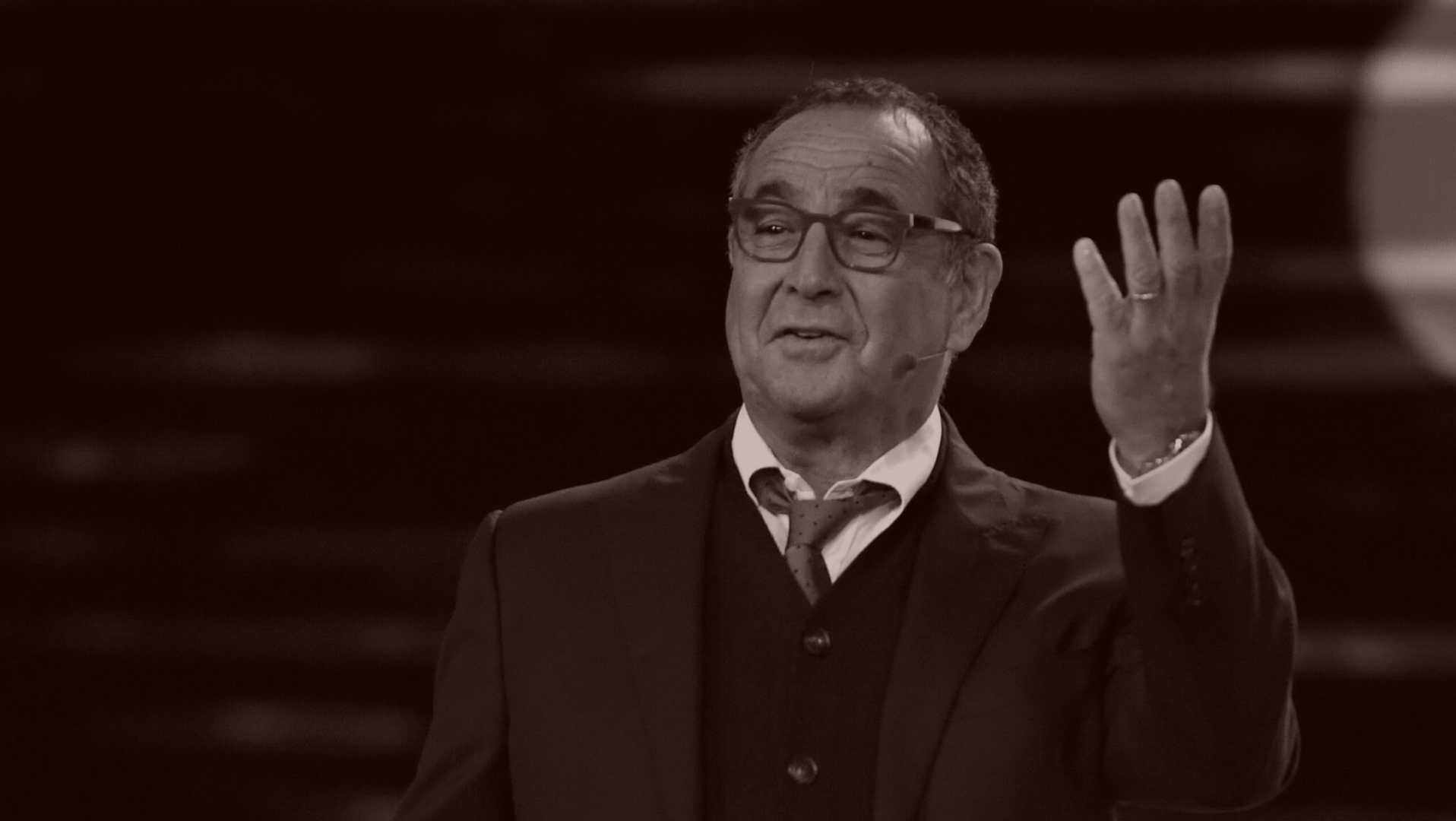
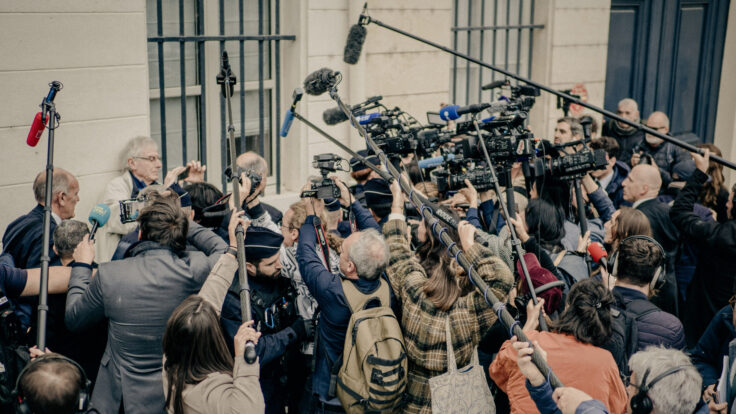
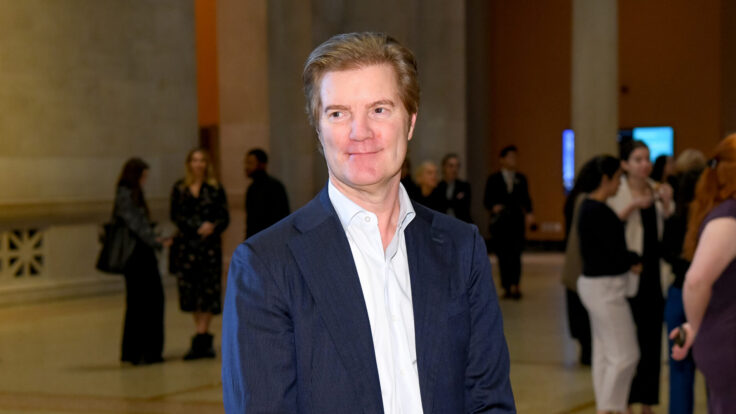
| The last time I saw Michael Kassan was, quite naturally, in Cannes, at the Carlton Beach Club on the Croisette, five years ago. I was having lunch with a certain former magazine editor and executive who called the affable and conspicuously-tanned trade marketing entrepreneur over to our table and insisted that “I must know Michael,” because “Michael knows everyone,” and “Michael runs all of this,” which I took to mean that he owned the annual advertising festival. Not quite. In fact, at that point, Kassan had just sold his strategic advisory firm MediaLink to the festival’s owners. But the deal formalized his self-ascribed role as “Mr. Cannes,” the conference’s de facto ambassador and its omnipresent heavy on the weeklong party circuit. A few years later, Kassan would mount an ill-fated bid to buy the festival, but it died in the crib.
In essence, Kassan was an access peddler, the media industry’s archetype of the Gladwellian connector. He had everyone on speed dial and shook hands at every table at the Polo Lounge, and for a price he would provide that access to his clients—a total agent and packager of the highest order. And, sure, he did “reviews” for big brands, advised them on which agencies to hire, even helped conduct executive searches—an advisor, influencer and kingmaker wrapped into one. But the true material advantage Kassan provided was access to decision makers and, indeed, to himself—an advertising svengali and Ferrari-driving bon vivant who had received book-length profile treatment from Ken Auletta and could share trade secrets over a McCarthy Salad.
Alas, buried further down in Kassan’s biography were some less illustrious details. In 1995, as an investor in El Pollo Loco, Kassan had been convicted of “grand theft by embezzlement” for taking funds from the company and moving them to other store locations without alerting the board. The crime was later reduced to a misdemeanor—he’d transferred the funds in plain sight—but Kassan, who was licensed to practice law in California, was suspended by the State Bar. In 1999, the California Supreme Court ruled to restore his license, but reiterated that Kassan had “fraudulently converted a large amount of money to his own use in violation of a most fundamental rule of honesty.” That year, Kassan was fired from the media buying firm Western Initiative Media—but not before he sued them for breach of contract.
The details of Kassan’s conviction and temporary disbarment are included in Auletta’s 2018 book Frenemies, though as the author himself notes, they’re also available via a Google search “if one is willing to scroll through several pages.” In any event, it became clear this week that United Talent Agency C.E.O. Jeremy Zimmer either never ran that Google search or, more likely, that he concluded, as the entire industry had, that Kassan was a reformed man, and that bringing him into the fold would provide a meaningful R.O.I. In 2021, UTA acquired MediaLink for $125 million in an all-cash deal. Per the terms, Kassan would become a partner at UTA while continuing to serve as C.E.O. of MediaLink, which would thereafter operate as “a UTA company.” Presumably, Zimmer was buying revenue and relationships, while Kassan hoped the deal would confer greater access via the UTA client roster and further expand MediaLink’s ambitions. (Disclosure: I used to be represented by UTA.)
Of course, it turned out to be much more complicated. “UTA ignored the history,” one Hollywood executive told me today. “Jeremy is a fool.” |
|
|
| On Wednesday, everyone who knows Michael woke up to dueling news alerts in the Hollywood trades. In UTA’s telling, the company fired Kassan “for cause” on March 7 and sued him for “misappropriation of company funds” following a third-party audit into financial irregularities. In the lawsuit, led by (who else?) Bryan Freedman, UTA detailed that Kassan transferred money from MediaLink to personal accounts, used company funds to pay off personal credit cards, deposited client checks directly into personal accounts, racked up millions in private expenses, gave his wife a company credit card so she could buy luxury goods (her preferred designer was Brunello, I’m told), and offered clients free MediaLink deals in return for equity that he kept for himself.
Per the complaint, he also charged his New York apartment and housekeeper to the company, and relocated a private driver from New York to Los Angeles and then used UTA funds to pay for his driver’s apartment. The lawsuit also provides messages and emails that allegedly appear to show Kassan’s knowledge of his misdeeds.
Was this gross impropriety or just gross Hollywood perks that aged poorly amid a declining business during a particularly bad year in the ad industry? In Kassan’s version, he resigned on March 6 and sued UTA for—you guessed it—“breach of contract.” In his lawsuit, led by Sanford Michelman, Kassan’s lawyers allege that Zimmer and UTA reneged on several promises they’d made during the acquisition process that effectively put him in a silo, robbed him of direct reports he’d been promised, shrunk his marketing budget, and stymied his ability to grow MediaLink. Most notably, Kassan also claims that UTA had agreed to an annual $950,000 “special expenses” budget and that Kassan actually spent less than the agreed-upon amount.
Both Michelman and Nick Shapiro, a spokesperson for Kassan, also told me that UTA is grossly mischaracterizing some of the aforementioned expenses. For instance, they argue that Kassan transferred funds into his personal account—MEK, Inc.—in accordance with his agreements with UTA and past practices as C.E.O. of Medialink. They say Kassan’s wife has had a company credit card since MediaLink’s founding, and that she used it to buy gifts for clients (Bottega for Aryeh Bourkoff, Gearys for Mattel C.E.O. Ynon Kreiz, Brunello for Zimmer himself, etcetera). “Everyone who knows him gets a Brunello Cucinelli bag,” Shapiro said. “This is how he grows the business.” Meanwhile, Kassan’s side claims that all of the private jet expenses were for Kassan, his wife and MediaLink clients. “They’re just making stuff up,” Michelman said of UTA’s accusations, “they’re making it up out of the ether.”
In short, both sides are accusing one another of trying to create a smokescreen. “Zimmer’s audit was no more than a fabricated pretext due to a personal dispute about how to best run MediaLink’s business,” Michelman said in a statement. Meanwhile, Freedman suggested that Kassan’s lawsuit against UTA was an attempt “to divert attention from the misappropriation of company funds that led to his termination.”
On one level, this is the unfortunate result of a very personal animosity between two Hollywood hustlers who wound up in a bad deal. Sources on both sides say Zimmer and Kassan’s relationship fractured fast, especially as Kassan feared he was losing authority over the company and resisted Zimmer’s attempts to integrate MediaLink into UTA—and, I’m told, UTA’s attempts to start putting a succession plan in place for Kassan, who is 73. Nevertheless, the UTA lawsuit alleges that in 2022 Kassan had over $700,000 in company funds wired to his personal S Corp and that, in 2023, he used $500,000 of company funds to pay off personal credit card debt “despite multiple warnings from MediaLink’s top finance executive” that Kassan never responded to.
On another level, however, this very now-litigious rupture is also a byproduct of the broader disruption of the advertising industry and the diminished stature of the influence-peddling business, the value of which no doubt seems abstract to today’s belt-tightening bean counters. Whatever Kassan was doing with company funds, it’s clear his actual business wasn’t doing all that well. As one Hollywood executive noted, “money and success have a way of smoothing out every kind of disagreement.”
This executive continued: “The headline-grabbing acquisition of MediaLink clearly failed and now everyone is howling j’accuse and hiring lawyers. If it was really working, no one would be fired suddenly or would resign unexpectedly, control wouldn’t matter, and [alleged] misappropriated funds would just be part of the grease that makes the ad industry hum.” |
|
|
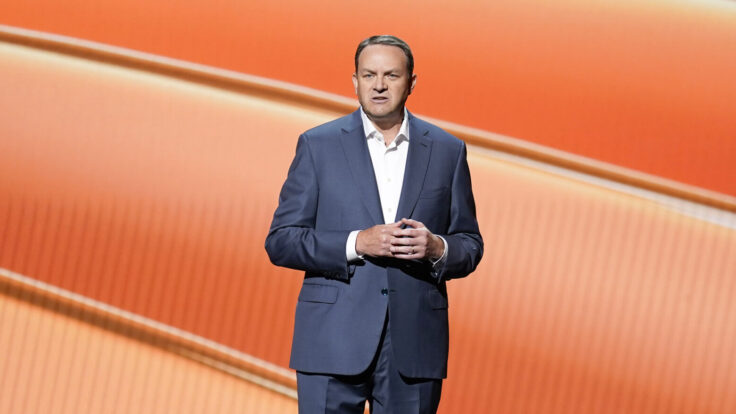
| Last Friday, toward the end of Don Lemon’s yet-to-broadcast interview with Elon Musk, the $200 billion-net-worth Tesla and SpaceX founder appeared to grow agitated and irritated with his interlocutor. Not without reason: Over the course of the roughly hour-and-fifteen-minute-long interview at Tesla headquarters in Austin, Lemon had pressed Musk on a number of uncomfortable topics—his use of drugs like ketamine, and how that might influence his national security clearance; his antisemitic tweets, as well as the preponderance of antisemitic content on X; his feelings about Donald Trump, etcetera—that he isn’t usually forced to discuss in the friendlier venues he frequents. In any event, Musk bristled on a few occasions.
The interview was for the inaugural episode of The Don Lemon Show, which Lemon intended to launch as part of his post-CNN, Tucker Carlson-style deal wherein Musk’s X (formerly Twitter) would have first-broadcast rights for episodes that would eventually post on other social media platforms. Musk had agreed to Lemon’s request for an interview, presumably to juice interest in the show and, apparently, advance his ambitions of turning X into a free-speech refuge for cable news defenestratees. (In a cringeworthy move, Lemon had announced his deal in true Tucker fashion, declaring X “the biggest space for free speech in the world,” which must be a clause in these agreements. Or at least one hopes, I suppose…)
Either during the interview, or shortly thereafter, Musk came to the conclusion that he no longer wanted to be in business with Lemon. On Saturday night, Musk fired off a text to Lemon’s agent at UTA, Jay Sures, declaring: “contract is canceled.” In the days that followed, Sures tried to engage X C.E.O. Linda Yaccarino to see if the company wanted to make an effort to reverse course, though, as any Elonologist knows, such a decision really wasn’t hers to make.
Finally, on Wednesday afternoon, Lemon announced the news to the world—in a statement, a video, even an appearance on his alma mater, CNN, where he had not appeared since his termination from the company last year. Meanwhile, Musk took to X and claimed that he didn’t like Lemon’s approach, which was just “CNN, but on social media,” and that Jeff Zucker, Lemon’s former boss and close friend, was “talking through Don,” so the show “lacked authenticity.”
Whatever form Lemon’s show takes, it will still be broadcast on X, and YouTube, and other channels—but Musk won’t be paying for it. As for whether Lemon gets any money, that remains an open question. In a statement on Wednesday, Lemon’s spokesperson Allison Gollust, also a former CNN executive and personal friend of Lemon’s, said “Don has a deal with X and expects to be paid for it,” adding, “if we have to go to court we will.”
And, indeed, they may have to. It turns out that by the time of the interview, Musk and Lemon only had an oral agreement and were still working on finalizing the written contract. There were texts and emails confirming the deal, but the actual document had taken weeks to finalize (which may or may not have something to do with the fact that Musk fired X’s legal department).
Of course, Lemon is still basking in the glow of his recent approximately $20 million payout from CNN, but I’m sure he’d still like the money. On the other hand, this whole affair has given him, at least momentarily, the thing he may actually crave, which is enduring relevance. |
|
|
|
| FOUR STORIES WE’RE TALKING ABOUT |
 |
| Kamala Comeback |
| A candid, one-on-one conversation with the V.P. |
| PETER HAMBY |
|
 |
|
 |
| TikTok Intrigues |
| A potpourri of Silicon Valley intel around D.C.’s TikTok fight. |
| TEDDY SCHLEIFER |
|
 |
|
|
|

|
 |
|
|
|
Need help? Review our FAQs
page or contact
us for assistance. For brand partnerships, email ads@puck.news.
|
|
You received this email because you signed up to receive emails from Puck, or as part of your Puck account associated with . To stop receiving this newsletter and/or manage all your email preferences, click here.
|
|
Puck is published by Heat Media LLC. 227 W 17th St New York, NY 10011.
|
|
|
|