{{ 'now' | timezone: 'America/New_York' | date: '%b %d, %Y' }} |
|
|
|
Greetings from Los Angeles, and welcome back to In the Room. It’s raining in Hollywood
this weekend. I’m staying in and watching the Masters. ⛳
In tonight’s issue, Julia Alexander and I sit down with Chris Lehane, the OpenAI policy chief and legendary political consultant, to unpack the logic behind the tech giant’s surprising, nine-figure acquisition of TBPN. Yes, John and Jordi do a great show, but this is more about message and marketing than merely scaling their three-hour
gabfest. And, as Chris ever-so-delicately points out, a couple hundred million really isn’t all that much for a company that just raised $122 billion at an $852 billion post-money valuation.
🎙️ Our conversation with Chris was part one of a special Grill Room episode unpacking the OpenAI–TBPN deal. We also spoke to TBPN president Dylan Abruscato about how the partnership can supercharge growth and what it means for future tech-media
entanglements. You can listen to both interviews on Apple, Spotify, or wherever you get your podcasts. (By the way: You may have noticed more of
Julia’s work appearing in In the Room of late. Stay tuned for more exciting news on that front in the coming weeks.)
Also mentioned in this issue: Dianna Russini, Mark Thompson, Alex MacCallum, Bari Weiss, Pete Hegseth, Wolf Blitzer, Meredith Kopit Levien, David Ellison, David Leavy, Virginia Moseley,
Mike Vrabel, Steven Ginsberg, Sam Altman, Ben Thompson, Bill Clinton, Steve Jobs, Ronnie Chatterji, Elon, Zuck, and more… |
-
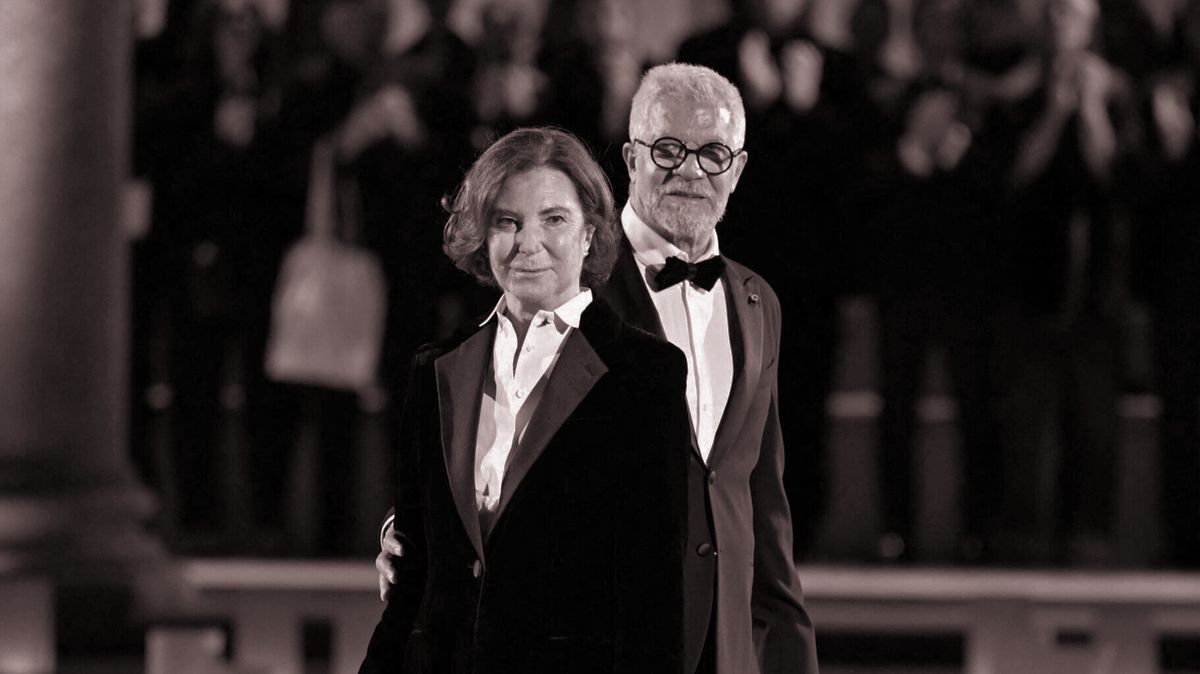
The Times turns on Russini: The New York Times is reinvestigating Athletic reporter Dianna Russini’s claims about her relationship with New England Patriots coach Mike Vrabel amid new concerns about the veracity of her story, according to sources familiar with the matter.
The news is a remarkable reversal given that The Athletic’s executive editor, Steven Ginsberg, had initially issued a full-throated defense of
the reporter after both she and Vrabel claimed the photos of the pair, published in the New York Post, had been taken out of context. “These photos are misleading and lack essential context,” Ginsberg said in his statement. “These were public interactions in front of many people. Dianna is a premier journalist covering the NFL and we’re proud to have her at The Athletic.”
Times sources say the Athletic had initially concluded that the images did indeed lack context,
including the presence of a larger group of friends, but then reopened its investigation due to “additional concerns” that are now being further reviewed. Russini’s previous coverage is also being reviewed, and she will not report for the paper during the investigation.
It’s not clear why Ginsberg felt compelled to give such a defiant denial in the first place, nor why the Times greenlit that statement so quickly. I reached out to Ginsberg several times this week and did not hear
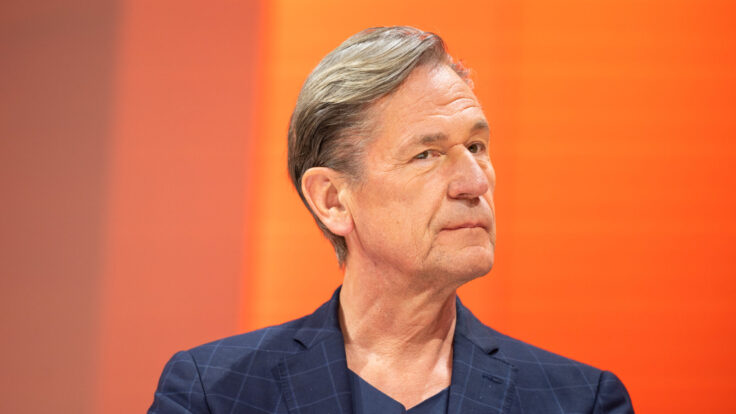
back. Times spokespeople are so far declining to comment. - MacCallum, neat: Mark Thompson’s move to promote CNN digital chief Alex MacCallum to chief operating officer has inspired a lot of speculation that she’s being lined up to take over as C.E.O.—a batshit theory that assumes the conquering Ellisons would somehow bow to the wishes of a presumably outgoing divisional C.E.O. as they
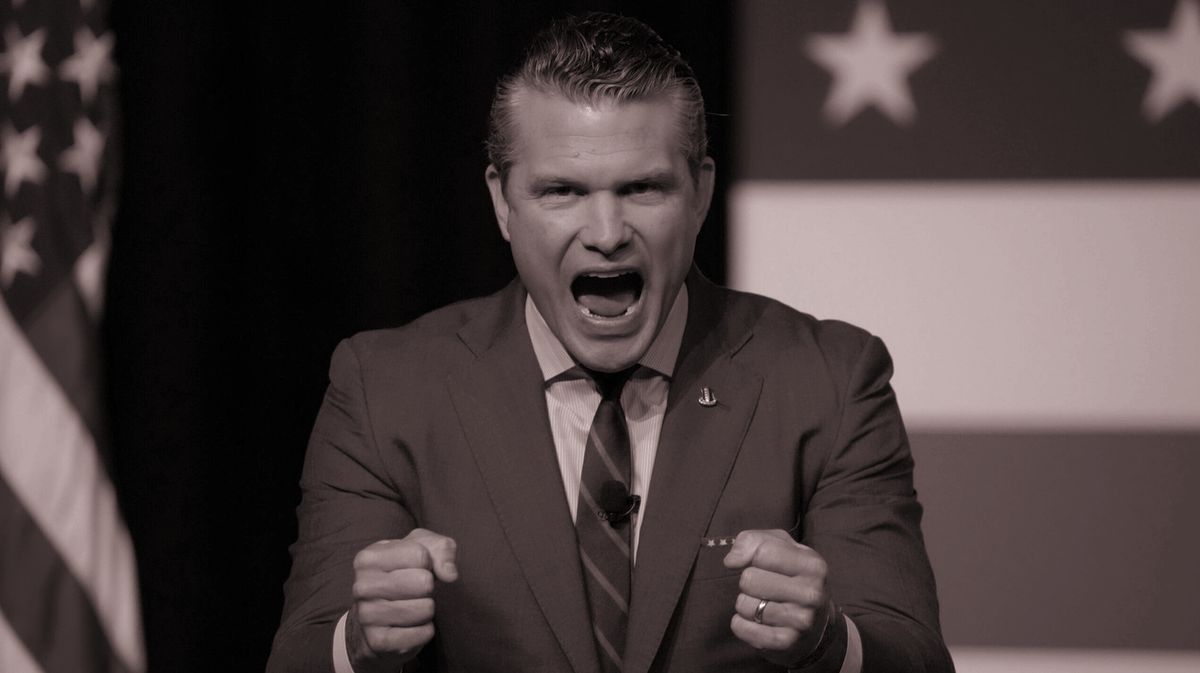
continue their diligence, close their deal, and feed Bari Weiss beta blockers while she fantasizes about a Pete Hegseth–Wolf Blitzer cage match. Anyway, that may indeed be what Mark wants, eventually, and it would mirror his promotion of Meredith Kopit Levien to C.O.O. of The New York Times, which positioned her to take the top role there. But it won’t be Mark’s decision to make.
David Ellison
and the Paramount-Skydance team will have their own ideas about who they want in charge. Alex may be a savvy digital operator—we’ll know whenever CNN decides to start sharing substantive digital growth metrics—and her promotion underscores the company’s digital-first priorities. But, friends, a digital leader is very different from a C.O.O.—itself a seemingly redundant role in a cable division that is going to be run in a matrixed manner. (Recall, CNN’s last C.O.O. was
David Leavy.) CNN still derives its profits from TV, and she obviously doesn’t have the talent relationships, commercial experience, or programming experience. The new regime will probably want someone who can oversee all aspects of the business. All that said, Alex is truly smart and rightly beloved. She’ll be a calm leader during a presumably chaotic post-merger integration.
In any event, the promotion raises a number of intriguing plot points. First, this move would
seem to underscore the likelihood that Mark will leave after the Paramount-WBD merger. At that point, Bari will likely have entered the picture—not as C.E.O. or business lead, of course, but as someone with a strong editorial influence at both CBS and CNN. It’s certainly hard to envision the power-sharing dynamics between Alex, Bari, and executive editor Virginia Moseley. But my well-informed suspicion is that Ellison & Co. envision all of them reporting to an
entirely different leader, yet to be determined.
|
|
|
|
A genuinely intelligent conversation with OpenAI policy chief Chris Lehane, who
led last week’s acquisition of TBPN. Here, he explains the marketing value of his new podcast, its supposed independence, and Sam Altman’s trust issues. |
|
|
|
When OpenAI announced its recent nine-figure acquisition of TBPN, the millennial
tech-business talk show hosted by John Coogan and Jordi Hays, even the industry’s smartest analysts had a tough time making sense of the deal. Of course, no one questioned John and Jordi’s decision to take the money, even if it was almost certainly more stock than cash. But why did Sam Altman’s $850 billion A.I. giant need a digital talk show—particularly so soon after pledging to abandon “side quests” and focus on the core
objective of, ya know, winning the A.I. race and revolutionizing the world?
Some saw it as a vanity project, others as the latest evidence—after Sora, the Pentagon partnership, etcetera—of Altman & Co.’s penchant for placing bad bets. “It’s simply a deal that makes no sense,” wrote Ben Thompson, the reliably insightful tech analyst and author of Stratechery. “What exactly is OpenAI getting by owning TBPN that it wasn’t getting before? … TBPN
already exists and, by all accounts, was making money, so why does OpenAI need to own it?”
To answer those questions, I turned to Chris Lehane, OpenAI’s chief global affairs officer, who engineered the deal and will be John and Jordi’s new boss. Chris is the legendary political operative who made his name as a combative crisis manager in the Clinton White House, then parlayed his “master of disaster” persona into a high-powered advisory career, working
with companies like Airbnb, Uber, and Netflix on policy, communications, and regulatory strategy. For the last two years, he’s been executing that same playbook for OpenAI.
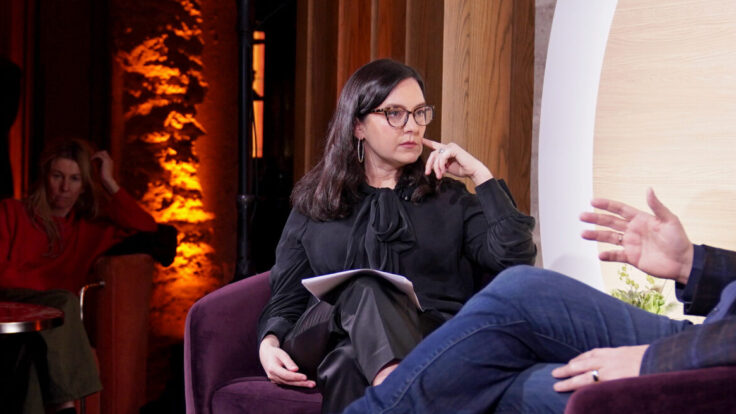
So… how does TBPN fit into that playbook? In a conversation with me and my partner Julia Alexander on The Grill Room, Chris explained that it’s all about owning the narrative. By scaling TBPN, OpenAI hopes to both expand “the A.I.-curious audience” while also leveraging John
and Jordi as an in-house marketing team, much as Steve Jobs once worked with Chiat/Day. “We tend to communicate in a very A.I.-researcher language [that’s] really hard to understand,” Chris told us. “We need to get a lot better at actually telling people why this is going to be important and good for them.”
Herewith, some highlights from our discussion with Chris, lightly edited for length and clarity. Those interested in hearing the entire interview, as well as our
interview with TBPN president Dylan Abruscato, can do so here. |
Dylan Byers: Why does OpenAI want to own
TBPN? What’s the thesis?
Chris Lehane: There’s a couple of different levels to this. First and foremost, Jordi, John, and their whole team are incredibly good at unpacking the ideas behind technology and specifically A.I.—the proverbial why and the how. I remember listening to them when we released o1. We put out an explanation describing it, but then I listened to
their show. They did a better job than I think we did at actually explaining it and translating it. Now, they were explaining it and translating it to a high-signal, Silicon Valley “opinion elite” audience… but they did a really good job of actually translating why it was important and what the big ideas were behind it. What they really do is break down the ideas behind the news.
The second part of that is, can we scale that particular audience while maintaining the quality and quantity?
Their core audience is roughly 70,000 high-signal people that really tune in on a daily basis. But there is a larger audience out there that is really A.I. curious and A.I. interested.
The third point is [marketing]. There have been a lot of analogies drawn to Microsoft and MSNBC, Bloomberg LLP and Bloomberg Media, Westinghouse and CBS, GE and NBC. The more apt analogy here is when Apple brought in Chiat/Day and created an in-house agency that became the Apple Media Lab. In an age where
content is the most important piece, bringing them in as the equivalent of a marketing agency for this era and this audience is an incredibly important aspect for us.
Dylan: But why does OpenAI need to be the one to scale this? Why spend this money?
We are at a moment when there is a much broader and growing interest in understanding the how and the why behind A.I. The 70,000 people they
hit right now are incredibly important, but imagine if it’s a much bigger audience—and that does take resources.
The second part is this aspect of bringing in an agency. You’re able to connect these folks who can do an incredibly good job of explaining things with a massive distribution channel that we can uniquely tap into. Put those together and you can start to see some really interesting opportunities.
And look, I never want to diminish costs or anything like that. We just went
through a $122 billion raise—the largest in history. Getting your head around the scale and scope of this technology, how transformative it is—this is not just your normal, highly successful startup; this is an entirely different sort of animal. People spend enormous amounts of money on their marketing agencies. We’re bringing that capacity in-house with expertise in terms of how people actually communicate—particularly A.I. users.
Dylan: Is this a
one-off—or a template for how tech companies will think about media going forward?
I do think we’ve seen technology platforms begin to really think about this. You look at how Netflix has changed how they put information out right [from] their platform. When I was at Airbnb, we used our audience as a distribution channel where we would communicate with them right through the platform. We were among the first to really use the actual distribution
channel of the platform itself to do our big product launches. And why not? [At OpenAI] we have a much bigger audience than all the traditional conventional media companies added together.
I think in the age that we are in, content is king. I just think we need to understand and recognize that we’re not in a time period anymore where you’re just speaking passively through paid advertising, or putting out an announcement in a blog or an old-school press conference or launch event. It’s a
totally different world right now. |
Declaration
of Independence
|
Julia Alexander: What kinds of media or digital
products will OpenAI build around this?
You should expect us to be building out some compelling and interesting franchises of our own. Over the last year, we brought on a chief economist, Ronnie Chatterji, and did a series of physical OpenAI economic events. We’ll be opening a space in Washington, D.C., called the A.I. Workshop, which we’re thinking of as an A.I. laboratory of democracy. You could see creating an entire content
series around that. We have something called the Forum, which has an A.I.-native audience of around 70,000 to 90,000 on a daily basis and is primarily a venue for developers and builders. We do something called “A.I. Academies,” tutorial modules for small businesses. We’ve been doing a lot of, in effect, beta tests of concepts that we could really build out, particularly as we approach a billion users. There’s just a big distribution network out
there.
Julia: How do you maintain editorial independence while also using TBPN as part of a broader strategy? How does that not create a problem for guests like Zuck, Dario, potentially Elon, who don’t want to participate in an OpenAI marketing machine?
I’m gonna give a little bit of a
wiseass answer and then I’ll give a serious answer. The wiseass part of it begins with the fact that Elon owns this thing called Twitter. All those people you just named are on Twitter. They seem to be comfortable being on Twitter. So like, I do think that that has a little bit been asked and answered. If you have a platform that seems to be very effective as a place to go and share your content and information, you’re gonna go on there.
The more serious answer: We do
have an editorial-independence commitment that was built into the contract. It’s a very specific provision. This [deal] only works if they’re able to maintain their editorial independence. I have a lot of faith and confidence that that will be the case.
Dylan: And how do you win the broader narrative battle around Sam Altman? Elon Musk is trying to kick the shit out of him every day. There’s a New Yorker
story this week saying he can’t be trusted. How do you convince the world that Sam is not the person that people are starting to depict him to be?
OpenAI, under Sam, has a very specific mission and purpose: to ultimately build A.G.I. that benefits all of humanity. And under Sam, OpenAI has led the effort to democratize access to this incredibly powerful technology so as many people as possible can participate in it. We have nearly a billion people who are
using this on a regular basis and the vast, vast majority of them are using it for free. We’re able to do that because Sam put in place a very different structure. We are a not-for-profit that oversees a public benefit corporation—the public effectively owns a big chunk of this through the nonprofit.
I also think you can judge someone’s character by who they are willing to stand up to and against. And right now there is a real battle, maybe even a fight going on, between Sam and
Elon and Mark Zuckerberg, and I think the fact that Sam is taking both of those folks on speaks for itself.
There really is this “people versus the powerful” dynamic that is taking place. It shouldn’t just be one person. Ultimately, this does need to be done through the small-d democratic process. We are the democratic platform out there. And we are trying to work through the democratic process to actually put these values in at the front end. I think you look at the actions, and those
actions matter a hell of a lot more than words. |
|
|
|
The industry’s go-to source for unflinching reporting on the trillion-dollar business of artificial intelligence -
perhaps the single most important technology of our time. Ian Krietzberg, the powerhouse journalist behind The Deep View, delivers twice-weekly insights into the latest dealmaking and breakthroughs in A.I., and how the intersecting worlds of finance, entertainment, media, and politics are being transformed in its wake. |
|
|
|
Join Emmy Award-winning journalist Peter Hamby, along with the team of expert journalists at Puck, as they let you in
on the conversations insiders are having across the four corners of power in America: Wall Street, Washington, Silicon Valley, and Hollywood. Presented in partnership with Audacy, new episodes publish daily, Monday through Friday. |
|
|
|
Need help? Review our FAQ page or contact us for assistance. For brand partnerships, email ads@puck.news. You received this email because you
signed up to receive emails from Puck, or as part of your Puck account associated with {{customer.email}}. To stop receiving this newsletter and/or manage all your email preferences, click here. |
Puck is published by Heat Media LLC. 107 Greenwich St., New York, NY 10006 |
|
|
|
|