Greetings from Los Angeles and welcome back to In the Room.
Prediction markets
are becoming a ubiquitous force in American elections, as evidenced by the hundreds of millions traded on Polymarket and Kalshi during the New York City mayoral race. As these platforms expand their trading options beyond the price of Costco hotdogs to politics, policy, business, culture, etcetera, it’s reasonable to assume that
many news media organizations will start orienting some of their coverage around those trades, much as ESPN and Fox Sports have increasingly integrated betting lines into their own broadcasts. Gamification drives engagement, especially when there’s money at stake.
Could the integration of prediction markets be similarly beneficial for political and general interest news outlets? It’s hard to fathom that Fox News or CNN or MS NOW wouldn’t at least consider integrating Polymarket
odds on, say, the likelihood of a U.S.-China trade deal, cabinet appointments, or the president’s approval rating. One even wonders if there are some potentially uncomfortable yet lucrative financial opportunities available to the first movers. Anyway, just a thought, which costs a nickel now that they’ve retired the penny. But more to come on this, I’m
sure.
In tonight’s issue, news and notes on Gerry Cardinale’s abrupt decision to abandon his bid for Telegraph Media Group—yet another plot twist in RedBird’s long and tortured attempt to acquire the Tory broadsheet. Is English nationalism really so strong, or did Gerry just not do his homework?
🍸 Plus, on the latest edition of The Grill Room, Julia and I assessed the week’s buzziest media flashpoints: Jim
Bankoff’s plan to spin off the Vox Media Podcast Network; Bob Iger’s flirtation with A.I.-fueled, user-generated content at Disney; the latest Trump-BBC drama; and the aforementioned impact that prediction markets might have on the news business. Follow The Grill Room on Apple,
Spotify, or wherever you prefer to listen.
Mentioned in this issue: David Ellison, Larry Ellison, Darrell Issa, Pam Bondi, David Zaslav, John Malone,
Bari Weiss, Hugh Johnston, Olivia Nuzzi, Jacob Bernstein, Kara Swisher, David Haskell, Gerry Cardinale, Matt Garrahan, Sheikh Mansour, Sir Paul Marshall, John Thornton, Chris Evans, Lord Rothermere, David Montgomery, Rupert
Murdoch, and many more…
Let’s get started… |
-
Deadline WBD: The bidding deadline for Warner Bros. Discovery is November 20, per The Wall Street Journal. As anticipated, Paramount, Comcast, and Netflix all intend to submit bids, though only the Ellisons are interested in acquiring the entire company, including its diminishing cable assets. The Journal also confirmed that WBD hopes to close a deal before year’s end. That sounds insanely quick and entirely impossible, of course, but
none of this has been remotely normal.
Meanwhile, Netflix is already facing potential regulatory scrutiny. On Thursday, California Rep. Darrell Issa sent a letter to Attorney General Pam Bondi warning that a Netflix takeover of Warner Bros. studios and HBO Max “raises antitrust concerns that could result in a harm to consumers.” As I’ve noted
before, these are precisely the kinds of regulatory hurdles that the Ellisons hope to exploit as they make their case to David Zaslav, the WBD board, and the company’s shareholders.
On Friday, John Malone, the WBD board chair emeritus and Zaz mentor, likened the suitors to the parable of the blind men and the elephant during a hit on CNBC. “We have three or four aggressive bidders,” he said. “They each are seeing a different elephant
because of where they come from and why this asset would be important to them in their future and the future of their companies. Larry Ellison sees this as a global technology platform that could really use A.I. to dramatically change the whole ballgame in social networking and streaming. The Netflix guys just see it as a great way to have the best library and the best production studio in movies and television. … So, I’m sure they’re studying the heck out of it.” (As a result
of our recent acquisition of Air Mail, Zaslav has become a de minimis investor in Puck.)
|
|
|
A MESSAGE FROM OUR SPONSOR |
|
|
- Bari’s CBS News blues: Speaking of Paramount… media people keep asking me who I think will get the CBS Evening News chair. Despite Bari Weiss’s big ideas about bringing in outside talent, it looks increasingly likely to me that she’ll end up going in-house. That would seem to favor current CBS
Mornings co-anchor Tony Dokoupil, especially since Norah O’Donnell already had the job. We shall see…
- Bob and Neal never-ending: The Disney–YouTube TV fight is poised to carry on “a little while” longer, as Disney C.F.O. Hugh Johnston put it on the company’s investor call this week. As my partner John Ourand has noted, “This deal is being closely monitored by the
entire sports business industry. Unlike YouTube’s previous negotiations with NBCU or Paramount, this is ESPN. If YouTube can survive a sports rights trench war in the throes of football season and win the negotiation, it will become a harbinger of declining rights fees across the industry.”
Disney stock dropped by nearly 8 percent on Thursday, its worst day since April. Meanwhile, YouTube is seeing subscriber defections following two Monday Night Football games and two
weekends of SEC football. Disney is projecting confidence. “We perhaps have some leverage as well, because there are other places people can go to get sports,” Johnston said on CNBC. But, as Ourand put it, “YouTube TV can undeniably play a much longer game.” - And finally, Olivia!: The Olivia Nuzzi book rollout and career renaissance continued on Friday with a splashy New York Times Style
piece from Jacob Bernstein, who ventured to Malibu to spend time with the former New York and soon-to-be Vanity Fair journalist, driving up and down P.C.H. in “her white Mustang convertible—like a Lana Del Rey song come to life.” He also described her as “the modern iteration of a
Hitchcock blonde.”
The top talkers here are the excerpts about R.F.K. Jr. from Olivia’s forthcoming book, American Canto, as well as further confirmation from her mentor Kara Swisher that she was the one who’d dimed Nuzzi out to New York magazine editor David Haskell. (“She just needed to come clean and she never did,” Swisher told Bernstein. “It was a betrayal of the audience.”)
That
said, the real thing here is the vibes. Olivia cultivated an image and an aura early on in her career, and she has managed to sustain it, with the help of profiles like these, despite being at the center of one of the most batshit crazy political-media dramas to come out of the Trump era (which is really saying something). She has come out of this with a book people are talking about, a new job (thanks to Mark Guiducci), and some great if somewhat
unctuous press. Good for her, she’ll be just fine—in fact, she’s already turning a personal nightmare into mystique.
|
|
|
After a second bid to take over The Telegraph met a
particularly British brand of resistance, RedBird Capital walked away from the whole ordeal. Now the 170-year-old paper is back to waiting for a Goldilocks buyer. |
|
|
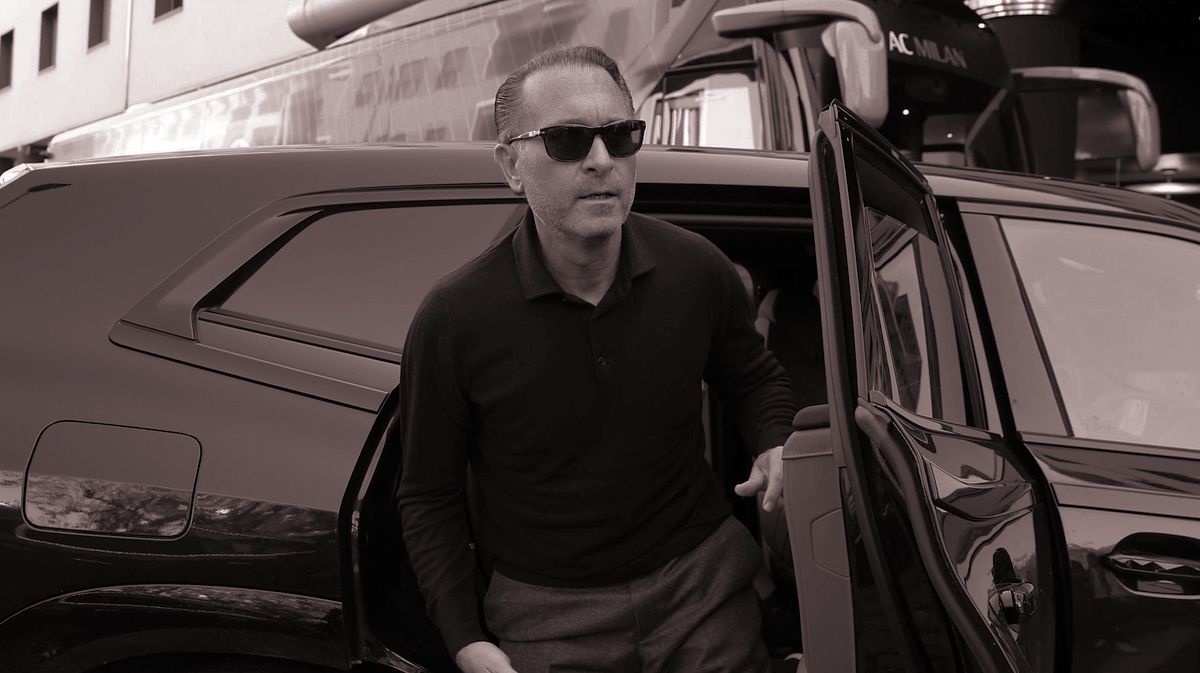
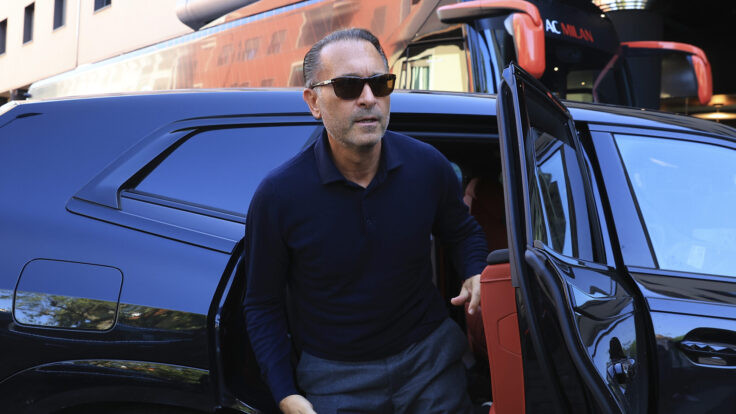
On Friday morning, Gerry Cardinale’s RedBird Capital abruptly
announced that it had withdrawn its bid for Telegraph Media Group—yet another plot twist in his firm’s prolonged and tortured attempt to acquire the storied Tory broadsheet. The news, offered sans explanation, seemed to surprise many—particularly since RedBird had recently imported the FT’s Matt Garrahan into an advisory role, presumably priming him to work with its bankers and advisors before taking it over. “Wow,” texted one banker. Or, as one of
Gerry’s contemporaries asked me: “How hard is it to buy a newspaper?”
Quite hard, it seems, at least in the case of The Telegraph. As you’ll recall, RedBird made its first run on the paper two years ago on behalf of Sheikh Mansour, the Emirati royal who seemed eager to add U.K. media assets to his portfolio of football clubs and investment funds. The Barclay family was then offloading both The Telegraph and The
Spectator in order to pay off a $1.4 billion debt. Gerry and Mansour used their co-investment vehicle, RedBird IMI, run by Jeff Zucker, to engineer a $750 million debt-for-equity swap for both assets. Mansour’s International Media Investments was intended to post 75 percent of the funding for each deal, while RedBird was prepared to fork over the remaining 25 percent. Meanwhile, Mansour offered to personally pay off the other half of the debt. (Disclosure: Through our recent
acquisition of Air Mail, RedBird is now a minority investor in Puck.)
Alas, RedBird IMI’s takeover was met with vehement protest from the Telegraph newsroom and ultimately rejected by British regulators who chafed at the prospect of foreign sovereigns taking over their storied media institutions, and thus instituted a new law capping foreign state ownership of newspapers at 15 percent. Plenty of blame was thrown around, and some wondered whether Zucker’s American bravado
wasn’t the right style of diplomacy for the ornery Brits. In the end, it probably came down to British protectionism or, some have argued, xenophobia. The Brits certainly haven’t objected to the Sheikh’s ownership of Man City. |
So RedBird IMI was forced to take their assets back to market. It sold The
Spectator to Sir Paul Marshall for £100 million, or about $130 million, last year. But it couldn’t find a buyer for The Telegraph at a price that would recoup what it had spent to acquire it. In lieu of other options, Gerry prepared to assume control of the asset under RedBird in a $674 million deal that reduced Mansour’s stake to the requisite 15 percent. Suddenly, Gerry, who had effectively been a passive investor supporting his Emirati business partner, was
on the cusp of becoming a British newspaper proprietor. (As I’ve noted before, Gerry’s stake in the Ellisons’ Paramount takeover has given him a similarly unexpected role in the American news business.) |
|
|
A MESSAGE FROM OUR SPONSOR |
|
|
Alas—yes, alas, again—the Brits weren’t terribly keen on Gerry running
The Telegraph either. As RedBird sought its own regulatory approval, the takeover once again became heavily politicized. Fleet Street—and The Telegraph especially—began drawing attention to RedBird chairman John Thornton’s business dealings with China. Meanwhile, they remained dubious that Mansour’s 15 percent stake would actually cap his influence. The whole thing began to take on the flavor of the roiling nightmare that has descended upon
The Washington Post—a saga in which everyone gangs up to reject new leadership without quite realizing that things desperately need to change.
This rejection, too, may have been inevitable, but some U.K. media suggested that Gerry needed to stick the landing, which likely led to the pursuit of Garrahan as an operating partner at RedBird—presumably a layover until taking over as the editor of the paper after the deal closed. But The Telegraph’s
current editor, Chris Evans, became enraged after learning about Garrahan’s recruitment—which, of course, further flamed the newsroom’s antipathy toward its would-be owners. “As soon as it leaked, the newsroom went into overdrive and started attacking RedBird,” presumably at Evans’s behest, one U.K. media source said. “It’s 2–0 to Chris. He beat back IMI and now RedBird.”
It may be 2–0 in the eyes of cynical British journalists, but that sure seems like a pair of Pyrrhic
victories. The Telegraph will now go back to the market as other suitors digest the mix of regulatory and player-hating headaches that RedBird endured. In their brief statement, RedBird said it will “work hard to help secure a solution which is in the best interests of employees and readers.”
The list of potential buyers probably includes all the same parties who kicked the tires the last time Gerry put it on the block—Lord Rothermere, the chairman and
controlling shareholder of the Daily Mail and General Trust; David Montgomery, the veteran newspaper executive; etcetera. Still, many anticipate that Gerry and Mansour will have to lower their price expectations. “It’s not worth much more than £400 million,” one U.K. media executive told me. |
So, Gerry will lose some money, but he’s probably happy to have his hands clean of the
effort. He’s quite busy trying to help the Ellisons run Paramount and buy Warner Bros. Discovery. And, as I’ve noted, he never really set out to buy The Telegraph in the first place.
Two weeks ago, in one final attempt to overcome the political headwinds, Gerry wrote an editorial for The Telegraph in which he stressed that the company would be run through his fund and that he would not govern it as “an individual proprietor,
which is an important distinction that gets overlooked in the debates around ownership.” Of course, as Murdoch has shown, invested proprietors are exactly what British journalists seem to want out of their owners—they just want a certain kind. As for Garrahan, perhaps Gerry can find other uses for him at CBS News or Front Office Sports. Or maybe Gerry will buy the Rothschilds’ 20 percent stake in The Economist and put him there.
Anyway,
it’s possible that the biggest loser in all this is actually The Telegraph, itself. Beyond defending his honor, Gerry also used his editorial to argue that The Telegraph needed to embrace change and set grand ambitions for the paper’s future. “For some time, The New York Times has prospered on the global stage, offering its users digital products and services alongside its journalism and attracting almost 12 million subscribers,” he wrote.
“Our ambitious plans for The Telegraph would see it become the global center-right equivalent to The New York Times, offering world-class journalism and commentary that resonates in the U.K. and globally.”
It’s a hell of an idea. Hopefully for them there’s a trusted Brit over there with significant capital, no foreign business partners, similar ambitions, and the stomach for Evans and his charges. |
|
|
Join Emmy Award-winning journalist Peter Hamby, along with the team of expert journalists at Puck, as they let you
in on the conversations insiders are having across the four corners of power in America: Wall Street, Washington, Silicon Valley, and Hollywood. Presented in partnership with Audacy, new episodes publish daily, Monday through Friday. |
|
|
A professional-grade rundown on the business of sports from John Ourand, the industry’s preeminent journalist,
covering the leagues, players, agencies, media deals, and the egos fueling it all. |
|
|
Need help? Review our FAQ page or contact us for assistance. For brand partnerships, email ads@puck.news. You received this email
because you signed up to receive emails from Puck, or as part of your Puck account associated with {{customer.email}}. To stop receiving this newsletter and/or manage all your email preferences, click here. |
Puck is published by Heat Media LLC. 107 Greenwich St., New York, NY 10006 |
|
|
|