Welcome back to The Varsity, once again from Puck’s sun-dappled South Tribeca office. The NFL
hosted a full day of meetings with flacks from every team, and I participated on a morning panel alongside Katie Feeney, ESPN’s Gen Z influencer, that focused on changes in media.
Pod alert: The Premier Lacrosse League starts its eighth season this week, so I asked Paul Rabil to come on The Varsity to walk us through the latest turns in his entrepreneurial journey. This is a good one. Also, make sure to listen to
yesterday’s episode: Joe House and Nathan Hubbard, co-hosts of The Ringer’s Fairway Rollin’ podcast, disentangled LIV Golf’s strategic misfires and mused about the potential return of LIV players to the PGA Tour.
Below, a little more on the LIV debacle, an update on the NFL’s blitz on the upfronts, and legal savant
Eriq Gardner stops by to weigh in on the gaming and prediction market chaos that has been keeping league executives up at night. As usual, Eriq’s reported analysis is the sort of work you can only find at Puck, and, as most of you know, he’s now writing for The Varsity every Monday. (By the way, if any of you have encountered problems registering for the Inner Circle to receive my Thursday emails, email Fritz@puck.news, and he’ll help out.)
Let me know if you need any
help sounding out the big words.
Also mentioned in this issue: Nicolás Maduro, Tyrese Maxey, Gannon Ken Van Dyke, Pete Rose, Joe Mazzulla, Jayson Tatum, Jamal Crawford, Michael Selig, Dan Spillane, Tim Donaghy, Mike North, Brian Rolapp, Quest Meeks,
Reggie Miller, Terry Rozier, Noah Eagle, and more…
Now, back by popular demand… |
The Brady Meter
Sixers 109–Celtics 100
Grade: A-
|
In the spirit of dedicated fan service, The Varsity is bringing back the hugely popular Brady Meter,
which analyzed the GOAT’s choppy first year as an NFL broadcaster. Most weeks, we’ll train our sights on one televised sporting event and the talking heads and yammermeisters that called it. In today’s issue, The Varsity turns its eagle eye to Saturday’s first-round Game 7 between the Sixers and the Celtics.
With about five minutes left in the game, Celtics coach Joe Mazzulla challenged a foul call made on Sixers guard Tyrese Maxey. NBC almost immediately
went to a replay that showed Mazzulla would lose the challenge—Maxey was, indeed, fouled. The broadcast then went to a replay that showed chaos on the Celtics bench, with Mazzulla listening to one coach advocating for a challenge over another coach pleading for him to save it for later.
That video turned out to be the highlight of an overall strong performance from NBC on Saturday
night. And the 29-year-old Noah Eagle, who narrated the moment in a highly fraught contest given the Jayson Tatum pregame scratch, showed that he will be a long-timer in this business. Reggie Miller voiced a lot of strong opinions (who knows if his coaching from the sidelines would have altered the outcome or not), and Jamal Crawford was likable enough. In any event, networks should ditch the three-person booth for all
basketball games outside of, maybe, the NBA Finals. |
- Here
come the upfronts…: The network upfronts season kicks off next week, as media companies descend on Manhattan to entertain ad buyers with lavish presentations. The NFL is the headliner, the cornerstone they use to build the rest of their schedule. Thanks to multiyear deals, networks typically enter the upfronts with around 35 percent of ad inventory around their NFL games presold. By the time the upfronts wrap, that number usually climbs to around 80-85 percent.
Of course, the NFL
sells itself. But networks like the opportunity to pitch against the league’s fall schedule in order to charge a premium for marquee matchups. Which is why plenty of executives did a spit take when NFL schedule maker Mike North commented on a Buffalo Bills podcast about a possible delay in the release date that would misalign with the ad-buying festivities. “I
don’t think it’s coming out in June,” North said. “That second week in May has been our target the last few years, but I don’t know that it’s impossible to think about that third week in May.” We’ll keep you posted. - LIV’s long putt: LIV Golf may be on its deathbed, but its fingerprints are all over the sport it tried to disrupt. Whatever damage the Saudi-backed league did during its brief yet loud life, it also shook the fossilized PGA Tour out of its
complacency.
I asked Nathan Hubbard, co-host of the Fairway Rollin’ podcast, to weigh in on LIV’s impact. “PGA Tour players were not making as much money as they ought to—the way it was structured, and the location of the events, were ceilings on achieving that value on behalf of players and the Tour more generally,” Hubbard said. “Brian Rolapp has been very clear publicly about this point: LIV contributed a lot to the PGA Tour’s eye-opening and
moving out of its sedentary position. … I think that’s the lasting legacy on the good side: enhancing the product in the long run.”
|
|
|
|
For the first time ever, the government has filed fraud charges over insider trading on a
prediction market. Could athletes, coaches, and trainers be next? |
|
|
|
For decades, the sports world’s gambling problem was treated as a disciplinary matter: Pete
Rose was banned, Tim Donaghy was suspended, etcetera—and usually at the discretion of league commissioners. Then the Supreme Court blew open the door for states to legalize sports betting, prediction markets arrived, and the gambling business entered a new, more legally treacherous era. Last month, federal prosecutors charged U.S. Army soldier Gannon Ken Van Dyke with commodities fraud after he earned roughly $400,000 by trading on Polymarket using classified information about Nicolás Maduro’s fate—the first time the government has pursued criminal insider trading charges related to a prediction market.
The sports world should pay attention. The Commodity Futures Trading Commission, once caricatured as the agency of Trading Places
frozen-orange-juice-futures lore, could soon become a vehicle for regulators to go after athletes, coaches, trainers, front-office personnel… anyone trading on a sliver of informational edge.
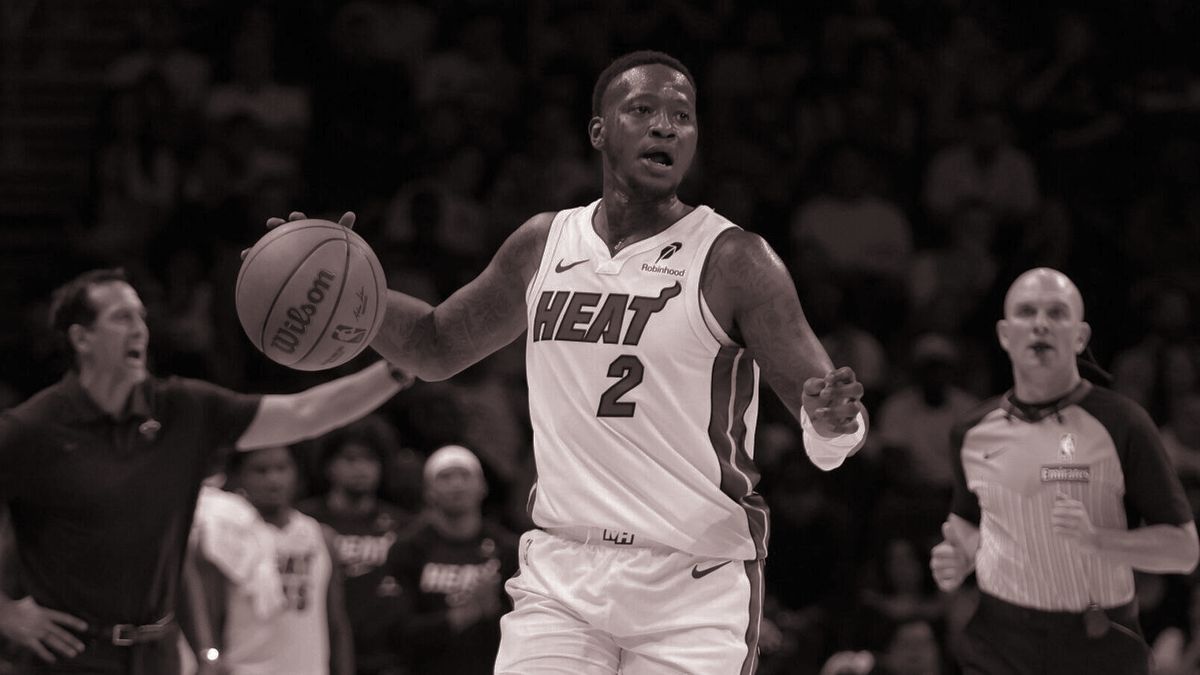
Given the ongoing jurisdictional turf war between the C.F.T.C. and the states, none of this is straightforward. There’s also the unresolved question of whether existing fraud statutes are equal to the task. Consider the case of NBA guard Terry Rozier, whom federal
prosecutors recently indicted over an alleged gambling scheme in which he would remove himself from games while associates sold that information to bettors. (Rozier has denied the allegations.) It’s been billed as an insider trading case, but the government’s charge is actually wire fraud conspiracy—and that distinction is doing a lot of work.
In a motion to
dismiss, Rozier’s lawyers argued that the government’s theory rested on an obsolete premise—that sportsbooks were being deprived of “economically valuable information” needed to make wagering decisions. This “right-to-control” theory, they noted, was rejected by the Supreme Court in Ciminelli only three years ago. At the end of the day, they contended, the case
amounts to bettors violating sportsbook terms of service—hardly the stuff of a federal fraud case. What the government is trying to do, they say, is convert behavior long regulated by state gaming authorities into a federal felony. This past week, in a Brooklyn courtroom, Rozier’s team pressed those arguments even as prosecutors signaled they might amend the indictment with new charges.
The government’s approach with Van Dyke, the soldier who bet on Maduro’s capture, is different. Instead
of forcing insider betting into the ill-fitting box of wire fraud, prosecutors have reached for commodities fraud—imposing, in effect, a securities-style insider trading framework onto prediction markets. The question now is whether a court can be persuaded to treat these quasi-gambling instruments as commodities while also satisfying the statute’s other demands, including proof of intent to defraud. Only then might a durable enforcement model emerge—one that doesn’t depend on approval
by Congress.
If that model does emerge, the ramifications for sports will be immediate. What has long been treated as a matter of league discipline begins to look like a federal crime. In an era of real-time injury disclosures, tightly controlled team information, and ubiquitous betting markets, the space between the locker room and the trading floor is getting way narrower. |
Regulation isn’t just about bringing cases; it’s about writing the rules. In recent weeks, politicians,
sports leagues, and even retail traders have put mounting pressure on C.F.T.C. chairman Michael Selig to do exactly that in the prediction-markets arena. He struck a defensive tone in a letter to The Wall Street Journal, writing, “Claims that ‘insider trading is rampant,’ and that our insider trading rules are ‘fuzzier’ than others are
simply untrue.” At the same time, he’s flagged manipulation in sports-related contracts as the agency’s “biggest issue.” Meanwhile, the C.F.T.C. just closed a public comment period on how to proceed. Translation: The agency is getting ready to draw new lines—and once it does, it will have firmer footing to investigate and prosecute those
who cross them.
How far might it go? It’s easy to imagine a more tailored definition of insider trading for event contracts, accompanied by data-retention mandates and stricter know-your-customer and source-of-funds requirements. That would move platforms like Kalshi and Polymarket closer to fully regulated exchanges—and strengthen the C.F.TC.’s argument for preempting state-level crackdowns.
But more ambitious proposals are already circulating: bans on participation by “event
insiders,” blackout periods before outcomes resolve, and prohibitions on certain categories of contracts. In their own comment letter, the NFLPA, NBAPA, and other player associations urged the C.F.T.C. to prohibit contracts tied to “negative” outcomes—missed free throws, for example—on the theory that they invite manipulation.
The leagues
themselves, notably, aren’t pushing back so much as angling for a seat at the table. Several have proposed that platforms such as Kalshi be required to use official league data—presumably at a price—and come close to suggesting that leagues should have veto power over which contracts are listed. The C.F.T.C. has, for now, encouraged a “pre-self-certification” process, but some leagues want that deference codified. As Major League Baseball’s senior vice president for integrity and compliance,
Quest Meeks, put it, “Leagues are best placed to identify which markets … raise significant manipulation or insider trading concerns.”
There is more. NBA assistant general counsel Dan Spillane and others have
urged that these platforms be required to cooperate with league investigations, including sharing data on traders and their transactions. MLB and the NBA have already entered into memorandums of understanding with the C.F.T.C., laying the groundwork for increased surveillance. Formalizing that arrangement would effectively give prediction markets a second
regulator—one with a direct stake in the outcome of the games themselves.
Kalshi’s response is revealing. The platform doesn’t reject the leagues’ integrity concerns; it seeks to absorb them. Yes to surveillance, proscribing certain traders and types of contracts, and cooperation with the C.F.T.C. Not so fast on letting MLB or the NBA determine
which markets can exist, which data must be used, or who can access trader identities as a matter of course. In other words, Kalshi is happy to be regulated like a market. It just doesn’t want to be refereed by the leagues. |
Thanks, Eriq. I’ll see you all tomorrow.
John |
|
|
|
Join Puck’s chief political columnist, John Heilemann, as he roams the corridors of power and influence in America on this
twice-weekly interview show, taking you beyond the headlines with the people who shape our culture: icons and up-and-comers, incumbents and insurgents, moguls and machers in the overlapping worlds of politics, entertainment, tech, business, sports, media, and beyond. The conversations are rich and revealing, unrehearsed and unexpected… and reliably impolitic. A Puck-Audacy joint, new episodes drop every Wednesday and Friday. |
|
|
|
An essential, insider-friendly Hollywood tip sheet from Matthew Belloni, who spent 14 years in the trenches at The
Hollywood Reporter and five before that practicing entertainment law. What I’m Hearing also features veteran Hollywood journalist Kim Masters, as well as a special companion email from Eriq Gardner, focused on entertainment law, and weekly box office analysis from Scott Mendelson. |
|
|
|
Need help? Review our
FAQ page or contact us for assistance. For brand partnerships, email ads@puck.news.
You received this email because you signed up to receive emails from Puck, or as part of your Puck account associated with {{customer.email}}. To stop receiving this newsletter and/or manage all your email preferences, click here. |
Puck is published by Heat Media LLC. 107 Greenwich St., New York, NY 10006 |
|
|
|
|