{{ 'now' | timezone: 'America/New_York' | date: '%b %d, %Y' }} |
|
|
|
Greetings from Los Angeles, on the heels of a surreal weekend in Washington, and welcome
back to In the Room. Peter Hamby and I were among the many journalists in the ballroom on Saturday night. We debriefed on the media fallout from the assassination attempt, and the future of the Correspondents’ Dinner, on Puck’s flagship podcast, The Powers That Be.
In tonight’s issue, news and notes on the next chapter at The Washington
Post, where “acting” publisher and C.E.O. Jeff D’Onofrio is embarking on the unenviable task of stanching subscriber churn, coaxing back wary advertisers, and persuading a shell-shocked newsroom to believe again in an institution that once defined the category. Wish him luck.
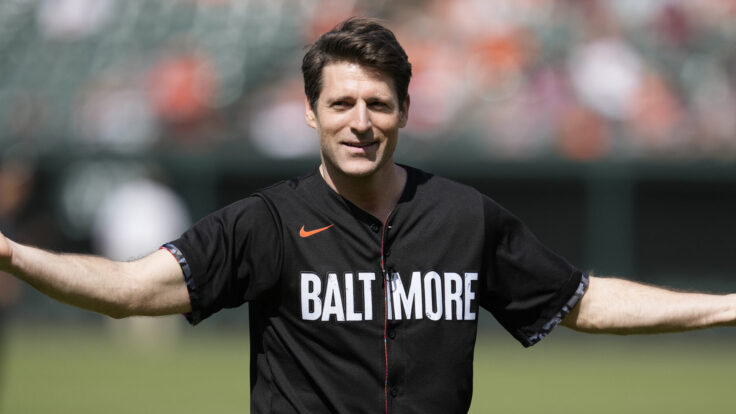
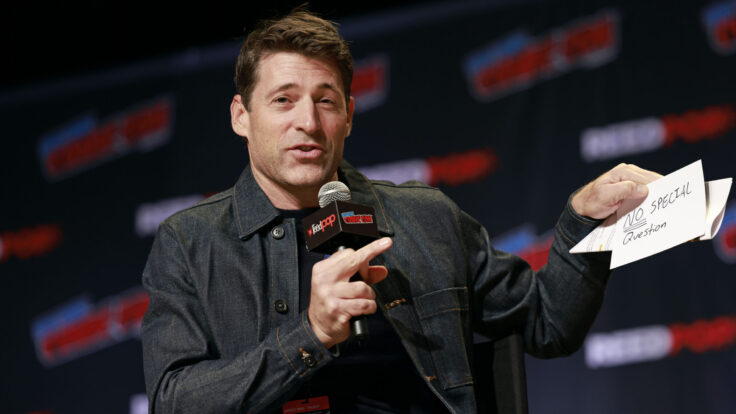
🎙️ Plus, on the latest episode of The Grill Room, Trey Yingst, the leading war correspondent on Fox News, talked about building one of the most prominent
social media presences in TV news—and what his multiplatform reach means not just for his own profile but for the network as a whole. Follow The Grill Room on Apple, Spotify, or
wherever you prefer to listen.
Also mentioned in this issue: the Ellisons, Barry Diller, Bob Iger, Ben Thompson, Bret Baier, Brendan Carr, Mark Ein, Mathias Döpfner, Marc Andreessen, Marc Benioff,
Jimmy Kimmel, Josh D’Amaro, George Stephanopoulos, Chris & Hamish, Richard & Janice, Jesse Watters, Jonathan Greenberger, Keith Poole, Neil Vogel, Rebecca Blumenstein, Robert Allbritton, Suzanne Scott, Will Lewis, and many
more… |
-
All the Ellisons’ emirs: David Ellison has quietly asked the F.C.C. to preapprove a scenario in which international backers of his merged Paramount–Warner Bros. could boost their equity stakes, as well as their voting control to as much as 20 percent. The ask is especially notable since foreign investors are already poised to own 49.5 percent of the combined entity, with roughly three-quarters of that capital coming from the Gulf, including significant stakes tied to
the U.A.E., Qatar, and Saudi Arabia. Paramount had previously said these backers would forgo voting control and cede that to the U.S. investors, who are led by the Ellisons, RedBird, and LionTree.
If the F.C.C. balks here, however unlikely that might be, Paramount may be unable to tap those sovereign funds at all, forcing Larry Ellison to shoulder much of the $47 billion equity backstop himself—precisely the situation he brought in the sovereigns to avoid. On
some level, yes, this latest twist represents the irony that the administration of our America First president may be willing to rubber-stamp the petro-fueling of two historic news brands. But there is another, more revealing detail in all this: While centibillionaires may stop at nothing to support the Hollywood dreams of their children, they also syndicate the risk.
Of course, even if the F.C.C. looks the other way, the Trump administration won’t be forever.
Democrats are already making noises about breaking up WarnerMount when they return to power. Just this afternoon, Senator Cory Booker introduced legislation that would direct the government to review and potentially unwind any mergers valued at over
$10 billion since January 2025—and referred specifically to the threat of “Gulf sovereign-wealth-fund financing.” Sounds like he has one merger in particular in mind. - A note on the Jimmy thing: F.C.C. chairman Brendan Carr’s abrupt review of ABC station licenses—allegedly about Disney’s D.E.I. policies but obviously about Jimmy Kimmel’s poorly timed but innocuous “widow” joke—has raised two derivative points
in media circles. First, as I’ve pointed out many times, Carr has limited authority to revoke the ABC stations’ licenses, and any attempt to do so would require a long and onerous legal process. (For what it’s worth, lawyers and press-freedom experts have also classified his intimidation tactics as likely illegal.) Moreover, unlike the first go-round, Disney is not flinching: The company has said that it is “confident” in its “continued qualifications as licensees under the Communications Act
and the First Amendment” and is “prepared to show that through the appropriate legal channels.”
I’m sure Josh D’Amaro won’t repeat the mistake that his predecessor Bob Iger made when he took Jimmy off the air amid F.C.C. pressure over his remarks about Charlie Kirk. By now, Disney has seen that capitulation carries more risk than reward. Speaking of which, let’s not forget Iger’s original sin: ponying up $16 million to settle Trump’s
lawsuit against George Stephanopoulos, presumably in the hopes that it’d get Trump off their back. (You’ll never guess what happened next.)
But, as my partner Eriq Gardner has noted, D’Amaro also doesn’t have to sit idle. “If the company wants to go on offense, the selective timing and targeting of the review could itself tee up a First Amendment claim that [Carr] is leveraging the licensing regime to police speech by proxy,” Eriq
wrote this week. “A preemptive suit, even a bid for declaratory relief, isn’t out of the question.”
In the long run, these are the kind of headaches that D’Amaro would certainly prefer to do without, especially as he juggles the more existential challenges of streaming economics, parks growth, and disciplined
capital allocation. And with late night at the vanguard of linear’s decline, it’s not hard to imagine that he might eventually follow David Ellison in moving to phase out the genre entirely. - D’Amaro bets on ESPN: Speaking of Disney, Peter Kafka has reported that D’Amaro intends
to keep ESPN in the portfolio, despite long-standing internal debates over spinning out the business. As you know, both Iger and Chapek did plenty of soul-searching on an ESPN spinoff too, and frequently changed tack. For now, D’Amaro’s operating theory is that the sports network is essential to Disney’s streaming pivot, even if it keeps the linear albatross around its neck.
- Diller filler: Barry Diller has officially
changed the name of his holding company from IAC to People Inc., and appointed C.E.O. Neil Vogel as head of the new publicly traded entity. This has been a long time coming, of course. The TL;DR is that Diller is refocusing his business around the profitable but unglamorous publishing assets.
- Substack loses The Ankler: Richard Rushfield and Janice Min are taking their Hollywood newsletter startup The
Ankler off of Substack and moving it to Passport, a platform created by beloved tech analyst Ben Thompson. In an interview with Axios, Janice said the move would give them “more ownership of our audience now, the data, who they are, which allows us to personalize more.”
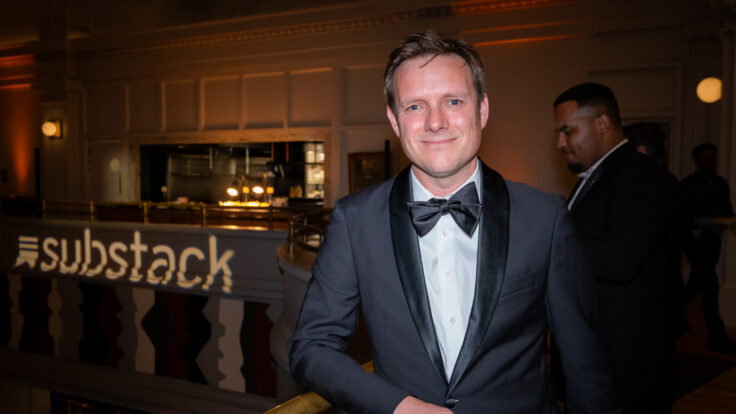
This isn’t a great look for Substack founders Chris Best and
Hamish McKenzie, who, in addition to watching thousands of writers decamp for Beehiiv and other platforms in the past year, have faced criticism over predatory rev-share practices and the way they’ve leveraged creators to fortify their own social platform. (My partner Julia Alexander has some insightful thoughts on this.) Best
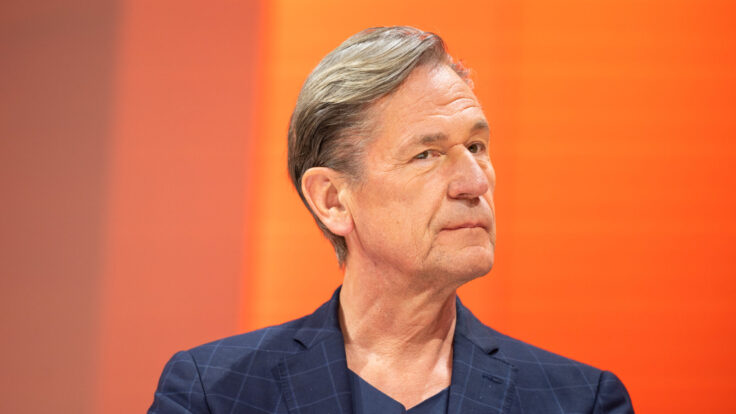
and McKenzie tend to tout the network effect benefits that Substack provides, but, as Janice told Axios, these effects aren’t necessarily as meaningful for media startups as they are for individual creators. - Mathias pulls rank: Axel Springer chief Mathias Döpfner has told Politico staffers who are upset about his pro-Israel politics that they should quit if they can’t get with the program—a rare instance of owner-flexing that his more
risk-averse contemporaries surely envy.
As you may know, Mathias has established core values at all Axel Springer companies—dubbed “the essentials”—that include support for Israel’s right to exist. Nevertheless, a group of Politico employees sent a letter to incoming Politico
editor-in-chief Jonathan Greenberger last week arguing that Mathias’s recent pro-Israel op-eds “risk undermining our reputation as an impartial news source” and requested more overt disclaimers as well as more rigorous standards reviews of his work.
In a call with Politico executives this week, audio
of which was obtained by Jewish Insider, Mathias said, “Nobody should work for Axel Springer despite the essentials or in disagreement with one of the essentials. If the essentials are not attractive, if the essentials are not a magnet, if the essentials are not a reason why to work for this company, I can only recommend to work for other companies.” Mathias also said he found elements of the letter “a bit disturbing” and vowed to “write more in the future, not less.” - And finally…: I learned this week that NBC News president Rebecca Blumenstein is publishing a book about her effort at The New York Times to evacuate more than 200 Afghans after the fall of Kabul. The book, which is co-authored by writer Diana Kapp, “highlights four exceptional young women
as they forge a new life in America.” Good for her, but how did she find the time?
|
11 percent: The average increase in compensation for S&P 500 C.E.O.s in 2025,
according to an ISS-Corporate survey.
117 percent: The average increase in compensation for media and entertainment C.E.O.s in 2025, according to the same survey. |
Stars of the In the Room cinematic universe spotted at last night’s state dinner for King
Charles III and Queen Camilla at the White House: Jeff Bezos, Jensen Huang, Tim Cook, David Ellison, Ruth Porat, Marc Andreessen, Marc Benioff, Suzanne Scott, Chris Ruddy, Keith Poole, Bret Baier, Maria Bartiromo, Ainsley Earhardt, Greg Gutfeld,
Laura Ingraham, and Jesse Watters.
And now, the main event… |
|
|
|
Months after another round of deep cuts and Jeff Bezos’s overdue jettisoning of
Will Lewis, The Washington Post is grappling with the harsh realities of rebuilding the brand—beginning with naming Lewis’s permanent successor. |
|
|
|
On the Sunday after the White House Correspondents’ Dinner, I found myself on the roof terrace at
the Ned—the elegant, neo-patrician members’ club overlooking the Treasury and National Mall—talking shop with a public affairs executive who manages the advertising spend for one of the town’s trade groups. As inevitably happens during polite conversation in official D.C., our exchange turned to the state of The Washington Post, which has obviously been enduring one of the more dismal chapters in its sesquicentennial history.
The weekend was a reminder that fates change fast in
Washington. Exactly one year earlier, Will Lewis, the Post’s notoriously inept former publisher, spent $1.3 million of the paper’s already strained budget to host his own post–Correspondents’ Dinner brunch at the very same club. Since then, the Post has alienated more subscribers, suffered heftier losses, cut a third of its newsroom, and shuttered most of its local and sports coverage. Will himself was excommunicated after months of absentee leadership
and one truly ill-timed lads’ trip to the Super Bowl. Indeed, this week, I learned about one of his final derelictions of duty: Before the February cuts, Mark Ein, the affable D.C. venture capitalist and owner of the Washington City Paper, put forward a proposal to acquire the Post’s local and sports coverage and integrate it into his own title. I’m reliably told that Will never even brought it to Jeff Bezos’s attention.
This time
around, the Post decided to forgo the Correspondents’ Dinner festivities, settling instead for hosting one of the many unremarkable pre-dinner receptions that take place in the drab, subterranean conference rooms at the Hilton. The humble showing seemed commensurate with the Post’s diminished standing in the Washington influence economy. Up on the Ned’s roof, my new friend divulged that he intended to spend “10 percent of what I spent last year” on advertising with the
paper.
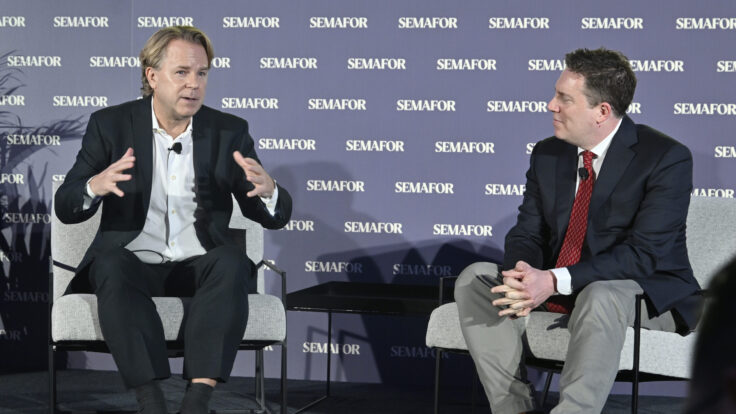
The Post has a tough row to hoe, obviously, and many in Washington still ponder who Bezos will task with leading that unglamorous effort. In truth, however, Bezos already has his guy. Sources familiar with the matter tell me the plan is simply to proceed with Jeff D’Onofrio, the chief financial officer, who was appointed acting C.E.O. and publisher after Will’s defenestration. There is no formal executive search underway, and no plans to
replace D’Onofrio anytime soon. In the most likely scenario, one source said, D’Onofrio, a journeyman C.F.O. who once served as chief executive of Tumblr, will simply drop the “acting” title and formally assume the role. |
Earlier this week, I’m told, D’Onofrio convened executive team members for a two-day, on-site
“off-site” to map out a strategy for getting the Post to profitability. While there are no specific initiatives he’s ready to announce, the guiding principle was to abandon Will’s obsession with shiny objects—the third newsroom, A.I.-generated podcasts, etcetera—and simply invest in repairing the damage he did to the newsroom, the brand, and the product. This will include fairly rudimentary fixes, like updating the website and mobile app, as well as gestures that reprioritize
journalism as the North Star, such as bringing back the Ben Bradlee and Eugene Meyer awards. “We need to rebuild our foundation,” a Post source told me.
Post sources note a stark vibe shift between Will and D’Onofrio, unsurprisingly, and many seem grateful to have a publisher who’s in the newsroom and “not hiding on the ninth floor,” as one source put it. (Never underestimate how much this symbolic gesture matters to journalists.) They also commend him for
trying to fix the “culture.” In a memo earlier this month, he called journalism the “foundational strength and the core product,” and stressed a commitment to “open communication and shared values.”
Trophies and culture aren’t going to save the business, of course. The Post has lost a lot of ground in the last half-decade, and it’s hard to see how it regains relevance and competes for talent, subscribers, and ad dollars after being all but left for dead. It’s a heavily saturated
market, as you know. And as if the Times, Journal, Politico, Axios, Puck, Punchbowl, Semafor, and all the rest weren’t enough, it now has to fend off Robert Allbritton’s Star, too.
D’Onofrio said the Post’s goal “is to be a break-even business this year,” but that its “longer-term goal is to grow and to be a profitable business that reinvests our profits back into our journalism.” That’ll be a grind, and, at this point, it’s hard to imagine the
M&A play or product innovation that could meaningfully alter the trajectory. More likely, D’Onofrio will be forced to play defense: stanching subscriber churn, coaxing back wary advertisers, and persuading a shell-shocked newsroom to believe again in an institution that once defined the category. The job actually isn’t reinventing the future of news, but proving that the Post still deserves some small place in it. |
|
|
|
A professional-grade rundown on the business of sports from John Ourand, the industry’s preeminent journalist,
covering the leagues, players, agencies, media deals, and the egos fueling it all. |
|
|
|
Join Puck’s chief political columnist, John Heilemann, as he roams the corridors of power and influence in America on
this twice-weekly interview show, taking you beyond the headlines with the people who shape our culture: icons and up-and-comers, incumbents and insurgents, moguls and machers in the overlapping worlds of politics, entertainment, tech, business, sports, media, and beyond. The conversations are rich and revealing, unrehearsed and unexpected… and reliably impolitic. A Puck-Audacy joint, new episodes drop every Wednesday and Friday. |
|
|
|
Need help? Review our FAQ page or contact us for assistance. For brand partnerships, email ads@puck.news. You received this email because you
signed up to receive emails from Puck, or as part of your Puck account associated with {{customer.email}}. To stop receiving this newsletter and/or manage all your email preferences, click here. |
Puck is published by Heat Media LLC. 107 Greenwich St., New York, NY 10006 |
|
|
|
|