{{ 'now' | timezone: 'America/New_York' | date: '%b %d, %Y' }} |
|
|
|
Greetings from Los Angeles, and welcome back to In the Room. Tough break for
Michael Rapino. The federal jury’s ruling that Live Nation illegally monopolized the ticketing market could conceivably lead to a breakup of the company. And, as my partner Eriq Gardner notes in the Puck Slack, it could also embolden state A.G.s to challenge the Ellisons’ WarnerMount deal.
As a reminder, I’ll be in Washington next week and look forward to seeing many of you at The Puck Penthouse, our pre-White House
Correspondents’ Dinner party on Saturday, April 25, just around the corner from the Washington Hilton. The event, which is presented by Amazon, will celebrate the fourth estate and bipartisan comity. It’ll be a great party, and I look forward to inaugurating the Puck ice luge before we head over to the dinner.
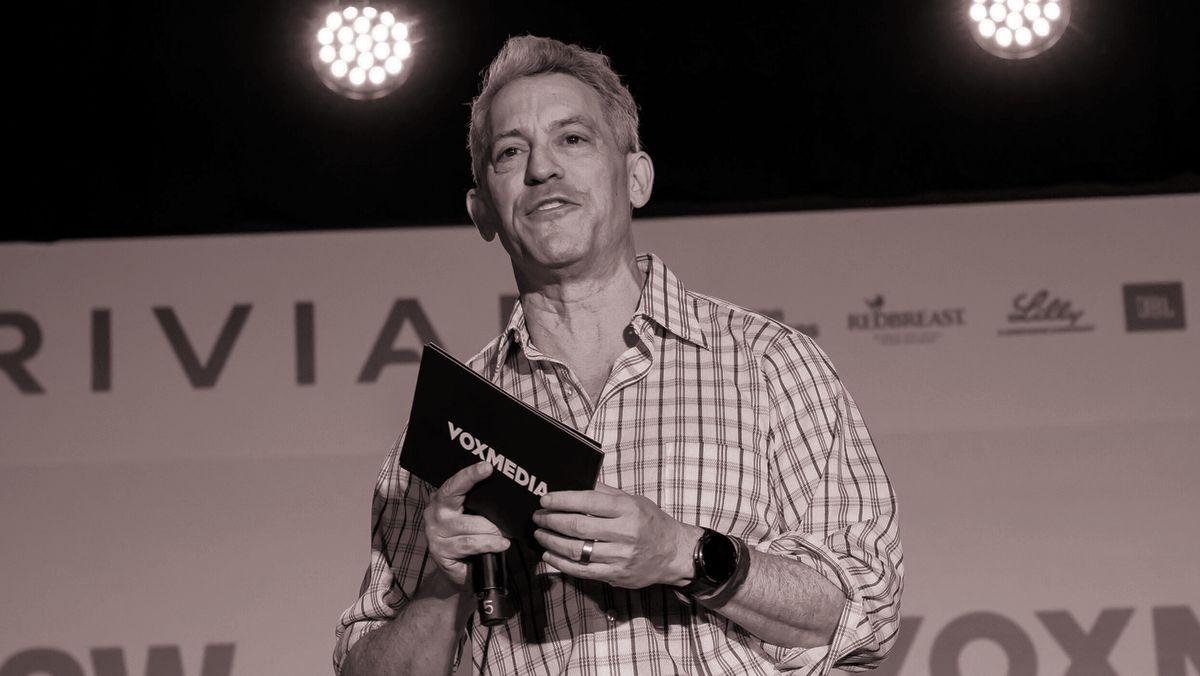
In tonight’s issue, news and notes on Jim Bankoff’s impending sale of the Vox Media portfolio, which is likely to split the podcast network from New
York and the digital publishing business. “There’s not one deal, there are deals,” a source tells me—and the negotiations are progressing on all fronts. “I don’t think people realize it’s selling itself for parts,” said another.
🎙️ Plus, on the latest episode of The Grill Room, former NBC News president Noah Oppenheim returns to assess the slow fade of linear TV news—and what legacy players like NBC, CBS, and CNN can do to stay relevant as
the screens shrink, the formats change, and the talent struggle to manage their anxiety. Noah’s TL;DR playbook: lean into tentpoles like NBC’s Today and CBS’s 60 Minutes, invest in premium video content, adapt to the way people actually consume media now, and, perhaps most importantly, develop a point of view that audiences can’t get anywhere else—à la Fox News. Follow The Grill Room on
Apple, Spotify, or wherever you prefer to listen.
Also mentioned in this issue: Peter Thiel, Dianna
Russini, David Ellison, Steven Ginsberg, Mark Lazarus, Mathias Döpfner, Aron D’Souza, Balaji Srinivasan, Alex Hardiman, Hannah Yang, Jason Sobel, Chris Wiggins, Richard Rushfeld, Brendan Carr, Aryeh Bourkoff, Kara Swisher, Scott
Galloway, Esther Perel, Brene Brown, Andy Roddick, Mike Vrabel, Maria Sharapova, Jay Penske, Karlie Kloss, and more… |
-
Peter Thiel’s Objection: Peter Thiel and Aron D’Souza, the Australian businessman who masterminded the investor’s campaign to take down Gawker, have reunited to launch a new platform that relies on former F.B.I. and C.I.A. investigators and A.I. to adjudicate claims in the news media. The pitch to prospective clients is that Objection—what a name!—will
allow executives to fight back against reporters who have tried to ruin their reputation “not with evidence,” but “with a narrative.” Objection claims to be the internet’s “first A.I. tribunal,” and promises clients that it can save their reputations “in days, not years.”
D’Souza is founder and C.E.O. of the venture, and raised his initial funding round from Thiel and a group of investors that also includes former Coinbase C.T.O. and entrepreneur Balaji Srinivasan.
Frankly, I can think of a lot of members of the executive class, particularly in media and tech, who will be intrigued by this idea and may give it a trial run. Whether it gets broader adoption remains to be seen. - The full Ginsberg: Dianna Russini, the Athletic reporter who was photographed at a Sedona resort with Patriots coach Mike Vrabel, has resigned from The New York Times’s sports brand even as
she disputes “the narrative” around “the episode,” which is ostensibly—albeit not really—a denial that the two were involved in an affair. (Maybe she should give Thiel a call…)
In a letter to Athletic executive editor Steven Ginsberg, Russini said she was resigning because she had “no interest in submitting to a public inquiry that has already caused far more damage than I am willing to accept.” She was doing so, she said, “not because I accept the narrative that has been
constructed around this episode, but because I refuse to lend it further oxygen or to let it define me or my career.”
Yes, there’s ample reason to look askance here: Why leave your job if you did no wrong? In any event, Russini’s resignation underscores Ginsberg and the Times’s error in rushing so quickly to her defense. Ginsberg initially said the photos were “misleading and lack essential context,” and that the photos depicted “public interactions in front of many people.”
There are, of course, no other people pictured in the photos, including those of the two on the roof of a private bungalow—which, as recent guests of the Ambiente informed me without solicitation, can only be accessed from inside the private bungalow.
In his message to staff, Ginsberg said that despite “clear concerns” over the initial photos, “we received a detailed explanation and it was our instinct to support and defend a colleague while we continued to review the matter. As
additional information emerged, new questions were raised that became part of our investigation.” Noble instincts, I suppose, but the prudent executive procedure would have been to gather all the “additional information” before dismissing the matter outright.
Meanwhile, The Athletic will continue its standards review of Russini’s work to ensure there were no conflicts of interest. (In her statement, Russini said she had “covered the NFL with professionalism and dedication
throughout my career, and I stand behind every story I have ever published.”) The matter of Russini’s conduct with Vrabel will presumably be left up to the “public inquiry.” - Mathias’s green light: Mathias Döpfner’s Axel Springer has secured U.K. government approval to proceed with its £575 million acquisition of The Telegraph, clearing the last major hurdle to bring the asset’s tortured, years-long sale process to an end. (The
company will still need approval in Australia and Ireland, which seems likely.) As I’ve noted before, this deal opens up all sorts of interesting possibilities. With The Telegraph and Politico, Mathias will now have two separate English-language news brands already engaged in or eyeing international expansion. How will he leverage them?
- NYT digital moves: The New York Times is elevating chief product officer
Alex Hardiman and chief growth officer Hannah Yang to executive vice president roles while its chief digital officer, Jason Sobel, is exiting the company—a career move that he reportedly told the Times about last year. (No drama here, a Times source assures me. “He lives in San Francisco… made a fortune at Facebook. Why slog through it?”) Hardiman, in particular, is an incredibly well-liked Meredith favorite
who has the right mix of former tech experience and a sufficiently long Times tenure—get ready to hear her name bandied about in future C.E.O. speculation. Separately, CNN has tapped the Times’s longtime chief data scientist, Chris Wiggins, to serve in a newly created role as head of machine learning and A.I. science.
- Ankler vs. Ellison: As our Semafor buddy Max Tani noted, Paramount
has pulled its advertising from The Ankler, the Hollywood-focused Substack enterprise, after founder Richard Rushfeld joined many Hollywood stars in signing a petition to block the company’s merger with Warner Bros. Discovery. Richard was also seen handing out “Block the Merger” pins at CinemaCon in Las Vegas. It’s not my brand of journalism, but to each their own. I trust he anticipated this response, and maybe even relishes it. I’d be curious what Janice Min,
his business partner, thinks about all this. (Yes, I asked…)
- And finally… A fun coming attraction: At this year’s White House Correspondents’ Dinner, which President Trump is set to attend, The Wall Street Journal will receive the Katharine Graham Award for Courage and Accountability for its reporting on
the “bawdy” birthday letter that Trump sent to Epstein—the very same article that inspired Trump to sue the Journal for defamation. This week, a federal judge dismissed that lawsuit. We’ll see whether the president arrives early enough to shake the hands of the reporters who authored the piece. Spoiler alert: I wouldn’t count on it!
Meanwhile, all eyes in the room will be on the CBS News tables, where, as Breaker first reported, Pete Hegseth and Stephen Miller have been invited as honored guests. David Ellison is also throwing a party earlier in the week “honoring the Trump White
House and CBS White House correspondents.” Perhaps this is why F.C.C. chair Brendan Carr told CNBC this week that he was “pleased with some of the changes we’re seeing at CBS.”
|
2,000: The number of employees the
BBC is set to lay off in a drastic effort to save 10 percent of its annual budget.
1,000: The number of employees that both Disney and
Snap are cutting in an effort to streamline their respective operations.
And now, the main event… |
|
|
|
News, notes, and all the scuttlebutt pertaining to Jim Bankoff’s admirable,
atom-splitting attempt to sell off Vox Media in parts: New York, its various digital assets, and the podcast network that powers the business. |
|
|
|
In the coming weeks, I’m told, Vox Media C.E.O. Jim Bankoff is likely to agree to
multiple deals to sell various assets of his company, including the Vox Media Podcast Network, New York magazine, and the portfolio of digital brands that includes The Verge, Eater, and SB Nation—a tidy but somewhat anticlimactic end to one of the great media roll-ups of the 2010s. “There’s not one deal, there are deals,” a source familiar with said deals told me. Another source close to the matter suggested that negotiations on all fronts were “positive,” but cautioned
that they were still “far from conclusion.”
Jim and the bankers at Aryeh Bourkoff’s LionTree have been shopping the assets since late last year, as Semafor first reported in March. The podcast business, which has been marketed to prospective buyers as TalentCo, could include the podcast network as well as Vox.com, according to a source who has seen the pitch deck. Jim has also positioned the podcast business for this spinoff by establishing separate sales teams and
operational structures. (He declined to comment for this story.)
The podcast network, which is financially and creatively anchored by Kara Swisher and Scott Galloway and a couple of other hosts, is indeed the most profitable and high-growth part of the business. Sources familiar with the company’s numbers say it did around $60 million in revenue last year and north of $20 million in profit. By contrast, New York did more than $100 million in
revenue but drew a profit of around just $6 million. In an appearance on The Grill Room last year, Jim touted podcasts as the company’s central growth engine, declaring it a “more lasting and durable medium … than social or even websites at this stage.”
Still, the podcast business has some notable key-man vulnerabilities. The network includes 40-some shows, but
the vast majority of revenue comes from about a half-dozen, including the Pivot podcast and the rest of the Kara–Scott Cinematic Universe. Vox boasts a broad roster of talent that also includes Esther Perel, Brené Brown, Andy Roddick, and, as of this week, Maria Sharapova, but the business itself is really quite dependent on two 60-something thought leaders and a few others. To his credit, Jim locked
Kara and Scott into a four-year revenue-share deal that incentivizes performance and will keep them in-house until at least 2029—presumably a prerequisite to any signed term sheet.
And yet the business remains compelling to the right suitors, especially with that attractive EBITDA margin. Late last month, The New York Times reported that Versant, the parent company of MS NOW and CNBC, was “one of multiple suitors” in talks to buy the podcast network. Versant, which
already has a stake in Vox Media, is still at the table, I’m told. The company has capital and has been acquisitive in the interest of “diversifying” its cable business. (It recently acquired Free TV Networks and Indy Cinema Group.) The question is whether Versant C.E.O. Mark Lazarus actually wants to pony up nine figures for low-eight-figure EBITDA in order to have a podcast network and bring Kara and Scott into the MS NOW–CNBC universe. Maybe he does. |
And who wants New York? Jim and LionTree presumably began that leg of the sales journey at
the doorsteps of civically minded, altruistic billionaires and other wealthy individuals who might be tickled by the prospect of owning a storied media brand and confident in their ability to, say, double its revenues. After all, who wouldn’t want the Laurene Jobs option, which sounds infinitely better and cleaner than pursuing a deal with a strategic or a private equity company? If all fails, one imagines, Jay Penske’s media empire already owns 20 percent of
the combined business and might tie it into its network of Hollywood trades and Rolling Stone. But that would be an ignoble end to the New York story that Jim would probably rather not countenance.
There’s been some scuttlebutt that Karlie Kloss might be interested in acquiring The Cut, the New York fashion and culture vertical, and adding it to a burgeoning media portfolio that includes i-D, which she bought from Vice in 2023. I
couldn’t confirm this with the parties involved, but it’s hard to imagine how they’d extract that vertical from New York without diminishing the value of the larger asset. It’s also unlikely that Bankoff or the guys at LionTree would want to cut this whole thing into ever more pieces, thereby complicating an already complex deal.
In any event, the fate of Vox’s podcast and publishing businesses will be revealed soon enough. And, as one source familiar with the deal talks noted,
“If they sell the store, there is no other Vox Media company. I don’t think people realize it’s selling itself for parts.”
Still, one has to commend Jim for sticking around long enough to see the process through. After presumably taking some money off the table when NBCU invested $200 million at a $1 billion valuation in 2015, he had plenty of opportunities to jump ship while Vox was coming down from those heights. Instead, he built out a portfolio of solid mid-market brands, diversified
the business, tried and failed to sell, landed the Penske investment, and positioned the assets for their best-possible exit, all things considered.
It’s not the outcome one might have envisioned a decade ago for Vox Media, but it sure beats the fate of its erstwhile contemporaries, which either went bankrupt or were carved up by creditors. And it’s a responsible end to a professional tenure that stands out in stark relief when juxtaposed with some of its peers. At the very least, the
highs and the lows will make him a useful board member for companies in and out of media whenever he decides to set up his third act. |
|
|
|
A professional-grade rundown on the business of sports from John Ourand, the industry’s preeminent journalist,
covering the leagues, players, agencies, media deals, and the egos fueling it all. |
|
|
|
Join Puck’s chief political columnist, John Heilemann, as he roams the corridors of power and influence in America on
this twice-weekly interview show, taking you beyond the headlines with the people who shape our culture: icons and up-and-comers, incumbents and insurgents, moguls and machers in the overlapping worlds of politics, entertainment, tech, business, sports, media, and beyond. The conversations are rich and revealing, unrehearsed and unexpected… and reliably impolitic. A Puck-Audacy joint, new episodes drop every Wednesday and Friday. |
|
|
|
Need help? Review our FAQ page or contact us for assistance. For brand partnerships, email ads@puck.news. You received this email because you
signed up to receive emails from Puck, or as part of your Puck account associated with {{customer.email}}. To stop receiving this newsletter and/or manage all your email preferences, click here. |
Puck is published by Heat Media LLC. 107 Greenwich St., New York, NY 10006 |
|
|
|
|