Welcome back to The Varsity. I’m John Ourand.
Several sources have told me
that, between the World Cup, the UFC America 250 event, and the Knicks’ Finals run, they’ve never had to field more requests for tickets. Even network and league executives have lamented being thrust into the unusual position of having to say no to partners and colleagues trying to get tickets.
Pod alert: ESPN’s Burke Magnus, who runs all content for the network, joins The Varsity on Wednesday to talk about everything from Inside the
NBA and NHL rights to NFL Network and college sports. Also, make sure to listen to yesterday’s episode, wherein U.S. Soccer C.O.O. Dan Helfrich gives a spirited defense of the state of soccer in the good ol’ USA.
In tonight’s issue, Puck’s legal ace Eriq Gardner gets to the bottom of the Protect College Sports Act of 2026, a recently introduced bill ostensibly meant to tame the N.I.L. and transfer portal anarchy that could upend the state of NCAA
broadcasting. Also, news on Scripps’ latest carriage fight and a scorecard for NFL ad sales last season that every network executive will want to see.
Also mentioned in this issue: Chris Coons, Gabriel Magalhães, Maria Cantwell, Clive Tyldesley, Ted Cruz, Rob Green, Eric Schmitt, Roger Goodell, Donald Trump, Peyton
Manning, and more. |
Brady Meter
Paris Saint-Germain vs. Arsenal: 1–1
Grade:
A-
|
The UEFA Champions League final is the biggest sporting event in Europe, so it was no surprise that CBS’s
Saturday afternoon coverage was top notch—particularly with Clive Tyldesley on play-by-play. Tyldesley and analyst Rob Green did not try to oversell a tense game that PSG won on a penalty shootout, and they obviously didn’t have to.
The best moment came at the end, before Arsenal’s Gabriel Magalhães sent the final
penalty kick over the goal, sealing PSG’s win. As the Brazilian set up his shot, Tyldesley remarked, “I’m a little surprised to see him amongst Arsenal’s chosen five”—accurately predicting Magalhães’ game-ending miss. |
- A
good, old-fashioned carriage fight: Back in April, Comcast’s decision to black out more than three dozen Scripps local stations from its Xfinity systems partly came down to a sort of Luca Brasi–style message: After working for years to cliffpath the regional sports networks business into smithereens, the good people in Philly were not going to overpay for some post-prime channels that carried live sports. (Comcast and Scripps ultimately reached a deal early last month that
kept those local sports payouts at bay, for the most part.)
So when news broke over the weekend that Scripps channels were going dark on DirecTV, it was natural to assume that sports, once again, played a part in this dispute. After all, 17 Scripps stations carry the NBA Finals and NHL Stanley Cup Final, which both start this week—including the ABC affiliate in Vegas, where the hometown Golden Knights are competing for the most famous trophy in sports.
Sources have told me,
however, that DirecTV actually seems willing to cut a local sports deal. Instead, the dispute is centered on the overall fee that Scripps wants DirecTV to pay. Now the big question is whether the NBA and NHL finals will create sufficient leverage to force DirecTV into a deal. We’ll know the answer by the end of the week. - NFL media math: As the NFL contemplates new media deals that could suck billions of dollars out of entertainment industry budgets, a
new report revealed that league ad revenue hit a record $5.9 billion last season, up 7 percent from the previous year. According to Guideline Insights, regular-season ad revenue rose 6 percent, while playoff ad revenue was up 13 percent. Disney, which has negotiated to simulcast ESPN’s Monday Night Football on ABC during specified dates (and created alternative programming in the form of The Manningcast), showed the largest growth of all networks, up 19
percent.
As streamers added more games in 2024-25, their ad revenue jumped more than 70 percent, according to the report. In 2025-26, though, their ad revenue increased just 5 percent, to $676 million. Of course, networks rely on more than ad revenue to finance their NFL deals. Affiliate fees and retrans agreements also help cover those costs. Still, the report underscores why the NFL has become such a colossus. - The World Cup legacy:
Yesterday, I sat down with U.S. Soccer C.O.O. Dan Helfrich to discuss this forthcoming North American World Cup, which commences next week in Mexico City. The 1994 tournament, which was hosted in the U.S., precipitated the creation of Major League Soccer. So I was curious what the 2026 games might spawn. In short, Dan said it was all about building and refining a talent pipeline for the sport. “I’m spending a lot of time with FIFA’s technical development experts to push on
what system creates the conditions in Country A or Country B that help them develop the best player,” he said. “We are, by most data, the first- or second-most-played sport in the country already, but that doesn't exist in every community in America,” he said. “So when we articulate our goal—becoming, in the next five years, the number one played sport in every community in America—this World Cup has to be an instigator, a catalyst, an accelerant for that happening.”
|
|
|
|
Tucked inside Congress’s latest college sports proposal is a provocative idea: Some games
may simply be too important to disappear behind a paywall. |
|
|
|
It’s hard to find bipartisan agreement on much of anything these days. Which is why it felt like a minor
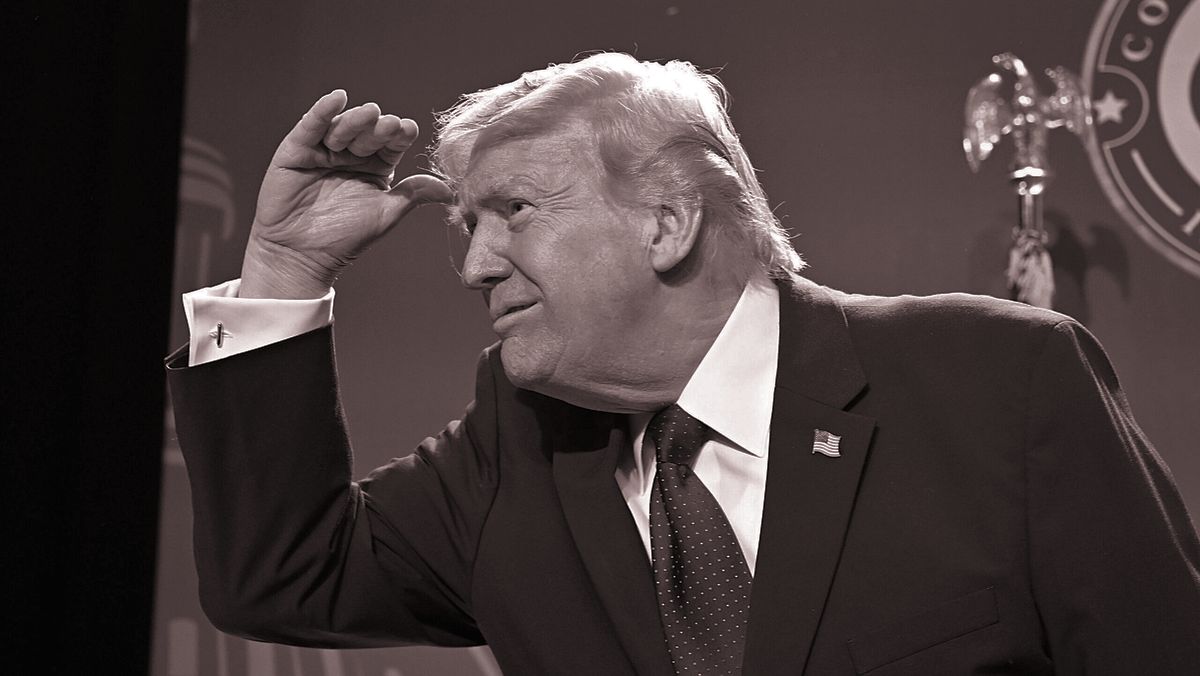
miracle when Senators Ted Cruz, Maria Cantwell, Eric Schmitt, and Chris Coons unveiled the Protect College Sports Act of 2026 last week. Considering that Donald Trump appears genuinely interested in the issue, it’s easy to imagine the legislation gaining traction sooner rather than later, and reshaping the economics of college sports.
The headline-making provisions are largely what you’d
expect. The NCAA and its conferences would receive a measure of legal peace through a limited antitrust shield—allowing them to enforce eligibility standards and transfer rules without constantly looking over their shoulder for the next lawsuit. The bill also takes aim at conference consolidation, establishes a federal framework for athlete agents, and formalizes name, image, and likeness rights. Though, the legislation artfully dodges the most explosive question of all: whether college athletes
are employees.
The more intriguing elements in the bill, however, involve television. Tucked into the legislative plumbing is what amounts to a congressionally sanctioned media-rights experiment: pooled inventory, local broadcast obligations, use-it-or-lose-it requirements, and a modest expansion of the calendar protections that have long
kept the NFL off certain Fridays and Saturdays.
The proposal also partially unwinds a story that began more than four decades ago with NCAA v. Board of Regents of the University of Oklahoma, the 1984 Supreme Court decision that broke the NCAA’s grip on college football television rights. Since then, conferences and schools have largely negotiated media deals on their own. But under the Protect College Sports Act, schools and conferences could form a new pooled-rights entity and
jointly market telecast rights—giving college sports leaders the ability to compete more directly against professional leagues for media dollars. They’d also potentially be more attractive to streamers like Netflix, which have shown more enthusiasm for marquee events than season-long tonnage.
There are some red flags for streamers, though. The bill introduces a new concept called “market-level broadcast access,” designed to prevent local college football and basketball games from
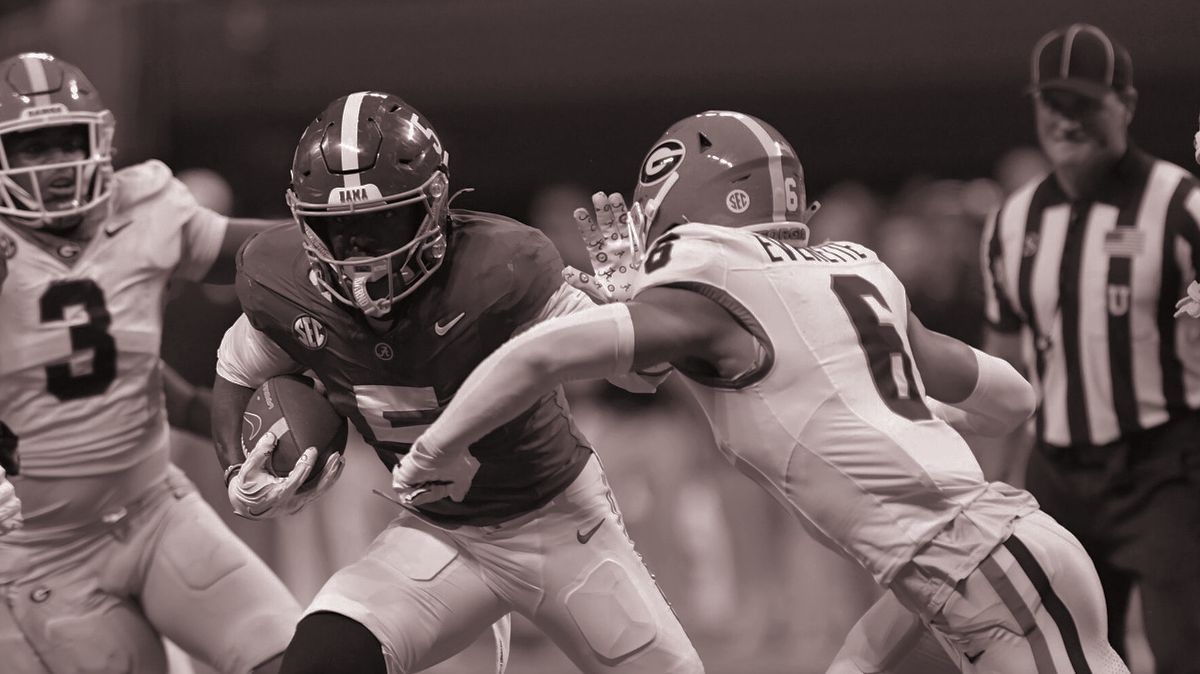
disappearing behind paywalls. In essence, if an Alabama–Georgia game landed on Netflix or Apple TV, the rights-holder would still have to provide one free-to-view local option in each of the schools’ home markets. That could be done through a sublicense, a local station arrangement, or a free affiliated offering. Either way, it’s still a pain in the ass.
The F.C.C., naturally, would oversee the inevitable battles over that access. Not because Netflix would suddenly become a broadcast
licensee, but rather because the commission would gain jurisdiction over complaints alleging violations of the bill’s good-faith negotiation requirement. The provision would thus give regulators a modest foothold in monitoring how streamers distribute premium live sports. That may unsettle professional leagues: The NFL, in particular, may not love the precedent embedded in the legislation that certain sports rights are so culturally significant that they cannot be treated as ordinary
subscription content. |
That’s not the only novelty. There’s also a “requirement of use” rule for sports other than football and
basketball, including many Olympic sports. A broadcaster or streamer that licenses non-marquee sports, such as volleyball, wrestling, or softball, could not simply warehouse those games indefinitely. After one year, any unused rights could revert. The practical result could be an explosion of lower-cost, always-on college sports programming, perhaps on FAST and A.V.O.D. platforms hungry for live content.
And the bill doesn’t stop there. At a moment when Washington has spent years debating
a federal right-of-publicity statute for performers, Congress appears to be edging toward creating a federal framework for college athletes’ N.I.L. rights, including “computer-generated representation.” That language opens a host of questions. Anyone who profits from the commercial value of athletes’ identities—video game publishers, Peyton Manning–style production companies, athlete-influencer agencies, documentary filmmakers, advertisers—should be scrutinizing the fine print.
Somewhere, lawyers are preparing First Amendment arguments.
Then there is the amendment to one of the most consequential laws in sports media. The Sports Broadcasting Act of 1961—the statute that NFL fans are forced to relearn about every autumn—has long prevented the league from scheduling games on most Fridays and Saturdays during the heart of the college season. The Protect College Sports Act would expand that protected window—currently, the second Friday in September through the
second Saturday in December—to the first Friday in September through the third Saturday in December. In practice, this could complicate the NFL’s early-September Friday experiments and some mid-December Saturday inventory. Christmas Day games might still fall outside the expanded protected window, although maybe not every year.
Whether that provision survives what is certain to be an intense lobbying campaign from Roger Goodell is another question
entirely. But if nothing else, the proposal is a reminder that this legislation is about far more than N.I.L. collectives and transfer portals. |
Thanks, Eriq. See you all tomorrow.
John |
|
|
|
Join Puck’s chief political columnist, John Heilemann, as he roams the corridors of power and influence in America on this
twice-weekly interview show, taking you beyond the headlines with the people who shape our culture: icons and up-and-comers, incumbents and insurgents, moguls and machers in the overlapping worlds of politics, entertainment, tech, business, sports, media, and beyond. The conversations are rich and revealing, unrehearsed and unexpected… and reliably impolitic. A Puck-Audacy joint, new episodes drop every Wednesday and Friday. |
|
|
|
An essential, insider-friendly Hollywood tip sheet from Matthew Belloni, who spent 14 years in the trenches at The
Hollywood Reporter and five before that practicing entertainment law. What I’m Hearing also features veteran Hollywood journalist Kim Masters, as well as a special companion email from Eriq Gardner, focused on entertainment law, and weekly box office analysis from Scott Mendelson. |
|
|
|
Need help? Review our
FAQ page or contact us for assistance. For brand partnerships, email ads@puck.news.
You received this email because you signed up to receive emails from Puck, or as part of your Puck account associated with {{customer.email}}. To stop receiving this newsletter and/or manage all your email preferences, click here. |
Puck is published by Heat Media LLC. 107 Greenwich St., New York, NY 10006 |
|
|
|
|