Welcome back to The Varsity. I’m John Ourand, writing from D.C.,
where the Commanders are looking like themselves again with Jayden Daniels back on the field.
In tonight’s issue, a candid conversation with the billionaire Texas Tech booster Cody Campbell about his haters in the media, his quixotic plan to overhaul college sports, and more. I also chat with Wells Fargo Securities analyst Steven Cahall about ESPN’s streaming future, dish on the rumors I’m hearing about the pending F1-Apple deal, and
contemplate how the NFL can create a new media package without adding an 18th game.
But first…
🎟️ In the Arena: Our inaugural sports media conference is almost here, and the lineup is stacked: Adam Silver, Josh Harris, Gerry Cardinale, Michael Rubin, Eric Shanks, Derek Chang, and many more. The event, co-hosted with MoffettNathanson, is taking place on October 16 in New
York. We still have some tickets left, so click here to get yours.
🎧 Pod alert: With the NHL’s regular season starting tomorrow, it seemed like the perfect time to have
Greg Wyshynski, ESPN’s NHL analyst, back on The Varsity for a preview. In Wednesday’s episode, we’ll discuss the new C.B.A., the league’s media rights deals, its successful international push, and more.
Let’s get into it… |
Down to the
J.V.: Reader’s Choice Edition
|
The week has barely started, but it looks like Bill Belichick and
Mark Sanchez are locked in a race to the bottom. First, there’s Belichick, who has turned U.N.C. football into a reality show—and one that’s terrible on the field. Meanwhile, there’s Sanchez, who allegedly accosted an elderly truck driver in an alleyway. Send your vote before Thursday, but I think I know who’s going to win. Just reply to this email. |
|
|
A MESSAGE FROM OUR SPONSOR |
Baseball has never felt more alive. This season, more than 71.4 million fans came through the
gates, marking three straight years of attendance growth for the first time since 2007. The energy was not just in the ballparks, it was everywhere. Viewership surged across national broadcasts, local RSN games, MLB.TV, and even overseas in Japan, proof that the game’s reach is stronger than ever. The audience continues to get younger, both in the stands and on screens, bringing a new generation into the heart of the game. And on the field, history was made as for the first time ever, seven players joined the 30/30 club in a single season, showcasing a record-breaking mix of power and speed. All of this momentum leads to one place: the Postseason. Because when the stakes are highest and the lights are brightest, October
Hits Different. Watch the Division Series on FOX/FS1 and TBS, find details at MLB.com/postseason. |
|
|
- The ESPN
D.T.C. bull case: Few industry observers are more bullish about ESPN’s direct-to-consumer service (don’t call it Flagship!) than Wells Fargo Securities equity analyst Steven Cahall. In a report this morning, he predicted the service will have 1.5 million to 2 million subscribers by the end of the year, and 32 million by 2030 (10 million subscribers from ESPN+, and 22 million for Flagship). He set a price target for Disney of $159 per share, well north of today’s $112. “Wall Street
has underestimated the size of [the cord-never] market,” Cahall told me this afternoon.
I asked Cahall why he was feeling so bullish, and he responded by citing subscriber counts at both Peacock and Paramount+. “That says to me that there is a big universe of cord-cutters and cord-nevers that have some amount of interest in sports, and they haven’t been served up a product that fits that lifestyle,” he said. “Everything has been based around the bundle, which has a really big paywall.
That’s probably a habit that is changing with generations.” - An 18th game workaround: For the NFL Players Association, the league’s desire to add an 18th game represents a powerful chit during their collective bargaining negotiations. After all, Roger Goodell has said he’s open to commencing media rights negotiations as soon as next year, even though the current C.B.A. runs until 2031.
Without that extra game, could the NFL still
create a new package to sell to streamers? Cahall believes the league has more than enough inventory to create a new package, and he pointed to the regional games that are currently part of the Sunday afternoon packages carried by CBS and Fox. “CBS and Fox pay around $16 million to $18 million per game based on 100+ games each per season. If they each lost one game per Sunday afternoon, then their per-game fees go to around $21 million to $24 million,” Cahall wrote. “A new partner (like Netflix)
could then pay $80 million per game for the Sunday streaming–only games, which is consistent with Amazon’s. This adds nearly $3 billion in rights for the NFL.” - More Apple-F1 chatter: Apple’s F1 deal has been in the works since the summer, and I’m hearing the two companies are hoping to make a formal announcement about the deal in two weeks, during the U.S. Grand Prix in Austin. The number I keep hearing is $140 million per year for U.S. rights, a
significant bump from the $90 million per year that ESPN currently pays.
The main holdup had been a dispute around Formula 1’s streaming service. Apple stuck to its original position that the racing circuit needed to shut down F1 TV in the U.S., and was reluctant to dole out $140 million on rights fees just to have the races carried on another streaming service. Because F1 TV is profitable in the U.S. market, Formula 1 has been hesitant to pull the plug. It’s not entirely clear
where the two sides netted out on this, but it’s an area to watch when the deal finally gets announced. Meanwhile, this will be Apple’s most significant sports rights deal since it signed a 10-year, $2.5 billion deal with the MLS three years ago. - A Peacock–YouTube TV point of order: In the wake of last week’s YouTube TV–NBC deal, there’s been some confusion over whether YouTube TV ingested Peacock programming or not. This is a huge issue for
traditional media companies that are loath to give Google the rights to carry their streaming feeds within the YouTube TV environment. In their view, the $3 trillion Alphabet already has enough power over their programming without having all of the access to subscription and viewership stats from streaming services.
In short, NBC did not give YouTube TV the rights to fully subsume Peacock content. Instead, YouTube TV will launch a channel that carries sports that had been
exclusive to the streaming service: the NBA, the Premier League, the Olympics, etcetera. But YouTube TV will not have access to any of Peacock’s entertainment or news programming, or any NFL games sold exclusively to Peacock, like a wild card playoff game or an international one.
For YouTube, its subscribers will have access to sports on Peacock without having to leave the YouTube TV environment. For NBC, it will bring more subscribers to Peacock that they’re not getting from the pay TV
universe. With all the sports on Peacock, there will occasionally be two or more sports on at the same time—in that case, I’m told, NBC is considering a secondary overlap channel to carry those events.
However, Peacock and YouTube did reach an agreement to carry the Peacock ad-free service in a Channels-like model. Obviously, YouTube TV will pay NBC for the channel, although the exact amount is unknown. (NBC and Amazon Prime Video Channels struck a similar deal a little more than
a month ago.) - Wall Street’s WBD skepticism: Whenever my partner Bill Cohan writes about Paramount’s pending purchase of Warner Bros. Discovery, I stop whatever I’m doing and open the email. In last night’s edition of Dry Powder, he offered this doozy…
“My sources on Wall Street are starting to voice skepticism that a deal
will materialize. One esteemed source wrote to me that ’the whole thing feels very J.V.’ and that there has been no bid for WBD because ’there is no money to finance a bid.’ If Larry Ellison were funding the deal, he hypothesized, it ’would have happened already.’ Ellison, even with his $350 billion fortune, doesn’t have $50 billion of cash ’lying around,’ as this person put it. He would probably need around $100 billion of Oracle stock, or other assets,
available to be margined—at 50 percent—to get the $50 billion in cash to buy all of WBD. Plus, PSKY would have to assume WBD’s $30 billion of net debt.
“Ellison, this person continued, didn’t become the third-wealthiest man in history by making emotional decisions with his money. Would Larry really want to pledge one-third of his fortune to the combination of PSKY and WBD, a deal that would combine three movie studios with a bunch of declining cable channels and two big
newsrooms? ’It’s also already leveraged,’ he wrote ’This all looks absurd now. Something doesn’t add up. It just smells funny.’”
|
|
|
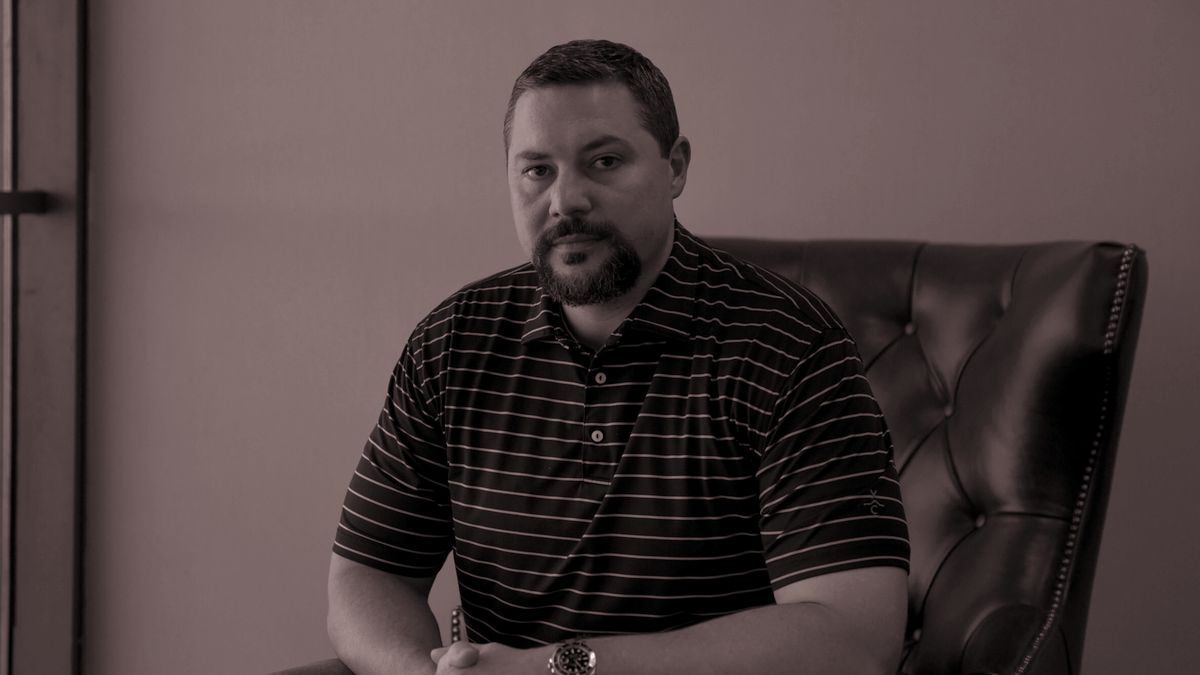
The former NFL player and billionaire Texas Tech booster Cody Campbell
struck a nerve with his radical proposal to overhaul the Sports Broadcasting Act. But is there actually some logic to his quixotic plan? |
|
|
The billionaire Texas Tech booster Cody Campbell has been one of the
most prolific advertisers on college football Saturdays this season: All of the major networks have been running his ads calling for major overhauls to college sports. But this past weekend, Campbell’s spots were nowhere to be seen. On Saturday, he took to X to say that Fox and ABC refused to run his ad this week, which is partially true, according to my sources. After all,
the ads he submitted included swipes at conference commissioners. “Their greed is bankrupting all but the biggest schools,” he said in the commercial.
Understandably, the networks had no interest in running a commercial bashing their business partners in such personal terms, so they told Campbell to revise and tone down the language. We’ll see whether the edited version makes it into upcoming broadcasts. Regardless, the micro-drama captures the oilman’s role as an agitator with deep
pockets, unafraid to push for significant changes in the college sports business and unconcerned with whomever he upsets. When Campbell talks about his plans, he uses rhetoric more commonly associated with political campaigns, complete with intensive lobbying and huge ad buys.
Above all, Campbell wants to amend the Sports Broadcasting Act of 1961 to allow college conferences to pool their rights, and potentially work out more lucrative media deals. But Campbell has a hard road ahead of
him. His detractors are among the most powerful people in sports—conference commissioners, athletic directors, media executives, to name a few. They dismiss Campbell’s ideas as naive, and believe the billionaire’s ultimate goal is to help his alma mater, Texas Tech, more than college sports in general. Campbell addressed these criticisms and more on a recent episode of The Varsity. What follows is a Q&A, lightly edited for clarity. |
John Ourand:
You talk about athletic departments losing money—and they obviously do—but some people want to reframe that as a marketing expense. When I was a junior in high school, for example, Doug Flutie was a senior at Boston College. In the span of one year, BC became an impossible school to get into because so many people applied.
Cody Campbell: What you’re talking about is well studied and documented. It’s
called the Flutie effect. Another great example is that, from the time that the University of Alabama hired Nick Saban until he retired, their enrollment increased by a ton. There’s a marketing element that brings a lot of value to the school in terms of enrollment, but also the value of the degree. There’s benefit to alumni engagement. As people say in higher ed, it’s the front porch of the university. I’m chairman of the board at Texas Tech, and we see this
firsthand.
However, there’s no reason for the schools to have to put money into the athletic departments. One solution is to just modernize media rights. The Sports Broadcasting Act is 65 years old. A lot has changed within media in the last 65 years, and if you fix that problem, there’s no need for academic funds to be diverted. Something’s just not right about tuition money going to pay for athletics. |
|
|
A MESSAGE FROM OUR SPONSOR |
Baseball has never felt more alive. This season, more than 71.4 million fans came through the
gates, marking three straight years of attendance growth for the first time since 2007. The energy was not just in the ballparks, it was everywhere. Viewership surged across national broadcasts, local RSN games, MLB.TV, and even overseas in Japan, proof that the game’s reach is stronger than ever. The audience continues to get younger, both in the stands and on screens, bringing a new generation into the heart of the game. And on the field, history was made as for the first time ever, seven players joined the 30/30 club in a single season, showcasing a record-breaking mix of power and speed. All of this momentum leads to one place: the Postseason. Because when the stakes are highest and the lights are brightest, October
Hits Different. Watch the Division Series on FOX/FS1 and TBS, find details at MLB.com/postseason. |
|
|
It’s going to be hard to change that
thinking.
The conferences receive the media rights distributions from NBC, CBS, ESPN, Fox, whatever. They pay for their conference expenses, and then they divide out the remainder and send it to their constituent institutions. And then those institutions have to deal with the budget problems that they have. It really creates this scenario where the people who are sensibly running the business at the top end don’t have any idea of what’s going on
at the bottom line. And that’s crazy. No business would run like that in a normal sense. |
I’m having trouble with your idea about opening up the Sports Broadcasting Act.
If you pull all the rights together, you’ll certainly get more money. But the realities of the media business today is that networks are cutting costs. If you think there’s an extra $7 billion out there, I have trouble finding it.
College athletics severely under-monetizes itself. Beyond football and basketball, we have all these other sports that people are interested in, like volleyball, women’s basketball, baseball, softball. People want to
watch these sports. But when the schools sign over their media rights, they sign over the rights to every sport. So if a network chooses to not platform women’s basketball, for example, there’s no opportunity for that sport to grow fandom or viewership.
The NFL dictates exactly which games are broadcast on which networks at what time. We could do the exact same thing with our women’s sports and Olympic sports, and actually grow those into sports that make money if we had more control over
how things are broadcast. I’m not so sure that the media companies are going to be opposed to this. What they want is more live content.
In the near term, you may have some pushback, but long term, the best thing for the media companies, and college sports, is for there to be better coordination and pooling of rights in college. If we don’t do something today, you’re going to see this erosion of college sports over time, especially if there’s no promise of more funding to come because the
schools just flat out can’t afford it.
Your detractors question your motives. They believe that you’re out for Texas Tech more than the overall college sports business.
Here’s the deal. Texas Tech is going to be just fine. If everything burns down, Texas Tech’s fortunate enough to be sitting on top of the world’s largest oil field. We have great boosters. The state of Texas is very healthy. The school itself is very financially
healthy. So Tech is fine.
The reason I’m doing it is because I care about the opportunity across the country. I’ve learned so much through being the board chair at Tech. I’ve learned so much through the work that I’ve done in our N.I.L. collective. I’ve seen the things that have happened over the last four and a half years. I understand the problems, I understand the legal issues, the practical issues, the commercial issues at a very deep level. I’ve felt like I’ve had a lot of success in
business, and want to find ways I can give back. This is an area that I deeply understand and know that I can help fix. |
On the Big Ten’s P.E. idea: “I don’t really have an issue with Big Ten
schools—like my alma mater, Purdue—taking P.E. money, but I have yet to hear what athletic departments are going to do with that money. You aren’t going to buy more fans or create more alumni.” —A Varsity subscriber
On Fox’s contingency planning: “What protocols led to Brady Quinn replacing Mark Sanchez after his injury/arrest? I would love insight into Fox’s contingency planning and how they prioritize talent across all of its properties when competing
priorities exist.” —A sports business executive
On time travel: “Hindsight is 20/20 and all that, but if you could go back in time to advise the legacy mediacos about the future of sports distribution, what is the one critical moment you’d travel to, why, and what would you tell them in that moment?” —A Varsity subscriber
[Ed. note: A question for the ages! I welcome your responses to this.] |
|
|
Ace media reporter Dylan Byers brings readers into the C-suite as he chronicles the biggest stories in the
industry: the future of cable news in the streaming era, the transformation of legacy publishers, the tech giants remaking the market, and all the egos involved. |
|
|
Join Emmy Award-winning journalist Peter Hamby, along with the team of expert journalists at Puck, as they let you
in on the conversations insiders are having across the four corners of power in America: Wall Street, Washington, Silicon Valley, and Hollywood. Presented in partnership with Audacy, new episodes publish daily, Monday through Friday. |
|
|
Need help? Review our FAQ page or contact us for assistance. For brand partnerships, email ads@puck.news. You received this email because you signed up to receive emails from Puck, or as part of your Puck account associated with {{customer.email}}. To stop receiving this newsletter and/or manage all your email preferences, click here. |
Puck is published by Heat Media LLC. 107 Greenwich St, New York, NY
10006 |
|
|
|