Welcome back to The Varsity. I’m John Ourand, in Miami to see Netflix’s
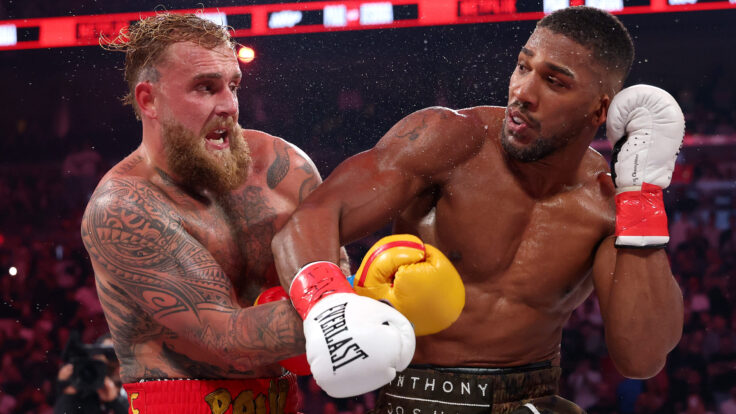
eventizing in real time. Tomorrow, the streamer will produce the Jake Paul–Anthony Joshua fight from the Kaseya Center. I’m looking forward to the spectacle. Speaking of which…
Pod alert: Netflix vice president of sports Gabe Spitzer will be my guest on The Varsity this weekend. We’ll talk about
the streamer’s strategy, and why it pursued deals for the FIFA Women’s World Cup and Christmas NFL games. (Subscribe here and here.)
Mentioned in this issue: Adam Silver, Brian Windhorst, the NBA Cup,
Anthony Edwards, Nikola Jokić, Northwest Indiana, Ted Sarandos, Greg Peters, Michael Jordan, Champions League, Kevin Warren, Joe Flacco, and…. the Bucked Up LA Bowl Hosted by Gronk. |
Player of the Week: Adam Silver
|
The NBA Cup has its fair share of detractors, who find the concept of an in-season tournament to be
silly, inane, a distraction, a scheduling nightmare, a gimmick, etcetera. But it’s here to stay. While Adam Silver can point to viewership and attendance upticks as evidence that the idea is starting to catch on, it was more instructive to hear the NBA commissioner talk about changes that need to be made to keep this interest going—including potentially moving the final from Vegas to some storied college hoops locales. And really, here’s the key point: Amazon is paying
the NBA $1.9 billion per year for a package of rights that includes the NBA Cup, so what are we even talking about? Get used to it. |
Down to the J.V.: Kevin Warren
|
I had to laugh when I
saw that Kevin Warren, the Chicago Bears president and C.E.O., had threatened to build a new stadium in Northwest Indiana. I know, I know: Never say never. But Warren’s comments seemed to come straight from the Idiot’s Guide to Securing Public Financing for Your Professional Sports
Stadium. Remember, the Bears have already bought land in Arlington Heights, a desirable site in suburban Cook County, and committed to the site. Warren’s comments seem more like headline bait than a serious proposal. |
- ESPN’s Heisman extension: ESPN will air the Heisman Trophy Ceremony for at least the next six years as part of a new agreement signed this week. It’s not an especially big deal—ESPN will carry the event, announce the finalists, and produce shoulder programming. But the extension shows the value of longstanding relationships in the industry: ESPN has carried the ceremony since 1994, and Chris Fowler has hosted every year. Neither side was eager to end this
relationship, especially after Saturday’s show posted 4.3 million viewers on ABC. “It’s a vitally important partnership that goes back 32 years,” said Kurt Dargis, ESPN’s senior director of programming. “It just falls in the natural cadence of our season.” For the record, Heisman Trust C.E.O. Jeff Price handled the negotiations on his side, and IMG’s Hillary Mandel advised the Heisman Trust.
- An NFL
auction: The NFL is in the market with the rights for the game it’s planning in Melbourne next season. Just yesterday, the league sent out R.F.P.s to a host of media companies and streamers—all the usual suspects—for the Week 1 contest that will feature the Rams against a T.B.D. opponent. That likely means that next season’s Brazil game, which will not be scheduled for opening weekend, would move back to one of the NFL’s current broadcast partners. YouTube bought the rights to this season’s
Brazil game—which netted around 18.5 million U.S. viewers and another 1 million or so internationally—for around $100 million as part of a one-year deal. Sources tell me that the league is hoping to have a deal for the Australia game in place by the Super Bowl. Given the huge time differences, the league is likely hoping to strike a deal with a streamer that has global reach.
- Bowled over: I’m sure many of you were on the edge of your seat last night
watching Joe Flacco’s alma mater, Delaware, go wire to wire in its win over Louisiana-Lafayette in the 68 Ventures Bowl. You were, weren’t you? Critics have long carped about C- and D-tier bowl games, which have lost even more altitude in the College Football Playoff era. This year, big-name schools like Notre Dame, Iowa State, Kansas State, and Baylor all turned down invitations to play in various sponsor-underwritten cash grabs.
But despite the decades-long
enthusiasm slump, bowl season is still working out quite well for the TV guys. We have the numbers from the first two games played last Saturday, courtesy of my SBJ buddy Austin Karp, who reported that 2.3 million people tuned in—not bad for a noon kickoff—to watch South Carolina State’s narrow victory over Prairie View A&M in the storied football tradition that is the Cricket Celebration Bowl, Marchand’s favorite. Then, buoyed by its Heisman ceremony
lead-in, Washington’s rout of Boise State tallied 3.8 million for—I’m not kidding—the “Bucked Up LA Bowl Hosted by Gronk.” So, yes: Marginal football, good business, great copy. - YouTube meets Oscar: YouTube’s live-events strategy has always been somewhat inscrutable. Three years ago, the platform committed about $2 billion per year for NFL Sunday Ticket rights—a deal that undoubtedly helped put its v.M.V.P.D., YouTube TV, on a
trajectory to become the country’s biggest distributor (though it isn’t yet). But when MLB had its out-of-market package up for auction earlier this year, YouTube did not meaningfully engage. Then, YouTube picked up that Brazil NFL game, but never emerged as a serious candidate for NBA rights.
So how to make sense of the news this week that YouTube has scooped up the Academy Awards in a five-year deal beginning in 2029? The move has generated plenty of chatter about the platform’s
newfound commitment to live events writ large. But until YouTube becomes a regular presence at the negotiating table, it’s fair to question its interest in live sports. - Julia Alexander on the Oscars and the Netflix–Barstool deal: Few people know the streaming video business as well as my partner Julia Alexander, so I asked for her two cents on the two major streaming programming stories of the week: YouTube’s Oscar buy and
Netflix’s similarly seismic deal to poach three Barstool podcasts from YouTube, including the very popular Pardon My Take. “YouTube wants more highbrow, live events that specifically encourage TV usage as the company sees increased revenue potential in connected TV ad spend,” Julia told me. “Netflix is focused on increasing overall engagement by giving audiences yet another reason to open the app, some form of daily sports content, and bringing in additional brand deals.”
She
continued: “The video podcast move is happening for the same reason co-C.E.O.s Ted Sarandos and Greg Peters are willing to spend $83 billion for Warner Bros. Discovery’s biggest I.P. assets: It’s difficult and expensive to build successful new franchises, and the company needs new formats in its unceasing quest for expansion. But Netflix’s podcast strategy seems a little more iffy than YouTube’s Oscars bet. YouTube just needs to prove that it can shift
an existing audience over to its own platform. Netflix has to prove that podcast creators—who rely on YouTube’s built-in S.E.O. tools and secondary channels to grow their audiences—can maintain the same type of hyper-engaged fan base on Netflix. All I know is that somehow all of this ends with Theo Von winning an Oscar.”
|
And now for the main event… |
|
|
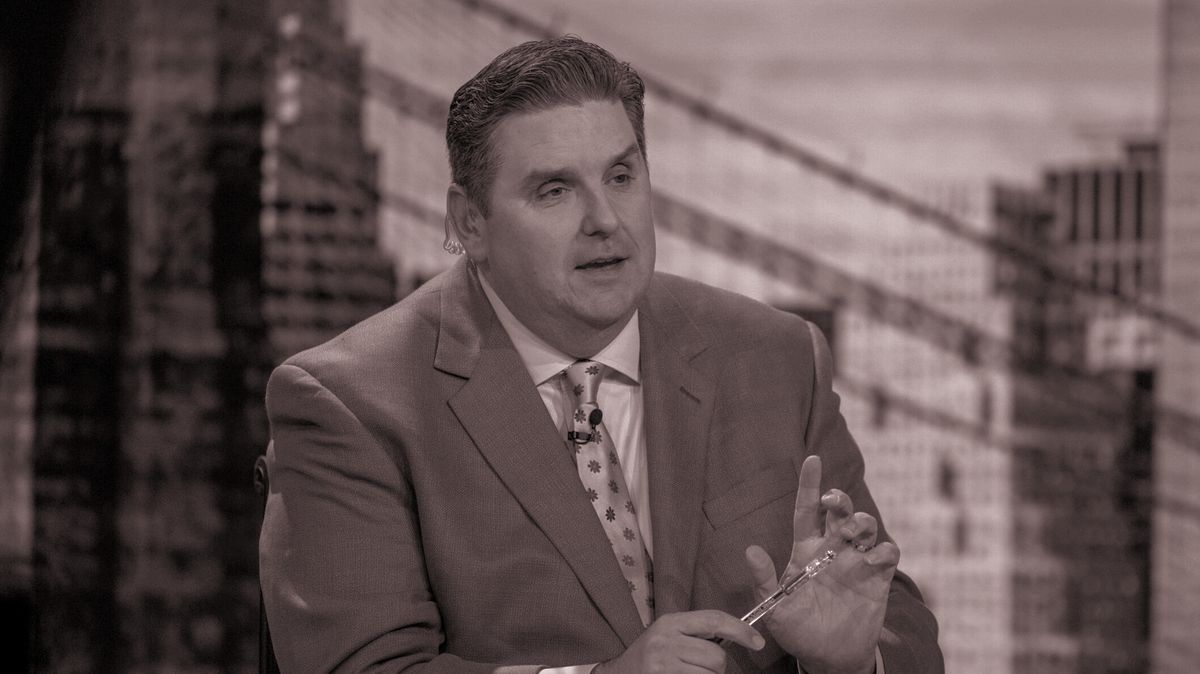
A candid chat with ESPN’s Brian Windhorst about the NBA’s next frontier after
its massive $76 billion rights deal—its attempt to make it big in Europe, potentially dip into the Middle Eastern sovereign wealth fund pot, and set up a true Champions League–style format. |
|
|
By most business metrics, the NBA is in an enviable position. It’s just a few months into new
media rights deals worth a collective $76 billion; early-season TV ratings are looking strong; and Adam Silver, the league’s commissioner, is poised to reveal ambitious expansion plans next year. Still, despite those good tidings, the NBA does have a few areas of concern. The league’s NBA Europe plans are in flux, even Silver acknowledges that he needs to tinker with the NBA Cup, and everyone is bracing for the coming retirements of superstars like LeBron
James and Steph Curry.
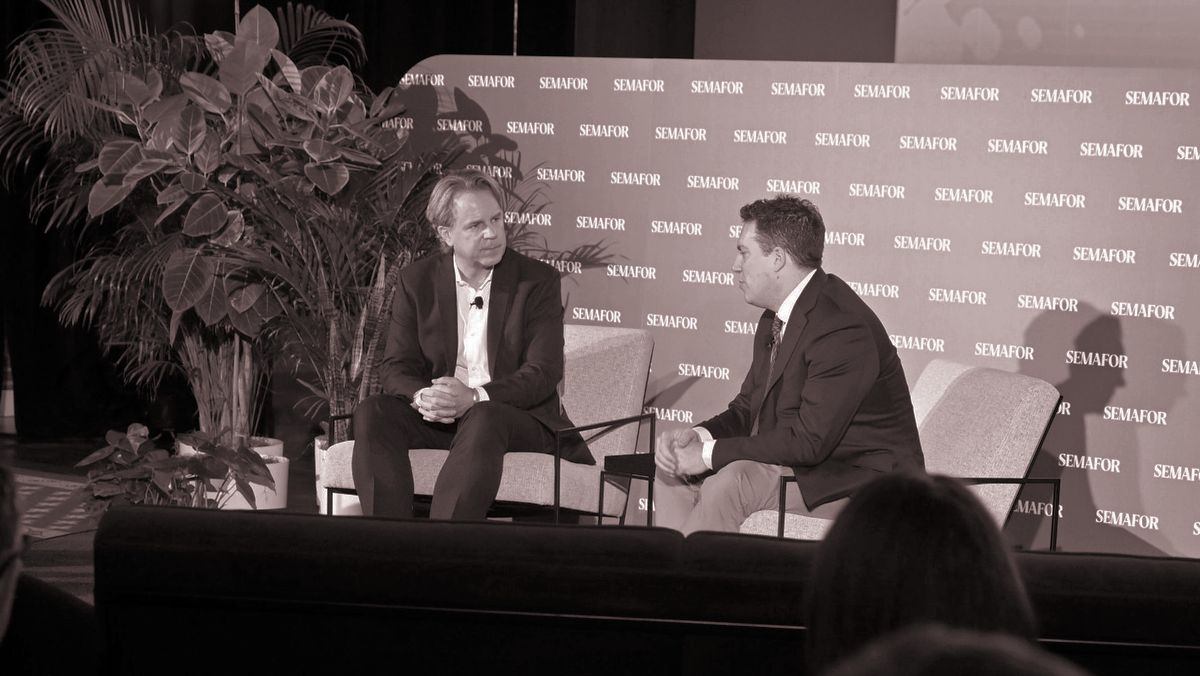
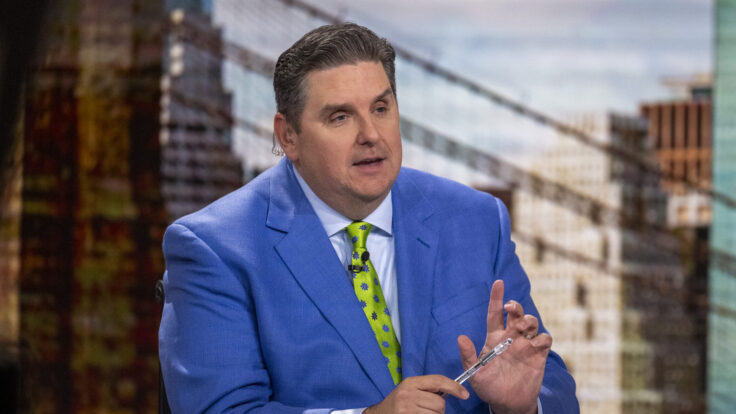
I addressed all these questions and more with Brian Windhorst, ESPN’s top NBA reporter, on a recent episode of the Varsity podcast. What follows is a transcript of our conversation, lightly edited for clarity. |
John Ourand: Let’s start with the NBA Cup, which just had the
championship on Tuesday night. People I talk to in the business seem to like it. But friends of mine who aren’t, they don’t really know what it is. How would you grade it right now?
Brian Windhorst: I think the idea is really smart, but the execution could be better—and I think the NBA would admit that. But just in case anybody thinks it’s not successful, the NBA Cup has been sold to Amazon for 10 more years. So number one, the
league got what it wanted, which is an extra property. And second, they’ve already sold it, so it’s not going anywhere. The way it looks will be different, I think, moving forward. This was designed as a way to draw in the casual fan, and I’m not sure it’s working.
Starting next year, I think the NBA is going to break the NBA Cup semifinals and championship apart. What’s being discussed would be to play the semifinals at the respective teams’ sites, and then play the championship at a
neutral site outside of Las Vegas.
The NBA has done a great job of expanding internationally and pushing forward with this NBA Europe idea. What exactly is the NBA trying to do here?
The NBA sees an underserved opportunity in Europe. Basketball is very popular in Europe, but there’s a big gap in the way soccer teams perform and are able to capture revenue and the basketball teams. The NBA thinks they can do it better. I’m skeptical
that the NBA can make this successful, but they’re going to do this league. Whether or not it gets off the ground in 2027 or 2028 is still up in the air.
There are underserved fans in the world who want more basketball. There are fans in Asia, but not a lot of talent; there’s money in the Middle East, but no population; and there’s talent in Europe, but they haven’t proven to be a revenue juggernaut. So the NBA, I think, is trying to take advantage of the situation and solve it. I don’t
think Adam Silver would ever say it this way, but I will: Part of the reason the NBA is doing NBA Europe is to give sovereign wealth funds a place to invest in teams. If they have media rights situations set up for NBA Europe, I’m not aware of them. And I don’t think this works without media rights. That’s the big reason why the European basketball teams aren’t able to grow, because they don’t have media rights; the soccer teams do.
Would NBA Europe serve as a feeder league for
the NBA, like another G League?
If the NBA owns it, there’s going to be a salary cap. If you’re an NBA team, you don’t want to lose your star to PSG because the Qataris are willing to pay five times more than your max contract. Naturally, there may be players who would rather play in Europe, but it’s not going to be apples to apples from a monetary standpoint. So yes, in general, I think it will create a minor league.
Having said that, if
you asked Adam Silver or some people in the Middle East what their dream is, it’s to create a Champions League. The concept would be that in, say, 2050, the NBA champion would play the European champion would play the African champion would play the Asian champion, etcetera. The NBA has paired with FIBA, basketball’s international governing body, on this project. FIBA conducts the World Cup of basketball, which happens every four years. Not many people in the Americas pay attention to it, but it
is very much a thing in the rest of the world. And FIBA knows how to do international competitions. That would be their dream of all dreams. And the Middle East is willing to fund it all, and host it all if they can. There’s a real pathway there, but we’re in the very early stages of that. |
What are your fears about the NBA with superstars like LeBron, Steph, etcetera, finally
hanging it up within the next few years?
I don’t think the quality of the NBA game has ever been better—the skill, the speed of the game—my concern is that the fans aren’t connecting with the next generation as well. For instance, Anthony Edwards has everything that you could possibly want in the next face of the NBA, but from a metrics standpoint, he’s not delivering at that level. And this is a guy who has actually proven it on
the court—someone people have compared him to Jordan because of how attractive his game is.
Is there a problem with where he plays, though? It would seem to me that it’s hard to develop stars in Minnesota.
The obvious pushback to that is that Durant and Westbrook became superstars in Oklahoma City, but you may have a point. Certainly the reason you see so
much Lakers stuff on ESPN is because ESPN is a data-driven company. And what you see on air, for the most part, is a reaction to what the data says, and the data says the fans want the Lakers.
For example, I think Nikola Jokić is one of the most aesthetically pleasing players of my lifetime, but I live in Omaha, and I’m blacked out on League Pass, so I couldn’t watch a lot of Nuggets games. But this year, with Amazon taking over, I can get all of the Nuggets games. I’m
seeking out the ways to see more Jokić, but the casual fan isn’t. So yes, it is a challenge for the NBA, and I don’t know what’s going to happen. It’s something that I’m sure keeps Adam Silver up occasionally. |
On Notre Dame and the C.F.P.: “There’s a common misunderstanding of why Notre Dame A.D.
Pete Bevacqua is so upset. Pete isn’t mad that the ACC lobbied for Miami, it’s that the ACC specifically targeted Notre Dame as the school that should be excluded in favor of Miami. It’s one thing to lobby for an ACC team, it’s another thing to target and disparage another school with which the ACC has a significant relationship. Why not lobby for Miami and ND to get in over Alabama? That’s the part that rubs Pete (and ND fans) the wrong way.” —A finance
executive
On the NFL’s cheap owners: “You wrote that the Bengals organization is one of the cheapest ownership groups in the league? Hmmm… where does the McCaskey family (Chicago Bears) fall on this list? You should do a ‘Top 10 Cheapest NFL Ownership Groups.’ Happy to help from personal experience.” —A Varsity subscriber |
Have a great weekend, everyone, and see you Monday.
John |
|
|
Join Puck’s chief political columnist, John Heilemann, as he roams the corridors of power and influence in America on
this twice-weekly interview show, taking you beyond the headlines with the people who shape our culture: icons and up-and-comers, incumbents and insurgents, moguls and machers in the overlapping worlds of politics, entertainment, tech, business, sports, media, and beyond. The conversations are rich and revealing, unrehearsed and unexpected… and reliably impolitic. A Puck-Audacy joint, new episodes drop every Wednesday and Friday. |
|
|
Ace media reporter Dylan Byers brings readers into the C-suite as he chronicles the biggest stories in the industry:
the future of cable news in the streaming era, the transformation of legacy publishers, the tech giants remaking the market, and all the egos involved. |
|
|
Need help? Review our FAQ page or contact us for assistance. For brand partnerships, email ads@puck.news. You received this email because you
signed up to receive emails from Puck, or as part of your Puck account associated with {{customer.email}}. To stop receiving this newsletter and/or manage all your email preferences, click here. |
Puck is published by Heat Media LLC. 107 Greenwich St., New York, NY 10006 |
|
|
|