Welcome back to The Varsity. I’m John Ourand, preparing to endure a
real-life Deliver Me From Nowhere moment this weekend at my high school reunion. Glory days, indeed…
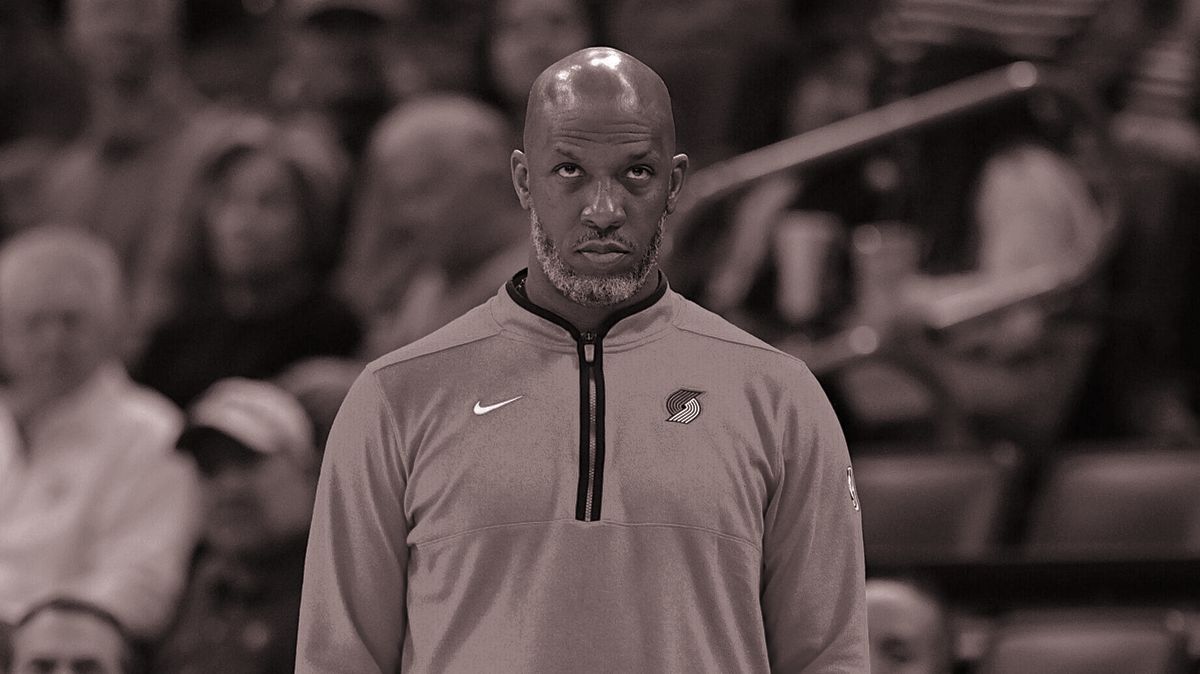
This issue is chock-full of news and analysis on everything from Formula 1’s Apple deal and Charter’s attempt to sell its Lakers R.S.N. to Amazon’s global strategy and World Series ad sales. But we’re also going to spend a lot of time on the story du jour—the roiling NBA betting scandal that resulted in the indictments that were just unsealed against Trailblazers
head coach Chauncey Billups and Heat guard Terry Rozier. At our inaugural In the Arena event last week, commissioner Adam Silver and I discussed the opportunities and perils of legalized gambling. Suffice it to say this was not how Adam wanted to open the season…
🚨 On deadline: Negotiations between ESPN and YouTube TV have remained quiet this month, suggesting that the two sides were on their way to a relatively easy renewal.
No more. This afternoon, ESPN went scorched earth on YouTube TV—publishing a statement that accused Google of “exploiting its position at the expense of their own customers.” The main issue isn’t ingestion, but price. Of course, this is a marked difference from three weeks ago, when Bristol quietly signed a renewal with Comcast. And that came after five other low-key carriage renewals dating back to last year’s Charter deal. Stay tuned…
🎧 Pod alert:
Michael Rubin launched Fanatics about 15 years ago, reinventing the sports merchandise space in the process. He has since grown the company into a market leader in collectibles and gaming, and is now expanding into live events, all while presumably lurching toward an eventual I.P.O. Rubin spoke at our In the Arena event with Bill Cohan and Michael Nathanson about how he’s grown and structured his business—and yes, he commented on the I.P.O.
chatter, too. Also, make sure to listen to yesterday’s episode of The Varsity, where RedBird Capital’s Gerry Cardinale explained his sports investment strategy and talked candidly about his Paramount adventure. I received a ton of good feedback on this one. |
Player of
the Week: Hans Schroeder
|
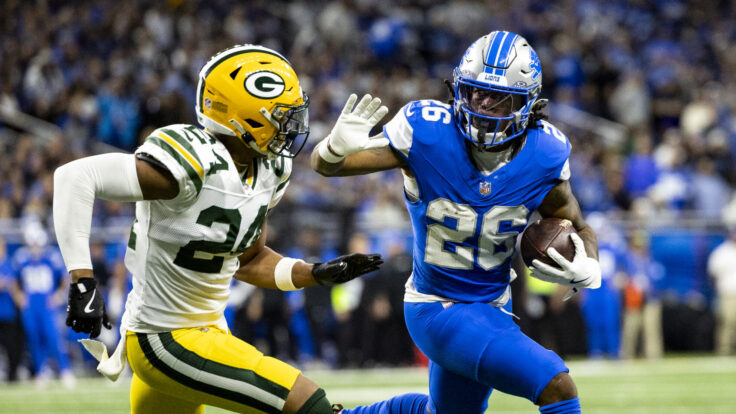
On Wednesday, NFL owners officially approved the sale of NFL Network to Disney in
exchange for a 10 percent stake in ESPN. Now the deal awaits regulatory approval, which could take around a year. Hans Schroeder, the league’s E.V.P. of media distribution, confessed at In the Arena that this deal was born out of a contracting pay TV business. In a world where most cable shingles are going to get cliff-pathed into oblivion, the NFL Network, its games, and RedZone have safe harbor within the ESPN product bundle. “We thought this was a
great way to position NFL Network for a brighter future as we look forward in a pay TV world that's clearly going through some challenges,” Schroeder said. “This is a way to strengthen it, and do so in a way that we thought worked really well for our fans.” |
Down to the
J.V.: The Commissioners
|
Recent sports betting scandals, from Shohei’s interpreter to
Jontay Porter, have followed similar patterns: terrible, sky-is-falling headlines followed by, well, not much. But it seems inevitable that eventually, one of these scandals will actually have legs.
The major American sports leagues, which continue to argue that regulated wagering is preferable to the previous Wild West, are certainly incentivized to clean this mess up and move forward quickly.
In-game betting alone is predicted to become a $14 billion annual business by the end of the decade, and the overall sports gaming industry is universally anticipated to provide an increasingly significant boost to the P&L—particularly as cable bidders erode, the streaming industry consolidates, and the R.S.N. business winds
down.
Adam Silver, Rob Manfred, and Roger Goodell can’t afford to underestimate the challenges of these gambling snafus. An hour after the news broke about Billups and Rozier, Congressman Paul Tonko exclaimed that the scandals were “an inevitable consequence of the unchecked explosion of the sports betting industry.” Will the league and the culture move on quickly, or is this an inflection point? |
|
|
A MESSAGE FROM OUR SPONSOR |
Forever at the top of its game, the trailblazing BMW 7 Series. Engineered to win. Learn more at
BMWUSA.com |
|
|
- F1
doldrums: Perhaps surprisingly, F1’s stock dropped slightly after the league announced its new five-season, $140 million-per-year U.S. rights deal with Apple—an appreciable upgrade from its expiring $90 million annual ESPN contract. Alas, financial analysts don’t like that the league is shuttering its profitable F1 TV service in the United States as part of the package. Wells Fargo analyst Steven Cahall estimated that F1 TV had around half a million U.S. subscribers, which
accounted for close to $60 million in annual revenue on top of the ESPN proceeds. “That may not go to zero—I think there’s still going to be F1 TV premium as an add-on,” Cahall told me. “As an analyst, I’m looking at the financials, and Liberty Formula 1 is a pretty expensive stock. Its investors expect rights to grow pretty nicely over the medium term, and I don’t think they got that with this deal.”
Cahall is closely monitoring F1’s forthcoming media rights renewals in Australia, Spain,
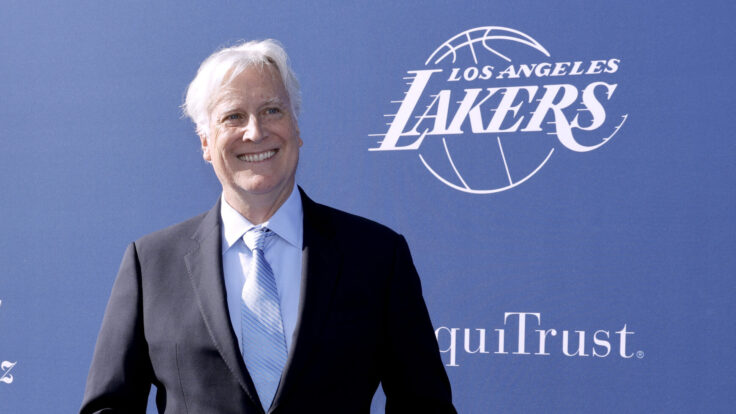
Italy, Germany, Austria, and Switzerland over the next several years. Will existing media partners, like Sky, hold the line on pricing as ESPN did during this past cycle? “It’s helpful that Apple is there globally to gather these rights,” Cahall said. “But if they’re doing it in the same environment that we just saw play out in the U.S., then you could have media rights revenue, which is arguably the most important revenue source for this company, no longer growing.” - Bankruptcy blues: As I reported last week, Charter has retained Raine to explore the sale of Spectrum SportsNet, the team’s regional sports network that pays the Lakers a staggering $180 million a year to broadcast its games. Of course, the schadenfreude has already kicked in regarding whether any bidders actually show up. After all, few buyers would be interested in a fading R.S.N. with such an enormous rights fee. Meanwhile, Charter believes that it can
get out of the deal, which runs to 2037, simply by having the R.S.N. declare bankruptcy. (The Lakers deal, unlike its Dodgers pact, isn’t secured by Charter.)
The Lakers, for their part, would only accept a lower fee if they conceded Charter’s Chapter 11 argument was legally legit. That’s not gonna happen. Several good sources have told me that the Lakers are prepared to dig in on this point, thereby nearly assuring a contractual dispute that seems destined for court. - Amazon’s global aspirations: Amazon Prime Video, one of the few great global streamers, has made an unusual habit of acquiring sports rights on a territorial basis. Its new NBA deal is global, but the company’s NFL contract is U.S.-only. It carries the Champions League in Europe, and it streams the NHL in Canada. Notably, however, Amazon gained the rights to broadcast its forthcoming Black Friday NFL game between the Eagles and Bears in 240
territories. Is this reversal a hallmark of the new Jay Marine era?
At our In the Arena event, I put the question to Amazon’s global head of sports. Marine reiterated that, in general, global rights aren’t as important to Amazon. “It sounds good to say, Hey, I have this property globally—and there are some efficiencies there,” Marine said. “But the reality is that most customers live in one country, and they don't really care whether you have it in another
country or not.”
When I asked how global rights can work, Marine pointed to the NBA and said, “Our local Prime Video teams will be marketing the NBA everywhere. We also carry League Pass globally, so people can subscribe and get all the games everywhere. The NBA loves our worldwide scale, and the NBA was a unique league that also made sense for us.” - Oh, Canada: Toronto’s presence in the World Series will not affect Fox’s ad sales efforts around
the Fall Classic. Indeed, Fox sold most of its World Series ads during the upfront selling season this spring. Ironically, sales for the 2024 World Series—which wound up featuring the Yankees and Dodgers—didn’t see as much activity during the upfronts, largely because buyers had the previous year’s lackluster five-game Rangers–Diamondbacks matchup fresh in their minds. So Fox turned around and sold more ads in the so-called “scatter market”—the window outside of the upfronts—that
year.
Sources told me that the World Series was around 85 percent sold heading into October, with the first five games more than 90 percent sold. The question is whether a Dodgers–Blue Jays series will create enough buzz to convince ad buyers to spend early next year. - MrBeast’s $100 million day in court: My partner Eriq Gardner just reported
a great piece on the legal battle involving Jimmy Donaldson (a.k.a. MrBeast), his unpalatable MrBeastBurger, and a ghost kitchen that you all should read. It’s a tale of celebrity endorsement gone sideways.
Here’s Eriq: “In summary judgment arguments this week, Donaldson, represented by veteran entertainment litigator Steve
Marenberg, is presenting a straightforward case: If you’re going to plaster my name, face, and digital footprint on a product, you’d better not screw it up. He accuses [Robert Earl’s] Virtual Dining Concepts of violating that basic rule—posting on Instagram without approval, flouting the agreement—and he’s trying to void the contract entirely. That would free him from exclusivity and noncompete provisions, and clear a path for a more appetizing
partnership with, say, Burger King.”
Eriq continued: “In its countersuit, VDC, represented by courtroom bruiser Bill Carmody of Susman Godfrey, argues that Donaldson walked away from a promising business with strong early sales. Perhaps the juiciest part of the spat coalesces around dueling media narratives: Earl’s team points to MrBeast’s swelling subscriber count, a $300 million Series C fundraising round last year, and a $5 billion valuation as proof that the burger
deal hasn’t dented the MrBeast brand. Donaldson disagrees and argues that while his star may still be rising, it could be rising faster.”
|
And now on to the main event… |
|
|
Despite the screaming headlines about the Rozier–Billups nightmare,
grizzled sports media executives are more sanguine in private—recognizing that sports betting isn’t only an irreversible trend but also an increasingly central part of the economic future of the industry. |
|
|
When news broke this morning that the NBA was embroiled in another gambling
scandal—or “the insider trading scandal for the NBA,” as F.B.I. Director Kash Patel described it—the league’s partners retreated into what can best be described as wait-and-see mode. After all, the comingling of sports and legal sports betting has likely become irreversible. As ESPN host Mike Greenberg discussed the latest scandal to befall pro sports, a promo
for ESPN Bet was displayed prominently onscreen. As the NBA prepares for a full slate of games tomorrow, around half of its teams will be carried by a channel called “FanDuel Sports Network.” And on and on. In fact, the integration between sports and gambling has become so pervasive that my text messages were filled with jokes like this, and
this.
Indeed, the news was undeniably horrible. Miami Heat guard Terry Rozier was arrested and accused of using inside information to make prop bets. (The Wall Street Journal reported back in January that the F.B.I. was investigating Rozier. His lawyer
told Pablo Torre that he intends to fight the charges.) The feds also arrested Cleveland Cavaliers assistant coach Damon Jones, who was accused of using inside information to make bets, and Portland Trailblazers coach Chauncey Billups for his alleged role in a series of rigged poker games.
As the challenging headlines
dominated conversations throughout the sports business today, the executives I spoke with generally had a more tempered sense of how much damage this scandal would cause. They had seen similar headlines in March of last year, when Shohei Ohtani’s interpreter helped himself to the Dodgers star’s money to pay off gambling debts. They also looked back to the following month, when the NBA banned Jontay Porter for life for making prop bets on himself. |
|
|
A MESSAGE FROM OUR SPONSOR |
Forever at the top of its game, the trailblazing BMW 7 Series. Engineered to win. Learn more at
BMWUSA.com |
|
|
Even as they read through the indictments, several sports media types who deal with
the NBA remained unconcerned, certain that at some point, these headlines would recede into the background and things would return to business as usual. Yes, two NBA coaches had been arrested, but many clung to a double-barreled assuagement—that legalized sports betting has made the system more regulated and, well, that the horse is already out of the barn. While acknowledging that these types of stories can lead to long-term consequences, sports betting is legal in 39 states,
and it will take a lot more than a couple of indictments to stop that momentum. “The truth is that we don’t know everything right now,” one sports executive said. “A lot of times in situations like this, everybody takes their lead from the league level.” (Also, for what it’s worth, the Billups indictment had nothing to do with sports betting.)
Indeed, the NBA isn’t going to overreact to a shit sandwich of these proportions. More than a decade ago, commissioner Adam
Silver called for the legalization of sports betting in a Times op-ed. “I believe that sports betting should be brought out of the underground and into the sunlight where it can be appropriately monitored and regulated,” he wrote. Silver’s stance was radical—he was the only sports commissioner at the time to publicly support the legalization of sports betting. Eventually, of course, the Supreme Court struck down a federal sports betting ban, and companies like
DraftKings and FanDuel became two of the largest marketers in the industry.
In a recent onstage interview at our In the Arena event in New York last week, Silver told me that he still hoped to see the sports betting market mature. “What I was advocating for at the time was federal legislation, so there’d be consistency from state to state,” Silver told me. “Everything isn’t where I would have wanted in terms of protections. … It’s still better.” Silver credited technology from companies
like DraftKings, Fanatics, and FanDuel that flag unusual betting activity.
Of course, Silver acknowledged that the system was hardly perfect. “I lose sleep over it,” he said. “I think that better technology will help us do an even better job monitoring aberrational behavior, but it’s pretty good now. It analogizes like a stock exchange—if there’s aberrational behavior, it gets picked up really quickly. … And from that standpoint, that’s our best chance to catch wrongdoers.” Even if
grizzled executives are trying to keep calm and carry on, one presumes Silver isn’t sleeping easy tonight. |
On broadcast vs. streaming: “The NBA numbers for NBC and Amazon are going to be
the best and most fair read yet on broadcast vs. streaming. They’re both new outlets; the schedules are going to be pretty comparable in quality. If NBC’s numbers are way better, there really are no excuses for Amazon. And if Amazon is competitive with NBC, you kinda have to tip your cap to them.” —A media executive
On Gerry Cardinale’s In the Arena appearance: “Your Gerry Cardinale
pod was great. He’s so smart, I need a business thesaurus handy to translate sometimes.” —A media executive
On ESPN’s ‘Inside the NBA’ debut: “I noticed there was no ESPN BottomLine ticker on Inside the NBA. Has there ever been an ESPN program that Bristol didn’t put the BottomLine on?” —A Varsity subscriber
[Ed. note: I
checked with ESPN comms exec Ben Cafardo, who pointed out that ESPN does not use the BottomLine scroll during Monday Night Football or the Masters. You can now add Inside the NBA to that list.] |
Have a great weekend. See you Monday.
John |
|
|
Ace media reporter Dylan Byers brings readers into the C-suite as he chronicles the biggest stories in the
industry: the future of cable news in the streaming era, the transformation of legacy publishers, the tech giants remaking the market, and all the egos involved. |
|
|
Join Emmy Award-winning journalist Peter Hamby, along with the team of expert journalists at Puck, as they let you
in on the conversations insiders are having across the four corners of power in America: Wall Street, Washington, Silicon Valley, and Hollywood. Presented in partnership with Audacy, new episodes publish daily, Monday through Friday. |
|
|
Need help? Review our FAQ page or contact us for assistance. For brand partnerships, email ads@puck.news. You received this email because you signed up to receive emails from Puck, or as part of your Puck account associated with {{customer.email}}. To stop receiving this newsletter and/or manage all your email preferences, click here. |
Puck is published by Heat Media LLC. 107 Greenwich St, New York, NY 10006
|
|
|
|