 |
|
Good evening, and welcome back to In The Room, my biweekly email on the inner workings of the American media industry. Tonight, some high-level observations on the state of the news media, startups real and imagined, and the seemingly impenetrable success of The New York Times.
|
 |
| The Meredith Moat |
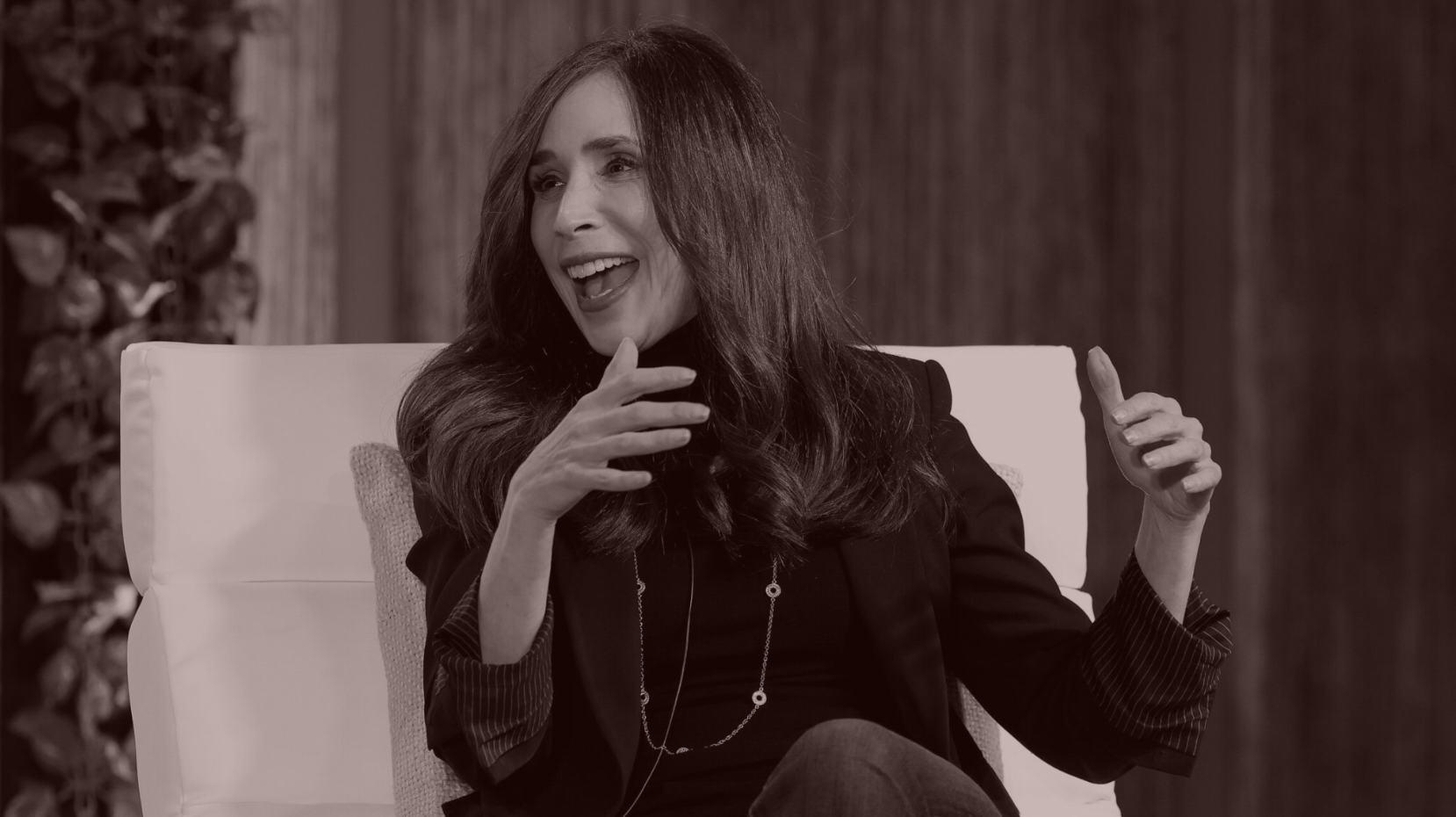
| In an era of unprecedented disruption—new mediacos, new models, highly capitalized competitors, and CNN gyrations—none of the big guns are holding a candle to the Times. |
|
|
|
| In the premiere episode of the fourth season of HBO’s Succession, that amusingly precise and insightful roman à clef of the media industry—“I am convinced Jesse Armstrong has the transcripts of Rupert’s rants and inner monologues,” one media executive in a position to know such things recently told me—the hapless Roy siblings are revealed to be toiling away on a new startup, The Hundred, which Kendall describes as “Substack meets MasterClass meets The Economist meets The New Yorker.” This absurd, idea-less name-dropping pitch-deck babble was quickly embraced by journalists and Succession enthusiasts (it’s a heavily-shaded Venn diagram, to be sure), who delighted in a critique of the various behaviors on display: bullshit-laden start-up ideation, born-on-third-base fundraising arrogance, general vanity, and the craven lust for influence.
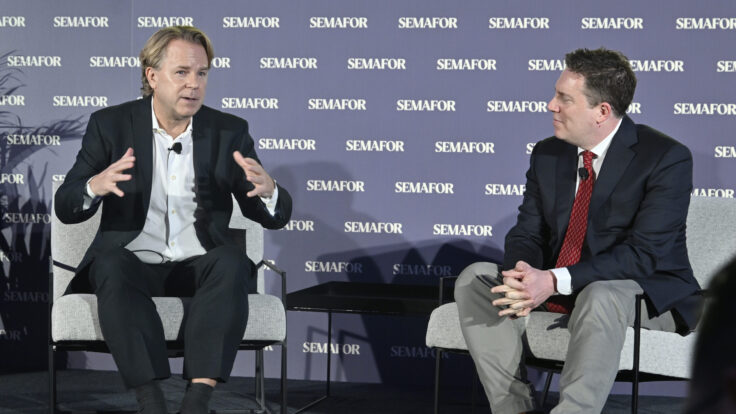
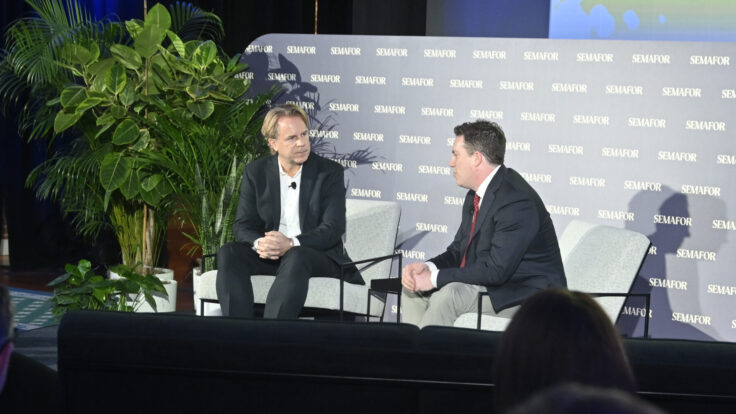
Every startup is built on a promise, of course—Puck promises to take you inside the conversations happening in America’s power centers, all premised on a new economic model—but media types today seem particularly vulnerable to a heavy cake of grandeur. When Ben Smith decamped from The New York Times to launch Semafor, with former Bloomberg C.E.O. Justin Smith, he memorably promised a global news site that would cater to the world’s 200 million, college-educated, English-speakers “who no one is really treating like an audience.” Executives at both the Smiths’ alma maters certainly raised eyebrows. The Times and Bloomberg weren’t treating their audiences like audiences? Also, what does that even mean? Anyway, whatever.
Ben, perhaps recognizing his own moxie, as well as the delta between Semafor’s current iteration and its ultimate ambitions, has recently been game enough to get in on the joke. After the Succession premiere, the Semafor Twitter account briefly turned The Hundred’s tagline into its own. Ben also appeared on Kara Swisher’s (excellent) HBO-sanctioned Succession podcast, effectively capitulating to the conceit that The Hundred was, at least in some part, modeled after his own company.
The Smiths would likely argue, in fairness, that a great mediaco usually needs a good hype man. The Messenger, the soon-to-launch general news enterprise from 74-year-old publishing scion Jimmy Finkelstein, is headed to market with even frothier ambition-laden pablum. With an alleged $50 million in financing, Finkelstein and his co-conspirators hope The Messenger can match the prestige of The Washington Post while achieving the scale of the Daily Mail, according to sources who have met with them. They hope to launch this May with 175 journalists, and eventually scale to 550 journalists within a year, while making $100 million in annual revenue by 2024.
On some level, The Messenger reflects the stations of its proprietors: Finklestein, himself, is a veteran of the disintermediated traffic and display advertising business; and Richard “Mad Dog” Beckman, a chief ad man at a bygone version of Condé Nast (and then Vice, The Hill, and others) has all the charm of an airport hotel. Finkelstein and Beckman seem to see an opportunity in serving a high-low content mix to a Drudge-sized center-right-leaning audience, and hoping that digital advertising at scale will pay the bills, all within a very tight time frame. What could possibly go wrong?
Alas, that model, ascendant when Ben Smith ran Buzzfeed News, has been largely replaced by various hybrid strategies. Media people have guffawed at The Messenger’s personnel ambitions not simply because they seem too bold, but rather because they seem unnecessary. Why tether a company to a 500-person newsroom before the entity has even established a sensical and extensible business model? A recent New York Post item skewers Finkelstein’s business plan as “delusional.” I’d simply say instead that it’s anachronistic.
Short on new hires, The Messenger recently acquired Grid News, which could get them as many as 50 additional employees, but not much else. (Again, why accumulate fixed costs before the business is at a revenue threshold?) They shut Grid down on Monday.
The most amusing aspect of all the startup marketing rhetoric, of course, is the way it presumes that a brand’s power is easily built. Finkelstein recently told the Times: “I remember an era where you’d sit by the TV, when I was a kid with my family, and we’d all watch 60 Minutes together. Or we all couldn’t wait to get the next issue of Vanity Fair or whatever other magazine you were interested in. Those days are over, and the fact is, I want to help bring those days back.” Setting aside the irony of that statement—I recognize consumer behavior has changed, but I’m nostalgic, so let’s throw $50 million at it anyway—what’s most notable is the vainglorious belief in his own ability to create such a brand not over the course of a century, as both the Post and the Daily Mail did, but seemingly over the course of a few years. |
|
|
| Building anything is difficult, but building a new global media company to rival the entrenched players is near impossible. In his interview with Kara for the Succession podcast, a self-aware Smith noted that Kendall’s tagline for The Hundred evidenced “the worst instinct in media startups, but also the thing that everybody thinks, which is: ‘Nobody is doing this. They must all be such idiots. The space for doing our Economist plus Substack thing is so wide open. And we see it and nobody else sees it. And the reason this doesn't exist is because we’re the only geniuses.’” The wiser instinct, Ben said, “is to assume it’s super hard and that’s why nobody is doing it.”
Indeed, extremely few globally-minded media startups have achieved meaningful and lasting success in the digital era: Politico sold to Axel Springer last year for $1 billion, the most successful exit for a news entity in the digital media era. It took them fifteen years, $50 million of Allbritton family capital, some Jim VandeHei-John Harris-Mike Allen-Roy Schwartz special sauce, and the timely ambitions of a KKR-backed German-media empire to get there. (The sauce is indeed special: VandeHei, Allen and Schwartz went on to launch Axios in 2017 and then sell it, five years later, to Cox Enterprises for $525 million. AxiosHQ, their SAAS spin-off, just raised a new financing round at a $100 million valuation.)
Then again, it is only now, with Axel’s backing, that Politico is beginning to fully realize its global ambitions, wedding its Washington and Brussels divisions into a single business and expanding to California and London. And of course, no clear-eyed Politico executive would argue that its brand rivals, say, The New York Times, on a global scale.
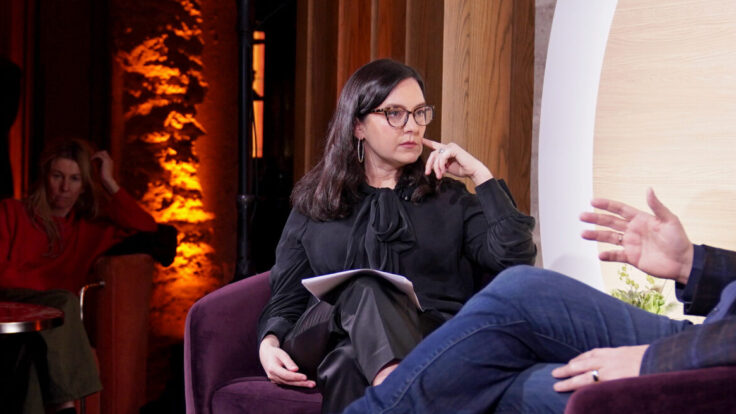
In fact, all these challenges point, again and again, to the success of the Times. A decade or so ago, Business Insider, Vice, Vox, and Buzzfeed all tried to vanquish the Times in one form or another, but the paper caught up on product and strategy before the insurgents could credibly compete on quality. Ever since Mark Thompson sagely set the Times Company on its current course toward membership and subscription, A.G. Sulzberger and C.E.O. Meredith Kopit Levien have truly metamorphosed the business into a robust, multi-platform profit machine with nearly 10 million paying subscribers (8.8 million are digital-only), 1,700 journalists, dozens of new franchises and acquisitions—Wordle, The Athletic, Cooking, Wirecutter, etcetera—as well as its own in-house advertising agency, which is set to become even more ambitious under the leadership of its newly hired global chief advertising officer Joy Robins, late of The Washington Post.
While new media startups seem to highlight how hard it is to achieve the Times’ stature, legacy competitors are showing that it is equally difficult to maintain it. Ostensibly, CNN should be the Times’ biggest competitor on the global stage. It has Coca-Cola-level brand recognition, global newsgathering resources and, most importantly, unparalleled reach, with the most widely distributed news channel and the most heavily trafficked news site in the world. And yet while the Times is making gains on CNN’s core value proposition—the ability to provide live video coverage of breaking news from around the globe—CNN still mostly trails the Times’ agenda-setting journalism and has failed to emulate its diversification into a lifestyle media company.
Indeed, CNN has gone in the opposite direction, killing or neutering its differentiated content—so long, CNN+; so long CNN Films—while its C.E.O., Chris Licht, tinkers with the increasingly irrelevant domestic linear product. On Wednesday, CNN unveiled the new logo for its revamped dayside lineup, which is arguably no better or worse than something ChatGPT might have designed if given the reins, but nevertheless has no bearing on the existential challenges facing that business. |
|
|
| With Jeff Bezos’s backing, The Washington Post, too, should be vying with the Times for global dominance. And for a time, during the meteoric growth attained during the Marty Baron-vs.-Donald Trump era, it seemed to harbor those ambitions. But while the Times was diversifying and acquiring at a record clip, the Post under C.E.O. Fred Ryan stayed conservatively focused on its core product and forewent a number of potential acquisitions. In recent years, it has been beset by subscriber churn, revenue declines, and an exodus of top talent on both the editorial and business sides. (Robins’ aforementioned defection to the Times is both a testament to the Gray Lady’s power, as well as the latest vote of no confidence in Ryan’s leadership. People just seem to want to work with Meredith instead.)
Beyond these entities, it’s difficult to think of any entrenched player, at least in the United States, who is capable of competing with the Times in a meaningful way. Fox News and MSNBC are of course too overtly partisan; broadcast news is on a long and irreversible decline into irrelevance (I was told today that ABC News will cut at least 50 positions as part of broader layoffs at Disney); and legacy print empires like Hearst and Condé Nast are preserving value as they manage decline. These days, the most promising digital media companies play for powerful but niche audiences. Punchbowl owns Capitol Hill, The Information long ago laid claim to Sand Hill Road. The integration of The Athletic into the Times Company portfolio isn’t seamless, but if it is successful then expect Kopit Levien to continue the M&A push.
Less than 20 minutes into the Succession premiere, the Roy siblings quickly abandon their startup dreams in order to acquire a more compelling target: Pierce Global News, a multi-billion dollar legacy media conglomerate owned by a wealthy family that’s loosely modeled on the Sulzbergers (as well as the Bancrofts, who sold Dow Jones to Rupert Murdoch in 2007). They are motivated, in no small part, by their desire to beat their father in a bidding war—even if that means spending considerably more than PGN is worth, or than the siblings themselves can afford. But they’re also piqued by the appeal of owning an established news organization with real influence, rather than building something from scratch that may very well fail.
“I thought we were going for The Hundred: small, new, fast on our feet,” Roman Roy protests. His sister Shiv cuts to the point: “As a business, [PGN] is much better than the made-up company of dreams we were ready to pitch,” she says. “I mean, it’s very exciting, but it’s kind of bullshit.” |
|
|
|
| FOUR STORIES WE’RE TALKING ABOUT |
 |
|
 |
| Biden vs. the “Blob" |
| D.C. foreign policy insiders are growing exasperated with Biden’s Ukraine strategy. |
| JULIA IOFFE |
|
 |
| The Netflix Superpower |
| A surprise hit reveals the streamer’s nonpareil distribution capability. |
| JULIA ALEXANDER |
|
 |
|
|
|

|
 |
|
|
|
Need help? Review our FAQs
page or contact
us for assistance. For brand partnerships, email ads@puck.news.
|
|
|
|
Puck is published by Heat Media LLC. 227 W 17th St New York, NY 10011.
|
|
|
|