 |
 |
|
Good evening, and welcome back to In The Room. Tonight, a gut-check on an industry suffering for leaders in an age of diminished ambitions.
|
|
|
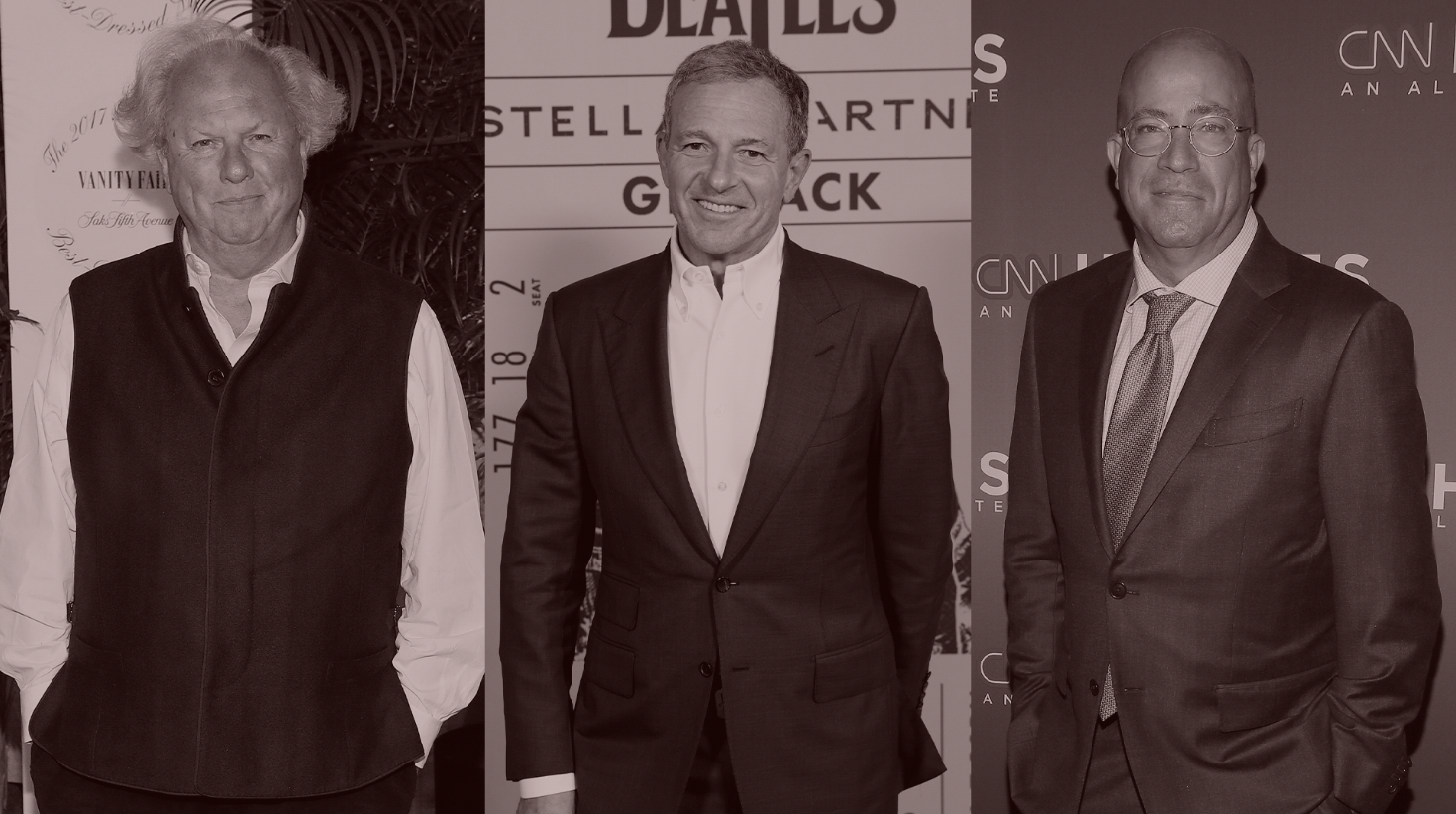
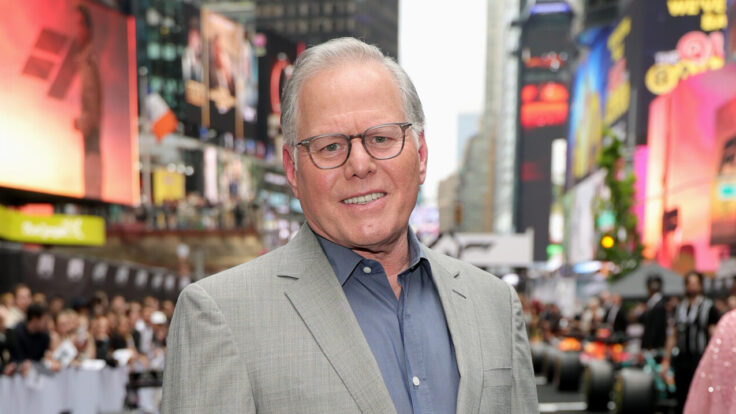
| Last week, as I was perusing the extensive, token-in-the-legend-meter coverage of Graydon Carter’s star-studded, summer-christening soirée with David Zaslav at the Hotel du Cap—lengthy writeups in the Times, the Journal, New York, etcetera—I couldn’t help but notice a fascinating detail.
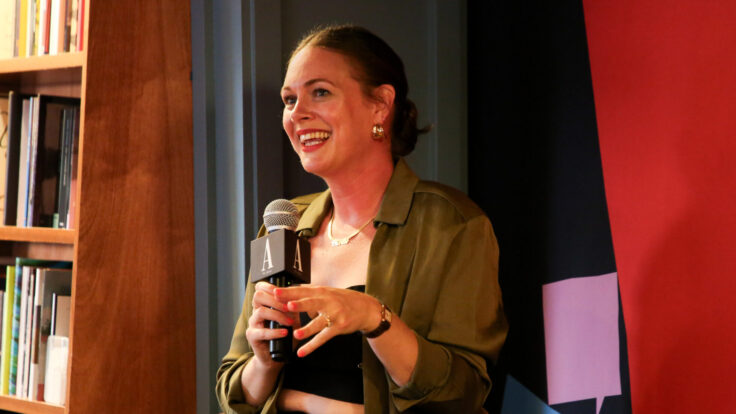
A few nights earlier, Carter’s successor at Vanity Fair, Radhika Jones, had thrown her own party at the same storied venue, and despite luring Jeff Bezos and Lauren Sanchez ashore off Koru, the couple’s new superyacht, it was clear she was destined to be upstaged by her predecessor, a well-known master in, among other things, the fine art of A-list gatherings. As the Times noted wryly, Miuccia Prada, whose namesake brand co-hosted the V.F. event, did not attend Jones’ bash. Sipping an espresso ahead of his own grande fête, Graydon was asked by a Times reporter about Radhika’s event and replied, indifferently: “I’m sure it was fine.”
The quote reverberated through the halls and up and down the elevator shafts at Condé Nast, a notoriously gossipy company, where leadership questions are, of course, always looming, even if they aren’t really that newsy anymore. To wit: today, Wired’s editor-in-chief Gideon Lichfield announced that he was leaving the brand after two unremarkable years. The departure was met not with a bang, but a whimper. Wired used to be one of the most important brands in the culture, and is now a shadow of its former self. And Lichfield’s musical chair is small potatoes, of course, at a company steeped in history and addicted to dish, a place where Anna Wintour is perpetually said to be one Met Gala away from announcing her retirement, at which point Vogue’s still-lucrative advertising business may face an existential crisis (perhaps that’s why she never does leave). |
|
A MESSAGE FROM OUR SPONSOR
|
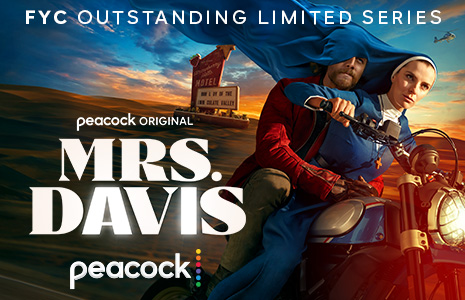 |
Peacock proudly presents the critically acclaimed Original Mrs. Davis for your Emmy consideration. “Mrs. Davis” is the world’s most powerful Artificial Intelligence. Simone is the nun devoted to destroying Her. From Tara Hernandez, a co-executive producer of The Big Bang Theory, and Emmy winner Damon Lindelof, creator of Watchmen and co-creator of Lost, comes an epic quest of biblical and binary proportions. Starring Betty Gilpin as Simone, Mrs. Davis is streaming now only on Peacock.
|
|
|
| The same might be said of David Remnick, who is similarly inextricably linked to The New Yorker’s identity after 25 extraordinary years at the helm. After hemorrhaging money during the Tina Brown era, The New Yorker is now one of Condé’s most profitable brands, thanks in part to the successful subscriber business he built with the help of Nick Thompson, now the C.E.O. of Atlantic Media. And yet some wonder if even Remnick may see the logic in timing his exit to the magazine’s forthcoming centennial, in 2025, when he will be 66, but that will be up to him to decide.
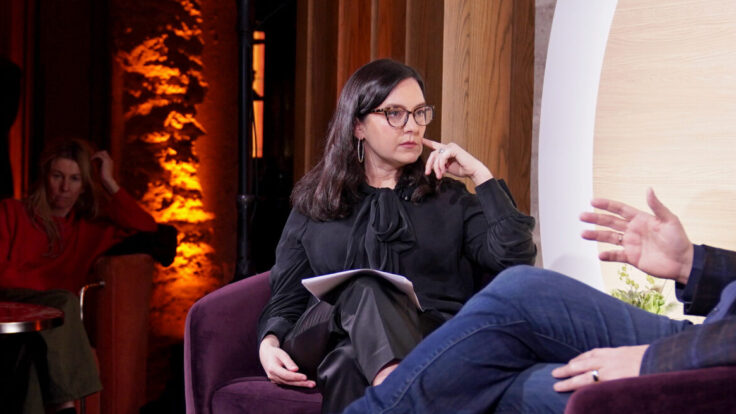
Jones, of course, has been facing down challenges since she was appointed. (The Times memorably called her a “surprise choice” in the headline announcing her hire in 2017.) She has largely iterated off the playbook that Graydon perfected (the high-low, the Oscar party, Cannes, the Summit, which she surprisingly unwound) but with less panache, gravity, and financial success. During Carter’s tenure, V.F. broke culture-shaping news: from the identity of Deep Throat to Caitlyn Jenner, from its groundbreaking work on George Bush’s path to war to the late Christopher Hitchens’ essays.
Back then, it made hundreds of millions a year in revenue. Now, it occasionally features cost-saving illustrations on the cover and earns far less as the exigencies of the industry, among other things, have forced belt-tightening and reduced its cultural footprint to a toehold. Last year, I noted that the title made $60 million in advertising revenue in 2021 (Condé Nast disputed those figures). Jones unquestionably had very big shoes to fill, and these are unforgiving times for the media industry. Nevertheless, there are those inside Vanity Fair and Condé who say she’s exacerbated the problem and accelerated the decline. (A Vanity Fair spokesperson declined to comment.)
In any event, what really struck me about the Graydon vignette was how much it epitomized a particular trend we’re seeing in the industry, one in which a generation of larger-than-life players helmed seemingly indomitable cultural icons that now appear to be shrinking with time. Radhika may not fill the unique and coiffed silhouette of Graydon, to be sure, but then again how many current media executives can be said to be as big as their predecessors? |
|
|
| Remembrance of Things Past |
|
| CNN C.E.O. Chris Licht is only the most obvious of these examples. Interestingly enough, his ill-fated stewardship of Jeff Zucker’s former cable news network began with a repudiation of both his predecessor’s editorial vision and micromanaging leadership style, as well as overt attempts to avoid inevitable comparisons by distancing himself both philosophically and physically, setting up his office outside the newsroom on a corporate floor. The pitfalls and missteps of Licht’s first year have been well documented here and by others, and will soon be featured in a lengthy Tim Alberta opus for The Atlantic, which I’m told will be published in a week or two.
And yet it’s fair to say that Licht’s cardinal sin was his failure to win the respect and reverence of the vast majority of people who work for him—to fill out the silhouette, as it were—which, of course, made all of his secular and intractable problems (cord-cutting, the post-Trump malaise, etcetera) harder. CNN is now the consistent third-place network and, as of today, it is farther behind MSNBC in total day ratings than at any point in its history. Meanwhile, the flight of anchors and producers to rival networks has taken on trend status. And one wonders how long Anderson Cooper is willing to stomach the indignity of coming in fourth behind Newsmax’s Eric Bolling.
But of course, similar stories are being told across the industry: at ABC News, Kim Godwin coasts on the achievements of her predecessors James Goldston and Ben Sherwood, whose talents she cannot match but whom she nevertheless feels entitled to dismiss in the digital pages of Vanity Fair; at The Washington Post, Sally Buzbee lives in the shadow of Marty Baron, as well as the apparently diminished ambitions of her boss, Fred Ryan, who once seemed poised to go toe-to-toe with the Times but is now struggling to stem subscriber churn. Cesar Conde hardly musters the gravitas of Andy Lack. Time recently announced its youngest ever editor-in-chief, a position once helmed by stalwarts like Walter Isaacson and Jim Kelly. Bob Chapek needed to be rescued by his predecessor, and successor, Bob Iger. None of this is surprising, after all. As business models collapse, these jobs aren’t as cushy or competitive as they used to be. One notable exception, however, is actually Zaz, a step up in clout and comp from Jason Kilar.
Even the recent drama embroiling Fox News—the embarrassing Dominion disclosures; the $787 million settlement; the surprise ouster of Tucker Carlson, which continues to drag on the network’s primetime ratings—is at least in part a result of the post-Roger Ailes leadership team’s inability to keep the more crazy and conspiratorial on-air talents in line. (Yes, obviously, Ailes’ sins were far, far, far worse, it goes without saying.) One oft-repeated sentiment inside Fox News during the Dominion hearings, even among those who acknowledged their former boss’s horrific behavior, was that “none of this would have happened under Roger.”
Of course, after Tucker’s exit, even Fox’s powerful primetime vehicle feels less influential. Its next iteration, likely to be built around Sean Hannity at 8 p.m., with Jesse Watters slotted somewhere nearby, seems but another unremarkable rearranging of the deck chairs that occurs with regularity in T.V. news these days. (Officially, Fox News says no decisions about the primetime lineup have been made.)
Rather amusingly, Matt Drudge, who was the first to break the still-unconfirmed Fox News primetime plan, touted this as the network’s “boldest and most fearless line-up ever.” Perhaps he was in on the joke. There’s not much in the media that feels bold or fearless these days, particularly when weighed against the past. So much just feels smaller.
A bright spot, perhaps, is the rather surprising font of a new generation of innovation: the veterans. Carter and Zaz’s party, after all, was in support of Air Mail, the former’s digital media company, which recently raised $17 million in a Series B financing. Zucker is in the early stages of erecting his own media entity with Redbird. Goldston, not some millennial, was tasked with programming the January 6th Committee’s provocative video content, and has since set up shop with Kevin Mayer and Tom Staggs at Candle Media. Maybe the old guys have still got it. |
|
|
|
| FOUR STORIES WE’RE TALKING ABOUT |
 |
|
 |
| A Yellowstone Mystery |
| Notes on an $80M lawsuit surrounding TV’s No.1 series. |
| MATTHEW BELLONI & ERIQ GARDNER |
|
 |
|
 |
| Yalta 2023 |
| Imagining the post-invasion contours of Russia and Ukraine. |
| JULIA IOFFE |
|
|
|

|
 |
|
|
|
Need help? Review our FAQs
page or contact
us for assistance. For brand partnerships, email ads@puck.news.
|
|
|
|
Puck is published by Heat Media LLC. 227 W 17th St New York, NY 10011.
|
|
|
|