 |
|
Good evening, I'm Dylan Byers.
|
|
Welcome back to In the Room, my biweekly private email on the inner workings of American media. This afternoon, a conversation with my colleague Peter Hamby on the rapidly approaching midterms and ‘24 campaign cycle. Without an obvious storyline for the media to glom onto, we debated how cable networks might augment their coverage this time around; identified the largest, counterintuitive gap in American politics; and addressed the inevitable question: what might a third round of Trump campaign coverage look like with a rival superpower in North Florida?
|
| SPONSORED BY HULU |
 |
|
|
 |
| The Media Braces for Its Second Trump Marriage |
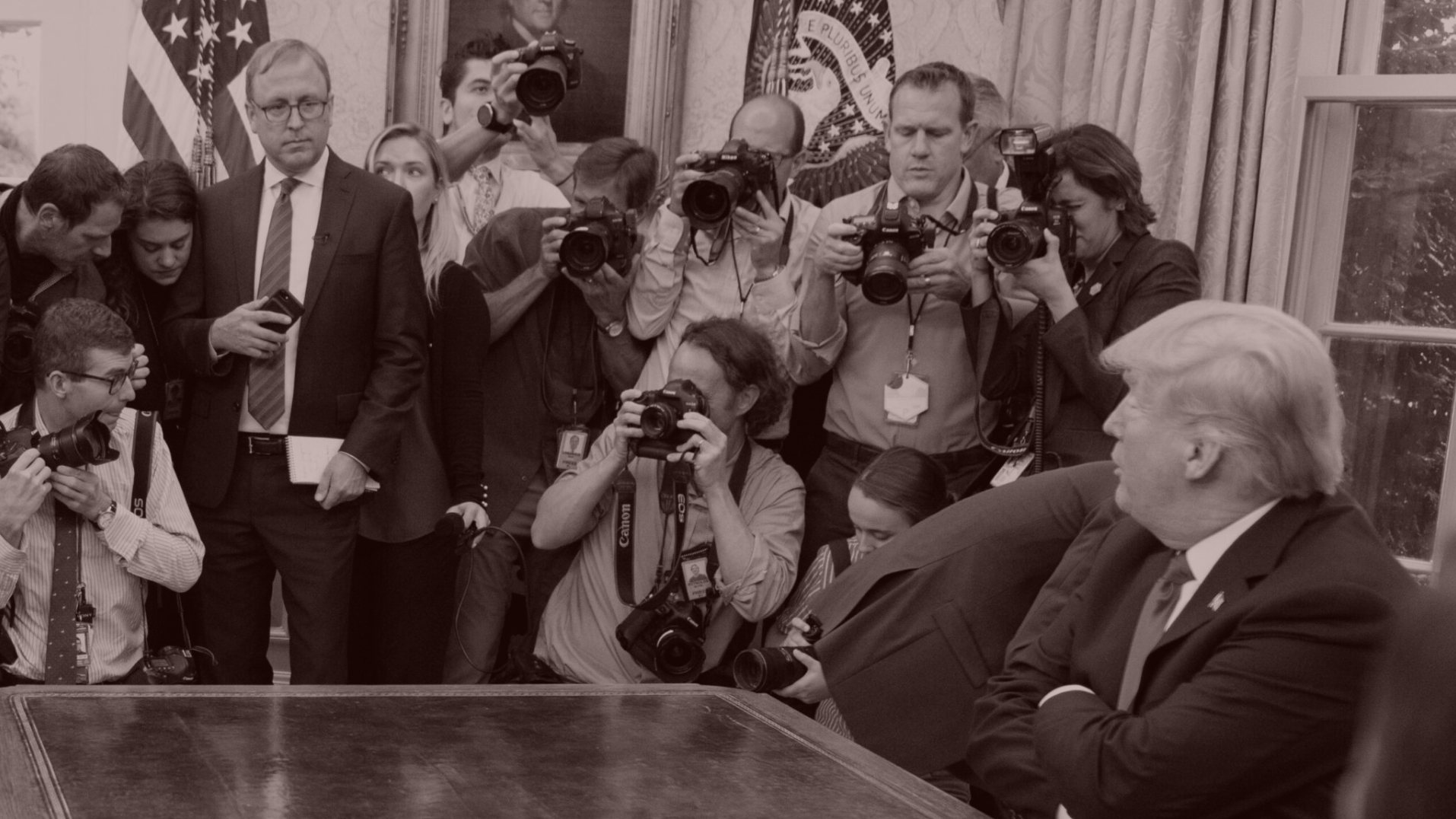
| As the 2022 midterm cycle metamorphosizes into the 2024 presidential cycle at light speed, the media industry is bracing for the reality that it’ll be stuck covering Donald Trump again, for better or worse. Dylan Byers and Peter Hamby discuss how it will be different this time. |
|
|
|
| Dylan Byers: Hi Peter, I figured I’d check in since I’m off the grid this week and very much missing our weekly podcast gab session. As summer gets underway and I’ve got this opportunity to get a little perspective on the news cycle, I’m realizing that this is very much the calm before the storm, politically speaking.
First, though, just as I was preparing to ask you about MSNBC and their place in the cable news world, with their ratings dwindling and their uncertain direction in the post-Trump world, the news dropped that the Supreme Court had killed Roe v. Wade, ending federal protections for abortion. It feels like their coverage of the ruling also revealed a few things about their challenges.
Peter Hamby: Funny you mention that. I actually flipped on Fox and MSNBC this morning to see how they were covering the abortion news. When I was watching MSNBC, it definitely hit home that they inhabit this sort of tortured spot between news and opinion, especially during dayside programming. It’s been that way for years, and maybe execs are fine with it. But they do this thing where they throw to their really wonderful reporters in the field, all over the country, and those reporters deliver information that often doesn’t square with the received wisdom of the left.
I remember in 2018, Gadi Schwartz, one of the best field reporters on television, reported for MSNBC from a migrant caravan in Tijuana, Mexico. At the time, Trump was claiming that the migrants were mostly men trying to come into the country. The MSNBC narrative was, of course, to say that Trump was wrong, that most of the migrants were women and children fleeing violence. Schwartz walked them through the camp and revealed that, in fact, the migrants were mostly men. Like most facts, it didn’t square with either of the two political narratives. And presenting uncomfortable facts is a core function of news. This is what so many reporters at NBC, who sometimes queasily appear on MSNBC, do. And yet, while the studio-based hosts and pundits on MSNBC inhabit much more of a fact-based world than their counterparts at Fox News, MSNBC’s roster of talent has a bad habit of cherry-picking facts to satisfy their audience. Telling consumers what they want to hear, not what they need to hear, doesn’t pass the journalism smell test. But maybe that’s not what MSNBC is trying to do? I have no idea.
Anyway, I noticed this dynamic play out after the Dobbs ruling came down on Friday. Correspondents were doing some great reporting from all over the country. “MSNBC reporting from the ground in Missouri, a state where life has changed dramatically due to the Supreme Court’s decision,” tweeted Lis Smith, the Democratic strategist, a veteran of red state campaigns. “More of this, please.” But back in the studio, one of MSNBC’s daytime hosts—I won’t name names, because this is endemic at the network—was interviewing a pro-life activist about the ruling. The anchor kept referring back to a single poll showing that roughly two-thirds of Americans oppose overturning Roe. Aren’t you out of step with Americans?, the anchor pressed her conservative guest. But the pro-lifer came back with her own compelling, and accurate, data: Big majorities of Americans actually oppose abortion in the second and especially third trimesters of a pregnancy, and many Americans, too, often tell pollsters they’re uncomfortable with the idea of an abortion outside of cases involving rape and incest. And only a quarter of Americans support abortion at any time during a pregnancy.
Those are inconvenient poll numbers for Democrats, for MSNBC’s viewers, for the post-Roe narrative on the left. But audiences deserve facts that challenge their worldview. It makes them better thinkers—and it opens them up to the possibility that, yes, there are plenty of people in the country who have complicated views that don’t always square with partisan talking points. Politics is about persuasion, not just shaming people who disagree with you.
All of this is impressionistic on my part, and this is a long-winded answer to your question about MSNBC’s future. Their ratings have gone down since Trump left office, but they have actually been pretty good during the Jan. 6 hearings, and they are consistently beating CNN across the board in the ratings. But CNN, like the Phoenix Suns, is in rebuilding mode—and they seem to be developing a pretty clear point of view moving forward with their new president Chris Licht, to get back to facts and reporting rather than noise and opinion. Both networks have a challenge in the sense that almost no one under the age of 40 is watching, and their executives are managing decline as eyeballs have moved to social media and streaming. But I do wonder, in MSNBC’s case, if there’s a limit to how much outrage porn they can shovel to left-wing Boomers before they realize that telling people what they want to hear all the time might turn out badly, or ruin a bond of trust that’s barely there in the first place. |
| ADVERTISEMENT |
 |
|
|
| Byers: Once we’re into fall, we’re into midterms, and once we’re done with midterms we’ll be in the heat of a very intense and chaotic 2024 campaign season. These two-year campaign cycles are, of course, the Super Bowl for the cable news outlets and large newsrooms that you and I spend so much time talking about on the pod. What are you noticing so far about how the midterms are being covered by the press?
Hamby: One thing I’m struck by at the moment, just thinking about the midterms, is how little coverage there is compared to this moment in 2018. Back then, Trump was the focal point of most news coverage, much of it hostile, and it felt like newsrooms were covering the midterms constantly, almost partaking in the excitement of it in a way that aligned with what many of their progressive viewers and readers wanted. There was so much coverage of fresh-on-the-scene Democratic candidates, and the coverage itself was habitually fawning and credulous, a standard that most newsrooms would never apply to Republican candidates in the Trump era. Every day it felt like there was a new glowing profile of one of the candidates—A.O.C., Beto O’Rourke, Stacey Abrams, Andrew Gillum and so many House candidates that would end up in the new majority. Many of those big names came up short, of course, but they were made famous anyway. This midterm year, yes, the cable networks have gone all in covering big primary nights on various Tuesdays, but with Trump out of the White House, audiences and news consumers are either fatigued with political coverage or just tuning it out, as almost every TV and digital metric shows.
Maybe engagement and viewership will tick up later in the year. The generic ballot contest is probably closer than the fundamentals predict—Republicans only lead by a couple points—and Democrats keep nominating talented candidates in competitive states against G.O.P. nominees who have embraced the MAGA freak show in a way that might give swing voters the ick and make some of these races more competitive.
But the larger storyline this year isn’t as simple as it was in 2018, when it was Trump vs. Everyone. Biden-era politics is just murkier, a little dreary and definitely not in sync with what left-leaning news consumers want or root for. The news these days is largely produced for college-educated centrists and liberals who are willing to pay for it. And for them, the news isn’t great! The patterns revealing themselves suggest Democrats will lose both the House and Senate. Compared to the last midterm year, turnout is up in Republican primaries and down in Democratic primaries.
It’s possible that the Supreme Court ruling on Roe will change that dynamic by introducing new, in some cases existential stakes. But Biden’s approval rating is historically bad. Consumer confidence is at an all-time low and 70 percent of Americans think the country is on the wrong track. That’s a good storyline for Republicans who have largely divorced themselves from caring about mainstream media, but not Democrats and their friendlies in the press.
Byers: You wrote the treatise on modern-day campaign coverage during your time at Harvard. I’m wondering what you’re anticipating from the media in 2024, particularly given the trauma of the Trump years and the highly polarized state of the nation. And also given that Trump’s rise, in 2015-6, coincided with the industry’s profound insecurity as the Facebook news feed, YouTube, and a disintermediated ecosystem, in general, spooked the business. New models have emerged since then and the business is on surer footing.
Hamby: Well the first thing I want to say—bear with me here—is that while the country is far more polarized than it used to be, voters in the middle still decide elections. In 2016, yes, Trump won thanks to surging turnout among non-college whites, but he really won because independents and self-described moderates swung from Obama to Trump in key suburban counties. Then in 2020, yes, Biden won with a surge in turnout among Black voters and young people. But he really won because he flipped independents and self-described moderates, in particular college-educated men, away from Trump in the key suburban counties.
I point this out because in the aftermath of 2016, the mainstream press was fixated on the “forgotten Americans” who eat at Cracker Barrel and wear Carhartt unironically. In the following election, particularly during the Democratic primary fights of 2019, the press was fixated on the notion that people of color and chic progressives would decide the next president. Liberal icons Bernie Sanders and Elizabeth Warren won adoring coverage from young campaign reporters who liked their politics; identity-focused candidates like Kamala Harris and Kirsten Gillibrand were given favorable coverage out of the gate despite having no message or resonance with actual voters; and Pete Buttigieg, himself a history-maker as the first serious gay presidential candidate, was initially a golden boy in the press until he tacked to the middle (gasp!) and got savaged by libs on Twitter.
Why does any of this matter for 2024? Because Biden, the ultimate nominee and president, was mostly ignored or dismissed by pundits and the press throughout the Democratic primaries, even though his politics and message were far more aligned with the average Democratic and independent voter than any of his rivals. Biden won because normie Democrats who don’t mainline Twitter and MSNBC—suburbanites in mom jeans and over-50 Black voters who go to church on Sunday—knew him, liked him, and thought he could beat Trump. As was the case in 2016, reporters were so beguiled by what they wanted to happen that they missed what was actually happening. |
| ADVERTISEMENT |
 |
|
|
| Byers: That disconnect, of course, between the median voter and the median journalist, also helps to explain why organizations like CNN are prioritizing a new tenor of coverage that doesn’t cater to either end of the political spectrum, or even strive for some false equivalence between the two, but doesn’t talk down to them either.
Hamby: Looking back on that primary, one of the pieces I’m most proud of was one I wrote for Vanity Fair about how the biggest gap in American politics isn’t between left and right. It’s between people who follow politics obsessively, and people who don’t. The people who don’t make up the vast majority of the American electorate. They aren’t political junkies, which is normal and healthy. Perversely, though, the people who get paid to chronicle politics for a living—campaign reporters, editors, television producers, pundits—are the opposite of normal. They are mostly white, college-educated social media addicts who live in socioeconomic bubbles, and assume most people understand their jargon. They can also be contemptuous of people who don’t get “the game,” and unfortunately—because of shrinking newsroom budgets and the need to endlessly churn out content—they travel the country less than they did in past election cycles. That’s a huge problem. The press has never been more culturally removed from the people it’s supposed to inform.
What I hope changes in 2024 is that reporters spend more time talking to people who aren’t like them—not just people who own guns and go to diners, and not just loud D.S.A. activists or progressive millennials who put ACAB on their Hinge profile. People who just don’t have an opinion. People who might be under-informed. People who vote for candidates not because of some au courant policy idea, but because they have some kind of gut feeling about them. People who don’t watch the news. People who go to church but also want their daughters to have access to abortion. Grandmas, gig workers, that tío who hates socialism. Like it or not, those are the people that decide elections. Not experts. Campaign coverage should include a dose of humility, so that it’s built around the concept of actually listening to voters rather than talking at them.
Byers: Our colleague Tara Palmeri reported yesterday that Trump is thinking about moving up his announcement to run for president to freeze out Ron DeSantis. How do we think The Times, CNN, et al., are going to be able to handle a third Trump campaign? And are the journalists who cover him, including the ones who profited the most off of the work they did covering his administration, ready for another long and nutty race?
Hamby: First of all, Trump should be worried about DeSantis, who just tied with Trump at the top of a University of New Hampshire poll of Granite State Republicans. That would have been unimaginable a year ago, even six months ago. Yeah, it’s one poll, but while Trump is on the sidelines, DeSantis has been in the game, governing as an own-the-libs culture warrior with an enviable mid-50s approval rating in Florida. Trump has his die-hards, but he’s also looking like the only Republican that Joe Biden could beat in 2024, and a large majority of Americans now say he should face criminal charges for inciting the Jan. 6 riot at the Capitol. Trumpism might be around for a long time, but Trump himself will inevitably fade.
Politics is about the future not the past, blah blah blah. But Trump’s worst nightmare isn’t a crowded field of next-gen Republicans throwing darts at him. They’ll divide the vote and Trump will skate through the primary like he did in 2016. The reason Trump is scared of DeSantis is that his opponent would have a credible message for today’s Republicans: He’s a MAGA disciple, but without the dictator baggage. He isn’t exactly Mr. Charisma, but he’s also smarter and more cunning than Trump, as Dexter Filkins’ recent profile of the governor in The New Yorker revealed. And, yes, DeSantis can win a general election. Those aforementioned suburban dads outside Milwaukee? They might not like Trump, but they also like a plump 401(k) and probably don’t have an issue with that Don’t Say Gay bill, which is actually popular with independents. DeSantis has to prove he has the mettle to survive outside of Fox News and his bubble of enablers, but he’s got a shot.
Anyway, if Trump does run, I don’t think the media will make all of the same mistakes. Sure, he will get unnecessary airtime, but not the kind of free coverage that he got from Jeff Zucker’s CNN. And yes, clout-chasing reporters will surely cloak themselves in obnoxious sanctimony while they cover his speeches or report on his lies. But Trump is no longer the mesmerizing new guy on the scene like he was in 2016, when the media just couldn’t look away and voters were willing to give him a shot. He hasn’t improved as a politician. He’s only worsened his standing with the American public, even in absentia. He’s proven himself unable to get through a single speech without making it about himself and his grievances. The guy is peddling the same old schtick he’s been doing for seven years now. Voters are tired of it, and so is the press. And Fox News has been doing their part to puff up DeSantis, not Trump, in the meantime.
Byers: I’m reminded of another excellent old Vanity Fair piece you wrote just after Trump left office about how Sarah Palin, once the obsession of political media, very quickly lost her spotlight, and what that portends for Trump. Obviously his star power is of an entirely different magnitude, with the key difference being that he actually spent four very chaotic years in the White House. But I do think he’s a little lower wattage this time around now that he’s a known quantity, and now that he’s stuck on Truth social. And certainly the January 6 hearings will factor into that.
Hamby: There is a more fundamental media challenge for Trump, too, which would also be an issue for DeSantis. Campaign reporters get excited about new politicians, and they tend to dismiss and punish old ones. The electorate, too, has a knack for following along. We saw this in 2008, when newcomer Barack Obama largely received gushing press while Hillary Clinton and John McCain were framed as has-beens. The pattern repeated itself during the 2012 Republican primaries, in which Mitt Romney—already familiar to the press corps thanks to his failed 2008 campaign—consistently faced negative coverage while a parade of Shiny Metal Object opponents arrived on the scene, grabbed the media’s attention, and climbed the polls. Romney survived that primary, of course, but he continued to face snarky and dismissive coverage until his loss in November. And more recently, as I mentioned earlier, Biden was a nothingburger for the press throughout the Democratic presidential primaries.
So while Trump would certainly be the frontrunner, a dominant fundraiser, and a pied piper for red America, I suspect the media will cover him with not only the same kind of contempt they have for years, but I have a hunch they’ll also treat him a little bit like a sad, over-the-hill figure, while attention moves to a potentially more interesting rival from Florida. The MAGA right certainly doesn’t care what the lamestream media thinks, sure, and the conservative media ecosystem is much more robust and wacky than it was in 2016. But there are plenty of center-right voters who don’t live inside that bubble. In elections, independent voters have always demonstrated a habit of following the currents of the almighty “narrative”—and by 2024, if the country feels as meh as it does now, voters on the right and in the middle might be open to getting on board with someone new, different, and slightly less orange. |
|
|
|
| FOUR STORIES WE'RE TALKING ABOUT |
 |
| Disney's Wall Street Bulls |
| A conversation circling the Wall Street-Disney love affair. Plus, predictions ahead of Sun Valley. |
| DYLAN BYERS & WILLIAM D. COHAN |
|
 |
| The Long Road to Moscow |
| Conscientious objectors who initially fled Russia are wending their way back home. |
| JULIA IOFFE |
|
 |
| Alito's Pandora's Box |
| Ioffe, Gardner, and Palmeri unpack today's Roe bombshell: how we got here, and what comes next. |
| PETER HAMBY |
|
 |
| Hollywood vs. SCOTUS |
| Matt Belloni joins Peter to discuss how Hollywood’s biggest companies will react to Roe's overturning. |
| MATT BELLONI |
|
|
|

|
|
|
| You received this message because you signed up to receive emails from Puck
Was this email forwarded to you?
Sign up for Puck here
Sent to
Unsubscribe
Interested in exploring our newsletter offerings?
Manage your preferences
Puck is published by Heat Media LLC
64 Bank Street
New York, NY 10014
For support, just reply to this e-mail
For brand partnerships, email ads@puck.news |
|
|