 |
|
Welcome back to In The Room. I’m Dylan Byers.
|
|
Tonight, news and notes on the reconstituted Mayer-Staggs-Iger brain trust at Disney, and what it suggests about the varying degrees of desperation from all parties involved.
|
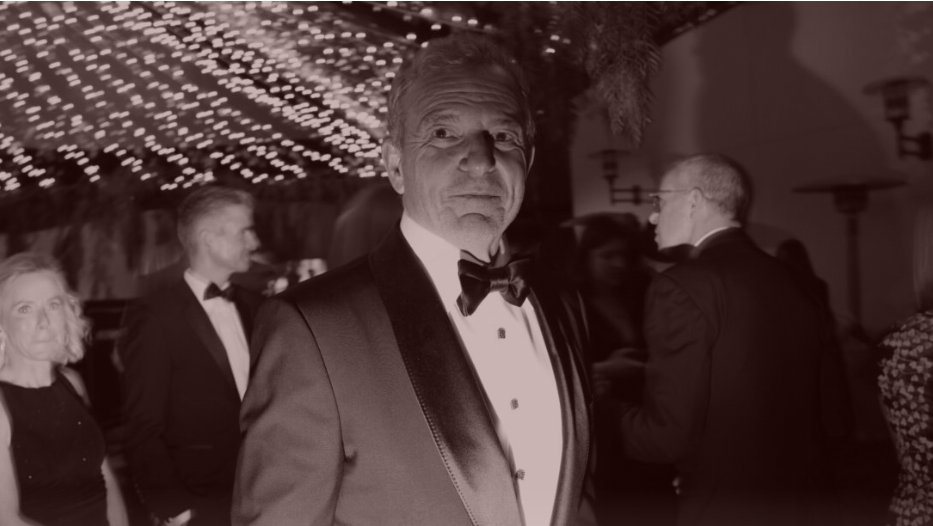 |
| The Iger Mouseketeer Plot Twist |
| Days after Matt’s scoop about Kevin Mayer and Tom Staggs’ return to help their old boss, the town’s attention is focused precisely where you’d expect it…: succession. |
|
|
|
| It’s hard, but if you squint and look back you might still be able to see the moment, eight or so months ago, when a buoyant and characteristically polished Bob Iger returned to his throne at The Walt Disney Company and was greeted with a hero’s welcome. At the time, Iger’s mere presence seemed almost enough to stabilize a company that had been beset by a global pandemic, various systemic and macroeconomic forces, and the unprovoked missteps of his successor-predecessor Bob Chapek. Yes, Iger had warned of the “challenging times” ahead, and the need to take decisive action in order to reorient the business, but the boss was back, employees were overjoyed, the stock was up 6 percent.
The reality that Iger returned to was, of course, far more challenging than even he seemed to have anticipated. Before long, Iger associates started suggesting to me that the once smooth and self-confident C.E.O. seemed notably overwhelmed by the myriad headwinds he was facing—the streaming challenges, linear’s decline, Nelson Peltz, etcetera. In the infamous CNBC Sun Valley interview, Iger gamely tried to address his company’s hurdles head-on by hanging a “For Sale” sign on ABC and disclosing that ESPN was pursuing a strategic partner. (Alas, where better to market assets than the Lodge.) He also memorably stepped in it by accusing Hollywood’s striking writers of being unrealistic in their demands and disruptive in their deeds. In retrospect, it was yet another early indicator that Disney’s once imperturbable leader was a little more antsy this time around.
Of course, nothing seems like a greater admission of Iger’s vulnerability than the news that my partner Matt Belloni broke earlier this week: Iger has enlisted two of his former lieutenants and onetime heirs apparent, Kevin Mayer and Tom Staggs, to consult him on the future of the company’s linear assets and how they intersect with its streaming strategy. “For now,” Matt noted, “Mayer and Staggs are merely consulting for Disney while continuing to run Candle,” their Blackstone-backed media holding company. Disney stock similarly jumped on the news of their re-engagement. And it was only a matter of time before people began wondering how long the arrangement might last, and whether it was, potentially, a game-changing moment for the company’s endless and ever-evolving succession plans. |
|
|
| It goes without saying that Mayer and Staggs have historically had mixed feelings about their former boss, to put it mildly. Iger spent six years grooming Staggs for the chairman and C.E.O. role, promoting him from C.F.O. to Parks chair to C.O.O. and giving him every reason to believe that he would be Disney’s next leader before abruptly, yes, defenestrating him in 2016 and keeping the job for himself. (Never mind that Staggs had once saved Iger from the ignominy of death-by-fowl-asphyxiation with a memorably aggressive Heimlich maneuver.) And, of course, Mayer had also been on the receiving end of Iger’s about-face when he was passed over for Chapek, after which he placed himself in a brief self-imposed exile at TikTok. The two men launched Candle Media as co-C.E.O.s. as something of a reclamation project.
Candle afforded Mayer and Staggs freedom from the strictures of a highly-scrutinized and regulated publicly traded conglomerate, but neither one of them ever seemed to have fully abandoned the dream of one day being given the job they’d been denied, much as Iger never quite seemed satisfied with retirement. The Candle portfolio has become a mixed bag of notably smart investments—René Rechtman’s Moonbug, owner of Cocomelon—and others for which they arguably overpaid, like Reese Witherspoon’s Hello Sunshine—leaving the two open to criticism that they were great operators but inexperienced investors. (Mayer has taken issue with those who make that argument.)
In any event, one of the great mysteries of this whole arrangement is why the team at Blackstone was okay with the Candle co-C.E.O.s breaking from their duties to assist the competition at Disney. Private equity firms rely on creative dealmaking, especially when they bring on elite roaming bulls affixed with their capital, but those deals tend to keep the value inside the house. Why would they willingly countenance their equitized portfolio company leaders offering their advice outside their walls? Anyway, that’s something only Steve Schwarzman and Jon Gray can answer. |
|
|
| Whatever the case, the return of Mayer and Staggs into the Disney fold seems to highlight the desperation of all parties involved, but most notably Iger. His associates and fellow media executives often surmise that part of Iger’s diminished stature this time around stems not just from the scale of his current challenges but also the absence of his former brain trust that supported him during his exalted first run atop the company.
Part of the shock from his rake-stepping comments in the CNBC interview emanated from the belief that they never would have happened under the watch of his longtime trusted comms tsarina, Zenia Mucha. Behind the scenes, Iger seems to pine for the wisdom of his old E.V.P. and general counsel, Alan Braverman. But there is no one he seems to miss or need more at this moment in time than Mayer, a notoriously ferocious dealmaker and early streaming evangelist who helped architect Disney+. (Whether Staggs was similarly missed, or whether he was merely a requisite condition of Mayer’s return, is an open and hotly debated topic among Disney Kremlinologists.)
Now that Mayer and Staggs have a foot in the door, it’s impossible to ignore how a consulting gig today could conceivably morph into something more lasting and substantial down the road. The speculation I heard from a few of the Disney veterans and other media execs I spoke to this week is that Bob, Kevin, and Tom may have some sort of unspoken openness to giving this arms-length remarriage a shot and letting the future possibilities—succession planning, a Candle acquisition, however unlikely—fall where they may. Indeed, all this advisory foreplay takes place well below the S.E.C. disclosure line.
And even in the event that none of that is in play, it’s still possible that Mayer is one impressive board presentation away from a formal invitation back into the Magic Kingdom. It’s all speculative. But it makes a lot more sense than the idea that Mayer and Staggs just wanted to help an old friend, especially since a Candle exit isn’t likely to reach the heights that some once expected. |
|
|
| Anyway, none of this bodes terribly well for the existing crop of would-be successors. Iger’s invitation to his former deputies is also an acknowledgement that the existing team is outmatched by the question of what to do about ABC, Hulu, FX, ESPN, etcetera. The Mayer & Staggs dealmaking I.Q. may ultimately prove beneficial for Disney, but it also suggests that Dana Walden, Alan Bergman, and Jimmy Pitaro, as extremely talented as they are, may not have the specific set of skills necessary to deal with this predicament.
Outside of Pitaro, who is likely to eventually helm a debt-burdened ESPN entity off to sea, the others likely don’t have the financial experience to lead a publicly traded media company in the modern age. The streaming era is far more complex and sophisticated than the days when a creative executive, like Les Moonves, could delegate all the traditional C.E.O. responsibilities to underlings. Even Ted Sarandos has a co-C.E.O. who can placate the agita of Wall Street analysts.
Indeed, Walden has always felt like a little bit of a drive-by candidate, or at least someone in need of much more grooming, and this new arrangement suggests Iger doesn’t yet trust her judgment on the most challenging aspects of the business. The whole team likely views the return of Mayer and Staggs the way the Astros bullpen might view the return of Justin Verlander: It’s a great day to be an Astro, for sure, but you can forgive the other starting pitchers for having mixed emotions.
Then again, it’s also possible that Mayer and Staggs don’t have the silver bullet to solve the linear problem because, of course, there are no great solutions to that problem. And Iger may be running low on options. |
|
|
|
| FOUR STORIES WE’RE TALKING ABOUT |
|
|
|

|
 |
|
|
|
Need help? Review our FAQs
page or contact
us for assistance. For brand partnerships, email ads@puck.news.
|
|
You received this email because you signed up to receive emails from Puck, or as part of your Puck account associated with . To stop receiving this newsletter and/or manage all your email preferences, click here.
|
|
Puck is published by Heat Media LLC. 227 W 17th St New York, NY 10011.
|
|
|
|