• Washington
  • Wall Street
  • A.I.
  • Hollywood
  • Media
  • Fashion
  • Sports
  • Art
  • Join Puck Newsletters What is puck? Authors Podcasts Gift Puck Careers Events
  • Join Puck

    Directly Supporting Authors

    A new economic model in which writers are also partners in the business.

    Personalized Subscriptions

    Customize your settings to receive the newsletters you want from the authors you follow.

    Stay in the Know

    Connect directly with Puck talent through email and exclusive events.

  • What is puck? Newsletters Authors Podcasts Events Gift Puck Careers
 
Puck logo
 
In The Room

Good evening, I'm Dylan Byers.


Welcome back to In the Room, my private email on the inner workings of the American media. Thanks as always for subscribing to Puck, and please feel free to reach out anytime. If this email was forwarded to you, you can sign up here.


Thanks,

Dylan
acosta

The Great Post-Trump Cable News Correction

The inside conversation about CNN’s impending pivot, The View’s G.O.P. problem, and the ballad of Suzanne Scott.

Dylan Byers

DYLAN BYERS

This week, I’m responding to a few pressing questions in my inbox and observations about the state of the media-tech-financial industry. As always, if you have feedback you’d like to share or a question you’d like answered in a future column, you can reach me at dylan@puck.news. My inbox is always open.

Dylan, the Journal and AP recently offered brutal assessments of waning post-Trump news consumption everywhere from the Washington Post to CNN. Do sources in your world share these concerns that major media brands have over-indexed on politics, and will they face a correction?


News engagement rises in times of crisis, or perceived crisis, and wanes in times of relative calm. Donald Trump’s candidacy and presidency was effectively seen as a six-year-long DEFCON 1-level threat to the sensibilities of liberals, moderates, and even more traditional establishment conservatives (who may have nevertheless voted for him). So it stands to reason that news engagement would decline precipitously after he left office, just as we might expect news engagement to decline after the end of the Cuban Missile Crisis. But there will always be future crises—including America’s quadrennial obsession with another presidential election—and so news engagement will ebb and flow, as it has forever.


What’s unique about the Trump situation was the duration of the perceived crisis, which incentivized many news organizations to restructure their editorial, marketing and business models almost entirely around one story. Most news outlets invested heavily not just in political coverage, but in building their brand around the idea of resistance to the president, or the preservation of the Republic, or of truth itself—hence The Washington Post’s urgent new tagline, “Democracy Dies in Darkness,” and CNN’s “This Is An Apple” campaign. I’m not sure I’d say these outlets over-indexed on politics, anymore than ESPN over-indexes on football in the fall. But you have to have a strategy for the off-season, and I’m not sure most Trump-obsessed news outlets knew what that was. That, in part, is why you see so many news outlets—from CNN to MSNBC, the Post to The Atlantic—still trying to make Trump the big story, whether by fixating on Jan. 6 or sounding alarm over a Trump candidacy in 2024. I’m not saying there isn’t a place for that—those are legitimate stories, and worthy of significant attention—but it’s also a crutch, not a strategy.


Over the long term, the most successful news outlets, big and small, are the ones that establish a brand loyalty that endures beyond any particular story or historical moment. You need consumers who want to live on your app and enable your push notifications and buy your tote bags. I grew up in a household of card-carrying New Yorker subscribers, NPR listeners and local evening news watchers. My parents didn’t read/listen/watch to learn about one specific story. Rather, it was a way of being, a lifestyle choice and a societal affiliation. I think brands like Fox News, The New York Times and Axios succeed at this, albeit with different audiences and at different scales. But if you’re a news organization that just builds your brand around resistance or defiance to a one-term president, it’s impossible to differentiate your content from every other publication chasing the same sugar high—and you only get your audience for one term. The threats people associated with Trump—the decline of truth, of tolerance, of civil politics—may be ongoing, but it’s much harder to tell that story without an iconic antagonist sitting in the highest seat of power. With Trump, the erosion of American democracy felt like a meteor hovering just outside earth’s atmosphere. Now it feels like climate change: no less real or threatening, but far more abstract.


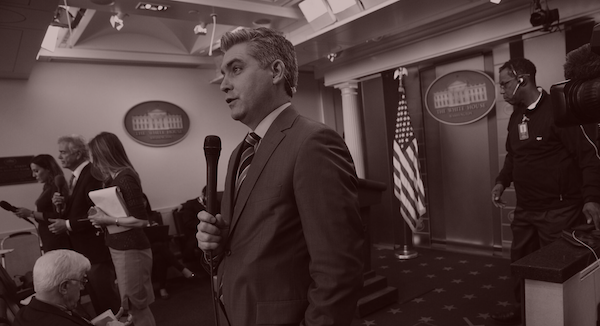
Is there a correction coming? I think so. I’m most curious to see what happens with CNN, an immensely powerful global brand, once synonymous with hard news, that has been somewhat jeopardized in this country by its investment in #resistance journalism. That’s a decision that Jeff Zucker made early on, when CNN reporters like Jim Acosta turned the White House briefing room into a gladiatorial arena—and made themselves household names in the process. When I was a kid, a CNN logo on a hat just meant news. Today it’s seen as a declaration of anti-Trump affiliation. I’m eager to see whether David Zaslav decides to stake CNN’s future on the former or the latter. Maybe he’ll try to thread the needle and do both, but that’s increasingly difficult in this polarized political environment. 


Meanwhile, I’m most bullish about The New York Times, which always resisted the temptation to go all-in on resistance journalism and continued to invest in coverage areas outside of politics, all while building out additional offerings like Cooking and Crossword that became habit-forming for readers. The Times commands fierce brand loyalty that will allow them to thrive beyond the current ebb of political news. In fact, many executives inside 620 8th Avenue actually view the company as a business focused on lifestyle content. As the aforementioned Journal report suggests, The Washington Post can’t say the same.

ABC’s struggle to find a palatable conservative for “The View” suggests a broader problem for liberalish cable news and opinion platforms trying to relocate the political center after Trump. You’ve written before about CNN and MSNBC’s efforts to pivot their lineups for the streaming era. Is this a talent pipeline issue, or a sign of deeper rot in our political-media firmament?


In terms of “The View,” I wouldn’t underestimate how much of this is a casting struggle, as opposed to a political challenge. Remember, “The View” is really an entertainment show. ABC isn’t just looking for a palatable conservative, it’s looking for a telegenic female co-host who fits in with this very specific and occasionally dysfunctional group of other co-hosts.


All that said, Trump-style conservatism has definitely created a major challenge for cable news. Take CNN, which tried for a time to include pro-Trump contributors on its panels but was repeatedly forced to drop them amid outrage over their staunch denial of basic facts. Imagine trying to reboot CNN “Crossfire” today with a pro-Trump Republican. It wouldn’t work, because a shared sense of reality is a prerequisite for rational debate. 


CNN has brought a lot of Never-Trump Republicans through the green room, but all this has done is highlight how much Trump forced Democrats and Never-Trumpers onto the same side of the national political divide. And so you have one conversation playing out on CNN and MSNBC, and another playing out on Fox News—and never the twain shall meet. Bringing Chris Wallace to CNN, or Shep Smith to CNBC, doesn’t solve that problem, because both of them are anti-Trump, even if they don’t define themselves that way publicly, and neither one speaks for or to the Fox News audience. Indeed, the Wallace and Smith moves are symptoms of the problem.

Who is the most underappreciated media executive at work today?


Suzanne Scott, the C.E.O. of Fox News. Try for a moment to divorce your feelings about the editorial product—the misinformation, conspiracy theories, fearmongering and toxic partisanship, etc.—and think solely about what she’s achieved. Scott, the first woman to ever run a cable news network, assumes the position from founding C.E.O. Roger Ailes, the man who created and controlled and defined the network for 20 years, and who has just been ousted in a sexual harassment scandal, and she effectively steadies the ship and maintains Fox News’ position as the dominant player in cable television all while managing some of the most difficult egos in the business, including Tucker Carlson and Sean Hannity. If you’re capable of the cognitive dissonance required to “appreciate” some of the more reprehensible characters in “Succession,” you should be able to recognize, at the very least, that she’s achieved some strange form of success—one that is rarely recognized by a media industry that views Fox News as corrosive to society. She’s also managed to do all of this while keeping an extremely low profile, as Fox News critics continue to direct their ire either toward the on-air talent or toward the Murdochs, but never toward her. The same couldn’t be said for Ailes… or Jeff Zucker at CNN… or even Andy Lack at NBC.

I have some time in the next few days. What are your top 5 media reads of the year?

  • Rebecca Traister on Katie Couric. This was just a magnificent piece of journalism that answered the question everyone in the media industry was asking when Couric published her infamous tell-all memoir: Why was Couric, once the darling of morning television, throwing punches at former colleagues and burning herself in the process? What was motivating her? Traister captured most of that, and revealed Couric for who she is without ever being insensitive or unkind. It was simultaneously generous and brutal. [New York]

  • Lauren Collins on Alison Roman. I’ve long been fascinated by Alison Roman as an unapologetically outspoken public figure/influencer who ran afoul of woke culture and nevertheless managed to salvage and even grow her career beyond the confines of the legacy media organizations for which she worked. It seems like getting let go from the Times was actually the best thing that ever happened to her: it forced her to do what more and more journalists are doing these days, building businesses around themselves. Collins captures that trajectory—as well as Roman’s inability, or refusal, to learn from past mistakes—very well. [New Yorker]

  • Ben Smith on Michael Wolff. Michael Wolff gave me my first paying job in journalism, and Ben Smith gave me my second, so I have a very personal attachment to this piece. But I’ve long been intrigued by Wolff’s status as a black sheep of American media. He offends the sensibilities of capital J journalists, and yet nevertheless forces them to pay attention to him—because he speaks uncomfortable truths, gets access to the seemingly inaccessible power players and has no qualms about taking zero bullshit. We shouldn’t overlook his errors or ethics, but we shouldn’t overlook his strengths and his contributions to this particular moment in American politics and media, either. [New York Times]

  • Smith on Viet Dinh. It can take a Herculean effort for a mainstream media reporter to break into the world of the Murdochs, and Smith did so quite well here—all while capturing the quiet and largely unknown figure who wields immense influence at Fox and in Murdochland: Viet Dinh. This is one of those pieces I, as a media reporter, wish I had written. [New York Times]

  • John Koblin, Michael Grynbaum, Edmund Lee and Lauren Hirsch on David Zaslav’s WarnerMedia coup. The Warner Media-Discovery merger was probably the most exciting and consequential media business story this year, and there was a great deal of palace intrigue in how it all went down—from Zaslav’s emoji-laden email to John Stankey to the covert discussions in Zaslav’s rented Greenwich Village townhouse, as well as the cruel twist of fate for WarnerMedia chief Jason Kilar, who was left entirely out of the loop until the 11th hour. Koblin and company offered a dramatic play by play with enough color to tee-up a Hollywood script—all the way down to the infamous Steve McQueen photograph that presided over the negotiation table. Another one I wish I’d written. [New York Times]

FOUR STORIES WE'RE TALKING ABOUT

cocktail

Hollywood's Hero of the Year

Love her or hate her, Bela Bajaria has been key to turning Netflix’s international content into globalized hits.

MATTHEW BELLONI

money bag

We Need to Talk About Kamala

Harris is the second most powerful officer holder in America, but she suddenly faces only downside.

PETER HAMBY

money bag

The Biggest Media Stories of 2021

Many of the hopes for a resurgent 2021 in the media business didn’t come to pass, but the year was hardly a disaster.

BRIAN MORRISSEY

card

The Times’ M&A Play

The Athletic has entered exclusive deal negotiations to sell to the Times. Should it?

DYLAN BYERS

 
swash divider
Facebook Twitter Instagram LinkedIn

You received this message because you signed up to receive emails from Puck.


Was this email forwarded to you?

Sign up for Puck here.


Sent to {{customer.email}}

Unsubscribe


Puck is published by Heat Media LLC.
64 Bank Street
New York, NY 10014


For support, just reply to this e-mail.

For brand partnerships, email ads@puck.news

SEE THE ARCHIVES

SHARE
Try Puck for free

Sign up today to join the inside conversation at the nexus of Wall Street, Washington, A.I., Hollywood, and more.

Already a member? Log In


  • Daily articles and breaking news
  • Personal emails directly from our authors
  • Gift subscriber-only stories to friends & family
  • Unlimited access to archives

  • Exclusive bonus days of select newsletters
  • Exclusive access to Puck merch
  • Early bird access to new editorial and product features
  • Invitations to private conference calls with Puck authors

Exclusive to Inner Circle only


Latest Articles from Media

Bari Weiss
Dylan Byers • December 30, 2021
Bari’s Prison of Her Own Design
After a month of contentious delays, 60 Minutes finally aired its piece on the notorious El Salvador prison CECOT. The “hostage standoff,” as one person put it, ended in an uneasy truce that could have been reached a month ago—and without exposing the distrust and division at Bari Weiss’s CBS News.
Mathias Doepfner
Dylan Byers • December 30, 2021
The Politico Succession Games Begin…
An era at Politico has been ending for the last decade—at least since the departures of Mike and Jim, then Jake and Anna, and, of course, the sale to Axel Springer. But with John Harris ascending to the chairmanship, again, it’s finally Axel’s baby. And Mathias Döpfner may be looking outside the mothership for Harris’s successor.
Tony Dokoupil
Dylan Byers • December 30, 2021
Tony and Bari on the Rocks
The sponcon set dressing at ‘Evening News’ provoked predictable outcry at the House of Bari. But are brand partners in TV news just an inevitability at this point?


Ben Smith, Justin Smith Semaphor
Dylan Byers • December 30, 2021
Semafornication
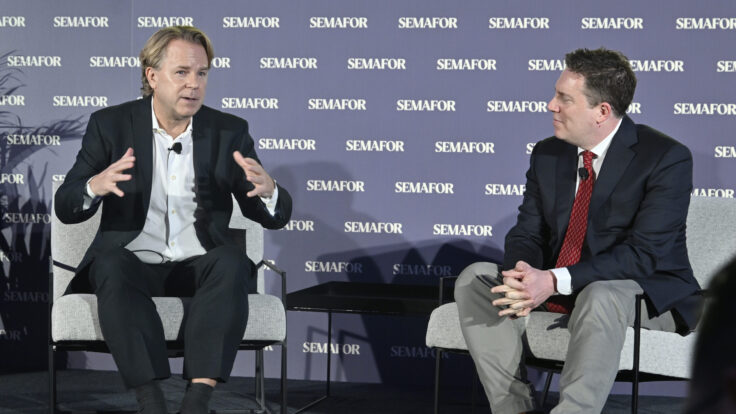
Ben and Justin’s recent fundraise at an 8x trailing revenue multiple, which follows David Ellison’s extravagant purchase of The Free Press, suggests we’ve entered a new era of digital media valuations. Unless we’ve just reentered the old one. Anyway, is Punchbowl next in line?
Tony Dokoupil
Dylan Byers • December 30, 2021
The Tony Accords
Tony Dokoupil’s disastrous debut as anchor of CBS Evening News highlights the uncomfortable truth about Bari Weiss’s tenure: While her politics take center stage, it’s her inexperience that’s her real liability.
Jim Steyer
Dylan Byers • December 30, 2021
Common Sense & Sensibility
A candid chat with Common Sense Media founder Jim Steyer on what lies in the hearts of Silicon Valley’s biggest bigwigs and what the A.I. bros are doing to your children. Plus, thoughts on Sundar, Zuck, and his brother Tom’s California gubernatorial bid.


Bari Weiss
Dylan Byers • December 30, 2021
The Weiss Flag
It’s tempting to view Bari Weiss’s first big blunder—pulling a 60 Minutes segment critical of the administration’s deportation efforts—as purely political, which it may have been. But it may have been the product of something more mundane: Bari doesn’t know how to lead a newsroom.


Get access to this story

Enter your email for a free preview of Puck’s full offering, including exclusive articles, private emails from authors, and more.

Verify your email and sign in by clicking the link we just sent.

Already a member? Log In


Start 14 Day Free Trial for Unlimited Access Instead →


Latest Articles from Media

Journalists
Dylan Byers • December 30, 2021
The 2025 Media State of the Union
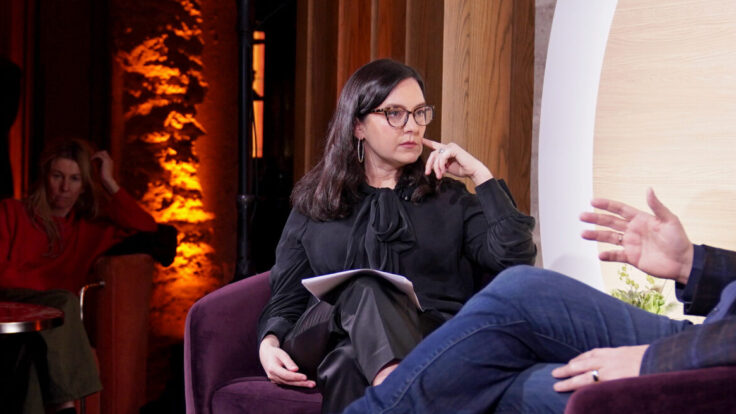
The inherent tension of the journalist-as-brand model, the continued erosion of institutional authority, the potential for an A.I. newsroom: Industry leaders weighed in on all this and more at a panel this week to unveil the results of our latest Puck–Orchestra survey.
Justin Smith ben smith
Dylan Byers • December 30, 2021
The Gulf of Semafor
As Semafor expands further into the Gulf, it’s becoming clear that Justin Smith and Ben Smith’s media baby is looking a lot more like the former than the latter.
Jim Lanzone Yahoo
Dylan Byers • December 30, 2021
The Lanzone That Time Forgot
Don’t waste your tears on Yahoo, the Internet 1.0 relic that collapsed into Verizon and then the warm embrace of private equity. C.E.O. Jim Lanzone explains how the Apollo-owned company is poised to make the most of its post-search distribution, and why niche is the new scale.


Bari Weiss
Dylan Byers • December 30, 2021
A Weiss Christmas
While The Free Press is flush with holiday spirit, Bari’s job reinventing CBS News is proving more vexing, amid anchor dreams dashed and the age-old challenge of enacting institutional change.
Bari Weiss
Dylan Byers • December 30, 2021
CNN’s Bari Christmas
In the wake of Netflix’s Warner Bros. coup, the folks at CNN are, perhaps naively, looking on the bright side: They may not have to work for Bari Weiss after all. But times in Spinoffville are going to get tough—and fast.
Olivia Nuzzi
Dylan Byers • December 30, 2021
The Nuzzicracker Ballet
The star-crossed saga of Olivia and Ryan continues its salacious, shameful pas de deux—ensnaring not just Vanity Fair’s new editor but further tainting journalism writ large. Even worse, it elides the real question: Why is a certain pathetic world hanging on every word of a jilted lover’s creepy account proffered without editorial oversight?


Hamish McKenzie, Substack
Julia Alexander • December 30, 2021
Substack Entrapment Theory
Google Zero killed the open web, ChatGPT isn’t replacing lost traffic, and superstar talent is a phenomenally difficult business. Digital media companies trying to stay upright are belatedly turning to creator-first subscription platforms in search of sustainable, niche audiences—without realizing that they’ve seen this movie before.
Get access to this story

Enter your email to get access to one article and free previews of our private emails from Puck authors and editors.

OR

Already a Member? Sign in


Latest Articles from Media

Alison Roman
Dylan Byers • December 30, 2021
Roman Holiday
The internet’s favorite food author finds herself at a familiar crossroads for writers who have become brands unto themselves: trying to balance scale, new ventures, and authenticity while keeping a loyal audience fed… in this case literally.
David Zaslav
Dylan Byers • December 30, 2021
Zaz’s Hollywood Endings
With the final bids for Warner Bros. Discovery under careful consideration, David Zaslav’s tenure as an ersatz Hollywood mogul may be coming to an end. Now, it’s all about the numbers, and which suitors have a glide path to regulatory approval. Just which sunset Zaz will ride into is anyone’s guess.
Olivia Nuzzi
Dylan Byers • December 30, 2021
A Brave Nuzzi World
Between the Bravo-ready mess of the Nuzzi-Lizza imbroglio and Michael Wolff’s Epstein deference, it was a monumentally bad week for media ethics. As journalists, even principled ones, become increasingly central characters in the stories themselves, is this kind of spectacle an unavoidable component of a new media world order?


Gerry Cardinale
Dylan Byers • December 30, 2021
The RedBird Balloon
After a second bid to take over The Telegraph met a particularly British brand of resistance, RedBird Capital walked away from the whole ordeal. Now the 170-year-old paper is back to waiting for a Goldilocks buyer.
Jim Bankoff
Dylan Byers • December 30, 2021
The Bankoff Job
Jim Bankoff is considering a spinoff of Vox’s faster-growing podcast network from its legacy publishing business. While it makes economic sense-ish, what does it mean for the future of brands like SB Nation, The Verge, and… ‘New York?’
Stan Duncan
Dylan Byers • December 30, 2021
Stan By Me
A handful of disgruntled employees confronted Stan Duncan, Condé Nast’s H.R. chief, about the company’s decision to shutter Teen Vogue. There was a video, of course, which captures either a noble moment of employee solidarity or a bunch of entitled staffers willfully unaware of Condé’s dwindling fortunes and the realities of the legacy media business. Either way, how far they’ve fallen.


Mark Lazarus
Dylan Byers • December 30, 2021
MS Doom
Spirits are uncharacteristically high at the post-spinoff MS NOW, but this is still a late-stage linear operation that’s shedding (mostly geriatric) viewers at a steady clip. Despite Versant’s money and Rebecca Kutler’s ambitions, is it just a matter of time before the realities of cable’s decline drag them under?


  • Terms
  • Privacy
  • Contact
  • FAQ
  • Careers
© 2026 Heat Media All rights reserved.
Create an account

Already a member? Log In

CREATE AN ACCOUNT with Google
OR YOUR EMAIL

OR

Use Email & Password Instead

USE EMAIL & PASSWORD
Password strength:

OR

Use Another Sign-Up Method

Become a member

All of the insider knowledge from our top tier authors, in your inbox.

Create an account

Already a member? Log In

Verify your email!

You should receive a link to log in at .

I DID NOT RECEIVE A LINK

Didn't get an email? Check your spam folder and confirm the spelling of your email, and try again. If you continue to have trouble, reach out to fritz@puck.news.

CREATE AN ACCOUNT with Google
CREATE AN ACCOUNT with Apple
OR USE EMAIL & PASSWORD
Password strength:

OR
Log In

Not a member yet? Sign up today

Log in with Google
Log in with Google
Log in with Apple
Log in with Apple
OR USE EMAIL & PASSWORD
Don't have a password or need to reset it?

OR
Verify Account

Verify your email!

You should receive a link to log in at .

I DID NOT RECEIVE A LINK

Didn't get an email? Check your spam folder and confirm the spelling of your email, and try again. If you continue to have trouble, reach out to fritz@puck.news.

YOUR EMAIL

Use a different sign in option instead

Member Exclusive

Get access to this story

Create a free account to preview Puck’s full offering, including exclusive articles, private emails from authors, and more.

Already a member? Sign in

Free article unlocked!

You are logged into a free account as unknown@example.com

ENJOY 1 FREE ARTICLE EACH MONTH

Subscribe today to join the inside conversation at the nexus of Wall Street, Washington, A.I., Hollywood, and more.

START 14-DAY FREE TRIAL

  • Daily articles and breaking news
  • Personal emails directly from our authors
  • Gift subscriber-only stories to friends & family
  • Unlimited access to archives
  • Bookmark articles to create a Reading List
  • Quarterly calls with industry experts from the power corners we cover