 |
|
Greetings from Carmel-by-the-Sea, and welcome back to In the Room, my twice-weekly private email on the media business. A shout-out to Henry Blodget, who today announced that he is leaving Business Insider and stepping down from its board 17 years after he founded the company. Read his farewell note here.
In tonight’s email, fresh reporting on Mark Thompson’s post-election transformation plan at CNN, which will include the culling of hundreds of jobs. Plus, news and notes on Fox News’s enduring ratings dominance.
Also mentioned in this email: Bret Baier, Brian Williams, John Santucci, Chris LaCivita, Will Lewis, Tucker Carlson, Chris Licht, John King, Jeffrey Lord, Jeff Van Gundy, Sean Hannity, and many more…
But first…
- 🎙️🍸 The Grill Room: On today’s edition of the podcast, I’m joined by Tim Miller, the veteran Republican political strategist, never-Trump media star, Bulwark podcast host, MSNBC green room denizen, and loyal friend of Puck, to reflect on the lessons of Donald Trump’s decisive win: the political realignment we all should have seen coming, and how the media might adjust to this new reality. As Tim noted on the show, news organizations (like the Democratic Party, itself) need to find a way to reach people beyond their urban, liberal, high-income echo chamber—and that will require a lot more than just putting Jeffrey Lord back on a panel.
- ABC News blues: Back in September, in the run-up to the ABC News presidential debate, the network’s executive editorial producer, John Santucci, quietly gave assurances to Trump campaign officials that the moderators would not fact-check the candidates—a check he couldn’t cash, which left Trump’s campaign co-manager Chris LaCivita absolutely irate during the debate, as I reported last week. Now, with Trump’s impending return to the White House, I’m told several ABC News insiders are concerned about Santucci’s heightened influence as the network’s emissary to the Trump White House and Mar-a-Lago. No one is naive about the dark arts required to secure big bookings and manage relationships in this business, of course, but many at ABC are nevertheless miffed that he went outside the chain of command and then threw his own colleagues under the bus while trying to placate LaCivita—especially now that all of it was caught on tape by a Trump documentarian.
- Will to work: On the heels of the election, Washington Post C.E.O Will Lewis announced that staff would soon need to return to the office five days a week, a mandate that aligns with Jeff Bezos’s own expectations for Amazon staff but which predictably pissed off members of the Post union who had become quite comfortable with the flexibility of working from home. By contrast, other Post journalists welcomed the news, hoping it might make the newsroom once again feel like, you know, a newsroom. In any case, Lewis and the union are once again at odds… but what else is new?
|
|
And now, on to the main event…
|
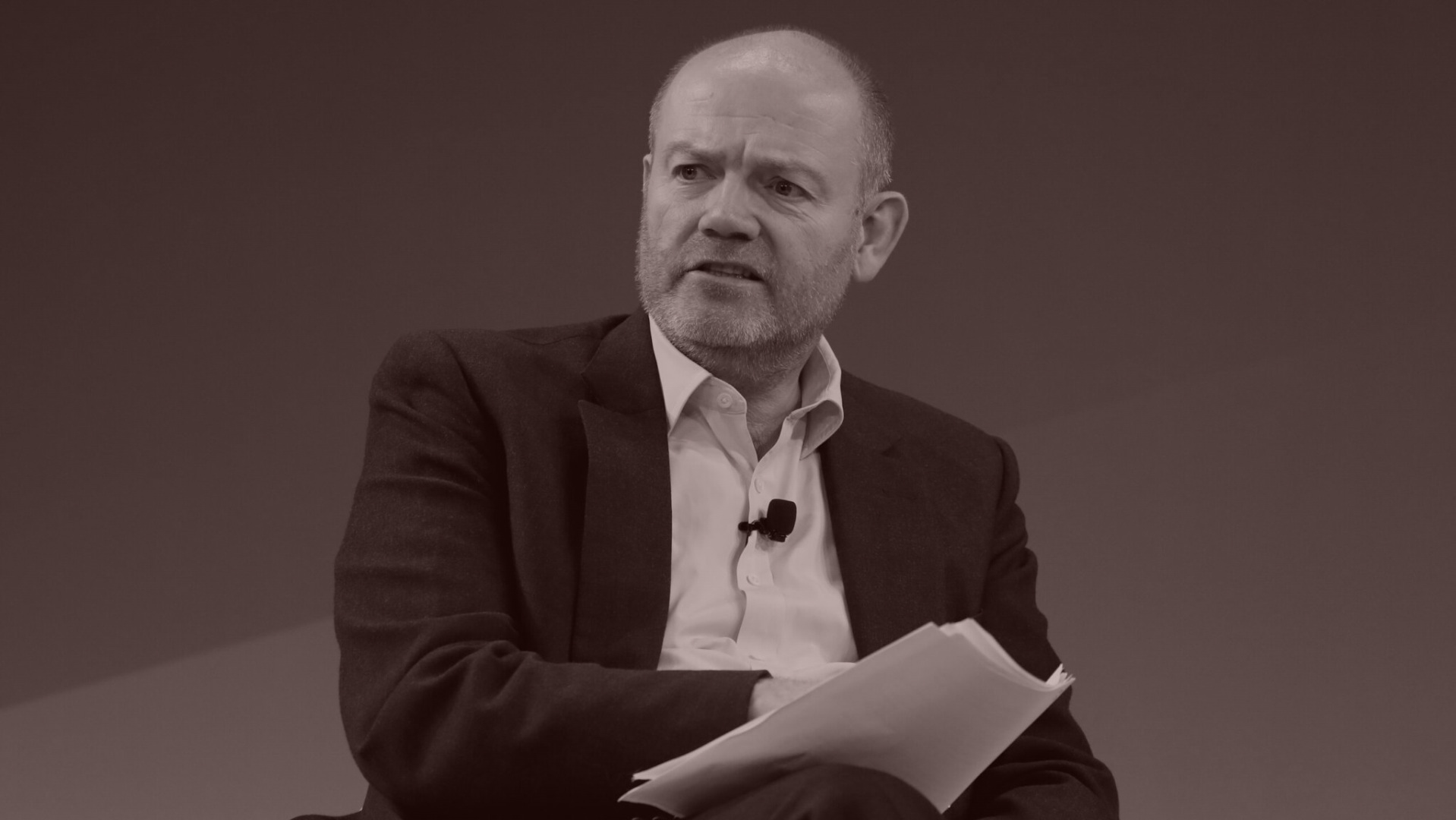 |
| CNN’s Existential Post-Election Season |
| With the election in the rearview, C.E.O. Mark Thompson will finally implement his true transformation plan at the network—including the culling of hundreds of jobs. Many of CNN’s own journalists, plenty of whom were blinded by Trump’s significant victory, have evinced similar naiveté about their own fates. |
|
|
|
| For about 15 or 20 minutes on Tuesday night, sometime after Sean Hannity declared that Donald Trump was going to win North Carolina, but long before his colleague Bret Baier was actually ready to make that projection (the network in a nutshell, I guess), Fox News was being watched by more than 11 million people. It was a capstone on an election night—and, frankly, an entire election cycle—during which Fox figured as the dominant television news network.
On one level, the 2024 election season marked an extraordinary triumph for Fox News. Despite recently being forced to fire their highest-rated talent, Tucker Carlson, and cough up $787 million because some B-team players (sorry, Maria) trafficked in defamatory and batshit crazy conspiracy theories, the network nevertheless maintained its prominence, posting several of the highest-rated events of the cycle: the first G.O.P. primary debate (12.8 million viewers), the Baier-Kamala interview (7.8 million), and election night (9.8 million in primetime). Fox either more than doubled or very nearly doubled the average audience of every other broadcast and cable network. Incredibly, Fox News drew a higher audience for Harris’s concession speech on Wednesday (7.9 million) than any of the other networks had on election night, itself.
Of course, success is relative in the age of linear television’s inexorable decline. Overall, the total primetime TV viewing audience on election night was down 25 percent from the previous cycle, to 42.3 million this year from 56.9 million in 2020. On that first Tuesday in November, Fox News had bested the competition with an average of 13.8 million viewers in primetime. Four years earlier, when a staggering 71.4 million watched the Trump vs. Hillary tally in primetime, Fox News posted 12.1 million viewers. In that light, Fox’s recent ratings win seems almost pyrrhic, a claim to the largest slice of a rapidly shrinking pie. Indeed, this election marked the first time since 2008 that Fox News averaged below 10 million viewers in primetime. But at least they’re still playing to win.
On the other side of the linear leaderboard was CNN. Historically, CNN has been the decisive cable news winner on election nights, and in 2016 it was the most watched television network period, averaging 13.3 million viewers in primetime. But the network’s linear audience has been decimated in recent years under Warner Bros. Discovery and the mismanagement of former chief executive Chris Licht. Its decline—to an average of just half a million viewers on any given night—has far outpaced its competitors’. And this year’s numbers were far more disappointing: On Tuesday, CNN averaged 5.1 million in primetime, losing an election night to MSNBC for the first time in its history, and coming in behind every other major network except for CBS. The severity of the decline is, frankly, staggering.
CNN prefers to tell a different story. Since former BBC director general and New York Times Company C.E.O. Mark Thompson took over the network more than a year ago, he has embarked on an ostensibly future-facing strategy that prioritizes digital and streaming growth over linear… all while hoping to manage the decline of the cable asset to prevent this transformation from turning into Chernobyl. On one level, this strategy seems obvious, particularly given the rapid acceleration of cord-cutting, and the fact that the linear asset still pays the bills.
But, as I have dutifully conveyed in the past, many grizzled network veterans and industry insiders have wondered whether there was a more elegant way to manage this suboptimal situation. Yes, streaming and digital is the present and future, but did Thompson really have to seemingly neglect the network, itself? During his tenure, CNN has ignored its misfortunes in both the morning hours and primetime. Yes, yes, everyone is a producer inside a place like CNN, and many people’s frustration with the Thompson plan is a consequence of the fact that these folks love making television, are addicted to the ephemeral high it provides, and pray that its old audience will one day return. Regardless, this emotional powder keg has, at the very least, manifested in an overwhelming lack of confidence at Hudson Yards that Thompson’s still-vague post-linear vision will be able to sustain CNN’s already diminished influence—to say nothing of the marquee talent’s high-seven-figure and, in Anderson Cooper’s case, low-eight-figure salaries. |
|
|
| In any event, shortly after Fox News announced its decisive ratings win on Wednesday, using the traditional TV metrics, CNN touted some different numbers: a “cross-platform audience” of 44 million, including 14 million who had streamed the coverage on its digital properties and on CNN Max. Meanwhile, the network proclaimed, 67 million had visited CNN.com to engage with results over the course of the day. Internally, digital teams were celebrating another data point: The average CNN app user had spent about 30 minutes cosplaying as John King on the Digital Magic Wall.
Inarguably, these metrics will be far more important to CNN’s future than its ability to best MSNBC by a few hundred thousand viewers. And yet, many industry insiders saw CNN’s press release as Baghdad Bob-ery—a blatant apples-to-oranges comparison intended to spin the network’s devastating fall from prominence. One veteran cable news insider elegantly likened it to “trying to put 10 pounds of shit in a 5-pound bag,” but said it “doesn’t camouflage the fact that their linear number was an embarrassment, and that Licht and now Thompson have not been able to get the brand back to where it was under Zucker.”
That’s either a brutally honest analysis of CNN’s current challenges, or a failure to appreciate the scale of the industry’s impending transformation and the new metrics required for success. Zucker, as you’ll recall, predicted all this and was already being positioned for a much larger portfolio at WBD, including both news and sports, before his defenestration. Even more broadly, the descent of CNN has been obvious to investors and keen observers since the Jon Klein era, back when Headline News used to occasionally outrate the flagship network. Anyway, CNN is never going back to 13.3 million viewers on election night. (And, for whatever it’s worth, Fox News claimed 47.2 million livestream views.)
Most notably, CNN’s poor ratings on election night and the P.R. department’s emphasis on digital growth hinted at something more ominous—or promising, depending on who you ask—for the folks at Hudson Yards and First Street NE. During a heated, high-stakes, and news-heavy election cycle—from CNN’s own presidential debate to the Biden withdrawal to the Trump assassination attempt and beyond—CNN employees had been given a months-long reprieve from Thompson’s slow but still ambitious digital overhaul. With the election over, CNN will now redouble its efforts toward that goal, and the changes will be significant.
In the next few months, I’m told, CNN will implement another round of layoffs that will impact hundreds of employees across the organization, including those whose TV production talents won’t necessarily be needed in the new digital-first landscape. Reporters and correspondents will be asked to assume more of the responsibilities once handled by teams of producers and production assistants, redundant assignments will be nixed, and various divisions will be reduced or even eliminated. Some of the on-air talent are also likely to be affected. At the same time, CNN plans to create new positions across the organization that will service Thompson’s new digital-first business. One source posited that the transformation might even result in a net gain of employees. We’ll see. A network spokesperson declined to comment. Meanwhile, insiders describe an atmosphere of high stress and high anxiety. |
|
|
| Is any of this surprising? Of course not. Thompson himself started sounding the warning upon his arrival last October, when he noted that TV was “too dominant at CNN and digital, too marginal,” and has been hammering the point in memos ever since. Moreover, the restructuring of CNN follows the paradigm of previously disrupted media sub-industries, such as the record and publishing businesses, where grand if unsustainable companies were remade as matrixed organizations with slimmed-down teams, flatter cultures, right-sized salaries, zero bullshit, and mixed memories of yore.
In fact, as my partner John Ourand has reported, ESPN is probably a couple years ahead of CNN on this path toward reinvention. The sports news network needed to lay off large teams and even ultra-famous on-air talent—Jeff Van Gundy, Mark Jackson, Suzy Kolber, RG3, Sam Ponder, etcetera—to free up capital to achieve its streaming ambitions via its forthcoming product, known internally as Flagship. Alas, these were painful but necessary decisions to facilitate capital allocations and prevent terminal decline.
The challenge ahead for CNN is similarly—no pun intended—linear. Its election night broadcast, itself, fully framed the issue in its quintessence. All the panels and sets were teeming with high-priced stars, nearly all of them interchangeable to the average viewer, filling the time with canned talking points, often without much news to discuss in the earlier hours of the evening. I’m not saying that Brian Williams’ Election Night special is going to win an Emmy or reinvent the medium, but it did articulate a future vision for the format: scrappy, ephemeral—and cheaper. On CNN, meanwhile, many of the anchors appeared as oblivious to their own fates as they were about Trump’s impending win.
The soul-searching has obviously begun within the Democratic Party, which has been trying to restore its Obama-era mojo for many cycles, despite the fact that so much has changed about our politics in the past 15 years. CNN, in working through its own introspective journey, may come to a similar conclusion: Re-creating the past never works. Indeed, it’s hard to imagine that audiences these days would respond enthusiastically to the product that filled the airwaves during the Zucker era. Similarly, as a transformation executive, Thompson has clearly prioritized the next phase of the business over the current one. It’s going to be an awful next couple months inside the business, but perhaps it’s necessary to protect its future. |
|
|
|
| FOUR STORIES WE’RE TALKING ABOUT |
 |
|
 |
| Kamala’s Fire Sale |
| How the Harris campaign is staving off its post-race debt. |
| TARA PALMERI |
|
 |
|
 |
|
|
|

|
 |
|
|
|
Need help? Review our FAQs
page or contact
us for assistance. For brand partnerships, email ads@puck.news.
|
|
You received this email because you signed up to receive emails from Puck, or as part of your Puck account associated with . To stop receiving this newsletter and/or manage all your email preferences, click here.
|
|
Puck is published by Heat Media LLC. 227 W 17th St New York, NY 10011.
|
|
|
|