 |
|
Welcome back to In the Room. I’m Dylan Byers.
|
|
Greetings from New York. I touched down last night from my WiFi-less cross-country flight and was immediately alerted to the surprising news that Bob Iger, David Zaslav, and the Murdochs had partnered to launch a sports streaming service, title TBD. This new joint venture may be a boon for the sports fan, but there are myriad questions about the Hulu-style deal structure and the logic behind it, which we’ll explore forthwith. One thing is certain, however: This will accelerate the decline of the cable bundle, which may be one reason why Comcast’s NBCU is not a party to the transaction.
Speaking of which, in tonight’s email, news and notes from inside Hudson Yards, where CNN staff seem to be growing increasingly anxious about Mark Thompson’s willingness to cede the linear battlefield as he invests in digital. Yes, everyone gets it, mobile is the future (and present, obviously), but if almost no one is engaging with CNN’s linear product by the time Thompson stands up this new digital enterprise, is anyone going to care?
But first …
🤝 Decoding the DIS-WBD-FOX Deal: Starting this fall, Disney, Warner Bros. Discovery, and Fox will create a streaming platform that conveys access to ESPN (and ESPN+), TNT, Fox Sports, etcetera—more than half of U.S. live sports rights, by one estimate—for a set price of around $40-$50 a month. The logic for these legacy mediacos is pretty obvious: reduce churn and amortize their significant investments in live sports rights. That said, as my Puck partner Julia Alexander noted last night, there are myriad questions about the deal structure, including revenue sharing for both advertising and subscriber retention. Also, which of these companies is actually building the app, and how will governance work? And how does this consortium avoid the pitfalls of joint ownership, which were made all too evident in the early days of Hulu?
The new venture is being touted as a landmark disruption—The Wall Street Journal, which broke the news, claims it will “reshape the sports and media landscape”—but that seems like heavy cake. “What actual pain point does this solve today for customers?” one veteran senior media executive asked me. “As a sports fan, I still need to go buy NBC and CBS (Peacock and Paramount+).” Indeed, for about $20 a month more, a consumer could just subscribe to YouTube TV and get almost everything this service offers, plus the rest of cable, which includes NBC and CBS. Also, a new sports-only streaming offer just makes everything even more confusing to the consumer.
Indeed, it feels like Disney, WBD, and Fox are trying to solve a problem for themselves rather than viewers, and trying to get points with bank analysts for innovation without actually addressing the underlying business model challenges. “What’s truly landmark is that these historic enemies face a disruption so great that they feel compelled to join forces to fight it,” the executive said. “There’s a model somewhere that says this offers sports fans a new choice, a new bundle. But at $40-$50 does it alter the larger dynamics? Consumers are empowered and are cutting the cord—and dividing the money three ways still means a smaller share of a smaller pie.”
🗞️ Subscription milestones: The New York Times’ annual digital subscription revenue has surpassed $1 billion, driven by the addition of 300,000 new digital subscribers last quarter. The Times now has 9.7 million digital-only subscribers, and 10.36 million subscribers total. Meanwhile, The Wall Street Journal has now surpassed 3.5 million digital subscribers and more than 4 million total. Dow Jones’ EBITDA increased 17 percent year over year in the last quarter, to $163 million, per the filing, its highest quarter on record.
|
 |
| Less Than Harlow |
| The readout from the CNN bunker as Mark Thompson reshapes CNN’s morning schedule, signals diminished interest in linear, and leaves his company of TV stalwarts wondering about the next shoe to drop. |
|
|
|
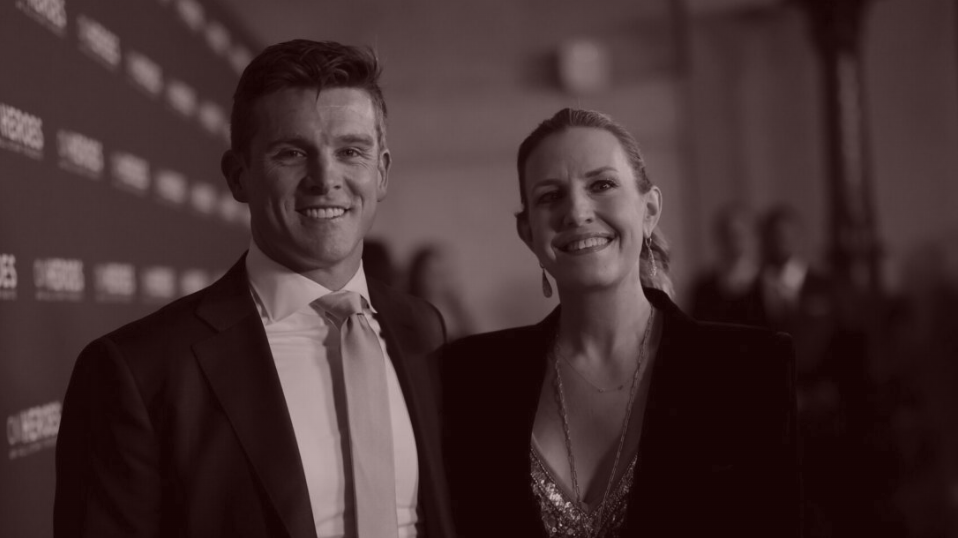
| On Monday, CNN chairman and C.E.O. Mark Thompson informed his staff, with signature British understatement, that he had “decided to reshape how we approach mornings on domestic cable.” This grand plan ostensibly amounted to little more than a musical-chairs-style reshuffling of his existing talent bench, but actually signaled a far more consequential investment thesis: Not only would Phil Mattingly and Poppy Harlow be vacating their roles as hosts of CNN This Morning, but CNN would be ending its decades-long investment in morning television entirely.
Subtly implicit in the news was the fact that Thompson was done fucking around with a post-post-prime format. On his watch, there would be no more 6-to-9 a.m. roundtable show to compete with the likes of Morning Joe. Instead, CNN News Central, the network’s Dunder Mifflin-esque, HLN-style news digest, would start at 7 a.m., preceded by two hours of Kasie Hunt’s early early show, which will inherit the CNN This Morning title.
Thompson has his logic, of course. His vision for a digital-first CNN, which he formally articulated last month, relegates the 24-7 cable network that has historically been CNN’s core business to an ancillary theater, as well as a source for cost savings—an Americanized BBC where intelligent and attractive enough people talk about domestic and global events without provoking arguments, and presumably at more P&L-friendly salaries. Indeed, Thompson will now consolidate production for all of the network’s a.m. hours out of Atlanta, a move that will reduce expenses significantly.
Meanwhile, despite aggressive efforts by his predecessors to compete in morning TV, the myriad iterations of CNN’s morning show have never matched the reach or influence of their rivals—a cruel irony, since both Jeff Zucker and Chris Licht had been celebrated morning show producers early in their careers. And ever since the Don Lemon-Poppy Harlow-Kaitlan Collins three-car collision receded from tabloid headlines, CNN This Morning has been drawing an audience commensurate with the population of Cincinnati or Orlando.
Still, Thompson’s announcement stimulated the latent anxieties of the network’s linear natives, which were made more acute by the manner in which he managed the casualties of his restructuring. Thompson gave the news to Mattingly and Harlow over the weekend and has since offered them new roles—which they are still negotiating—but no soft landings. Mattingly, who is widely admired by his colleagues, had just moved his wife and four children to the New Jersey suburbs from Washington in August. I’m told his CAA team didn’t carve in some of the customary contractual penalties. (Alas, to be fair, the morning show opportunity was a big bump up for Mattingly, a former congressional reporter, so his downside negotiating options were likely limited.) Harlow’s future is similarly uncertain, though that seems to be less of a concern for some of her colleagues given her mixed reputation inside CNN. (The more charitable critics describe her as “exacting,” perhaps “rough on the furniture.”)
The production team has been set even farther adrift. Thompson announced that the CNN This Morning production team would “disband”—that Etonian understatement again—which really meant that they’d be laid off and given the opportunity to apply for new roles. Alas, Thompson did not provide them with a specific end date, nor concrete information on when their severance would begin. “It’s bad people management up and down the line,” said one CNN veteran who has spent the week volunteering as a scream pillow. |
|
|
| It may be worth recalling, of course, that CNN is not an organization populated by shrinking violets. Licht met his swift demise for reasons of his own making, obviously, but he also quickly found himself outnumbered by powerful and well-connected employees who refused to suffer in silence. Thompson, also obviously, comes into this role with infinitely more credibility: Not only did he run Britain’s most prestigious public trust, but he literally saved The New York Times, resurrecting the public company under immense scrutiny.
Nevertheless, CNN veterans seem rattled by Thompson’s decision to wave the white flag in the mornings, and they aren’t necessarily abiding by his decision without a fair amount of second-guessing or angst or something in between. “This feels like a retrenchment,” one veteran CNN producer told me, “a return to the old CNN of the ’80s and ’90s”—before the network moved its morning show from Atlanta to New York and tried to compete with the big broadcast shows.
And indeed, sources at rival networks have been calling to celebrate CNN’s decision to cede the space. But even these assessments underestimate the true significance of Thompson’s digital pivot. In fact, he is not just retrenching, he is retreating from the linear ambitions that have driven CNN since its inception. Today it’s the morning show, but tomorrow it might be primetime. (Inside the network, many wonder how much more time will pass until the Collins-Phillip-Coates lineup gets tweaked.) Understandably, that scares the hell out of people who still think they work at a television network.
Thompson is not sentimental about any of this. He made clear early on that the digital pivot would be sharp, and there would be no sacred cows. Nevertheless, as I’ve noted before, his success will depend at least in part on his ability to inspire the faith and loyalty of the organization, as the revered Zucker knew and the reviled Licht found out the hard way. For a time, Thompson’s reputation, vision, and professional integrity gave CNN staff a renewed sense of hope for the network’s future and relief from the Licht-era trauma. But now that the pivot is actually underway, there are signs that hope is starting to wane.
Some CNN employees fear that Thompson’s retreat from linear will kill his efforts to funnel audiences to the new digital enterprise—in other words, that CNN TV will become so irrelevant to American audiences that they won’t care about CNN by the time he stands up the new business. “He’s killing the funnel,” one network veteran told me. Such dire predictions may underestimate the enduring power of the brand—despite Trump, despite Licht, despite everything—but it’s worth noting that even CNN’s dominant online traffic numbers are down from 2022.
Meanwhile, some CNNers seem to be coming to terms with the fact that, even if it is successful, a business built on digital ads and subscription revenue won’t be able to sustain the profits or the talent salaries to which they’ve grown accustomed. And as the business contracts, there will inevitably need to be more cuts. As I noted earlier this week, there is growing speculation inside CNN that the company may even relocate from Hudson Yards to save money.
All things considered, Thompson’s morning forfeiture was perhaps the best available way to incrementally manage the irreversible linear decline. After all, CNN will probably continue to draw the same ratings in those morning hours, for less cost. And as one media executive noted, “the key to managing decline is to cut spending as much as possible—deliver the best possible performance on the lowest cost structure—and ride it out as long as you can till you come up with something new.”
The problem is that CNN insiders are growing increasingly impatient for that “something new” to materialize. But it will likely be months before Thompson and his handpicked digital deputy, Alex MacCallum, stand up their new enterprise. And what if those insiders don’t like it? |
|
|
|
| FOUR STORIES WE’RE TALKING ABOUT |
 |
| Zero Dark McGurk |
| Why everyone loves to hate the foreign policy star. |
| JULIA IOFFE |
|
 |
|
 |
|
 |
|
|
|

|
 |
|
|
|
Need help? Review our FAQs
page or contact
us for assistance. For brand partnerships, email ads@puck.news.
|
|
You received this email because you signed up to receive emails from Puck, or as part of your Puck account associated with . To stop receiving this newsletter and/or manage all your email preferences, click here.
|
|
Puck is published by Heat Media LLC. 227 W 17th St New York, NY 10011.
|
|
|
|