 |
|
Welcome back to In The Room. I’m Dylan Byers.
|
|
In tonight’s email, news and notes on Mark Thompson’s CNN Innovation Report, a post-linear manifesto that acutely diagnoses the network’s challenges without yet providing specific solutions. Anyway, that’s Alex MacCallum’s problem now.
But first…
🛩️ Media chiefs in Davos: The World Economic Forum is slowly but surely becoming an Alpine version of C.E.S. Spotted among those laudably saving the world: NBC News Group chair Cesar Conde; Sky News chair David Rhodes; New York Times Company C.E.O. Meredith Kopit Levien and the paper’s executive editor, Joe Kahn; Washington Post C.E.O. Will Lewis and executive editor Sally Buzbee; Dow Jones C.E.O. Almar Latour; Condé Nast C.E.O. Roger Lynch; Atlantic C.E.O. Nick Thompson; Fortune Media C.E.O. Alan Murray, FT editor Roula Khalaf; Time owner (and Salesforce eminence) Marc Benioff; 60 Minutes’ Bill Owens; and embattled Business Insider editor-in-chief Nicholas Carlson and C.E.O. Barbara Peng.
🤼♂️ Ackman v. Döpfner: As anticipated, Bill Ackman is threatening legal action against Axel Springer after the German mediaco stood behind Business Insider’s plagiarism allegations against his wife, Neri Oxman. “We will respond in a formal complaint which will take a few weeks to prepare,” he wrote on X this week, adding: “By complaint I mean lawsuit.” Based on the available evidence, Ackman doesn’t seem to have much of a legal case here, but as my colleague Eriq Gardner notes on The Powers That Be, there are other ways he might exert legal pressure: harassing suits in welcoming jurisdictions, funding other plaintiffs with better claims, etcetera. In any event, Ackman will surely broadcast his plans soon, and in meticulous detail.
🇬🇧 Jeff Zucker’s Telegraph chase, cont’d: Jeff Zucker has enlisted former chancellor George Osborne to help smooth the regulatory process for RedBird IMI’s controversial Telegraph takeover and recently returned to London to meet with Ofcom officials before they submit their recommendations to culture secretary Lucy Frazer. Zucker sought to assuage concerns over RedBird IMI’s Emirati backers, who are broadly viewed as unwelcome financial stewards of the storied Tory broadsheet. Despite these overtures, it’s looking probable (though by no means certain) that Frazer will block the deal for now and move to “phase two,” which would necessitate at least another six months of regulatory review. That’s a long time for Zucker to have his money tied up in an asset he doesn’t control.
💨 Nardini exits Barstool: Erika Nardini is stepping down as C.E.O. of Barstool Sports after more than seven years at the helm. There’s no drama here: Nardini was hired by Peter Chernin and The Chernin Group to grow Dave Portnoy’s irreverent sports blog into a meaningful and monetizable business, which she did. It was the standard private equity playbook: Gain control of an asset with potential, bring in new management, and then let the money grow on trees. Chernin and Portnoy cashed out when Penn Entertainment bought Barstool for $550 million in the hopes that the brand could elevate its electronic sportsbook. Alas, it didn’t quite take, and Penn divested the business—selling it back to Portnoy for one dollar—as part of a merger agreement with ESPN. Nardini likely enjoyed one liquidity event and was then rescued from an earnout, so there was no more incentive for her to stay. She’s on to the next big thing—whatever that may be.
🎵 Condé consolidates: In news sure to surprise no one, Dame Anna Wintour has announced that Condé Nast will merge Pitchfork, the once-beloved music news and album review site it bought in 2015, with GQ, dispensing with Pitchfork editor-in-chief Puja Patel and laying off several staffers in the process. “This decision was made after a careful evaluation of Pitchfork’s performance and what we believe is the best path forward for the brand so that our coverage of music can continue to thrive within the company,” Wintour wrote in a memo to staff. My colleague Lauren Sherman will have more details in the next edition of her invaluable private email, Line Sheet.
🇺🇸 ABC News takes a Haley bath: Nikki Haley’s decision to forgo the ABC News and CNN debates in New Hampshire, in an attempt to will the G.O.P. primary into a two-candidate race—despite a third-place finish in Iowa—has forced both networks to cancel the events at significant financial cost. Well-placed political and media sources say ABC News will lose millions of dollars—estimates ranged from $2.5 million to $4.5 million—in expenses on the debate set and site fees, stage crews, travel and hotels, security, catering, and so on. On Tuesday morning, ABC News chief Kim Godwin curiously informed staff that she might venture to Manchester nevertheless in order to meet with Republican officials—a statement that confounded several journalists who had no earthly idea why she would need to make such a trip, but for her apparent love of travel.
|
 |
| Mark Thompson’s Fourteen Points |
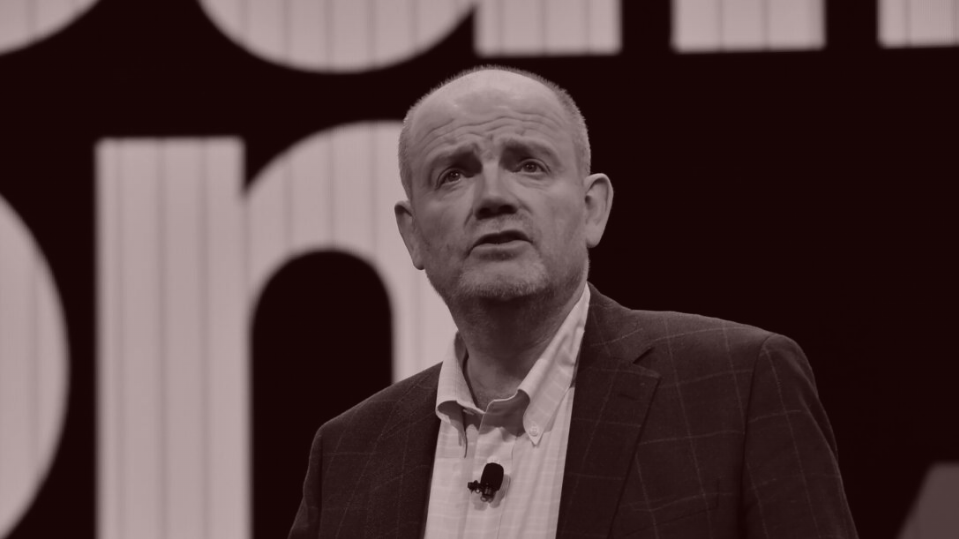
| After months of anticipation, CNN C.E.O. Mark Thompson has finally unveiled his shrewd, diplomatic, and resolute manifesto articulating CNN’s digital transformation. So what does it all mean? |
|
|
|
| On Wednesday morning, CNN chairman and C.E.O. Mark Thompson finally unveiled his long-awaited manifesto for the company’s future: a lengthy, well-considered, statement-of-purpose-style memo that sought to break an army of television veterans free from their linear stockade and will them into the digital present. In the memo, aptly titled “CNN’s Future,” Thompson diagnosed the all-too-familiar challenges—“The traditional TV universe is shrinking steadily,” the youths consume news on YouTube and TikTok, CNN feels “old-fashioned and unadventurous,” etcetera, etcetera—before articulating new goals and priorities, if not quite a specific roadmap for success. It was, in many ways, a sequel to the 2014 New York Times Digital Innovation Report that A.G. Sulzberger commissioned, and that had served as the catalyst for the paper’s digital transformation under Thompson a decade ago.
On the editorial side, CNN will combine its domestic, international, and digital divisions under Virginia Moseley, a Zucker-era veteran of the Washington bureau who deftly navigated Licht-era uncertainty as a member of the quadrumvirate interim leadership and has now emerged as one of the most powerful figures of the Thompson epoch. Meanwhile, as I first reported two weeks ago, CNN’s former product chief Alex MacCallum will return to the company as executive vice president of digital products and services, overseeing a new division that will pursue new products and growth opportunities, including potential subscription offerings. Of course, MacCallum held a similar position at the Times under Thompson, and her return means that Thompson is not merely betting on a familiar playbook, but also a familiar member of his former team.
Thompson’s memo bore all the marks of seasoned-executive authorship: He went out of his way to placate the talent and the network veterans—“Our domestic and global TV schedules are one of the jewels in our crown”; “I believe that linear TV will play a central and vital role in CNN’s success”; and so on—while also making clear that the pivot would be sharp, and there would be no sacred cows. “We must abandon our preconceptions of the limits of what CNN can be and follow the audience to where they are now and where they will be in the years to come,” he wrote. “We need to organize around the future, not the past. We need to recapture some of the swagger and innovation of the early CNN. It’s time for a new revolution.” |
|
|
| In an industry clinging to tradition, it is commendable that Thompson was willing to say this much out loud, and to state clearly that CNN’s challenges won’t be solved on the linear battlefield. Indeed, his decision to stay the course with the network’s relatively low-rated programming—including what he described as the “promising new primetime line-up,” which “still needs time to bed in”—was widely interpreted as a sign that Thompson is not nearly so preoccupied with linear ratings as his predecessors were. Jeff Zucker chased ratings, very successfully, via the pursuit of missing airlines and marooned cruise ships and, ultimately, Trump. Licht did so—far less successfully, of course—by tinkering with chyrons and set designs and editorial posture. To his credit, Thompson is focused on more existential challenges.
At the same time, there remains a sizable delta between Thompson’s declaration of priorities and the creation and implementation of an actual strategy. And Thompson is suggesting it will take many months more to bridge that gap. In an interview with The Wall Street Journal timed to the release of the memo, he wouldn’t even commit to a subscription strategy, despite its integral role in his plan, as I’ve long reported. “I’m not even sure that subscription is the right pathway for CNN,” Thompson said. “But I do think we need to start experimenting and exploring in the broader sense direct-to-consumer relationships and potentially direct-to-consumer paying relationships.” Translation: We know our problems, now we need to find solutions. And hopefully, Alex can help.
In fact, Thompson and MacCallum are almost certain to pursue a subscription strategy via tiered pricing for some of the core news offering—CNN will never go entirely behind a paywall, of course—and perhaps through ancillary offerings built around what Thompson described as “news-adjacent content and topical entertainment” (read: travel, food, health, etcetera, the sorta stuff that worked at the Times).
More immediately, Thompson and MacCallum are likely to focus on rebuilding the website and mobile app. In an all-hands town hall on Wednesday, Thompson described the current CNN.com experience as “dull,” suggesting that he wants to radically overhaul a digital product that, while heavily trafficked, has long struggled to engage users in a meaningful or monetizable way. Thompson sees video as a key differentiator for CNN—that’s its heritage, after all—but it’s still not clear what platform or UX upgrades CNN can implement that will get generations of TikTok and YouTube users to start engaging with CNN’s reporting on its owned-and-operated platforms.
Indeed, as I’ve noted before, transforming a global television network into a mass-market digital business may ultimately prove to be a more vexing challenge than turning a storied paper into a news and lifestyle platform for the wealthy liberal elite. (Another complexifier: The Times Co., for all its challenges at the time, was a public company; CNN is a part of a larger, debt-ridden public entity that still seems one merger away from its destiny.)
At the very least, this transformation will require a significant shift in investments, which may necessitate cuts and consolidation down the line. During the town hall, Thompson was asked whether there would be layoffs. To his credit, he avoided the Lichtian error of making any promises on this front, and instead noted that no media company can offer that sort of certainty, and it was possible there would be some reductions. But that’s not what this memo was about, he added. This memo was about a new direction, and new opportunities. |
|
|
|
| FOUR STORIES WE’RE TALKING ABOUT |
|
|
|

|
 |
|
|
|
Need help? Review our FAQs
page or contact
us for assistance. For brand partnerships, email ads@puck.news.
|
|
You received this email because you signed up to receive emails from Puck, or as part of your Puck account associated with . To stop receiving this newsletter and/or manage all your email preferences, click here.
|
|
Puck is published by Heat Media LLC. 227 W 17th St New York, NY 10011.
|
|
|
|