 |
|
Welcome back to In The Room. I’m Dylan Byers.
|
|
Tonight, new details on Mark Thompson’s grand plans for the post-linear multiplatform CNN, which will see a significant infusion of resources into digital and streaming as the company scales back on the TV side. Plus, news and notes on Zucker’s Telegraph chase, and the other Zaz-Malone backed media asset he’s been eyeing.
But first…
- The cruelest month: December is often the cruelest month in media. The season of year-end budget balancing begets layoffs that must be implemented at the precise moment that the outside world is bedecked in its festive holiday best. This year, the macroeconomic climate, softening ad market, and business model disruption has only exacerbated the pain of what was already a record-high year for media layoffs, with 20,000 jobs cut before October.
This week, Condé Nast started the process of laying off more than 300 employees, affecting The New Yorker—where layoffs are rare, given its robust subscription business—and Vanity Fair. Vox Media, which has been caught in a bit of a doom loop in recent years, is also cutting about 4 percent of its staff. At The Washington Post, employees have been informed that 120 will soon need to be laid off since only 120 accepted voluntary buyouts. Today, I learned that NBC News will implement a relatively small round of cuts—double, not triple, digits—in the first quarter of the new year. At CNN, where Mark Thompson is embarking on a new, digitally minded restructuring effort, the issue is a bit more nuanced. And that’s where we turn today...
|
 |
| The Mark Thompson Plan |
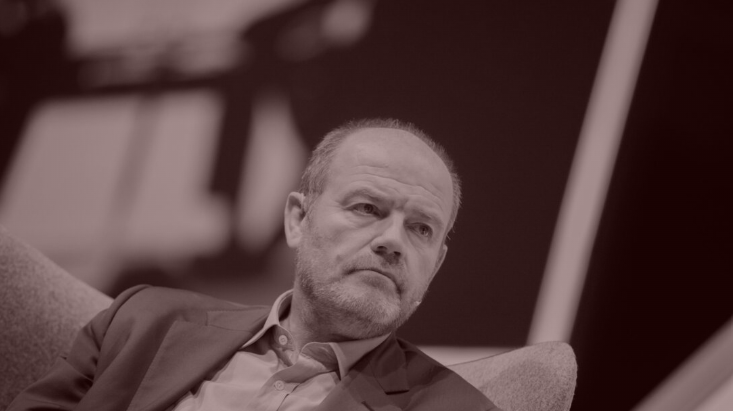
| CNN’s new boss has been working on a 2024 business plan that will restructure the network around a multiplatform philosophy. The plan, which will go into effect next quarter, will move significantly more resources into CNN’s digital efforts. |
|
|
|
| On Wednesday evening, just as tenuous hostage negotiations were cratering in the Middle East and war raged in Eastern Europe and Kissinger obits were hitting the presses, CNN debuted King Charles, a pretaped weekly primetime series. The show featured Gayle King and Charles Barkley sitting on a pair of soft pink and purple chairs, bantering amicably about news and culture and conducting interviews with the likes of Fat Joe and Gannett pop culture beat reporters.
The show, which had been conceived of by former CNN C.E.O. Chris Licht and developed by his longtime deputy Ryan Kadro (still at the network), was in many ways the last vestige of the brief, bygone era. Every other novel idea he’d had—new sets! new chyrons! a new morning show!—had been eagerly wiped away or readjusted upon his departure. But King Charles remained, presumably because of established contract agreements and an enduring belief by executives that star personalities might momentarily reverse or suspend linear TV’s inexorable decline.
Alas, the show was the lowest-rated CNN primetime premiere in at least a decade, debuting to less than half a million viewers. Also unfortunately, these numbers—roughly a third and a quarter of MSNBC’s and Fox News’s audiences in the same time period, respectively—have become quite familiar territory for CNN. Now, arguably, that level of attrition could justify the need to unabashedly try something new. (CNN claims the show was a relative hit with younger audiences). On the other hand—amid the dynamic situations in Gaza and Ukraine, the run-up to Election Day 2024, and so much more—a half-baked, pretaped talk show like this one ostensibly ran counter to CNN’s core value proposition: live breaking news.
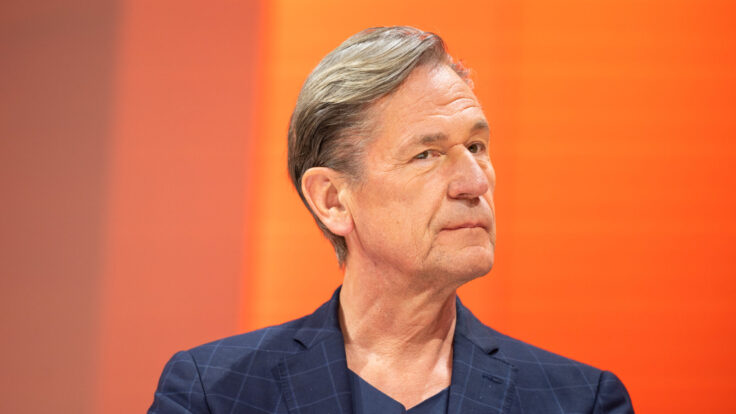
And yet, notably, CNN’s fate no longer rests on television ratings, a point the new chief executive, Mark Thompson, understands quite well. Upon taking the job, the former New York Times Company C.E.O. told his charges that the network “must be committed to presenting the news in whatever form, in whatever product, makes most sense for audiences today,” further stressing that “conventional TV… can no longer define us.” Thompson, who has the best track record in this sector of the business, has the full support of the Zazplex to integrate his vision.
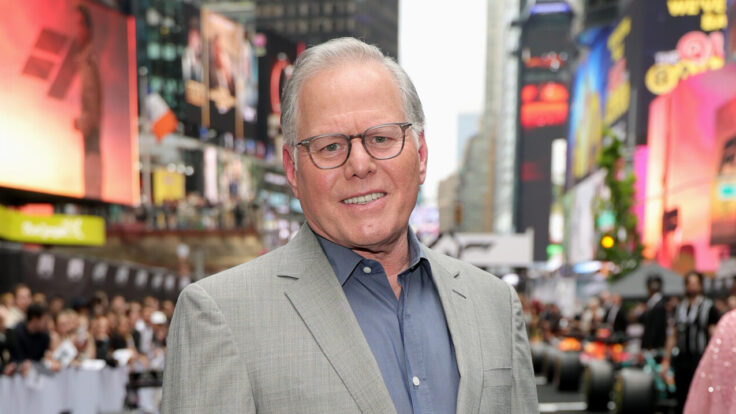
In fact, I’ve learned Thompson has been working on a 2024 business plan that will restructure CNN around this multiplatform philosophy. The plan, which will go into effect next quarter, will move significantly more resources into CNN’s digital efforts, and is therefore likely to result in budget cuts elsewhere, sources with knowledge of the matter said. Some said the new investments in digital will not necessarily require cuts. At the very least, WBD C.E.O. David Zaslav and C.F.O. Gunnar Wiedenfels aren’t asking their new C.E.O. to hit a staff reduction target this time around. So that’s good.
Nothing is final, nothing decided, but Thompson’s digital strategy is likely to draw from the playbook he used while executing the digital reinvention of the Times after the company published its Ninety-Five Theses-like innovation report. The core product will be news and journalism across platforms (digital, streaming, linear, etcetera), buoyed by new ancillary businesses likely to take the form of subscription products built around cultural offerings like health, travel, and food. CNN will also eye potential acquisition targets in the digital news space, sources said.
And CNN may also become more integrated with Bleacher Report, the Turner-owned sports news site. (Just spitballing here, but presumably Thompson could expand his purview across both CNN and Bleacher Report, not unlike Jeff Zucker’s role as head of WarnerMedia News and Sports, once upon a time). The general idea—no small task—is to deepen user engagement with CNN and turn it into the go-to news and information source for a mass-market audience, across all platforms. CNN already has one of the largest digital news audiences in the world by sheer traffic, but it’s a disengaged audience. Zaz and Thompson want to change that.
Until this ambitious digital reinvention commences, of course, CNN must still contend with some inconvenient realities: dismal ratings, a particularly lackluster primetime lineup helmed, from 9 p.m. onward, by relatively inexperienced hosts—the King Charles of it all. Thompson and Zaslav recognize these challenges, but seem to see light on the horizon. “CNN is back!” Zaz declared at the DealBook conference this week. (Curiously, and notably, Licht made a rare appearance in the audience.) But the mere promise of digital growth and greater multiplatform distribution, even in Thompson’s very capable hands, doesn’t entirely dull the rank-and-file pain of CNN’s diminishing stature in the broader news environment. The drama of the Licht era may be over, but the mediocrity persists, and the promise of the Thompson era can’t come soon enough. |
|
|
| Elsewhere in the CNN Cinematic Universe, Jeff Zucker’s effort to claim the Telegraph and Spectator for his Abu Dhabi-backed RedBird IMI fund is continuing as anticipated. After Lloyds Bank initiated the repayment of the Barclay family debt on Wednesday, U.K. culture secretary Lucy Frazer issued a public interest intervention notice to suspend the transfer of the media assets while she reviews concerns over foreign ownership and, particularly, the U.A.E.’s track record of press censorship. The upshot: Zucker’s bid will be delayed for months, then either approved or jettisoned.
This was what Zucker & Co. planned for all along. And because the Telegraph Media Group can’t change management while the regulatory review is underway, Zucker’s rivals—Lord Rothermere, Sir Paul Marshall, etcetera—can’t snap it up in the meantime, which appears to have been a clever chilling tactic executed by the RedBird deal guys. And so, we wait.
In the meantime, I’ve also learned that RedBird IMI was recently eyeing another U.K.-based company: All3Media, the production and distribution giant jointly owned by—wait for it—Zaslav’s Warner Bros. Discovery and John Malone’s Liberty Global. Zaz and Malone are reportedly seeking $1.3 billion for All3, which boasts more than 30,000 hours of scripted and unscripted content in its library, including shows like The Tourist, Fleabag, and The Traitors, as well as Squid Game: The Challenge. The French TV producer Banijay also submitted a bid for All3 this week, per Reuters; Britain’s ITV was in talks about a deal earlier this year, but has since pulled out.
Given that RedBird IMI’s initial fund is just $1 billion, it’s hard to imagine Zucker will be able to pursue All3 while vying for the Telegraph and Spectator. Nevertheless, his interest suggests that his ambitions in the media space go well beyond any one asset, and that he sees all of these investments as a piece of the larger international media business he hopes to create. |
|
|
|
| FOUR STORIES WE’RE TALKING ABOUT |
|
|
|

|
 |
|
|
|
Need help? Review our FAQs
page or contact
us for assistance. For brand partnerships, email ads@puck.news.
|
|
You received this email because you signed up to receive emails from Puck, or as part of your Puck account associated with . To stop receiving this newsletter and/or manage all your email preferences, click here.
|
|
Puck is published by Heat Media LLC. 227 W 17th St New York, NY 10011.
|
|
|
|