Welcome back to The Varsity, live from the Nation’s Capital. I’m John
Ourand, waiting for sancerre o’clock—let’s go, Andrew… —in advance of tonight’s Spurs-Thunder game.
As a D.C. native, I have always rooted against all the other I-95 teams—hate the Celtics and the Sox, ditto the Phillies and Birds, but I’ve always reserved a special amount of vitriol for New York teams. That said, I have to admit I’ve been smitten watching the “Nova Knicks” advance to the Finals for the first time since 1999. Many commentators have compared this
crew to that Spree-and-Houston team or the epic 1994 Ewing team that would have beaten the Rockets if John Starks hadn’t had the worst shooting night of his career. But my best comparison is actually… Linsanity.
For a fortnight in 2012, the city’s infatuation with an undrafted Harvard point guard (during Carmelo Anthony’s prime, no less) happened to coincide with a carriage battle between Machiavellian
team owner James Dolan and Time Warner Cable. Indeed, MSG Network was dark on all Time Warner systems in New York during the run. After just a couple of weeks, Time Warner was bleeding subscribers and desperate to cut a deal. That stretch was the first time I really understood how powerful the Knicks are in New York. The next couple of weeks should be a blast.
In tonight’s issue, a preview of tomorrow’s Varsity podcast, one of the most respected
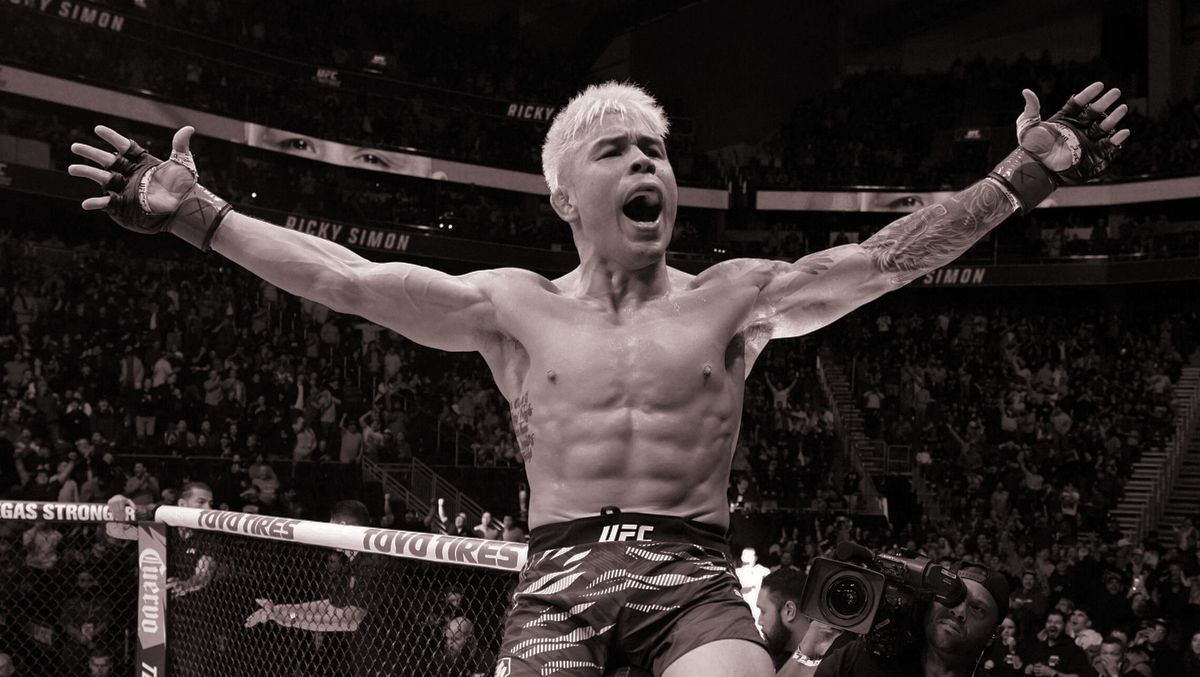
financial analysts in the media business, Wolfe Research’s Peter Supino, offers perspective on the sports rights marketplace and, in particular, scrutinizes what he believes are two misunderstood sports deals: Apple’s F1 partnership and Paramount’s deal with UFC. Also, the NFL deals with a legal setback, the PGA of America defenestrates its president, and Tom Dundon speaks!
Also mentioned in this issue: Nathan Charnes,
Don Rea Jr., MrBeast, Mark Shapiro, Tom Dundon, Brian Flores, James Uthmeier, Steve Wilks, Ray Horton, David Ellison, Taylor Swift, Ari Emanuel, Eminem, and more. |
- Which way is up?: A couple of weeks after Florida’s attorney general subpoenaed the NFL to get additional information on its implementation of the so-called Rooney Rule, which supports the pipelining of diverse coaching candidates, the U.S. Supreme Court today declined to hear an appeal from the league in the discrimination lawsuit filed by former head coach Brian Flores. The NFL had hoped to steer this dispute through its own arbitration process rather than
litigate publicly in court. But lower courts refused to compel arbitration, handing a meaningful win to Flores and fellow coaches Steve Wilks and Ray Horton.
Puck’s legal expert and Varsity letterman Eriq Gardner correctly predicted this outcome four months ago, so I gave him a call to find out
what’s going on. “This could get mildly uncomfortable for the NFL,” Eriq told me. “The league is now headed into discovery on allegations of discriminatory hiring at the exact moment Florida A.G. James Uthmeier is poking around about the Rooney rule. That’s not ideal optics. But it’s also important not to overstate this. The Flores case is embarrassing, but it is not existential in the way the Sunday Ticket case potentially is.”
In fact, Eriq thinks there could be a
strategic upside to the Supreme Court staying away from the Flores case: “The Court only hears a tiny number of cases each year,” he pointed out. “Realistically, it was always unlikely that the justices would take up two separate NFL matters in the same stretch. The league’s bigger concern is probably preserving room for a future petition in the Sunday Ticket case, which the Ninth Circuit could revive very soon. If that happens, the NFL could soon be back at the high court’s doorsteps—this time
with much stronger odds of getting an audience.” - Triple bogey: Only a year after being named president of the PGA of America, Don Rea Jr. is out, following a gaffe-filled reign that culminated with a disastrous Ryder Cup in September. Nathan Charnes, vice president at the PGA, was named acting president, a promotion that’s expected to be made permanent once Rea’s contract officially runs out in November.
This
move has been telegraphed since last fall, when the play at Bethpage was marred by boorish fans heckling the European team. Rea’s initial response was to dismiss the complaints, comparing the atmosphere to a youth soccer match. (A week after the event, Rea finally apologized via an email to the PGA’s 30,000 golf pros.) But there was more: When Rea presented the trophy to the European team, he said they “retained” the Cup rather than won it outright, which was perceived as another slight. And in
what was possibly his biggest error, on Saturday night, as the U.S. team was getting pummeled, a video circulated of Rea singing karaoke. (Eminem’s “Lose Yourself,” if you must know…) He never recovered, and didn’t even attend last weekend’s PGA Championship in suburban Philly. - Creating a culture: It’s been a rough, cost-cutting two months since Tom Dundon officially took control of the Blazers on April 1: layoffs,
restricting two-way players from traveling to road playoff games, and early hotel checkouts for staff. So I was interested in his answer to a question from The Oregonian on what cost-saving measures worked with his hockey team—he also owns the Carolina Hurricanes—that he could possibly replicate with the Blazers. “Create a culture where they’re taken care of but also pushed,” he said, “and creating a culture where everybody is doing what’s best for the team.”
How does laying off
70 people square with that kind of culture? “My experience is that less layers gives people more accountability and they do a better job,” he said. The whole piece is worth reading.
|
And now for the main event… |
|
|
|
Wolfe Research analyst Peter Supino offers up his candid thoughts and surprising
bull case for Paramount’s UFC deal and F1’s partnership with Apple—and why the mega-trend media universe keeps gravitating toward superstars. |
|
|
|

| John Ourand
|
|
|
|
Sports media professionals don’t agree on much, especially not lately. But one area they did find a
solid consensus was in the widely held belief that Paramount wildly overpaid for UFC rights last summer. Almost as soon as David Ellison’s acquisition of Paramount gained regulatory approval, he announced a $7.7 billion deal for UFC. It certainly made a big splash—but, critics wondered, at what cost? Then just a few months later, Formula 1 took its rights to Apple in a deal that also drew skepticism of the $4.5 trillion company’s strategy for live sports
rights.
But Peter Supino, one of the media industry’s most respected analysts, offered a different assessment of these deals. In an appearance on the Varsity podcast, he defended both, saying that UFC “could have an unusually bright future” and describing F1’s Apple deal “as a win.” The podcast posts tomorrow, but we’re giving you a sneak preview tonight. As always, this transcript has been lightly edited. Enjoy! |
John Ourand: For as long as I’ve been writing about sports media,
people have pressured me to say that sports rights is a bubble that’s about to burst. After two decades, it’s clearly not a bubble, but it does appear like the market is changing. How do you see it?
Peter Supino: Sports rights are about 20 percent of the total revenue of the whole paid TV business, broadly defined to include linear television, cable, satellite, and streaming. It’s an even greater proportion of viewing. Stepping
back and focusing at the widest expanse on what’s happening in media, these mega-trends are amplifying the most high-value stuff, whether it’s an athlete, a team, a musician, a creator. If you’re great, you’re in somebody’s pocket all day, every day. It creates greater value for the extremes of mainstream superstars and niche high-value-added talent. Those same forces gut the middle. Sports is very much on the right side of that trade, in the same way that Taylor Swift is on the
right side of that trade, and MrBeast is on the right side of that trade.
Who’s on the wrong side of that trade?
I worry that Major League Baseball could be on the wrong side of that trade. But the more obvious answer is broadcast primetime scripted dramas, low-value-add game shows, things that people might have watched because they were on TV or because they were on a portal page of a website.
Let’s talk about individual rights
deals. Much of the business, myself included, was surprised when Paramount agreed to pay UFC $7.7 billion over seven years. What did you make of that deal?
Overall, we were positive on the UFC having a successful outcome selling its media rights. We viewed the right estimate as $900 million, which was a little above consensus, but way below the $1.1 billion that it got. We felt that the decline of the pay-per-views was misleading because of piracy. The audience was many multiples
of the pay-per-view audience, and really misunderstood because people would watch the pay-per-views in groups because of how expensive they were. Then the sport itself has a couple of attributes that made it absolutely mission critical to streamers: It’s a year-round sport, it’s young, and it’s global. And it didn’t hurt that Ari [Emanuel] and Mark [Shapiro] were representing it.
I hear from rival
networks and streamers all the time, whispering that Paramount really overpaid for this. What I’m hearing from you is that they didn’t.
Let’s talk about what overpaying is. If the right price to pay is the price that an asset is worth based on its historical performance, then I would get behind the view that Paramount overpaid. Investors—and I bet David Ellison thinks of himself as an investor—have high-risk, high-return jobs because they try to imagine the world as it will be
instead of the world as it is. David Ellison is making some big bets, and I think the UFC is an asset that, if managed correctly by both TKO and its distributor, could have an unusually bright future. If that vision plays out, Paramount+ will benefit by more than the value it overpaid by. |
Four years after Apple did its MLS deal, most of my sources don’t consider it to have been
a very good deal for MLS. So when F1 went to Apple TV this year, I was a little concerned. You seem positive about that deal, though. Explain why.
We think F1 loses very little in going to Apple. In fact, it stands a good chance of netting out evenly—or even positively—from an audience perspective, while getting about a 7 percent annual value growth rate for its rights fees. The headline was $140 million between F1 and Apple. ESPN was paying $90 million, but that’s an
apples-to-oranges comparison. That’s because the Apple deal required F1 to hand over the F1 TV business and the premium streaming revenue that goes with it. Really we should compare $140 million to about $110 million, which amounts to a high single-digit growth rate, which is similar to the normal growth rate of sports rights in the United States.
There are a few reasons why we’re comfortable with this deal. First, F1 is unique in that its schedule is global and inconvenient for most U.S.
households, so the normal benefits of being on broadcast haven’t accrued to F1 the way they would for a sport that shows up Saturday or Sunday afternoons. Second, it turns out the F1 audience is a premium audience with a much higher propensity to use iPhones and Apple products than the rest of the market.
Third, F1 races lend themselves to shoulder content like few other sports assets. We saw that with Drive to Survive. So we’re excited about the way Apple can merchandise and
energize F1 fans around the races, which are only on about once every two weeks. So to flip a negative into a positive, a sports media distributor can retail that sport and add on to audience engagement if they’re smart.
What we know so far is that the audience on Apple is of similar size on average to what F1 got on ESPN last year, and it’s younger and more female—both important strategies for F1. We’ve heard from several people that there have been instances where the viewership was
down on Apple year over year, and F1 has told me that those events, if you’re trying to compare apples to apples, were the races in 2025 when ESPN simulcast with ABC. A broadcast audience inevitably gets additional viewing. The message from F1 about the Apple deal is that so far, things are a little better from an audience perspective, but it’s choppy, and we’ll have to see how the season plays out. If all they do is maintain a flattish audience and get more money, create more digital
optionality, we think it was a win. |
My item on Apple producing an MLS game using only iPhone 17 Pros clearly touched a
nerve…
On the cost of TV production: “I was thinking about this the other day when McAfee was on in my gym. He was standing in his cheap and basic set, and he was interviewing Schefter, who was sitting in his car and was using, I assume, a cell phone. No one cares. It did the job just fine. Spend the money on talent, not all the stupid bells and whistles.” —A broadcast executive
More on the cost of TV production:
“Sports media production is getting cheaper? I need to listen to that. The cost of gas has doubled for all of the trucks that travel to these events, and the generators and backup generators are also double the cost. NFL production costs for Fox and CBS are going up this fall.” —A Varsity subscriber via X
Even more on the cost of TV
production: “Noting that broadcast executives like to talk about how spectacular their production is, how many even broadcast in true 4K? What holds them back? Even the Super Bowl was upscaled 1080 claiming to be 4K on the stream. They have all had 4K cameras for years. That’s a story I would love to read.” —A Varsity subscriber
Still more on the cost of TV production!: “The list of innovations in remote television production is long and deep. Think of the
iPhone 17 Pro as a specialty camera, like skycams, pylon cams, spydercams, and track cams. The only difference is you can Google great meatball recipes or call your mom with the iPhone. This is your reminder to call your mom!” —A former production executive |
See you Thursday,
John
This newsletter was assembled with the help of Maya
Tribbitt. |
|
|
|
Puck sports correspondent John Ourand and a rotating cast of industry insiders take you inside the executive suites
and owners boxes where the decisions that shape the entire sports business are made. You’ll hear interviews with players, network execs, and everyone in between. The Varsity is an extension of John’s private email for Puck by the same name. New episodes publish every Wednesday and Sunday. |
|
|
|
The industry’s go-to source for unflinching reporting on the trillion-dollar business of artificial intelligence -
perhaps the single most important technology of our time. Ian Krietzberg, the powerhouse journalist behind The Deep View, delivers twice-weekly insights into the latest dealmaking and breakthroughs in A.I., and how the intersecting worlds of finance, entertainment, media, and politics are being transformed in its wake. |
|
|
|
Need help? Review our FAQ page or contact us for assistance. For brand partnerships, email ads@puck.news. You received this email because you
signed up to receive emails from Puck, or as part of your Puck account associated with {{customer.email}}. To stop receiving this newsletter and/or manage all your email preferences, click here. |
Puck is published by Heat Media LLC. 107 Greenwich St., New York, NY 10006 |
|
|
|
|