{{ 'now' | timezone: 'America/New_York' | date: '%b %d, %Y' }} |
|
|
|
Greetings from Los Angeles, and welcome back to In the Room. Last night in Washington,
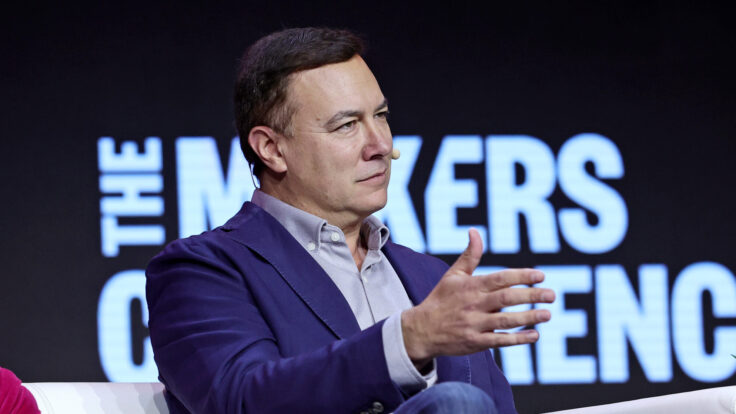
David and Pam Zaslav treated CNN chief Mark Thompson; his wife, Jane; and about a dozen of the network’s anchors and their partners to dinner at L’Ardente, just around the corner from the D.C. bureau. Nothing to report, just letting you know I’m still watching.
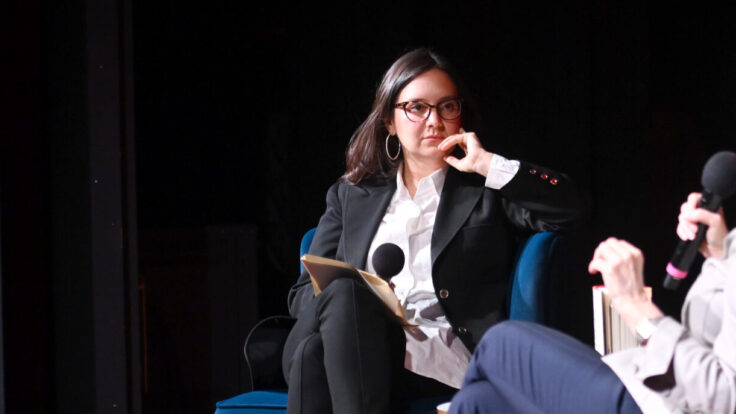
In tonight’s edition, news and notes on Bari Weiss’s audacious and controversial overhaul of 60 Minutes and the ascent of Nick
Bilton to the helm of America’s most popular news program. (Julia Alexander, your new regular Friday ITR correspondent, will be here on Monday.) Nick is entering this august position with a lot of bravado and no operational expertise. “Sometimes you need an outsider,” he told me. Sure, but… this outsider?
🎙️ Plus, on the latest episode of The Grill Room, Julia and I assessed the latest shockwaves emanating out from the Bari–CBS News psychodrama, and whether Nick will save or destroy America’s premier news program.
Follow The Grill Room on Apple, Spotify, or wherever you prefer to listen.
📣 Reminder: The Wednesday issue of In the Room
will soon be exclusive to Puck’s Inner Circle tier. Don’t forget to upgrade your subscription for access to all of Puck’s most exclusive insider reporting, including our sister publication, Air Mail. It is well worth it, and you can afford it. Join here.
Also mentioned in this
issue: Robert Allbritton, Sharyn Alfonsi, Byron Allen, Brendan Carr, Stephen A. Smith, Anderson Cooper, Josh D’Amaro, Jesse Dwyer, Dovid Efune, Cecilia Vega, Chris Licht, Will Lewis, Draggan Mihailovich, Tanya Simon, Jeff Bezos,
David and Larry Ellison, Jeff Bezos, and more. |
-
CNN v. Perplexity: CNN has sued Perplexity, opening an intriguing new front in the war between publishers and A.I. platforms. CNN alleges that Perplexity unlawfully copied thousands of its articles, videos, and images to power its chatbot-style products—then repackaged that journalism into competing summaries that were, according to the complaint, “identical or substantially similar” to CNN’s original reporting. Perplexity is framing the dispute as an existential fight over the open
web. “You can’t copyright facts,” its spokesperson, Jesse Dwyer, said in response to the suit.
Dwyer’s line has become Silicon Valley’s de facto legal defense, and it underscores the vulnerability of news organizations that traffic in what is fundamentally a commodity. Obviously, this is the great existential challenge of the era, and media orgs are hardly aligned. Perplexity is already facing litigation from The New York Times, Reddit, and Dow
Jones, among others, even as other publishers have opted for détente, signing licensing agreements with OpenAI, Google, and Anthropic in hopes of converting the content scrape into a recurring revenue stream. - Carr v. D’Amaro: F.C.C. chair Brendan Carr escalated his pressure campaign against Disney this week, abruptly moving up the license renewal deadlines for the company’s eight owned-and-operated ABC stations as part of a broader
scrutiny campaign targeting Disney’s diversity and inclusion initiatives. The F.C.C. described this maneuver as a procedural necessity, while Disney called it an “unlawful, arbitrary, and unconstitutional” workaround that is inconsistent with longstanding F.C.C. precedent. In any event, Josh D’Amaro’s first major political test as Disney C.E.O. continues apace.
- Robert v. Dovid: Washington media proprietor Robert Allbritton
is facing a new and unforeseen headwind in his effort to foment a newspaper war with The Washington Post. As you know, Robert recently rebranded his news startup NOTUS as “The Star,” after the old newspaper that his father, Joe, once owned. Alas, New York Sun publisher Dovid Efune has now decided to expand his own empire by resuscitating The Washington Star itself, and he’s filed a trademark infringement
against Robert for taking the moniker.
According to the lawsuit, Dovid has owned the Washington Star trademark since 2024 and discussed selling it to Robert earlier this year. No deal materialized, but Robert proceeded with the Star rebranding anyway. Dovid argues that the name change will deceive consumers who may associate Robert’s news site with Dovid’s paper.
The good news amid all this is that there are now even more jobs for Washington journalists. Robert and
Dovid have each committed to hiring around 50 additional staffers. The bad news is that a town already saturated with far more innovative media startups hardly needs two more newscos run by old-school proprietors who think they can go toe-to-toe with Jeff Bezos in a “newspaper war.” Of course, these are the same romantics who read the Post’s downsizing as a forfeiture, rather than a rational business calculation. Good luck to them. - And finally… Stephen A. Smith had lunch with the FT. “I’ve always conducted myself in a way that upholds the standards of journalism,” he told the paper. “I don’t go on the air and run off at the mouth. I research. I have sources all over the place. I’m still a reporter.”
|
$15 million: The yearly profit CBS says it will now make in late night after
selling Stephen Colbert’s Late Show time slot to Byron Allen for his Comics Unleashed broadcast. “With this ‘time buy’ model, we have shifted an hour that was losing roughly $40 million annually to $15 million in profit—a $55 million swing,” a CBS spokesperson told The Hollywood Reporter.
Meanwhile, ratings for the Comics Unleashed debut came in under a million, down 85 percent from the Colbert finale.
And
now, the main event… |
|
|
|
In tapping tech columnist/aspiring screenwriter Nick Bilton to run 60
Minutes, CBS’s Bari Weiss is once again playing the outsider card. But what exactly qualifies him to remake America’s top-rated news show? Just ask him. |
|
|
|
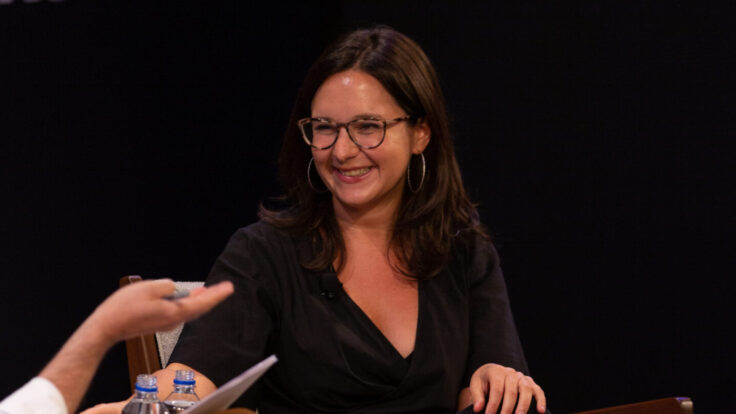
On Thursday morning, minutes after Bari Weiss announced her audacious
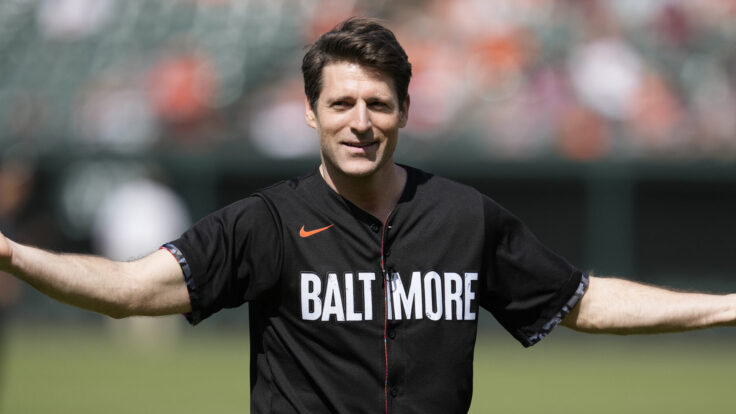
and controversial overhaul of 60 Minutes, I got a call from the show’s newly appointed executive producer. Nick Bilton, as you may know, is a former New York Times R&D savant turned tech reporter, Vanity Fair writer, and author who left journalism a few years back to pursue a career as a Hollywood screenwriter and documentarian. His credits include Fake Famous, an HBO documentary about Instagram celebrity, and Biggest Heist Ever, a
Netflix feature about a bitcoin scheme. He’s also working on a Martin Scorsese project.
In some ways, though, Nick is still most famous for authoring the bestselling book Hatching Twitter, a delightful and gory account of the origin story of the most dysfunctional media company of its generation—and, perhaps, a useful primer for the viper’s pit that he’s about to enter. He will now oversee editorial direction and story selection at America’s most popular news
program for 52 years running—the most pristine asset within a news division that was consummated nearly a year ago via Larry and David Ellison’s $8 billion deal for Paramount Global and is about to get pro forma-ed once again via their $110 billion deal for Warner Bros. Discovery.
Bari’s announcement characteristically signaled a drastic break from the show’s past and thus hit the industry like a thunderclap. Like Bari, Nick comes from
the talent side of the print/digital business, has no leadership or managerial background, nor any experience in broadcast television. But, to give the guy his due, he’s also very smart and self-confident. And he has plenty of experience rejecting the vicissitudes and often glacial culture of institutional journalism. Indeed, he left the Times to anchor The Hive, a digital media brand created a decade ago by Puck founder Jon Kelly. (Nick was offered a job at
Puck in its earlier days but instead decided to pursue his avocation as a screenwriter and continue writing columns at VF.)
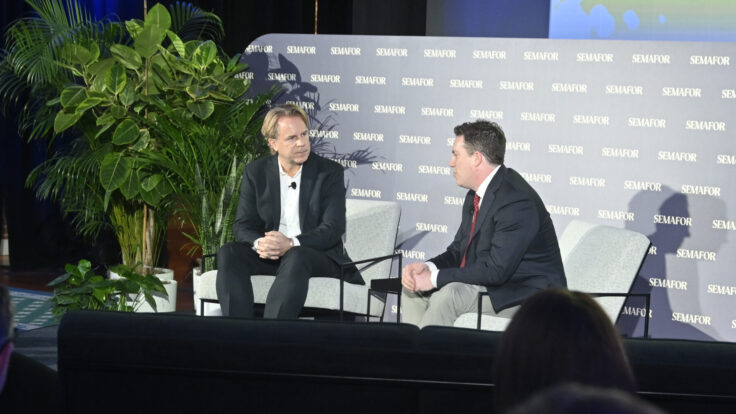
In our brief conversation, Nick suggested that his lack of traditional TV experience was part of the appeal. “You can’t necessarily have an insider change an institution from the inside, because they don’t know how to look at it from a different perspective,” he said. “Sometimes you need an outsider.” In a conversation with Semafor’s Max
Tani, Nick said he was undaunted by the task before him: “It’s not the slightest bit intimidating,” he averred. And if you know Nick, as I do, that confidence is genuine. While the guy has his quirks—the very Gen X black T-shirt and jeans look, the breadmaking, etcetera—he’s largely undaunted by the neuroses that afflict many journalists or the anxiety and occasional paranoia that consume many vainglorious television news executives.
Also, this bravado is part of the culture at
Bari’s CBS, where the mandate to modernize a declining linear product has become a catch-all justification for bold changes, regardless of whether or not the executives in charge actually have the credibility to implement them. Of course, this is a leitmotif of this transitional era in media, from Will Lewis’s “People are not reading your stuff” to Mark Thompson’s critique of CNN’s “old-fashioned and unadventurous feel” to Bari’s own “We are not
producing a product that enough people want.” Should Nick’s foray into TV news go awry, his own remarks may join this callow pantheon, right beside a sweaty Chris Licht’s memorable fortune cookie–style professional suicide note: “Zucker couldn’t do this shit.” |
In the meantime, Bari’s latest move is yet another Rorschach test. Her supporters champion her
moxie and believe she’s saving 60 from future linear wreckage. Her detractors fear that she’s suddenly undermined the one TV news show that didn’t need saving. In the end, both sides have a point. Yes, even the most successful news show can’t endure without multiplatform innovation. At the same time, risking the reputation of the brand itself complicates the effort.
Amid this overhaul, Bari has lost Anderson Cooper and fired Sharyn Alfonsi and
Cecilia Vega—all three of whom made their discontent known on the way out—as well as E.P. Tanya Simon and executive editor Draggan Mihailovich. Nine million people watch 60 Minutes. But, in the Bari era, far more are now familiar with the controversy surrounding her leadership.
So… why did she hire Nick? Even if you accept the need for bold product innovation at 60 Minutes, it’s hard to grasp how a former columnist with
IMDb credits fits the bill. Nick’s additional bona fide is that he’s a name-brand journalist and likeminded friend of Bari and her partner Nellie Bowles from their L.A. days, which calls to mind David Zaslav’s decision to tap Licht as C.E.O. of CNN because he knew him from his Hamptons garden parties. While Bari and Nick don’t really have overlapping politics, one assumes that they probably have fairly aligned views of traditional media and its denizens, as well
as a mutual impish delight for pot-stirring.
But the Nick hire also illuminates some larger themes of the late-stage linear era. One of the inherent conundrums of this age is that the historically qualified executives either no longer want these jobs at the revised salaries or, alternatively, can’t persuade the new principals that they’re sufficiently qualified to lead amid profound change. Nick, on the other hand, was seduced by a chance to return to the industry and make solid comp.
“There was no part of me that wanted to come back to journalism,” he told me during our conversation. “But when Bari approached me about it, I couldn’t get it out of my head.”
Nick told me that his true contribution to 60 Minutes would come from his ability to leverage new platforms to expand the brand’s influence beyond one hour on Sundays, where it has been “underutilized,” in his words. This will include new digital programs, podcasts, and social-ready content. “There are 100
people at CBS who know broadcast,” he said. “I know how to tell stories in every different format.” That may be true, but there’s scant evidence to suggest he knows how to tell stories on these platforms any better than other journalists with a mic and an iPhone—let alone evidence that he’ll be able to wrangle TV egos, navigate production schedules, and lead the old broadcast folks to their multiplatform salvation. But he does seem to know what Bari wants, and that counts for something these
days. Anyway, that’s what the money is for.
On some level, this was obviously an intentionally destabilizing hire—a sign that leadership views institutional prestige and modest ratings growth as wholly insufficient in an increasingly fragmented media environment. And, to be fair, they’re probably right. But media is not software, Larry’s native terrain. It’s a deceptively simple business built atop often complex, endorphin-driven, and frequently challenging creative
people.
Arguably, Nick’s greatest asset is that he’s one of those people. Like many talented journalists, he’s instinctive, aggressive, suspicious of concentrated wealth and power, deeply thoughtful, and—it has yet to be noted—has been extremely critical of Trump in his journalism. But he’s also a creative who has never had to architect a vision beyond his own output and workload—his own story or book or film. In truth, the performance management, operational drudgery,
commercial considerations, and day-to-day mechanics of TV can be handled by others. But the real challenge will be imposing the creative instincts that fueled his own success onto an entire institution, which requires a far different skill set. And of course, being a tech journalist is not the same thing as being a technologist. Nick started his media career in the Times’s R&D lab, but he has never overseen step-function transformation at scale inside a major public company.
In
many ways, Nick’s challenge is a microcosm of Bari’s own: He’s stepping into a heavily scrutinized and politically charged arena with a lot of certainty and no operational expertise. I don’t begrudge him for taking the leap. But it may have been smarter to feign humility, get to work, put some points on the board, and then start talking a big game. Instead, he’s made a tall order even taller. But I’m sure he’s already gotten an earful about this from observers and agents
and trouble-starters, and it won’t be the last time. Welcome to the business, Nick! |
|
|
|
Puck fashion correspondent Lauren Sherman and a rotating cast of industry insiders take you deep behind the scenes of
this multitrillion-dollar biz, from creative director switcheroos to M&A drama, D.T.C. downfalls, and magazine mishaps. Fashion People is an extension of Line Sheet, Lauren’s private email for Puck, where she tracks what’s happening beyond the press releases in fashion, beauty, and media. New episodes publish every Tuesday and Friday. |
|
|
|
A professional-grade rundown on the business of sports from John Ourand, the industry’s preeminent journalist,
covering the leagues, players, agencies, media deals, and the egos fueling it all. |
|
|
|
Need help? Review our FAQ page or contact us for assistance. For brand partnerships, email ads@puck.news. You received this email because you
signed up to receive emails from Puck, or as part of your Puck account associated with {{customer.email}}. To stop receiving this newsletter and/or manage all your email preferences, click here. |
Puck is published by Heat Media LLC. 107 Greenwich St., New York, NY 10006 |
|
|
|
|