Greetings from Los Angeles, welcome back to In the Room, and L.M.F.G. Knicks! Game 6 tips off Saturday night at 8 p.m. ET. Elsewhere in the wide world of sport this weekend: the French Open, the Spanish Grand Prix, and the Champions League Final. My focus, however, will be on Saturday night’s FIFA Club World Cup play-in match between LAFC and Club América, which will earn the winner $9.55 million—the biggest purse in the history of North American soccer—and the final ticket to what is poised to be the greatest tournament in global soccer. Alas, you’ll need to sign up for DAZN to watch.
In tonight’s issue, news, notes, and ruminations on the fate of Business Insider, which this week laid off a staggering 21 percent of staff as part of its ongoing effort to both mature as a business and outrun the external threats to its model. Of course, B.I.’s struggle is evocative of a broader transformation in the media industry, and one that may ultimately be for the best. Most brands are shrinking or right-sizing not only to become more efficient, but also to become better.
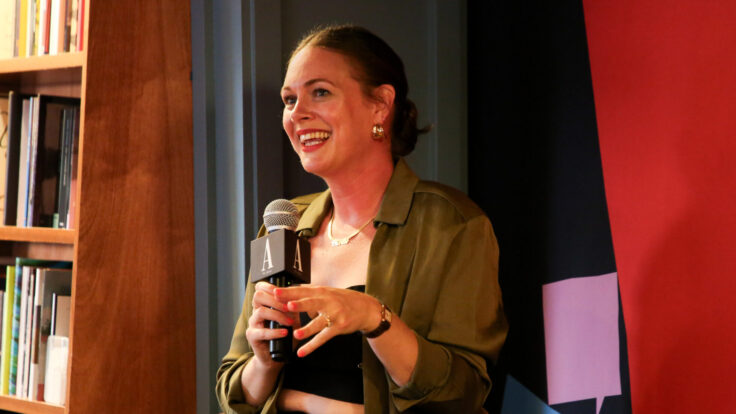
🍸 Plus, on the latest edition of The Grill Room, Julia Alexander and I reunite to reflect on the success of Inside the NBA, dissect the motives behind YouTube’s brazen poaching of Disney’s Justin Connolly, and debate whether Disney’s strategic acquisition of Cocomelon can help the business reclaim its former prominence in the preschool content space. Follow The Grill Room on Apple, Spotify, or wherever you prefer to listen.
Also mentioned in this issue: Shari Redstone, Mathias Döpfner, Matt Murray, Kenny Lerer, Barbara Peng, Wendy McMahon, Henry Blodget, Bill Owens, Nich Carlson, Joe Weisenthal, Jamie Heller, and many more…
Let’s get started…
|
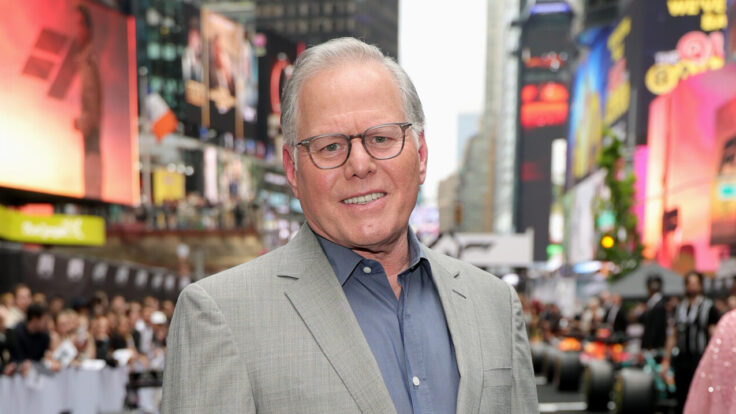
- Shari’s shareholder problem: While representatives for Paramount and Trump remain at an impasse over settling the president’s lawsuit against 60 Minutes—Paramount is reportedly offering $15 million, Trump wants at least $25 million—Paramount’s board and leadership remain fearful of the potential shareholder retaliation over their willingness to settle such a blatantly meritless lawsuit in order to win approval for Shari Redstone’s Skydance deal. Months ago, the Journal’s Jessica Toonkel flagged the concerns of directors and executives over exposure to liability for bribing a public official, as well as anxiety that such settlements would not be covered by their corporate insurance. In recent days, sources close to the company have stressed to me that these issues continue to plague the negotiations, and could conceivably run out the clock on the deal’s July 6 deadline—an existential crisis for Shari, who, as I’ve noted, really needs this deal.
- California v. Paramount: On a related note, Semafor’s Max Tani reports that the California State Senate has invited recently excised CBS News C.E.O. Wendy McMahon and 60 Minutes executive producer Bill Owens to testify in their own inquiry into whether Paramount has already violated state laws against bribery and competition—which gives you a flavor of what’s to come.
- Trump’s ‘anguish’: And finally, the president’s lawyers have argued in court papers that their client suffered “mental anguish” as a result of CBS’s editing of the 60 Minutes interview with Kamala Harris, and that his status as a “content creator” was damaged by the attention given to the interview. Yes, it’s okay to laugh; it’s also okay to cry.
|
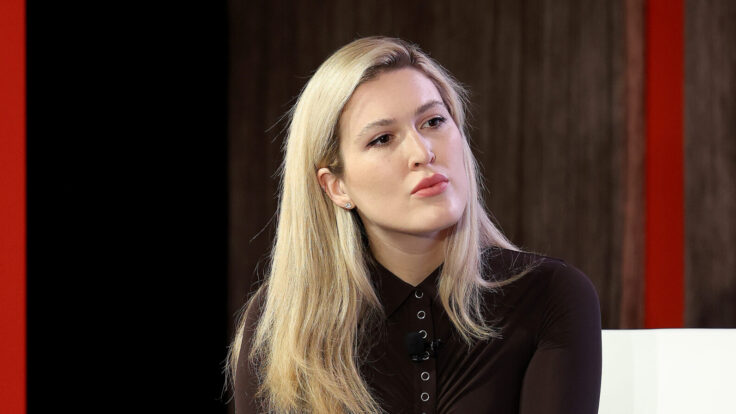
Finally, here’s a taste of Julia’s Inner Circle–exclusive reporting on the budding Disney-YouTube war…
|
|
|
 |
Julia Alexander |
|
- Can Disney outrun YouTube in live sports?: These days, YouTube haunts the hallways of Disney, from Burbank to Hudson Square, and for very good reason. The video platform has doubled its share of total TV minutes watched in the U.S., to more than 12 percent, while Disney+ and Hulu combined have hovered between 5 and 6 percent. So it was hardly a surprise, last week, when Disney unleashed the legal hounds after Justin Connolly, its former head of distribution partnerships, announced that he was decamping to YouTube to lead the company’s sports media business.
Live sports is the final frontier of legacy media—and it’s also the turf that YouTube most wants to seize. The company recently hired the NBA’s Jen Chun to run its YouTube TV business; announced a deal to broadcast the NFL’s São Paulo game globally on its main video platform; and agreed to pay $2 billion annually for Sunday Ticket exclusivity some two years ago. At the moment, YouTube is talking with MLB teams over prospective game packages. It was even a low-key frontrunner in the recent NBA negotiations.
Connolly’s recruitment was simply the most explicit signal of YouTube’s ambitions. And what stings Disney most here isn’t that he was beloved. (Connolly was once a contender to run ESPN, before the job went to current chairman Jimmy Pitaro.) It’s the fact that YouTube is pursuing a larger, more well-capitalized version of ESPN’s own playbook—it wants to be the nexus in a heavily fragmented space.
A remarkable 53 percent of sports fans in the U.S. say that streaming has made it too complicated to watch their favorite teams, according to a 2024 YouGov poll, and far too expensive to watch live sports. In order for YouTube to become the preeminent hub for sports, the company needed a connected executive to bring in more exclusive rights and partner with individual and niche streaming services across YouTube TV and YouTube Primetime Channels. And now they’ve got their guy. [Read More]
|
|
|
|
News and notes on the bloodletting at Business Insider, Henry Blodget’s Web 2.0 darling, which may finally close the chapter on one of the more vexing eras in media history—right in time for the next one.
|
|
|
|
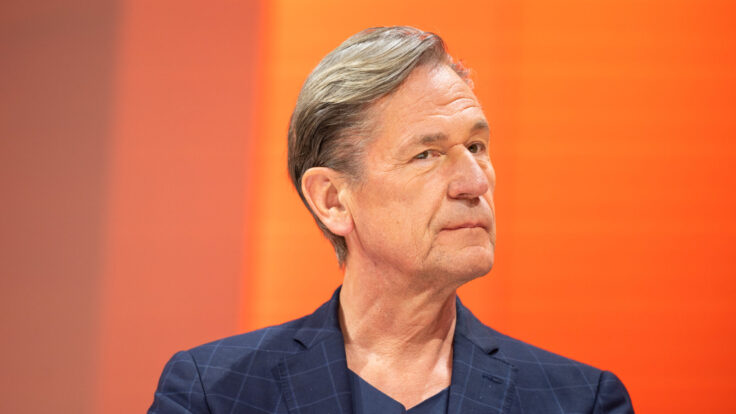
On Thursday, Business Insider, the Millennial-hued business news operation owned by Mathias Döpfner’s Axel Springer, announced that it would lay off more than one-fifth of its staff and attempt to diversify its revenue streams through subscriptions, events, and A.I. licensing—a significant and jarring, step forward in the parent company’s years-long attempt to both mature the business and outrun the external threats to its model. In a memo, C.E.O. Barbara Peng framed the moves as essential, if not existential, to B.I.’s long-term health. “Our strategy is strong,” she wrote, “but we don’t have the luxury of time.” Internally, employees understandably grieved on Slack, and the union issued predictable recriminations against the leadership over its “strategic failures.”
At the macro level, of course, the news was dramatic, if unsurprising. B.I. was not only the darling of the Web 2.0 era—Axel acquired it a decade ago, at the height of the market, for nearly $500 million—but one of the age’s lone credible survivors. A denuded BuzzFeed has languished on the cusp of being delisted ever since its I.P.O., and erstwhile enthusiasm about its ambitions now seems like carnival barking from a deranged past. Fellow travelers Complex and HuffPost are shingles on its dying corpus. Vice has been taken to the chop shop. The Daily Beast, which no one wanted to buy, has landed in the hands of last-gen operators without much of a plan for a subscale site with brand challenges. Hulk Hogan atomic leg-dropped Gawker out of existence. And then there is B.I. and Politico, Axel’s baby in D.C.
Business Insider’s vulnerabilities were obvious and hardly unique. The business overindexed on search and social referrals, and is now scrambling to compensate for Google and Meta’s own strategic pivots (yes, we’ve seen this movie before). In Google’s case, that includes the integration of Gemini A.I. into search, which summarizes information so that users don’t have to click through to an actual website—a simple update that will soon become a meteorite-level euthanizing event for many publishers. In her memo, Peng noted that 70 percent of B.I.’s business “has some degree of traffic sensitivity. We must be structured to endure extreme traffic drops outside of our control, so we’re reducing our overall company to a size where we can absorb that volatility.”
|
|
Of course, every news company is exposed to traffic sensitivity and feeling some degree of pressure from the tech platforms’ changes. But B.I.’s exposure on his front was also the result of a meandering strategy and brand creep. The B.I. that Axel acquired from Henry Blodget, in 2015, was a scrappy, irreverent, and occasionally provocative site that, in the Gawker era of the internet, managed to capture audience by joyously rebelling against the stuffy sophistication of its legacy forebearers.
After Blodget passed oversight of the newsroom to his protégé Nich Carlson two years later (while staying on as C.E.O.), the lack of sophistication became a glaring vulnerability—less impressive writers; less intriguing copy; and a grating, chip-on-the-shoulder posture, often manifested in cancel-culture hit pieces blatantly seeking scalps. Meanwhile, the rest of the industry caught up with its tactics.
Most disastrously, in 2021, B.I. made the decision to rebrand as “Insider” and broaden its focus to general-interest news and lifestyle content. In the process, it became a bloated clickbait factory overdependent on third-party distribution and revenue—a fact that the Trump 1.0 traffic surge and Covid’s disruption only temporarily concealed. By the time Google started tweaking its algorithms and the industry began reckoning with the real implications of A.I., it was clear to everyone in Berlin and New York that B.I. needed a full-scale rehabilitation—and maturation—stat.
And yet, in so many ways, these issues were present from birth. Unlike Politico, which was founded on a cornerstone of journalistic credibility, Business Insider’s editorial conceit always seemed like a ruse—it was founded, after all, by definitional outsiders. And while Web 2.0 investors like Kenny Lerer used to tour the circuit discussing how Millennial consumers were going to trade in the likes of the Times for BuzzFeed, the precise opposite happened. Over the years, B.I.’s top talent would depart, often for more august sinecures—Joe Weisenthal to Bloomberg; Peter Kafka to Kara Swisher’s Recode (though he eventually returned); Natasha Bertrand to Politico and then CNN, etcetera.
|
|
In 2023, Axel re-rebranded the site as Business Insider, restored its focus on business and tech news, and promoted the well-liked and acerbic Peng to C.E.O. Blodget was kicked upstairs and would eventually exit for the pastures of Substack. In the process, Axel articulated a new vision for the site as a sophisticated business publication for high-value audiences—in essence, a lower-tier version of the Journal or FT, the latter of which Mathias had long wanted to acquire. The next year, they hired Jamie Heller, the Journal’s business editor, and appointed her editor-in-chief. All smart moves, at least on paper.
In an ideal world, Mathias would like B.I. to be as formidable in the business community as Politico has long been in politics—which would fuel his larger ambition of establishing Axel Springer as the leading news organization for the transatlantic democratic world. The reality, however, is that not only may it be too late, but few newsroom leaders are up to that challenge in an age defined by insurgents, attacker brands, individualism, and authenticity.
Blodget and Carlson may have been flawed journalists and limited visionaries, but they at least loved and forged the joint. Heller’s imprint is undetectable, sans the shrinking of the organization. Her tenure seems likely to mirror Matt Murray’s at The Washington Post—a probably-not-first-choice yet undeniably able custodian of someone else’s problems. I’m sure she’ll give it her best college try, but the solution for both businesses is almost certainly continued cost-cutting followed by complementary acquisitions.
Whatever the case, the economic pressures and the renewed focus suddenly rendered a lot of B.I. staff inessential—reporters on non-core beats, an entire e-commerce team that no longer drew traffic, etcetera. In recent years, B.I. has laid off 8 to 10 percent of staff annually. This time around, it decided to get aggressive and rip off the Band-Aid. And despite all the pain, there is a logic to it—necessary savings, volatility tolerance, more money to invest in new business initiatives and more essential reporting, etcetera. But the real anxiety here isn’t just the layoffs. It’s the fact that the success of B.I.’s new strategy is by no means guaranteed. And, in that regard, it finds itself in ample and august company.
Without sounding hysterical, this industry is obviously passing through a stage in which most brands are shrinking or right-sizing not only to become more efficient, but also to become better—to excise the garbage content, clickbait, and fatuous schlock they were hooked on. The parallel calamity of Vanity Fair is a useful juxtaposition. A half-generation ago, the brand made hundreds of millions of dollars by publishing a couple dozen largely beloved pieces per month. And then the compounding anxieties of scale and mobile forced it to loosen its identity and go whole hog on TMZ fare, like the poop cruise and the missing Malaysian airliner. Can its brand power be revived in the post-post-Graydon era? You know that answer as well as I do.
At the heart of this transformation, perhaps, is the reality that news media at scale may have been a collective fiction. In the platform age, consumers create their own content mixes, usually based on trusted or affinity-aligned sources. The very notion of a newsroom—a one-stop, always-on bodega of information spanning politics to sports, manned by hundreds of people throwing pencils in the ceiling—now seems as anachronistic as a landline.
The Times has wended its way through this jittery reality by trying to hire trusted opinion voices and highlighting its top reporting stars with vertical video montages. CNN has professed a similar-ish plan, albeit with stagnated execution. Once upon a time, The Washington Post did the same—before it collapsed under the weight of its own cannibalizing self-hatred. And so the task for Business Insider seems all the more daunting. Years of fire-hose content production has left it devoid of stars and an identity worth reviving. Its brand credibility isn’t on par with the Journal or Bloomberg or CNBC—or even Axel’s own Morning Brew. And yet because of the knock, not in spite of them, Peng has a chance to create the most inspiring turnaround playbook of her generation.
|
|
|
|
Puck sports correspondent John Ourand and a rotating cast of industry insiders take you inside the executive suites and owners boxes where the decisions that shape the entire sports business are made. You’ll hear interviews with players, network execs, and everyone in between. The Varsity is an extension of John’s private email for Puck by the same name. New episodes publish every Wednesday and Sunday.
|
|
|
|
Unique and privileged insight into the private conversations taking place inside boardrooms and corner offices up and down Wall Street, relayed by best-selling author, journalist, and former M&A senior banker William D. Cohan.
|
|
|
Need help? Review our FAQ page or contact us for assistance. For brand partnerships, email ads@puck.news.
You received this email because you signed up to receive emails from Puck, or as part of your Puck account associated with . To stop receiving this newsletter and/or manage all your email preferences, click here.
|
|
Puck is published by Heat Media LLC. 107 Greenwich St, New York, NY 10006
|
|
|
|