Greetings from the San Juan Islands, and welcome back to In the Room. I’m Dylan
Byers.
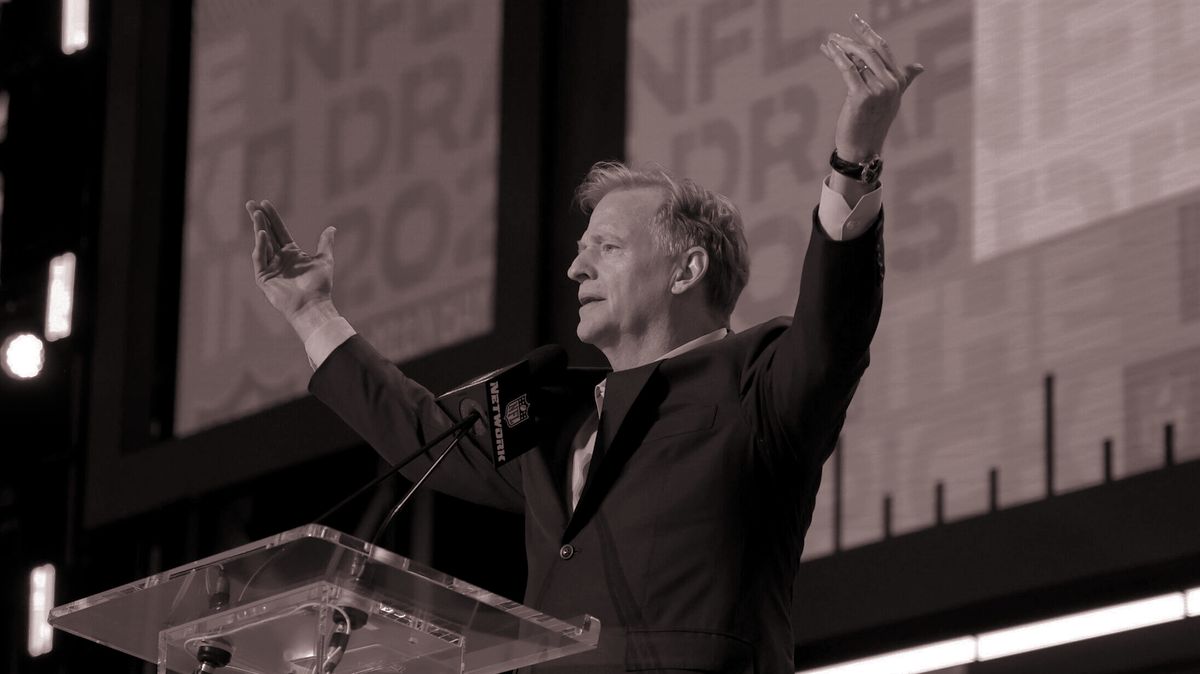
Getting into cell range up here requires a brief walk down to a cove—one of the island’s many perks—which is where I happened to find myself when The Wall Street Journal broke the news that OpenAI was acquiring TBPN, the tech-bro chat show helmed by friends-of-the-email John Coogan and Jordi Hays. I was out of pocket when my partner Matt Belloni broke the news that Jeff Shell
had started to negotiate his exit from Paramount. (We saw that coming a month ago, of course.) Add the leadership handoff at Politico, which I discussed in the previous email, and it’s been a very busy
week in media. I’ll unpack it all when I’m back in Los Angeles next week.
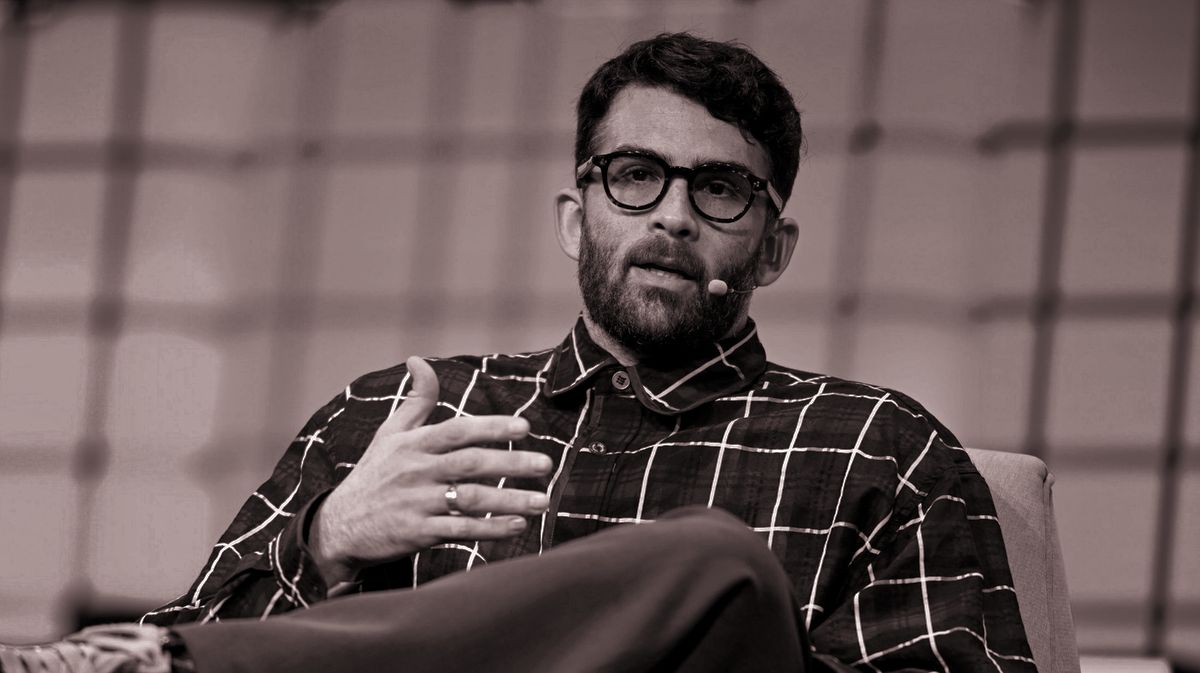
In the meantime, my partner Julia Alexander is here with some early reactions to the OpenAI–TBPN deal and a deep dive into the business of Hasan Piker, the polarizing leftist Twitch creator who has mastered the art of monetizing attention.
Mentioned in this issue: Hasan Piker, Sam Altman, Dario Amodei,
Mark Zuckerberg, Charlie Kirk, Jim Bankoff, Rachel Maddow, Pat McAfee, Jordan Peterson, Jonah Peretti, Pablo Torre, Jim Cramer, Shane Smith, David Frum, Reed Duchscher, Tucker Carlson, Ezra Klein, Brian Morrissey, Gavin Newsom,
Ro Khanna, Lawrence O’Donnell, and many more…
Take it away, Julia… |
-
TBPN’s exit ramp: Last December, I was having drinks with a prominent media investor who told me there are two types of founders: those who know when to sell and those who don’t. I think about this a lot, having come up amid the staggering valuations and missed opportunities of the Jim Bankoff–Jonah Peretti–Shane Smith era of digital media. Today, Vox Media is struggling to maintain its websites while reportedly trying to
off-load its podcast business to Versant; BuzzFeed is a penny stock; and Vice has been taken over by its lenders.
I recalled this investor’s philosophy again last week when listening to TBPN’s Jordi Hays and John Coogan explain their decision to sell their burgeoning tech media company to OpenAI. There’s been a lot of commentary—an unsurprising mix of grumbling, praise, and envy—about what the deal could mean: Is OpenAI getting into the media business? Will TBPN still
do interviews with guests like Mark Zuckerberg or Anthropic’s Dario Amodei? And with TBPN’s advertising business shutting down, what’s really in it for OpenAI, beyond Sam Altman’s ability to control an outlet and dispense pro-A.I. propaganda? OpenAI’s position is still pretty cloudy, but Hays and Coogan’s is not.
|
Speaking of TBPN and new media… |
|
|
|
In a media economy increasingly oriented around fandoms rather than scale, the
controversial leftist Twitch commentator may offer a model for slumping TV news brands in desperate need of adrenaline. |
|
|
|
This past week, The Atlantic’s David Frum injected a seemingly remarkable
statistic into the increasingly heated discourse over the perceived popularity of Hasan Piker, the far-left political commentator and unsparing critic of Israel who streams himself talking for hours on Twitch, a platform most commonly used by video gamers. Piker, of course, had recently become a fierce subject of debate in Democratic politics following a series of more-mainstream appearances—campaigning for progressive candidates, landing glossy magazine profiles, and being
interviewed on CNN this week about his trip to Cuba. (A day earlier, Jake Tapper had convened a panel to discuss Piker’s “checkered” past.)
Eager to put some distance between Piker and the Democratic brand, Frum claimed that “on a normal night, MS NOW’s primetime audience of roughly 900,000 is about 25 times larger than Piker’s typical concurrent stream of 36,000.” His point: The “cringe wine moms” watching Chris Hayes, Rachel
Maddow, and Jen Psaki vastly outnumber the people paying attention to a guy who’s been accused of antisemitism (which he has consistently denied) and said America deserved 9/11. Clearly, Frum would like to keep it that way.
Yet Frum’s wishful thinking about the nature of influence in the current media environment misses the point. Yes, it’s true that Piker isn’t a household name—as my colleague Peter Hamby recently reported, about 43 percent of
Americans under 30 have never heard of Piker, compared to the 41 percent who don’t recognize Jordan Peterson’s name or the 22 percent who don’t know Erika Kirk. But these days, we live in a fragmented attentional marketplace, where fandoms carry much more cultural weight than whichever Equinoxes or airport bars have cable news playing in the background. That might not translate to advertising dollars, as Piker’s manager, Reed Duchscher,
acknowledged on our Grill Room podcast back in February—the material is far too controversial—but it does support a large and growing subscription product with low churn.
Of course, it’s impossible to directly compare Nielsen ratings to Twitch streams, or New York Times subscriptions to whatever method Elon uses to measure
“engagement” on X. But there’s a reason fewer people these days seem to care about Jim Cramer than they do Jordi Hays and John Coogan, whose TBPN was just acquired by OpenAI—even though the Mad Money stalwart has about twice as many viewers on TV alone. We’re living in an era where multiplatform creators like Piker, Tucker Carlson, and even Ezra Klein have largely eclipsed their
institutional forebears.
The tectonic shift is everywhere you look: ESPN’s deal with Pat McAfee; the Times’s licensing of Pablo Torre; MS NOW’s new arrangement with the Pod Save guys; Fox’s acquisition of Red Seat Ventures to get back into business with Tucker, O’Reilly, and Megyn Kelly. Indeed, as declining legacy media brands seek new ways to regain their relevance, it seems everyone is
racing in the same direction. |
As the distinctively Gen X publishing philosopher Brian Morrissey noted the other
day in his newsletter, The Rebooting, media executives are increasingly thinking about “fandoms, not randoms” as the defining ethos of the post-scale, engagement-centric era. Part of the reason respectable Democrats like Gavin Newsom, Rahm Emanuel, and Ro Khanna have expressed their willingness to appear on Piker’s livestream despite his occasionally radioactive reputation is because they believe a 30-minute Zoom into his home
office will be more impactful than yet another cable news hit, where perhaps only a tenth of the audience is in the 18-54 demo—and because they’d be reaching a swath of the electorate that wouldn’t be caught dead watching Anderson or Lawrence O’Donnell.
There’s also a parasocial dimension: According to Pew research, about 70 percent of adults under the age of 30 who consume news primarily through influencers say that those creators are better than
traditional media at helping them understand news events and civic issues. Last week, the Reuters Institute’s Digital News Report noted that “the past decade has seen a broad shift across digital platforms toward greater personalization,” adding that “young people are therefore increasingly accustomed to media environments tailored to their individual preferences.” That personalization is now inextricably linked with authenticity—a hallmark of this era of the industry.
Digital
communities matter, too. Where Twitch and YouTube allow for real-time debates and raw discussion, those features are nonexistent on TV and basically moderated to the point of nonexistence on the Times. Platforms like Twitch leverage those network effects to help creators sell subscriptions and merch, and to generate organic growth, like when subscribers “gift” subscriptions to other viewers.
Obviously, it’s not easy for legacy media outlets to re-create that magic formula from
scratch, and there’s understandable anxiety about leaning into third-party distributors following Facebook’s “pivot to video” moment. Still, there’s no fighting the future, which is partly why so many of them are cutting deals with content creators to tap into their audiences. The Reuters Institute report also found that 86 percent of Gen Z stumble across news content incidentally rather than intentionally—mostly via clips, and almost always through digital creators, who inhabit a Hobbesian
information ecosystem in which the most provocative (and most authentic) voices are most likely to break through the noise.
The best creators understand this: Piker, for example, was open to debating the late Charlie Kirk not just because it made for good programming, but because a single long debate with the provocateur could be broken down into shorter video clips that dominate algorithmic feeds—potentially winning new subscribers. (Kirk, too, was a master of this
form.) Traditional cable networks still struggle with turning this kind of programming into long-term loyalty. Just yesterday, after the Journal scooped the TBPN–OpenAI deal, Hays and Coogan jumped onto their daily livestream while superfans—distinguished with their purple-crown badge icon on YouTube—were already discussing the potential fate of the show in the comments sidebar. TBPN’s fame arrived via viral clips on X and Instagram, but its core business is
propelled by its most loyal fans on YouTube, which provides the interactive features that cable still can’t match.
There are lessons here for the legacy players, especially as we barrel toward a world in which the boundaries between TV and YouTube start to blur. Incumbents need to find ways to redefine themselves on digital platforms like YouTube and Twitch, in part by hiring younger digital talent who aren’t as secondary or subservient to the master brand. That may require a
wholesale rethinking of how brands like MS NOW are structured—from representing a single corporate identity to functioning as a sort of “house” of brands. Fox has already moved in this direction with its Red Seat deal.
That will inevitably invite tensions, as ESPN quickly discovered after partnering with McAfee—a live wire who isn’t beholden to the corporate overlords in Bristol, or afraid to flex his independence. But the McAfee model works: A significant portion of viewers who
tune into The Pat McAfee Show every day from noon to 3 p.m.—the audience that spends additional cash to comment on McAfee’s livestream and participate in his community—aren’t ESPN diehards. They’re McAfee stans. And they’re engaging with a version of ESPN that would’ve been unrecognizable a decade ago.
Soon, many declining linear TV networks will likely come to the same realization: The next generation of audiences aren’t going to just find them on old channels.
Instead, brands need to get out of their comfort zones and convert new audiences by competing in the places where they’re actually spending their time, and partnering with the sorts of creators they actually follow—even if it means making deals with guys like McAfee… and Hasan Piker. |
|
|
|
A professional-grade rundown on the business of sports from John Ourand, the industry’s preeminent journalist,
covering the leagues, players, agencies, media deals, and the egos fueling it all. |
|
|
|
Join Puck’s chief political columnist, John Heilemann, as he roams the corridors of power and influence in America on
this twice-weekly interview show, taking you beyond the headlines with the people who shape our culture: icons and up-and-comers, incumbents and insurgents, moguls and machers in the overlapping worlds of politics, entertainment, tech, business, sports, media, and beyond. The conversations are rich and revealing, unrehearsed and unexpected… and reliably impolitic. A Puck-Audacy joint, new episodes drop every Wednesday and Friday. |
|
|
|
|
|
DYLAN BYERS & IAN KRIETZBERG |
|
|
|
Need help? Review our FAQ page or contact us for assistance. For brand partnerships, email ads@puck.news. You received this email because you
signed up to receive emails from Puck, or as part of your Puck account associated with {{customer.email}}. To stop receiving this newsletter and/or manage all your email preferences, click here. |
Puck is published by Heat Media LLC. 107 Greenwich St., New York, NY 10006 |
|
|
|
|