Greetings from Las Vegas, welcome back to In the Room, and welcome to the weekend. Don’t forget to do something nice for mom.
In tonight’s issue, news and notes on David Zaslav’s impending cable spinoff and the existential crisis it poses for CNN—a once-formidable news network that has become all but irrelevant after three years in the WBD crucible. Plus, a preview of the forthcoming P.R. battle between Bidenworld and Original Sin co-authors Jake Tapper and Alex Thompson.
🍸 On the latest edition of The Grill Room, Gerry Baker, the Wall Street Journal columnist and former editor-in-chief, joins me to explore the paper’s critical approach to Trump’s economic and foreign policies—and its unique position as a Murdoch-owned, conservative-leaning media institution actually willing to challenge the White House. Follow The Grill Room on Apple, Spotify, or wherever you prefer to listen.
Mentioned in this issue: David Zaslav, David Ellison, David Faber, Rupert Murdoch, Jeff Zucker, Jake Tapper, Chris Licht, Mark Thompson, Alex Thompson, Alyssa Farah Griffin, Adrienne Roark, Mike Steib, Chris Meagher, and many more…
Let’s get started…
|
- The new ESPN: Disney has decided to name its flagship ESPN streaming service… drumroll… ESPN—the name I’d suspected they’d give it, since it includes everything ESPN has to offer: the live sports and programming that currently exists on linear as well as the additional content on ESPN+. In addition to obvious branding simplicity, my partner Julia Alexander has noted some other advantages, including an easier upsell strategy and merchandising approach. “Less clutter makes the uniform experience much more helpful in building healthier engagement no matter where people are watching,” she told me. “You could also make this argument for HBO as they all start to bundle with one another and negotiate display space in each other’s apps based on the value they bring to overall engagement.”
- Kushner’s Heat deal: While we’re in the wild world of sports, my partner John Ourand picked up a nice scoop: Last year Josh Kushner bought a small, sub-5 percent stake in the Miami Heat—an especially notable detail given how small the majority owner, Micky Arison, kept the ownership structure. Anyway, for Kushner and his wife, Karlie Kloss, who made a pandemic move to Miami Beach in 2020, that’s a shorter commute to the games than Memphis, where Josh used to have a 2.5 percent stake in the Grizzlies.
- The Fox News administration: President Trump has said he intends to appoint The Five co-host Jeanine Pirro as interim U.S. attorney for Washington—the latest turn of the well-worn revolving door between the White House and the conservative network. Not to be too tiresome, but a few obvious and relevant details: Pirro hasn’t held a law enforcement job in two decades and was a leading propagator of the false statements about Dominion Voting Systems that forced the Murdochs to cough up a $787 million settlement. But Godspeed.
|
|
|
|
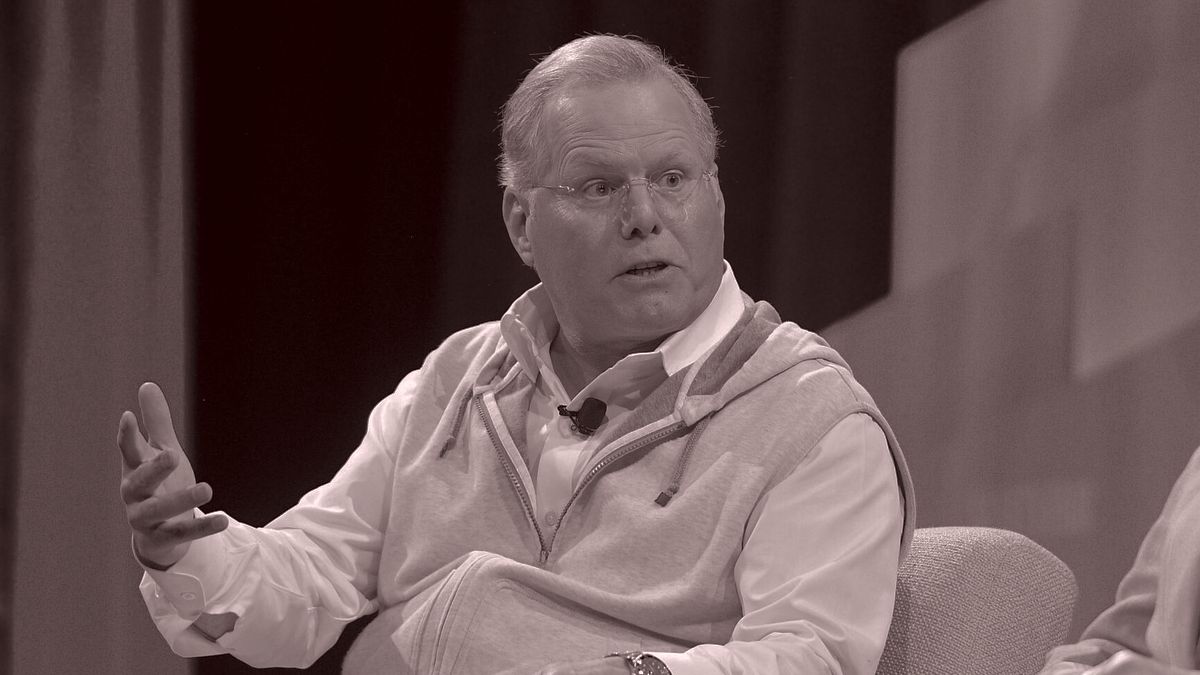
The latest news regarding Zaz’s desire to spin out his cable assets, including CNN, raises all kinds of existential questions for the iconic news network as it prepares to walk the plank. Plus, news and notes on Tapper’s battle with the Bidens.
|
|
|
When David Zaslav restructured Warner Bros. Discovery late last year, splitting his declining cable networks off from the growth-oriented streaming and studios business and the ever-prestigious HBO, the implications were self-evident. Officially, Zaz was “enhancing” WBD’s strategic flexibility and optimizing his TV business to drive free cashflow. But anyone with a rudimentary grasp of the industry’s trajectory, and WBD’s place in it, knew he was taking the first step toward spinning off the linear assets, just as NBCUniversal had done with MSNBC, USA, CNBC, Oxygen, etcetera—a portfolio now known as Versant—a few weeks earlier. “This was a big For Sale sign,” one veteran media executive told me the day it happened. Accordingly, WBD’s long-embattled stock popped 15 percent.
Five months on, Zaz appears to have advanced beyond the flexibility stage. On Thursday, David Faber, CNBC’s impeccably sourced C-suite whisperer, reported that Zaz was actively preparing the spin. “It’s become relatively clear to me from the many conversations I’ve had that we could get some sort of an announcement in the not-too-distant future that they are planning to try to split the company,” Faber said on Squawk on the Street. “What would that split look like? Well, most likely, or almost definitely, it’s the linear cable networks, and then you have the studio coupled with Max.” (On WBD’s earnings call, Zaz made a half-hearted attempt to uphold the optionality narrative: “We can move quickly if we decide to change,” he said.)
The fate of WBD’s new streaming and studios business post-spin is an open question, though there’s ample evidence to suggest Zaz will sell it sooner rather than later—perhaps to David Ellison, who is in the process of pushing his Paramount acquisition past the F.C.C. (Though it’s an open question whether he’ll have the stomach for an integration so soon after consummating such a high-wire deal.) Anyway, the fate of Zaz’s cable channels is… well, not great. As with Versant, it will likely only be a matter of time before Zaz’s SpinCo gets sold to a much smaller mediaco looking to buttress its sub fees, or to a private equity firm eager to expedite the value extraction, possibly in tandem with an operating partner. Few beyond the Warner lot will care who owns Deadliest Catch, of course, and now that Turner has forfeited its NBA rights, there’s really not much interest in the fate of that asset, either. The asset that does warrant some consideration here—at least for those who still harbor some hope for the future of journalism—is CNN.
|
|
As readers here well know, that once-formidable global news network has suffered a painful slide into near-irrelevance in the three years since Zaz took it over. Some of that was inevitable, given the broader decline of the cable business, but it certainly didn’t have to happen so hard, and so fast, as evidenced by the enduring success and influence of Rupert Murdoch’s Fox News—which, in a once unfathomable turn of events, more than doubled CNN’s ratings for Thursday’s new pope reveal. Previous CNN chiefs might have considered self-defenestrating over such an indignity.
During the Jeff Zucker era, before Zaz inherited CNN, the business was drawing record ratings, and earning more than $1 billion in annual profit. In reality, however, the dynamic was more complex: CNN had been struggling under Jon Klein and was susceptible to secular headwinds. But Zucker’s talent and the Trump moment ascended the business to unprecedented and perhaps artificial heights—much of which were undone during the Chris Licht administration. Zaz may have known that CNN, like his other cable networks, was challenged, but he nevertheless hired the most pedigreed C.E.O. on the market to fix such a challenge. He brought in Mark Thompson, an ostensibly brilliant digital turnaround artist, whose playbook proved either out of date or was simply applied too late.
Meanwhile, the well-paid producers and anchors did their own ignorant rain dance and pretended that irreversible technological and behavior shifts could be transcended. A lot of them reached out to Campbell Brown for career advice on life in the great beyond, too. Others blamed Zaz under their breath. But the truth is that there is plenty of blame to apportion. When this era of the media business is memorialized, it will feature a strange and abiding quirk: the intellectual dichotomy between the operators and investors who foresaw this day from the Klein period, and the practitioners who spoke in maths as their civilization declined.
Did it have to be this way? Was CNN always destined to be a crown jewel in a fading stand-alone cable portfolio—the modern corollary to, say, Time or Fortune when Jeff Bewkes sent Time Inc. off to the wild sea of the public markets as he prepared Time Warner for its adoption by the phone guys in Dallas? Presumably, had CNN maintained its Zucker-era influence while more aggressively navigating its digital transition, it might be a more appealing acquisition target. (Though Apollo or any of the big guys would have killed off CNN+ too…) But counterfactuals are impossible.
Instead, it’s likely that Zaz’s cable assets will hit the public markets with some debt attached, and it wouldn’t be surprising if they ended up in the hands of private equity, perhaps with a partner like Tegna or Cox. Looking out, it’s hard to fathom the justification of current salaries or resources, especially as the value of live broadcast fades, and younger generations engage with news via YouTube or TikTok or Instagram. As the network’s budgets shrink, smaller indignities will pile up: shittier offices, fewer perks, more clamoring for resources large and small, and then the emergence of unforeseen competitors with sharper focuses and fewer legacy burdens. One day, Kaitlan Collins will wake up and realize that she’s wasting her prime on cable and try to start her own Megyn Kelly–Tucker Carlson–Pat McAfee–style gig playing herself on a multiplatform mix of channels. At that point, the joint will presumably be run by careerist Mike Steib and Adrienne Roark types.
And while it can be hard to countenance such a depressing outcome for a brand that was once so dominant—the Coca-Cola of global television news, as it were—it is all but inevitable for a declining business with a massive cost structure that is trafficking a commodity, and not particularly well. CNN “will be orphaned, without any real investment or future,” one veteran media executive predicted. “I see no future for it.”
|
|
CNN’s existential crisis notwithstanding, the next several weeks will actually be relatively significant for the network. On May 20, star CNN anchor Jake Tapper and Axios correspondent (and network contributor) Alex Thompson will release Original Sin, their heavily hyped book about President Biden’s cognitive decline and the efforts by his family members and advisors to shield this reality from voters amid his failed 2024 reelection campaign. Risking hyperbole, the publishers at Penguin Random House call it “an unflinching and explosive reckoning with one of the most fateful decisions in American political history.” Heavy cake.
The release of Original Sin is poised to create something of a to-do, at least among the Morning Joe crowd and the insular, incestuous political-media establishment that you all know well. Most notably, it has scared the crap out of Bidenworld. For several weeks, Biden operatives have been backchanneling with members of the press—believe me—to try to cast aspersions on the book and its authors, offering intel from the former president’s aides and family members on background. This week, Politico reported that Biden had enlisted Chris Meagher, a former deputy press secretary and Defense Department spokesperson, to “help burnish his legacy”—an obvious euphemism for damage control, given that Jake and Alex’s book is certain to fuel the perception that Biden put personal pride before the fate of the Republic… which he did, but whatever.
On Thursday, Biden began his preemptive defense against Original Sin with an appearance on The View, which Meagher organized. Like his fateful performance at the first 2024 presidential debate, Biden exhibited a regrettable denialism of a cognitive condition that was readily apparent to anyone watching. Asked by Alyssa Farah Griffin to respond to “allegations” about his cognitive decline, Biden said the claims were wrong and unfounded, then struggled for a full minute to articulate that he had inherited a January 6 insurrection, a Covid pandemic, and “some basic issues,” before trailing off—at which point his wife, Jill, cut in and said, “The people who wrote those books were not in the White House.” The disconnect between Biden’s claim and the visible evidence was, frankly, staggering, and only built more heat around the reporting project.
In any event, the desperation of the former president’s publicity tour will be matched in intensity by the self-promotion and sanctimony of the co-authors themselves—a strength for both, it’s worth noting. While accepting an award during the White House Correspondents’ Dinner last month, Alex plugged the book, chastised his contemporaries in the press for their failure to report on Biden’s cognitive decline, and stressed that the media bore some responsibility for the public’s declining trust. (He’s not wrong, of course, but it didn’t go over well.)
On Monday, meanwhile, he and Jake posted a sizzle reel of all the occasions in recent years in which they had addressed the issue of Biden’s age, health, or mental acuity. To their credit, both men outperformed the vast majority of their peers on pressing that issue. Nevertheless, their publicity tour is likely to test the patience not just of the Bidens, but of their fellow journalists as well, many of whom capitulated to the White House press shop.
With a little more than a week to go ’til pub day, Original Sin looms over the D.C. chattering classes like a missile waiting to drop, its impact as yet unknowable, since the publishers are forcing everyone who wants an advance copy to sign an N.D.A. Will it move the needle for CNN? In a cruel twist of fate, Jake and Alex’s publicists are probably far more eager to book the authors on The View and Morning Joe and the late night shows—arenas of diminishing influence that at least claim more sway with bookbuyers—than the network that pays them.
|
|
|
|
Puck sports correspondent John Ourand and a rotating cast of industry insiders take you inside the executive suites and owners boxes where the decisions that shape the entire sports business are made. You’ll hear interviews with players, network execs, and everyone in between. The Varsity is an extension of John’s private email for Puck by the same name. New episodes publish every Wednesday and Sunday.
|
|
|
|
Puck’s daily political newsletter from Washington on what’s really happening in this town, from the White House to the Pentagon to Capitol Hill, K Street, and the campaign trail.
|
|
|
Need help? Review our FAQ page or contact us for assistance. For brand partnerships, email ads@puck.news.
You received this email because you signed up to receive emails from Puck, or as part of your Puck account associated with . To stop receiving this newsletter and/or manage all your email preferences, click here.
|
|
Puck is published by Heat Media LLC. 107 Greenwich St, New York, NY 10006
|
|
|
|