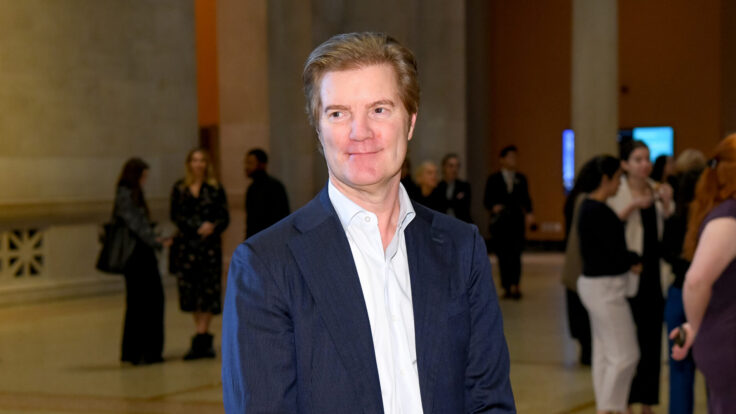
Greetings from Los Angeles, welcome back to In the Room, and welcome to the weekend. We’re entering a twilight zone stretch of the news cycle, where developing reports on the Israel-Iran conflict and the ICE raids will soon be obliterated by scores of stories relating to Jeff Bezos and Lauren Sánchez’s Wedding of the Century in Venice. Of course, it wouldn’t be a true Gilded Age without something so shamelessly opulent.
In tonight’s issue, news and notes on the Substack trend and trend pieces, as well as the career ambitions and compensation goals of journalists at this particularly transformative juncture in the news media.
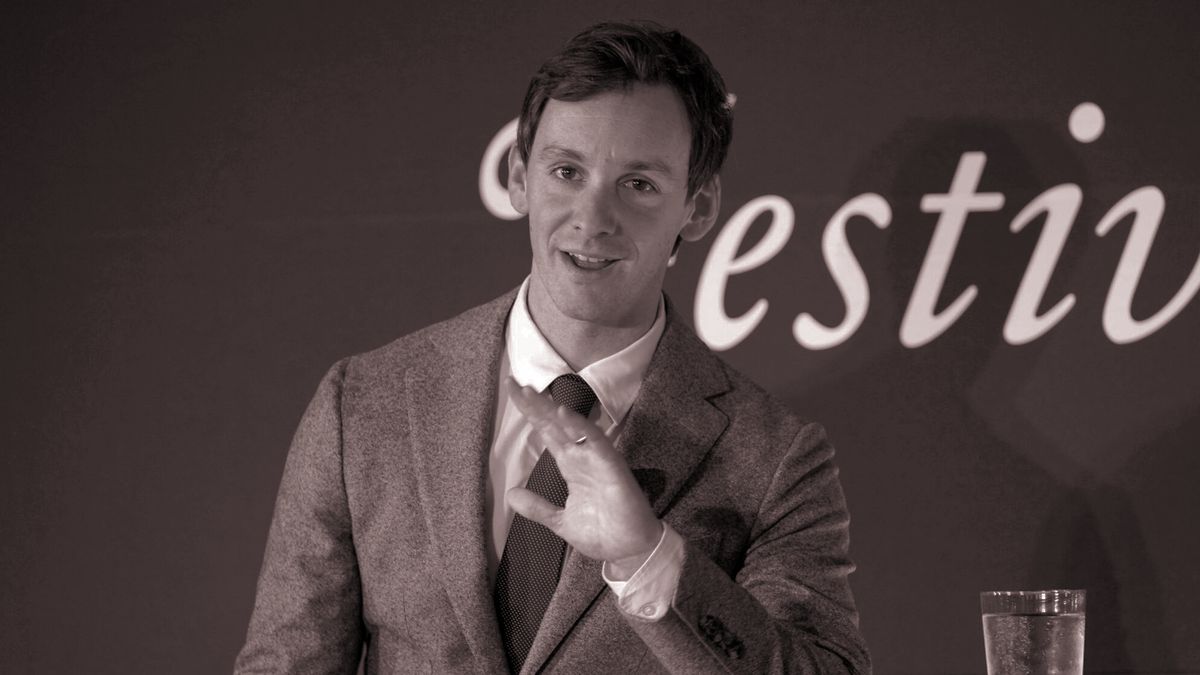
🍸 Plus, on the latest edition of The Grill Room, Julia Alexander and I ponder how YouTube has transformed the media business over the past 20 years: the proliferation of the creator economy, the amateurization of news, and whether Jake and Anderson should grab a microphone and ditch the suit. Follow The Grill Room on Apple, Spotify, or wherever you prefer to listen.
Also mentioned in this issue: Derek Thompson, Emily Sundberg, David Haskell, Oliver Darcy, the Post, Graydon, The Atlantic, Nick Thompson, Vox Media, Fox News, Charlotte Klein, Ashley Parker, Vanity Fair, Tim Alberta, Casey Newton, Bari Weiss, and Bryan Burrough’s rate card.
Let’s get started…
|
- Quote(s) of the week: “‘Crazy,’ ‘really crazy,’ ‘fucking crazy,’ ‘[t]ons of crazy,’ ‘so fucking cray,’ ‘bullshit,’ ‘bs,’ ‘bonkers,’ ‘kooky,’ ‘wacky,’ ‘bananas,’ ‘more than fantastical,’ ‘comic book stuff,’ ‘insane,’ ‘INCORRECT,’ ‘conspiracy theories,’ ‘ridiculous conspiracy theories,’ ‘a complete nut,’ ‘a bit nuts,’ ‘so nuts,’ ‘totally nuts,’ and ‘just MINDBLOWINGLY NUTS.’”—Fox News employees describing the network’s on-air claims about Smartmatic voting machines, from Smartmatic’s legal filing against the network.
- WaPo woes, cont’d: In yet another dismal data point for The Washington Post, print circulation for the paper has fallen below 100,000 for the first time in 55 years, per the Alliance for Audited Media. As the Washington City Paper notes, this is down from 250,000 just five years ago, “when the Post was one of the largest newspapers in the country by circulation.” Now, print isn’t the Post’s future—obviously—but it’s a blow to revenue nevertheless.
|
|
|
 |
Eriq Gardner |
|
- The YouTube-Disney battle, round two: The tug-of-war between Disney and Google over former ESPN executive Justin Connolly is heading to the replay booth. Earlier this month, a Los Angeles judge denied Disney’s bid to block Connolly from starting his new role as YouTube’s head of media and sports. Now, an appeal is underway.
The ruling from L.A. Superior Court Judge James Chalfant was certainly head-turning. Connolly, who spent two decades negotiating deals for ESPN, rising to president of platform distribution, re-upped with Disney just last year and was earning more than $6 million annually before Google lured him away with an even bigger title. While California strongly favors employee mobility, Disney believed it had the legal advantage, thanks to recent precedent validating so-called “fixed-term” employment contracts for a specified period. Connolly and Google pushed back, pointing to a clause that allowed Disney to terminate the contract at will. That, they argued, made it a one-sided agreement and rendered the noncompete unlawful.Judge Chalfant appeared to agree, finding that Disney hadn’t shown a likelihood of success on the merits and denying the injunction. But the fight isn’t over. The appeal now not only puts Connolly’s future at YouTube in question—just as the platform renegotiates its ESPN distribution on YouTube TV—but could also shape how freely media executives can jump to rivals in the streaming era. Disney will likely push for an expedited review.
|
|
|
|
Editorial salaries have been on a grim, steady slide since Graydon Carter gave up the reins—and the generous coffers—at Vanity Fair. But this week, news of The Atlantic’s hiring spree and the elusive promise of Substack riches has reporters following the money.
|
|
|
|
Earlier this year, on the occasion of the publication of Graydon Carter’s much-celebrated codex vitae, When the Going Was Good, one of his former staff writers, Bryan Burrough, published his own, less rose-tinted reminiscence of Vanity Fair’s halcyon days in the pages of The Yale Review. “As I look back today,” he wrote, “Graydon’s Vanity Fair does feel like some lost world, a gold-encrusted Atlantis ultimately inundated by economic and technological tsunamis, its glories only now being picked over by media anthropologists.”
Amid the nostalgia, the essay contained a fascinating data point. During his 25 years at the magazine, Bryan said he had been contracted to produce three articles a year, each roughly 10,000 words. At his peak, he was earning $498,141 a year, or more than $166,000 per story. These days, Bryan conceded, he would be lucky to receive $20,000 for a 10,000-word story. “People sometimes wonder why I don’t write more,” he wrote. “It’s a chore to explain that, at these rates, it is hard to get that excited.”
|
|
|
|
A MESSAGE FROM OUR SPONSOR
|
|
“The tone is as delightful as ever… It’s more like immersive theater than
reality TV”
|
|
“Traitors is taking reality competition to stylishly outrageous new levels”
|
|
|
Bryan’s piece came to mind this week after New York magazine’s Charlotte Klein published an article about the $200,000–$300,000 salaries that The Atlantic is now offering to top-tier hires, including nine émigrés from the embattled Washington Post. It was all slightly naive and yet nevertheless depressing: Klein was treating these low-six-figure salaries like aberrant pro athlete contracts. The piece, “Are You a $300,000 Writer?,” posited that the comp was both “extremely expensive” and possibly irrational. “It’s always nice to see people throwing money at journalism, but Jesus Christ, they’re throwing a lot of money, and I’m not sure how it’s sustainable,” one rival editor told her. And yet, she had a point: In a broken business where newsrooms have grown numb to perennial layoffs, this was arguably an auspicious sign of some sort.
The premise of the New York piece bemused many at The Atlantic, and across the industry more broadly. First, it seemed to betray the dispiriting
limitations of New York’s own salary structure, and perhaps the health of its parentco, Vox Media. It also laid bare the lowered expectations of an entire Gen Y and adjacent media class—Charlotte, her editor, New York editor-in-chief David Haskell, etcetera—who apparently look upon $300,000 a year as a ceiling, when, in fact, it should be the average. Indeed, the piece forgot to mention that most of the ex-Posties who took refuge at The Atlantic were already making around $200,000 or significantly more in their previous jobs, and may have simply taken a standard 10-to-15-percent transfer bump. (To my readers in the media C-suites, and in private equity—I’m sorry if these annual comps are giving you panic attacks.)
The larger point is that these salaries aren’t arbitrary—they’re a reflection of an economic strategy that, at least by the standards of a low-margin media business, actually appears to be working. The Atlantic, which happens to be owned by a billionaire, is also now profitable. I was told this week that the company is approaching 1.4 million subscriptions (officially, the magazine touts more than 1 million), though many of those are presumably being sold at pennies on the dollar, albeit with a status-defining tote bag.
Atlantic C.E.O. Nick Thompson, an editor by training who has remodeled himself as the sort of quant who obsesses over paywall structures, understands these unit economics, and has run the models that justify paying Tim Alberta and Ashley Parker for work that consumers will slap down a credit card to read. In this new strategy, of course, certain writers—when deployed correctly—become infinitely more valuable, while many more see their value plummet, especially with A.I. starting to eat away at the industry. Nick might not want to say that out loud, and Charlotte may not have explicitly articulated that point in her piece, but it’s the truth, and they both know it—or at least, they should.
|
The Substack Juxtaposition
|
|
On Friday, in a fitting coda to the week, Atlantic staff writer Derek Thompson announced that he was leaving the magazine after almost 17 years to join… Substack. In his telling, he was leaving not out of any spite toward his employer—no one asked him to disclose his salary as some form of purity ritual—but rather “because, after almost two decades at one publication, I want to write for myself.” Derek framed this as a journey of self-discovery—“I want to know what my mind is like when I’m writing for this audience of one”—and, given his penchant for philosophizing about the state of society, I believe him. But I also suspect that, after co-authoring a book with Ezra Klein and going on a tour of our nation’s most august green rooms, he saw a chance to make more than $300,000 by going it alone.
|
|
|
|
A MESSAGE FROM OUR SPONSOR
|
|
“A beautifully structured series"
|
|
“Amanda Seyfried does some of the finest and most powerful work of her
career.”
|
|
“This series dares viewers not to look away”
|
|
|
Of course, the economics of independent journalism are quite different. As I wrote earlier this week, for every Matt Yglesias, Casey Newton, and Emily Sundberg that has managed to hack it on Substack, there are thousands more who are destined to burn out, or disappear, before earning enough to cover the cost of living—let alone the cost of editors, marketing, design, legal support, research, etcetera, required to run a true media business. Indeed, there’s a lot of expensive infrastructure at news organizations that aspiring Substackers take for granted, and now have to cover on their own dime.
Can a deep thinker like Derek make real money here? There are different versions of success, of course: Bari Weiss’s Free Press has built a business on Substack’s architecture with a $100 million valuation backed by $15 million in investments from hedge fund and media executives who adore her libertarian politics and contrarian posture; Emily brings in north of $400,000 a year, and seems quite content to continue without outside investment. But even clearing that hurdle requires creating and sustaining something—news, insider intel, a sensibility—that people are willing to pay for on an ongoing basis.
And while standing up a Substack has become fashionable, it’s also true that even many of the bigger names won’t be able to make it without a significant amount of discipline and hustle. And, if they do, what’s the endgame? These businesses don’t have an obvious enterprise value or an established trading multiple. The history of the writing trade is filled with extremely talented people who followed their hearts without a long-term business plan. No one wants to replay that movie.
This week, Oliver Darcy, the former CNN media reporter who struck out on his own to launch Status, a nightly media newsletter that allegedly tops $1 million in annual recurring revenue, urged caution to his old friends in legacy media: “I do think it’s very hard to go out on your own,” he told me for a forthcoming episode of The Grill Room. “It’s not for the faint-hearted, and I’m working… I don’t even know how many hours I work—definitely over 100 a week. I’m slightly worried that a lot of people think it’s easier than it is, and that this is a ticket to get rich. It’s not.”
We’re a long way from Graydon’s halcyon days, but I was reminded of his own Grill Room appearance a couple months back. “I think the people that have Substack platforms, they must be working all the time,” he told me. Indeed, this is all a reminder that the writing business isn’t winner-take-all. The industry can only remake itself through guys like Derek and Oliver going off on their own and Ashley, Tim, et al. taking more stable jobs at an ambitious, family-run business. After years of dormancy and nail-biting, the fluidity is a small if positive sign that the publishing business is trying to figure out how to solve its problems rather than bemoan them.
|
|
|
|
Join Emmy Award-winning journalist Peter Hamby, along with the team of expert journalists at Puck, as they let you in on the conversations insiders are having across the four corners of power in America: Wall Street, Washington, Silicon Valley, and Hollywood. Presented in partnership with Audacy, new episodes publish daily, Monday through Friday.
|
|
|
|
A professional-grade rundown on the business of sports from John Ourand, the industry’s preeminent journalist, covering the leagues, players, agencies, media deals, and the egos fueling it all.
|
|
|
Need help? Review our FAQ page or contact us for assistance. For brand partnerships, email ads@puck.news.
You received this email because you signed up to receive emails from Puck, or as part of your Puck account associated with . To stop receiving this newsletter and/or manage all your email preferences, click here.
|
|
Puck is published by Heat Media LLC. 107 Greenwich St, New York, NY 10006
|
|
|
|



_01JXWZPAV9T53PVZG3NVXDMTC1.jpg "Long Bright River - Peacock")
_01JXWZPAJFT4TYS4RAXGMS2XTT.jpg "Long Bright River - Peacock")