Greetings from Los Angeles, and welcome back to In the Room. In tonight’s issue, news
and notes on Emma Tucker’s bold reinvigoration of The Wall Street Journal, which is setting the agenda in Washington, inspiring envy and anxiety at the Times, and possibly even forcing Rupert Murdoch into a legal battle with his longtime frenemy Donald Trump.
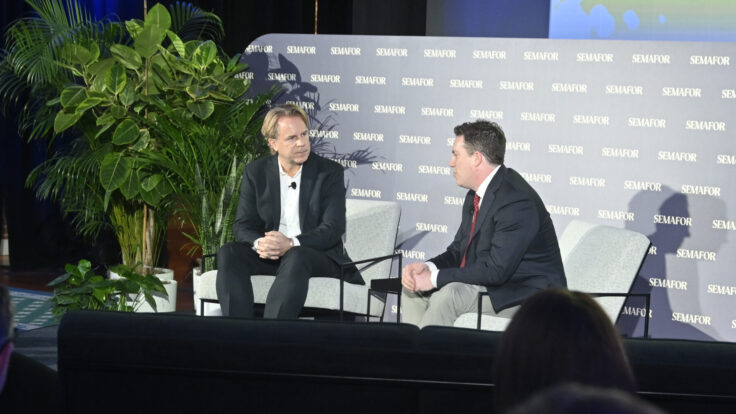
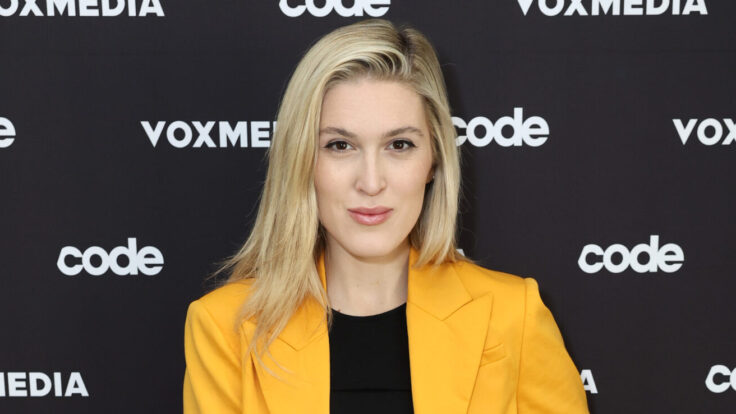
🍸 Plus, on the latest edition of The Grill Room, Vox Media C.E.O. Jim Bankoff joined
me for a deep dive into the company’s evolution since the Penske Media investment. We dug into Vox’s L.R.P., its burgeoning podcast network, the Kara & Scott deal, the down round, and its attempts to grapple with artificial intelligence. Follow The Grill Room on Apple,
Spotify, or wherever you prefer to listen.
Also mentioned in this issue: Marty Baron, Meredith Kopit Levien, Will Lewis, Matt Murray, Joe Kahn, David Zaslav,
David Ellison, Pam Abdy, Mike De Luca, and many, many more…
Let’s get started… |
-
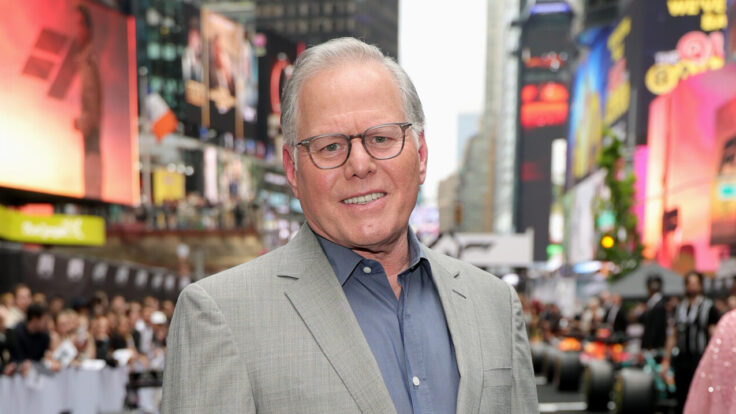
The Skydance play…: Now that David Ellison has finally caught the Paramount bus, attention has turned to his intentions for the business. My partners and I have all taken bites
of the apple here, and Brooks Barnes had a nice curtain-raiser in the Times over the weekend. A few things you can bank on: Paramount will cut a lot of jobs on its path to $2 billion (or more)
in synergies; the cable networks will almost certainly be spun off at some point (probably after they are sufficiently pillaged and the unit economics improve); and scripted programs will be scaled back. Also, surprise, CBS News will not be spared from these cuts. I know there’s cautious optimism around town that Ellison is a film lover and creative executive, but it will be a cost-extraction E.R. for the foreseeable future.
But what about the fun stuff—the thesis that motivated
David’s pursuit of the asset and inspired his father, Larry, to bankroll it in the first place? There’s a broad assumption that Ellison intends to paper over his mass layoffs with future transformative M&A, but the more I talk to folks in the Ellison milieu, the more I hear about how much their plan centers on the tech. Last year, David waxed poetic on CNBC about how “technology will transform every single aspect of this company,” and while that sounds like
pablum, he really believes it. Thanks to a convenient father-son deal, $PSKY will run on Oracle infrastructure. The Ellisons, I’m told, aim to transform Paramount+ from a glitchy third-world streamer into a state-of-the-art Netflix rival—good luck!—while also using A.I. and cloud computing to streamline production and cut costs.
At a breakfast this week, one veteran Hollywood executive posited that, after the Paramount integration, Larry—he said Larry, not
David—would almost certainly make a play for Warner Bros., the David Zaslav–led spinco that includes the film studio, HBO, etcetera. “It’s obvious!” this exec said of the Ellisons’ plan, and it certainly fits the narrative in the industry. Anyway, it’s plausible. - Oh… and the Bari buy: Meanwhile, friends in the media investment space seem increasingly bullish about David closing the deal with Bari
Weiss to bring The Free Press over to Skydance. Those talks are ongoing, and sources close to the company caution that it’s far too premature to say what will happen—or whether Bari will actually get the $200 million that executives or investors recently floated in the FT. (Hard to imagine…) Either way, a deal would likely catalyze a new round of digital media M&A activity, and the bankers are getting their pencils ready. Whether it’s $200 million or something more in the range
of $100 million to $150 million, which would constitute a premium on her recent funding round, Bari will be laughing all the way to the bank.
- WBD’s kids’ table: David Zaslav formally announced this week that he was splitting Warner Bros. Discovery back into Warner Bros. and Discovery, a surreal rebrand that surpasses even his own HBO Max volte-face. Meanwhile, Zaz’s leadership assignments for the two companies read like manifests for
the Mayflower and the Titanic, respectively. Zaz will take the catbird seat of the new Warner Bros., joined by Pam Abdy and Mike De Luca, Casey Bloys, Channing Dungey, et al. There’s even a seat for comms chief Robert Gibbs. On the Discovery side are all the poor suckers who got stuck with the linear albatross: C.E.O. Gunnar Wiedenfels, TNT Sports C.E.O. Luis
Silberwasser, CNN C.E.O. Mark Thompson, etcetera. (Alas, as anticipated, our old CNN friend David Leavy isn’t on either list.) Speaking of which, the kids’ table isn’t what Mark signed up for when he came out of retirement to run CNN, and I can’t imagine he intends to stick around for the journey. We’ll see…
|
Now, here’s Lauren with a quickie Vogue update… |
|
|

| Lauren Sherman
|
|
- Playing the hits at
Condé Nast: The funniest thing about last week’s Eva Chen–Vogue update, in which I mentioned that she is not-not in the running for Vogue’s U.S. content head gig, was that it triggered so many responses. And not about the fate of Vogue—or even this editor search. Instead, many
people have an opinion about what Chen should do with her life, including my best friend from college. (Another big takeaway was that reading comprehension levels are incredibly low, but that’s another story.) Anyway, as I mentioned, no decision has been made internally—people are still submitting proposals—but it would not make sense for Chen to take this job.
Meanwhile, more names popped up in the discourse. Most people are still betting on Chloe Malle
(a safe choice, à la Mark Guiducci at Vanity Fair), and others are rooting for Nicole Phelps, the director of Vogue Runway, or Carlos Nazario, style director at large at Harper’s Bazaar. Selby Drummond! Whether or not any of these people are still in the running (or ever were) is not for me to say.
Another Wintour loyalist whose name has emerged multiple times is Amy
Astley, the editor-in-chief of Architectural Digest. Astley, a former beauty editor and long-long-longtime Wintour deputy, was the original editor-in-chief of Teen Vogue. She’s a very good editor, has taste, is generally beloved by her staff, and was long thought to be The One, especially in the late 2000s when Teen Vogue was a big hit, because we all loved seeing rich-girl real estate. (Back in those days, as you’ll recall, Astley’s partner on the publishing side was Gina Sanders, who happened to be married to Steve Newhouse.)
After Lehman, the financial crisis, and the first death blow to the magazine industry, it was clear that Astley had outstayed her welcome at Teen Vogue, which seemed increasingly out of touch with youth culture, and more like a product that Condé publishers were
spoon-feeding to marketers. I’ve heard plenty of stories over the years about how Wintour—who doesn’t really fire people, but also espouses a postwar British realpolitik—suggested to Astley that she needed to evolve her career. At that point, it seemed likely that Teen Vogue would go the way of Gourmet, and Astley might be another Ruth Reichl.
Instead, Astley just sort of hung out until the Architectural Digest solution presented itself
to Wintour. It ended up being Wintour’s best H.R. move to date. [Read More]
|
|
|
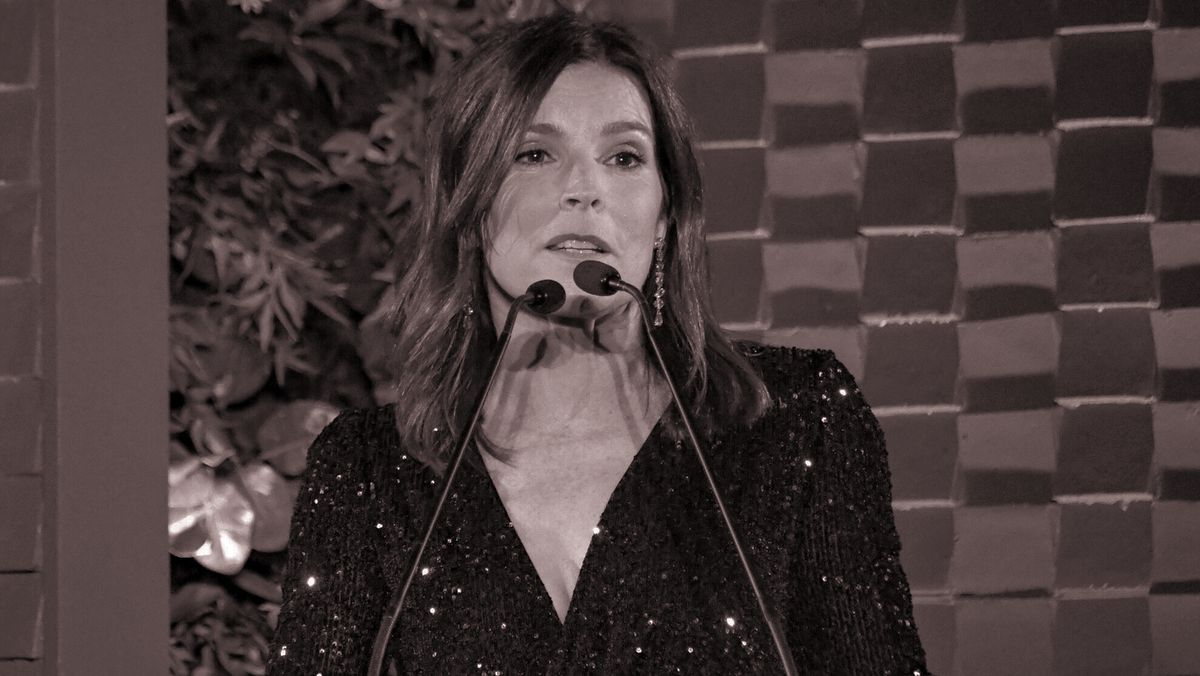
Not only has Emma Tucker completely revitalized the staid Journal with her
suffer-no-fools attitude and upscale tabloid instincts, but her strategic bet to repopulate the D.C. newsroom (moving out a generation of retiring mentors in favor of pot-stirrers) has the paper eating the Times’s lunch in the second Trump era. |
|
|
Last week, shortly after The Wall Street Journal broke the news that President
Trump’s Justice Department had informed him in May that his name was in the Epstein files—a follow-up to its previous mega-scoop about the president’s (alleged) lewd birthday card illustration—journalists inside the paper started sending around a provocative meme. It featured two cartoon dragons and essentially
posited that the Journal was eating The New York Times’s lunch. “We’re on fire,” one journalist there conceded when I mentioned the meme. “The Times was always thought of as number one,” said another. “I’m not sure you can make that case anymore.”
The more telling response came from inside the Times, where editors and reporters readily acknowledged the Journal’s recent editorial triumphs and were quick to praise its plucky and
charismatic editor-in-chief, Emma Tucker, whom virtually everyone in the industry likes and admires—save, of course, for the largely somnolent bureaucrats that she evicted from the joint upon her arrival from Fleet Street a few years back. “They’re having a great run on Epstein, and, in general, I think Emma has succeeded in sharpening them,” one reporter said. Another veteran Times journalist was more effusive: “Emma is the best editor they have had in a long time, and
she knows what a juicy story is and how to get it. And they’re the most competitive I’ve ever seen. I don’t know what the [dragon] drawing of us means, but they worry us.”
In the first Trump era, c. 2015-2021, an unprecedented surge of liberal panic fueled unparalleled growth across news outlets and seemed to herald a retro newspaper war between Dean Baquet’s Times and Marty Baron’s “Democracy Dies in Darkness”–era Washington Post—both
of which tripled digital subscriptions over the course of Trump’s first term. As we all know, the Post’s run ended rather abruptly once Trump left office, Baron retired, and it became clear that publisher Fred Ryan had been resting on his laurels while Times C.E.O. Meredith Kopit Levien went out and built a multiplatform news-and-lifestyle subscription business that could withstand the vicissitudes of the news cycle.
From there, the
Post descended into its current identity crisis under Will Lewis and Matt Murray—Tucker’s predecessor, by the way—and lost damn near all of its editorial talent. Meanwhile, the Times became the only available shorthand for what modern success actually looks like in the newsgathering business.
Into that vacuum stepped Emma, a veteran of Rupert Murdoch’s Times in the U.K., who embraced the role of change
agent and quickly set about trying to make the paper edgier, faster, and less erudite—or less “safe and boring,” as one Times veteran put it—than it had been under Murray. She restructured units, including the Washington bureau, and laid off several newsroom veterans—often the academic types who professed their love for mentorship over actually filing stories or innovating the place, and the young fogies who had been raised in their image. For her efforts, she was
rewarded with predictable protest from staff, who stuck Post-it notes on her office, and complained that these allegedly egregious cuts signaled a retreat from certain coverage areas, including politics and technology.
In fact, Emma was clearing deadwood and making space for new hires, including veterans of the Post, Politico, and elsewhere. Under
new Washington coverage chief Damian Paletta, the Journal quickly started producing some of the most distinctive and agenda-setting coverage, starting with the murmurs about Biden’s efficacy and then the plotlines of Trump’s first months back in office—Elon Musk’s DOGE agenda and personal behavior, Trump’s geopolitical moves and pinballing tariff policies, and the current Epstein controversy. In an
appearance on The Grill Room in March, Emma described her new strategy as “modernizing the newsroom—it’s about bringing in the skills that we need, some of the skills that were lacking when we got here. It’s about raising the metabolism of the newsroom and getting in people who are absolutely top of their game.”
In the meantime, the Times entered a new era of its own.
As Meredith continued to grow the business along increasingly diversified revenue streams, executive editor Joe Kahn evidenced himself as more of a Bill Keller than a Baquet—remarkably thoughtful and undeniably brilliant, but the sort of cerebral foreign correspondent type who doesn’t quite have the natural instinct that differentiates the good editors from the truly exceptional ones. Meanwhile, after stockpiling a fusillade of talent
during the Trump years and WaPo’s rolling crises, the Times’s deep bench doesn’t always manifest its promise.
Yes, the Times continues to drive news and produce scoops—Eric Lipton on Trump’s crypto business, Michael Schmidt on Trump’s war with the Ivy League, Jodi Kantor on the Supreme Court, etcetera—but many of the buzziest scoops that used to emerge from Trump 1.0 stars like
Maggie and Swan seem to come less frequently. Scholars of the trade who remember David Fahrenthold’s Pulitzer-winning work at the Baron-era Post may have been bemused to read his recent piece entitled, “The Short-Lived Plan to Produce a Trump-Themed Instant Pot.” (Yes, this was a hook for a broader
examination of lobbying tactics in the Trump era, but still…) |
It’s fascinating to watch the Times, which famously thrives in crisis, adjust to its new
position of economic comfort. But we’ve also reached the point in the cycle, three years into Kahn’s decidedly drama-filled reign, when the resident kremlinologists begin to wonder about the next person to ascend the greasy pole. Kahn, who is 60, has five years until he hits the mandatory retirement age, but industry folk wisdom suggests he could step back earlier to ensure the ascent of Carolyn Ryan, who is only slightly his junior. Ryan, in many ways, has a whiff of Tucker’s
news judgment, but has also been a creature of 620 Eighth Avenue long enough to have truly mastered the inside game.
In the coming years, we should all expect micro-narratives to coalesce around Kahn and the potential successors, all rendered in the predictably Times-ian hushed-tone euphemisms—the sort of word salad that can oscillate between compliment and critique based on the octave of voice or setting. Barring unforeseen events, Kahn may be referred to as brilliant
and a great leader or a steady hand or even the perfect person for the moment. Then you can expect a pause before, perhaps, something like, Now, we might need more of an Emma Tucker type.
In any event, the Journal’s starring role in this political cycle came to a head the other week when Trump, predictably miffed by the paper’s Epstein reporting, decided to sue the Journal; its publisher, Dow Jones; Dow Jones’s parentco, News Corp;
and, most notably, its proprietor, News Corp chairman emeritus Rupert Murdoch, for defamation. This week, Trump’s lawyers called on a judge to depose Rupert and force him to testify under oath within the next two weeks on the grounds that, at 94, he “has suffered, but thankfully overcome, multiple health issues throughout his life.”
Until the lawsuit, I’m told, Trump and Rupert communicated frequently, and many inside the Journal suspect that
Trump is especially vexed by the fact that he’s taking heat from Rupert’s paper rather than a more predictable antagonist. (In his Truth Social response to the Journal’s initial Epstein report, Trump memorably suggested that Murdoch had given him assurances that he’d “take care of” the story; my sources tell me no such assurances were ever given.) In any case, Trump’s lawsuit against the Journal has inspired a lot of media insiders to fantasize about Murdoch actually going head
to head with the president in court. Rupert may try to call Trump’s bluff, or, pragmatist that he is, he may simply pay to make it go away. Either way, one suspects that the aging mogul interprets the suit, at least in part, as a sign that he made the right choice in Tucker. |
|
|
Puck sports correspondent John Ourand and a rotating cast of industry insiders take you inside the executive suites
and owners boxes where the decisions that shape the entire sports business are made. You’ll hear interviews with players, network execs, and everyone in between. The Varsity is an extension of John’s private email for Puck by the same name. New episodes publish every Wednesday and Sunday. |
|
|
The industry’s go-to source for unflinching reporting on the trillion-dollar business of artificial intelligence -
perhaps the single most important technology of our time. Ian Krietzberg, the powerhouse journalist behind The Deep View, delivers twice-weekly insights into the latest dealmaking and breakthroughs in A.I., and how the intersecting worlds of finance, entertainment, media, and politics are being transformed in its wake. |
|
|
Need help? Review our FAQ page or contact us for assistance. For brand partnerships, email ads@puck.news. You received this email because you signed up to receive emails from Puck, or as part of your Puck account associated with {{customer.email}}. To stop receiving this newsletter and/or manage all your email preferences, click here. |
Puck is published by Heat Media LLC. 107 Greenwich St, New York, NY 10006 |
|
|
|