{{ 'now' | timezone: 'America/New_York' | date: '%b %d, %Y' }} |
|
|
Greetings from Los Angeles and welcome back to In the Room. Last Friday, after I
published my latest missive on David Ellison’s presumptive all-cash bid for Warner Bros. Discovery, a well-placed Hollywood source called to suggest to me that Netflix was also considering a bid for David Zaslav’s assets. This once-implausible scenario had already gained some
traction in the analyst community, and I’ll concede that my imagination started running wild when Ted Sarandos showed up with Zaz at the Crawford–Álvarez fight in Las Vegas the next night.
It seems hard to imagine—maybe Netflix would want the studio and streaming division—but the whispers,
themselves, are indicative of this feverish new era of M&A activity, catalyzed in large part by Ellison’s entry into the space. Ellison’s seemingly limitless cash and ambition have accelerated Hollywood’s consolidation process, and his decision to bid for all of WBD now—in an attempt to preempt potential rivals—is forcing nearly everyone to dust off their models. NBCUniversal, which is in the worst position to acquire Zaz’s assets from a regulatory perspective, spent
the weekend “running the numbers on WBD,” per a source familiar, though a Comcast source cautioned that such a takeover was implausible, especially as it was spinning off Versant. (Reps for Netflix and Comcast did not comment.)
So, in tonight’s issue, I hand the reins to my partner Bill Cohan to assess the latest deal philosophies regarding the Ellisons’ unsolicited takeover bid, as well as the view from Zaz and the WBD board.
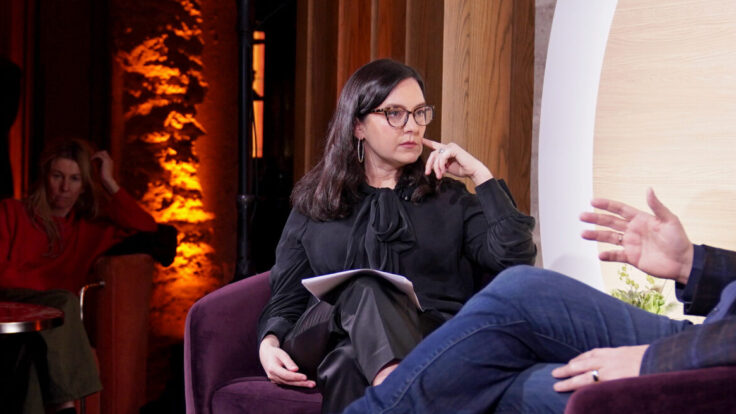
Also, I recently hosted a lively panel
on the wide-ranging impact of artificial intelligence on the media landscape, presented by Tishman Speyer, at The Spiral in New York. You can catch up on my conversation with The Atlantic’s Nick Thompson, NBCU’s Chris Berend, and our very own A.I. expert, Ian Krietzberg, by clicking here.
🍸 Plus, on
the latest edition of The Grill Room, Meredith Kopit Levien, C.E.O. of The New York Times Company, joined me for a deep dive into the paper’s metamorphosis from a traditional news company to a full-spectrum lifestyle brand. Kopit Levien explained how the Times is harnessing A.I. tools, tinkering with audio and
video, and sharpening its advertising playbook—all while building a diverse revenue landscape anchored in subscriptions. She also weighed in on The Athletic’s success, the Times’s quest to reach 15 million subscribers by 2027, and much, much more. Follow The Grill Room on Apple,
Spotify, or wherever you prefer to listen.
📝 Finally, I am pleased to announce the next installment of the Puck Private Conversation, powered by our partners at Orchestra.
In this edition of our quarterly survey, we’re seeking your input on the most pressing questions in the media business today, from audience engagement strategies and A.I. integrations to the fate of The New York Times, The Washington Post, ESPN, and Paramount. Please fill out the survey here. It’s fast, fun and thought-provoking, and your answers will help fuel the
direction of our own reporting, as well.
Let’s get started… |
-
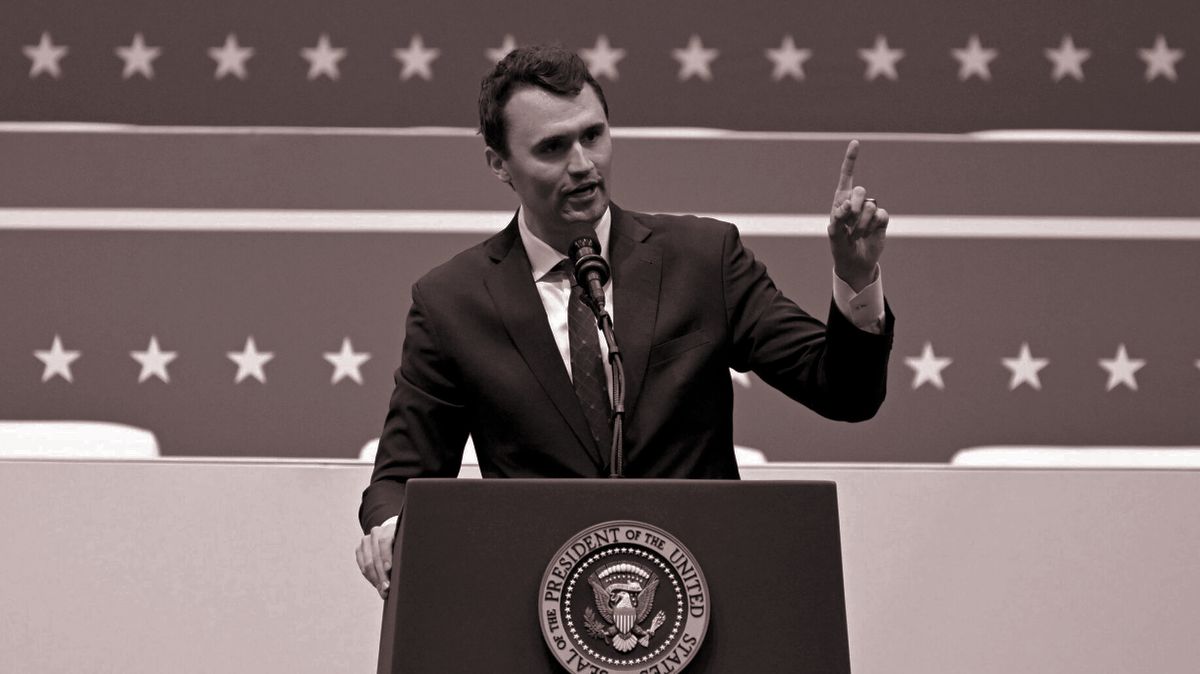
Disney pulls Jimmy Kimmel: Disney said late Wednesday that it was pulling Jimmy Kimmel from the air “indefinitely” amid pressure from the F.C.C. over a remark the late-night host made about Charlie Kirk’s suspected assassin. On Monday, Kimmel suggested the “MAGA gang [was] desperately trying to characterize this kid who murdered Charlie Kirk as anything other than one of them and doing everything they can to score political points from it.” In an
interview with conservative podcaster Benny Johnson on Wednesday, F.C.C. Chairman Brendan Carr called Kimmel’s remark “the sickest conduct possible” and suggested the F.C.C. might take action against ABC. Nexstar, which is seeking F.C.C. approval for its $6.2 billion deal with Tegna, also said it would preempt Kimmel’s show across its 28 affiliate stations.
Representatives for Disney were not immediately available for comment, but sources at the company
widely interpreted it as another brazen capitulation to the Trump administration, noting that Disney didn’t seem to take any issue with Kimmel’s remarks until after Carr and Nexstar put pressure on the organization. As for what “indefinitely” means, and when or whether Kimmel will appear on ABC again, only Bob Iger and Dana Walden seem to know. - Trump v. NYT: On a related note, Trump has filed a $15
billion defamation lawsuit against The New York Times and some of its reporters, the latest in a string of mostly meritless lawsuits against media organizations. Like The Wall Street Journal before it, the Times is fighting the suit, saying it “has no merit,” “lacks any legitimate legal claims,” and is
“an attempt to stifle and discourage independent reporting.” I suppose it’s notable that while entertainment firms like Disney and Paramount have paid the customary $16 million street tax to settle similar suits, the newspaper publishers are holding their ground and trying to call Trump’s bluff. On that note, CNN reports that Rupert Murdoch
is attending the royal dinner for Trump at Windsor Castle tonight.
- The Ellisons advance on TikTok: Larry Ellison is moving closer to a TikTok acquisition. Oracle, Silver Lake, and Andreessen Horowitz are poised to join the company’s existing American investors in taking an 80 percent ownership stake of a new, U.S.-based entity (the remaining 20 percent will be held by ByteDance). This will ostensibly help David Ellison advance
his own ambitious effort to turn the Skydance media empire into a vertically integrated studio, streaming, and social media business. For more on that, check out my conversation today with Peter Hamby on Puck’s flagship podcast, The Powers That Be.
- Apollo eyes AOL sale: Did you know that
AOL, the dial-up service that facilitated Generation X’s digital baptism and then somehow became the preferred email platform for every one of your octogenarian relatives, still does $400 million in EBITDA? The Journal reports that Apollo, which bought the company in 2021, is now eyeing a sale that could value it around $1.5
billion. There are very, very few successful turnaround stories in tech or media, and yet this is both.
- $tephen A. $mith: Congrats to Stephen A. Smith, who is making nearly $40 million a year across ESPN ($21 million), SiriusXM ($12 million), and his YouTube channel and podcast, per The Athletic—on a level with Tom Brady and Peyton Manning. Of course, those two
guys are former all-time great quarterbacks, while Stephen A. is a former columnist for a newspaper that barely exists these days. Whether you admire him or find his shtick totally insufferable, he’s an extraordinary role model for a profession teeming with skepticism and despair.
- The Peacock split: NBCUniversal’s long-anticipated Versant spinoff will start being phased in early next month, with the most immediate effects being felt in the news
division. By October 20, all NBC News correspondents will no longer appear on MSNBC, and both MSNBC and CNBC staff will stop participating in NBC editorial calls. MSNBC will begin broadcasting shows from its own facilities the following month—where, soon enough, it will be MS NOW.
- And finally… It’s TBPN time: John Coogan and Jordi Hays, the co-founders of TBPN, the Millennial tech news talk show, are finally
getting their cultural coronation. After announcing the hire of a new president via the Journal, they’ve
received love from The Free Press and, I’m told, are getting a New York Times profile and a write-up in Vanity Fair. These moments, when the establishment deems an ascendant entrepreneur worthy of notice, are truly one of my favorite subgenres of media coverage. (Its last iteration came when both the Times and Air Mail profiled
Emily Sundberg, a Grill Room podcast guest, in a single weekend.) Congrats and godspeed, gentlemen. Stop by The Grill Room anytime.
|
|
|
News and notes on the latest deal philosophies regarding the Ellisons’ unsolicited
takeover bid: Larry’s liquidity, Zaz’s optionality, and the WBD board’s disposition. |
|
|
Of course, just because someone is working on a deal for a company, and it leaks to The Wall
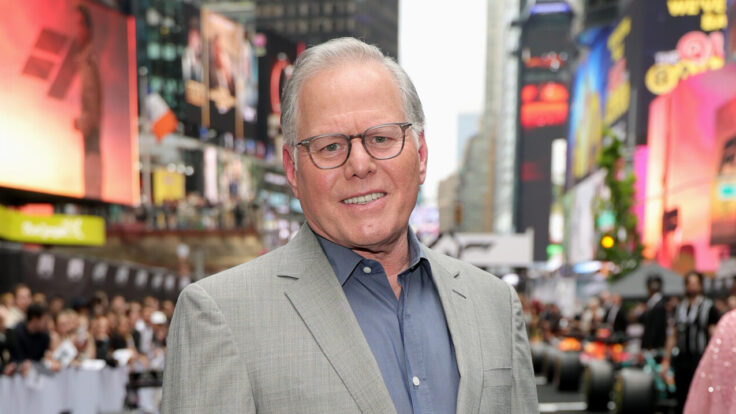
Street Journal, doesn’t mean a term sheet is coming all that soon. Putting together an unsolicited bid takes time, which is probably why it’s late Wednesday and David Ellison has yet to bid on Warner Bros. Discovery. After all, this deal would be plenty complicated no matter how you slice it. First, it’s only been a month since the Ellisons and RedBird Capital took control of Paramount Skydance. Yes, they’ve had more than a year to contemplate what they
would do with these assets, but that’s quite different from actually having the reins, making things happen, and implementing a new strategy. Meanwhile, two months have passed since the rumors started percolating that Paramount Skydance was going to acquire Bari Weiss’s The Free Press for around $150 million, and that deal has yet to be finalized and announced. Even at Sun Valley, few things happen overnight.
At the moment, WBD has an equity market value of nearly $45
billion, thanks to a 42 percent increase in the company’s stock price during the past five trading sessions, following the Journal report that the Ellisons were preparing their unsolicited bid for the company. WBD also has around $30 billion of net debt, giving the company a total enterprise value of $75 billion. (You will recall that in April 2022, Discovery Communications paid around $100 billion for WarnerMedia alone. But we’ll leave that difficult fact for another day.) Paramount
Skydance, for its part, has an equity value of almost $20 billion, up 18 percent since the news leaked. The company’s enterprise value is around $30 billion, including about $10 billion of net debt.
Normally, a $30 billion company would not be able to swallow a $75 billion company without doing the kind of Reverse Morris Trust transaction that Discovery deployed to buy WarnerMedia. (The deal essentially gave David Zaslav control while preserving AT&T shareholders as
majority owners.) But it’s pretty much impossible to execute a Reverse Morris in an all-cash deal, as Ellison is reportedly contemplating. I’m not sure if the Ellisons are planning to pay more per share than the roughly $18 that WBD already trades for, following the massive increase in the past few days. They certainly don’t have to. But to seal the deal, they might want to give Zaz the satisfaction of thinking he got them to pay a bit more. (Every $1 per share increase in the WBD stock is about
$2.5 billion.) If the Ellisons were to end up paying, say, $22 a share, as Rich Greenfield at LightShed Partners predicted, that would equate to roughly $55 billion in cash required to buy the equity, while assuming the $30 billion of WBD’s debt. Under normal circumstances, this deal might be considered dead on arrival.
But, of course, the reason we are even taking this seriously is because David’s father is Larry Ellison, with a current
net worth of $365 billion (up $173 billion alone in 2025) and an apparent desire to bankroll his son’s Hollywood aspirations. I have no inside knowledge of the liquidity of Larry’s wealth, but I assume he can come up with the fresh $55 billion to buy WBD, either by selling his Oracle stock or some of his real estate assets in Hawaii and Florida; or by exercising the revolver on a line of credit from the likes of Apollo, Blackstone, Ares, or KKR; or through a margin loan from a consortium of big
Wall Street banks. He’ll get the money if he wants to do this deal. Whether there would be a negative impact on Oracle’s stock remains to be seen. But I kind of doubt it, since Larry still owns some 40 percent of the company.
With Drexel’s “Highly Confident” letters a relic of the past—and discredited, in any event—it will probably take even Larry Ellison some time to get the financial backing together. And yet, stock market investors are not waiting for the proof of the Ellisons’
interest in WBD; they are driving up the WBD stock first, and asking questions later. |
The Wall Street research analysts are also having a field day with the prospects of the deal, as
you would expect. Our old friend Steven Cahall, at Wells Fargo, just came out with his third WBD-related report in a week. He wrote that he does not expect WBD stock price to move much beyond $19 a share, unless “a competitive situation arises,” with the “key question” being whether firms like Netflix, Amazon, and Apple “enter the fray.” (This is not investment advice.)
His conclusion, like mine, is that neither Apple nor Amazon will go for all of WBD. Netflix
might be interested in Zaz’s streaming & studios business, which would be split off from the mothership under the plan that will take effect next April. But as I discussed on Sunday, Zaz would need to convince his board and WBD shareholders that there would be more value coming from the split than from the Ellisons—that two in the bush is worth more than a bird in
hand. That’s a tough argument, especially given the increase in the WBD stock. It’ll require plenty of PowerPoint presentations and investment banker hours crafting a thesis that will be hard for WBD’s shareholders to swallow, although I’m sure WBD’s board, including the new trio of Joey Levin, Anthony Noto, and Anton Levy, will support Zaz.
In any case, it’s going to be a rough process for Zaz, even with his M&A street cred and his hopes
to gin up a serious auction. “No investor we have talked to believes WBD C.E.O. David Zaslav and the WBD Board of Directors could vote NO on a Paramount bid, assuming a $20+ offer, with the vast majority in cash (leveraging the Ellison family fortune),” Rich Greenfield wrote on Monday. He doesn’t even think Comcast or Disney or Fox can compete with Larry Ellison, although in a new piece on Tuesday, he described Comcast/NBCU as “the only realistic dark horse,” an idea I’ve been championing for a
few years now. Rich added that saying no to Paramount could be perceived as “complete and utter insanity.”
Yes, he conceded that there was a post-split bidding war argument. And, of course, he noted that Zaz does visibly love his Polo Lounge status. “We simply do not believe Zaslav wants to sell now and give up one of the most coveted jobs in Hollywood, especially when he feels he is on the cusp of unlocking shareholder value through the split,” Rich continued. “Not to mention, Zaslav’s
belief that while it has taken time for his management changes to positively impact studio results, it is finally starting to happen.”
But, in the end, Rich knows what has to happen here, assuming the Ellisons are serious. “Take the money and run,” he concluded. He’s not wrong. |
|
|
A professional-grade rundown on the business of sports from John Ourand, the industry’s preeminent journalist,
covering the leagues, players, agencies, media deals, and the egos fueling it all. |
|
|
Join Puck’s chief political columnist, John Heilemann, as he roams the corridors of power and influence in America on
this twice-weekly interview show, taking you beyond the headlines with the people who shape our culture: icons and up-and-comers, incumbents and insurgents, moguls and machers in the overlapping worlds of politics, entertainment, tech, business, sports, media, and beyond. The conversations are rich and revealing, unrehearsed and unexpected… and reliably impolitic. A Puck-Audacy joint, new episodes drop every Wednesday and Friday. |
|
|
Need help? Review our FAQ page or contact us for assistance. For brand partnerships, email ads@puck.news. You received this email because you signed up to receive emails from Puck, or as part of your Puck account associated with {{customer.email}}. To stop receiving this newsletter and/or manage all your email preferences, click here. |
Puck is published by Heat Media LLC. 107 Greenwich St, New York, NY 10006 |
|
|
|