Greetings from Los Angeles, and welcome back to In the Room. Bob Iger and
Jimmy Pitaro have officially minted their deal with the NFL, trading a 10 percent stake in ESPN for control of most of the league’s media assets, and deeper ties to a crucial partner. When you’re done here, be sure to check in with my partner John Ourand at The Varsity for the latest updates and analysis on the deal, as well as ESPN’s other
new deal with WWE.
In tonight’s issue, news and notes on this week’s quarterly earnings reports from the Times and the Journal amid a season of A.I.-fueled anxiety, as well as a check-in on The Washington Post. Plus, thoughts on the New York Post’s new Hollywood ambitions and Semafor’s possible new raise.
🍸 Plus, on the latest edition of The Grill Room, Wired global editorial director Katie
Drummond reflected on the brand’s transformation into a sharp-edged outlet covering the dystopian intersection of technology, politics, and culture. We also discussed the significance of original reporting, Wired’s growth strategy, A.I.’s threat to journalism, and much, much more. Follow The Grill Room on
Apple, Spotify, or wherever you prefer to listen.
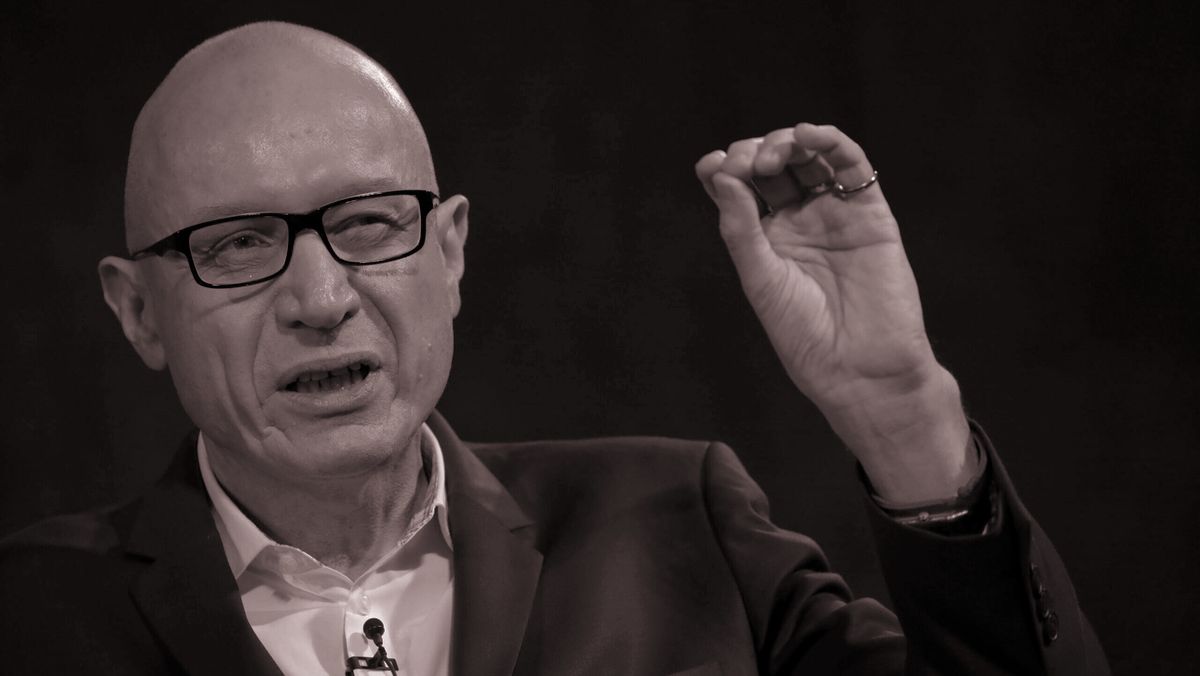
Mentioned in this issue: Robert Thomson, Will
Lewis, Justin Smith, Ben Smith, Liz Reid, Keith Poole, Patrick Soon-Shiong, Glenn Kessler, Carol Leonnig, Clay Felker, Kay Graham, and many more…
Let’s get started… |
- The
Post goes west: As you all know, the New York Post plans to launch a Los Angeles edition called the California Post, which News Corp chief Robert Thomson touted as “an antidote to the jaundiced, jaded journalism that has sadly proliferated” in the Golden State. The new
tabloid will be overseen by New York Post editor-in-chief Keith Poole, and is currently soliciting “expressions of interest” from would-be applicants.
“We are at a pivotal moment for the city and the state,” Thomson said in a statement, “and there is no doubt that the Post will
play a crucial role in engaging and enlightening readers, who are starved of serious reporting and puckish wit.” He’s not wrong on that last point; one need only look at the sad state of Patrick Soon-Shiong’s Los Angeles Times, or the dearth of rival outlets. At the same time, previous attempts to create New York media clones on the Pacific coast have languished—remember Clay Felker’s New West? We wish them luck.
|
|
|
A MESSAGE FROM OUR SPONSOR |
TASTEMAKER’S CHOICE The Range
Rover is a serene, elegant expression of modern luxury. EXPLORE |
|
|
- Here
come the Smiths: Justin Smith and Ben Smith are considering another capital raise for Semafor, after having already raised around $35 million since launching the events business and digital media entity three years ago. Semafor initially raised $25 million, then another $19 million, but about half of that replaced the roughly $10 million of the initial investment that came from Sam Bankman-Fried. As I noted at the time, the lack of
institutional investors on Semafor’s cap table always seemed like a curious blemish—a sign that these already wealthy and successful guys were looking for passive ride-alongs rather than exit-minded professional investors.
The potential new raise, first reported by Status’s Oliver Darcy, would likely be used to further expand Semafor’s live events business, which is its primary revenue stream. Still, it’s not clear why the Smiths need to bring on new money given
how much they’ve already raised—they’re not minting G.P.U.s or building cloud storage facilities—nor why new investors would want to get involved this far down in the capital stack. On the other hand, perhaps some investors are still fixated on the lure of Washington or Axios- and Politico-style exits, even though that seems like a lifetime ago. (Also, for what it’s worth, Justin’s events business is based in D.C., but Semafor’s newsroom is less relevant in that market.)
In any event, I’m
told Justin and Ben really haven’t decided what they plan to do yet. But floating it in the media sure seems like an odd way to go about testing the waters. As I noted when Substack’s founders floated their most recent raise via Eric Newcomer, serious raises tend to take place behind closed doors. The Semafor guys have not been shy since they both quit their previous jobs and
went public with their
media commitment ceremony in early 2022.
|
|
|
Earnings season has thrown the disparate fortunes of The New York Times Company and Dow
Jones into sharp relief with the worsening situation at The Washington Post. Hey Gemini, how many paywalled newsgathering businesses does this country actually need? |
|
|
On Wednesday, in a Gaslight-style attempt to change the narrative around A.I.’s adverse effects on
the news industry, Google Search chief Liz Reid published a treatise arguing that A.I. in search was actually “driving more queries and higher-quality clicks” to publishers. Her thesis likely elicited some morose laughter across the news industry. As I have noted, Google’s integration of Gemini A.I. into search—summarizing information so that users don’t have to click through to an actual website—has been widely seen as a meteor-level extinction event for
many publishers.
Indeed, the effects are already being keenly felt at every business that over-indexed on search and social referrals, and is now being forced to lay off staff amid traffic declines of as much as 30 to 40 percent. Business Insider laid off 21 percent of staff earlier this year, citing high sensitivity to the changes in Google’s referral traffic. Meanwhile, layoffs and buyouts across the industry—from Gannett to The Washington Post—seem driven, at least in part, by
a similar fear of A.I.’s transformative effects.
Nevertheless, Reid argued that “total organic click volume from Google Search to websites has been relatively stable year over year,” and that the users who clicked through to these sites were often more engaged with the content. She also criticized “flawed” third-party reports that “inaccurately suggest dramatic declines in aggregate traffic.” Alas, when asked whether Google was sending less traffic to publishers, Google sided against its
own executive: “Yes,” Google’s A.I. Overview responded to one query, “it appears that Google is sending less traffic to some websites, particularly news publishers, following the introduction of A.I. Overviews and other A.I.-powered features.” But, hey, maybe it was hallucinating. |
|
|
A MESSAGE FROM OUR SPONSOR |
TASTEMAKER’S CHOICE The Range
Rover is a serene, elegant expression of modern luxury. EXPLORE |
|
|
In any event, the A.I. disruption is increasingly top of mind for publishers. During News Corp’s quarterly
earnings report this week, C.E.O. Robert Thomson made an impassioned plea for protecting publishers’ intellectual property. “Discerning audiences crave content that is profound and purposeful and pithy amidst a morass of mediocrity and mendacity,” he said, adding that the industry was at an “historic inflection point in the age of A.I.” Thomson went on to appeal to Trump, noting how the president’s own book sales could be undermined by A.I. cannibalization.
(Notably, Thomson is among those named in Trump’s lawsuit against the Journal over its recent Epstein reportage.) “We will fight to protect the intellectual property of our authors and journalists,” Thomson said, “and continue to woo and to sue companies that violate the most basic property rights.”
Thomson, a longtime advocate for fairer compensation from tech giants, comes to this fight from a position of relative strength. During the call, he reported that Dow
Jones—which includes The Wall Street Journal, Barron’s, MarketWatch, etcetera—increased quarterly revenues 7 percent year over year to $604 million, while EBITDA grew 10 percent to $151 million. Similarly, The New York Times, which has been at the vanguard of the industry’s efforts to protect its I.P. from firms like OpenAI, reported
this week that it grew quarterly revenue 9.7 percent year over year to $686 million, and increased adjusted operating profit by 28 percent to $134 million. With that, $NYT stock surged 15 percent to an all-time high of $62 per share. It has now crossed the $10 billion market cap threshold—about half a percent of Meta’s size, but better than things looked more than a decade ago.
Of course, the vast majority of those companies’ revenues come from subscriptions—more than 70
percent, in the Times’s case; the Journal doesn’t break those out. Indeed, a robust subscription business would appear to be the final bulwark that news companies of any scale have against A.I.’s disruption. The Journal, which now boasts an editorial product that is as strong and relevant as ever, added 338,000 digital-only subscriptions in
the quarter, and now has more than 4.5 million total subscribers. The Times, which continues to expand its multiplatform news and lifestyle services business—it acquired two more sports-adjacent podcasts this week for the now-profitable Athletic—added 230,000 digital-only subscriptions and now has more than 11.8 million total subscribers, with a goal of reaching 15 million by the end of 2027.
The unfortunate coda, as you might have guessed, is The Washington Post—which,
as a private company, does not have to suffer the indignity of sharing quarterly earnings reports with Wall Street analysts. After losing hundreds of thousands of subscribers in recent months, it’s safe to assume those reports would paint a bleak picture. This week, Glenn Kessler, the Post’s longtime fact-checker, who was among dozens of employees to take a recent buyout, likened working at the Post to being on “the Titanic after it struck an iceberg.” On
Monday, I reported that veteran Post journalist Carol Leonnig was decamping to MSNBC, an orphaned and declining cable network that must suddenly look like a compelling place to land when compared to the Post.
On a recent episode of my colleague John Ourand’s excellent podcast, The Varsity, the departing Post sports columnist Sally Jenkins was circumspect about the paper’s challenges. Unlike Kessler and so many others, she
didn’t torch the editor or blame the owner. Instead, she argued that the Post needed the flexibility to slash bloat and commit to a new plan. Of course, the contents of that plan remain either well-guarded or unimpressive—hiring more video journalists, taking a page from Substack, etcetera—and perhaps both. Meanwhile, Jeff Bezos’s personal fortune currently stands at roughly 23x the Times Company’s market cap.
Setting aside
the humiliating leadership failures that have fueled the Post’s current drama under C.E.O. Will Lewis, there is an obvious lesson for all publishers in the widening delta between Kay Graham’s once-stellar paper and its rivals to the north. Without oversimplifying it, the Times and the Journal thrive by virtue of being distinctive enough to engender affinity from loyal subscribers. Those who fail to create that following—and especially
those who merely try to produce commodity content at scale—now serve no real purpose other than feeding the tech platforms. And despite what the executives at Google say, that’s no longer a sustainable business. |
|
|
Join Emmy Award-winning journalist Peter Hamby, along with the team of expert journalists at Puck, as they let you in on the
conversations insiders are having across the four corners of power in America: Wall Street, Washington, Silicon Valley, and Hollywood. Presented in partnership with Audacy, new episodes publish daily, Monday through Friday. |
|
|
A professional-grade rundown on the business of sports from John Ourand, the industry’s preeminent journalist, covering the
leagues, players, agencies, media deals, and the egos fueling it all. |
|
|
Need help? Review our FAQ page or contact us for assistance. For brand partnerships, email ads@puck.news. You received this email because you signed up to receive emails from Puck, or as part of your Puck account associated with {{customer.email}}. To stop receiving this newsletter and/or manage all your email preferences, click here. |
Puck is published by Heat Media LLC. 107 Greenwich St, New York, NY 10006 |
|
|
|