Greetings from Seattle, and welcome back to In the Room. I’ve just learned that New
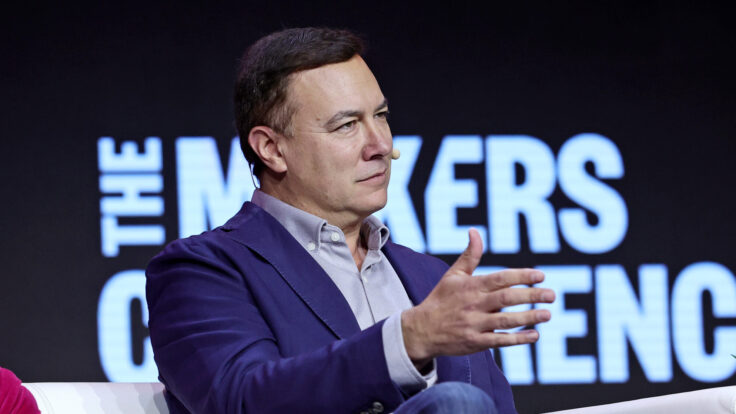
York magazine is set to put David Ellison on the cover of its forthcoming Monday issue, with a 10,000-word profile by Reeves Wiedeman—who, you may recall, was the author of that famous 2018 cover story about how Shane Smith built Vice “on a bluff.” I’m told David did not participate in the piece. Something to look forward to…
In tonight’s issue, news and notes on the latest media M&A speculation following Justin
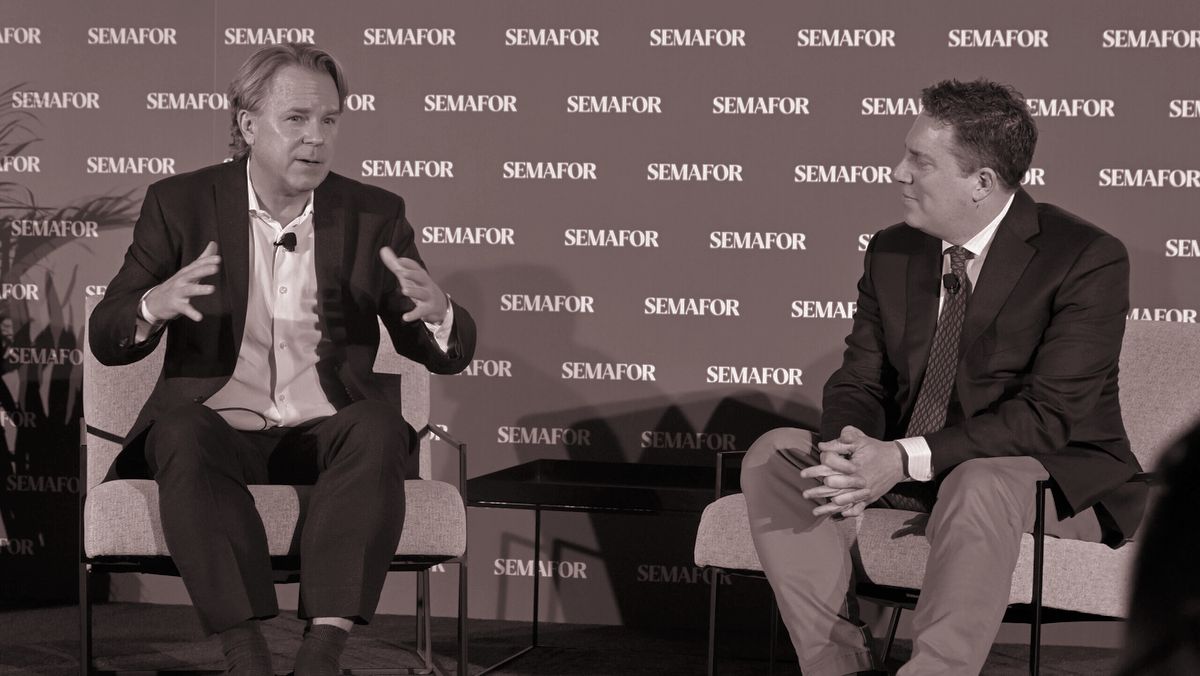
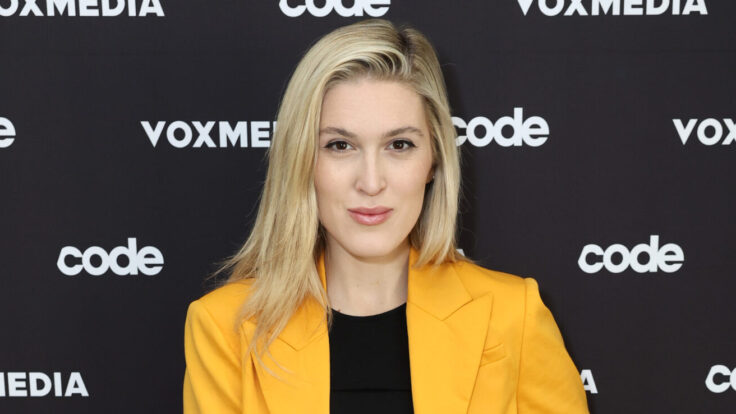
and Ben Smith’s $30 million raise at a staggering 8x trailing revenue multiple for Semafor. Is this an auspicious sign that the worm has turned for digital media following an era in which Vox executed a down round and BuzzFeed was threatened with a delisting? Is it just some Bari-adjusted EBITDA? Or will this headline number lure Jake Sherman and Anna Palmer to market Punchbowl? I’ll get into all of it below…
🍸
Plus, on the latest episode of The Grill Room, Julia and I surveyed a volatile week in media: Tony Dokoupil’s rocky debut at CBS Evening News and the broader questions it has raised about Weiss’s leadership, Semafor’s aforementioned eyebrow-raising $330 million valuation, the flood of A.I.-generated content overtaking Instagram and X, and plenty more. Follow The Grill Room on
Apple, Spotify, or wherever you prefer to listen.
Also mentioned in this issue: Josh Harris, Jeff
Zucker, Mark Lazarus, Mark Walter, Mathias Döpfner, Peter Chernin, Rupert Murdoch, Stephen Royer, Javier Guzman, and more.
But first… |
-
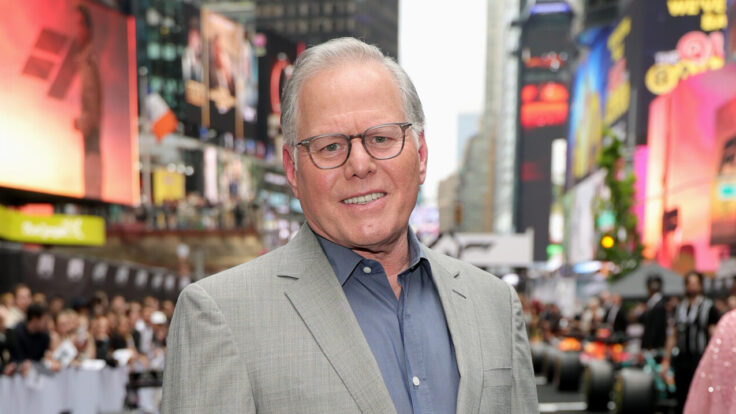
Warners watch: The clapback of the week goes to David Ellison, who responded to David Zaslav’s latest rejection of his takeover offer by declaring that Paramount now values his Discovery cable business at $0.00. Performative? Sure, but, as my partner Bill Cohan has noted, Ellison’s $30-a-share offer is looking “a lot tastier” after
Versant’s dismal I.P.O.
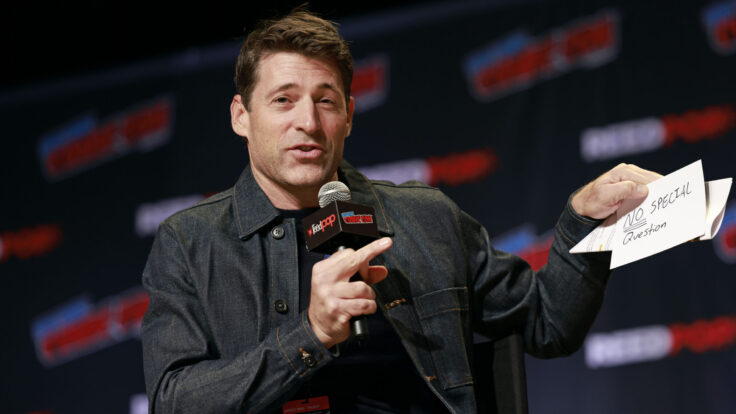
- Bari watch: A quick coda to my most recent piece on Tony Dokoupil and the latest drama at Bari Weiss’s CBS News. After Wednesday night’s Evening News broadcast, Javier Guzman, the show’s number two producer, was abruptly defenestrated
without explanation. Most CBS sources I spoke to noted that Javier, who was a somewhat polarizing figure internally, hadn’t taken to Bari’s vision for the network and made that known. Two sources said he had been “insubordinate” and tried to undermine the relaunch of the evening broadcast. On the other hand, one source told The Wrap that Javier was “highly respected,” and that his firing left some staffers “in tears.” Reader, choose your own adventure. (Javier did not respond to a
request for comment.)
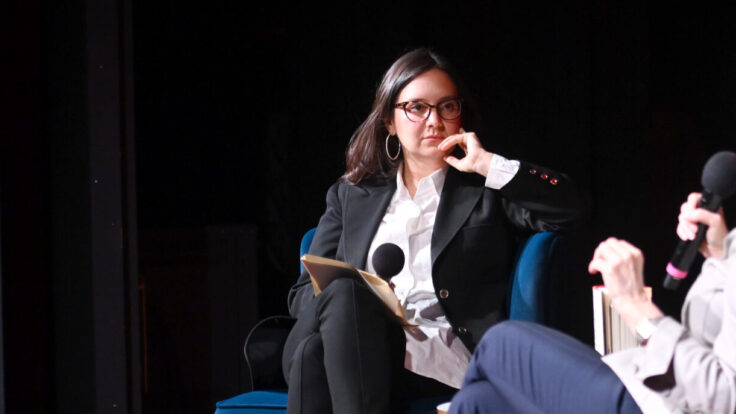
In any event, this almost certainly signals more terminations to come. As I reported earlier this week, Bari has privately complained about the laziness and mediocrity of her staff, and told multiple people that she’ll fire anyone who isn’t willing to work hard and get on board with her leadership. She appears to mean what she says. And
this could extend to 60 Minutes, as well. According to Oliver Darcy, veteran producer Michael Gavshon has been left “exasperated” by Bari’s “extensive editorial feedback.”
|
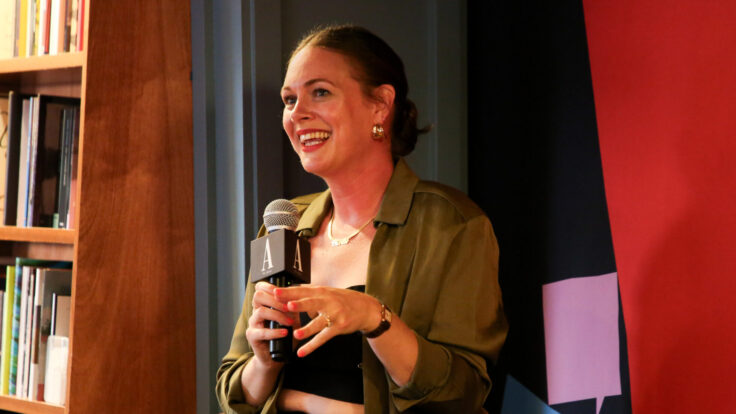
Over in The Varsity, my colleague Julia Alexander took a long look at Netflix’s new strategy of
hoovering up all the podcasting talent it can in its eternal attempt to meet audiences’ changing media habits. But how will video pods—which are by and large sui generis products of the YouTube ecosystem—play on the streaming platform? |
|
|

| Julia Alexander
|
|
- Beginning this Sunday,
some of the most prolific sports audio stars of the last decade, including Bill Simmons, Zach Lowe, and Dan “Big Cat” Katz, will move their podcast video shows onto the streamer and abandon their presence on YouTube. For these guys, the move is predicated on a hope that the platform can offer TV-sized paychecks, even as their shows mostly retain the D.I.Y. aesthetic—and perhaps offer a preamble of what talk shows, that old standby format, looks
like in the streaming era.
In many ways, the move is both a coup and a serious gamble. But there’s no question that it’s the right time for Netflix to experiment with sports video podcasts. According to Spotify, viewership on video sports shows increased by more than 400 percent year-over-year as of September 2025; female viewership rose more than 350 percent in the same period; and similar trends were seen in the U.K., Brazil, and Australia. Meanwhile, on YouTube, users reportedly
streamed more than 700 million hours of podcasts on TV sets in October alone—up from 400 million hours a year prior. YouTube’s TV app is also recording significant increases in sports viewing, rising by 30 percent in 2024. Netflix, which needs more tonnage, is hoping it can steal both viewers and advertising dollars from YouTube.
And yet if Sarandos’s podcast play is going to really work, Netflix needs to replicate some of what audiences actually want from a video podcast
experience. After all, podcasts on other platforms are essentially interactive, with easy-to-navigate chapters that allow people to skip sections they’re not interested in, and comment sections that foster community. Perhaps most importantly, the most popular hourlong or multihour episodes are often clipped into shorter videos, designed to target different audiences on platforms like YouTube, where algorithms help with growth and discovery.
At the moment, Netflix simply isn’t set up to
offer the podcast experience that audiences expect. And if Sarandos wants to win over top YouTube sports video stars like ESPN’s Pat McAfee and the Kelce brothers, he has to demonstrate that leaving YouTube isn’t a threat to their growth, but instead the savvy move at a time when viewership habits are rapidly changing. To achieve this, Netflix needs to make the platform a welcoming place for actual podcast fans, not just TV viewers. Herewith, three humble
suggestions… [Read more with an Inner Circle subscription]
|
|
|
Ben and Justin’s recent fundraise at an 8x trailing revenue multiple, which
follows David Ellison’s extravagant purchase of The Free Press, suggests we’ve entered a new era of digital media valuations. Unless we’ve just reentered the old one. Anyway, is Punchbowl next in line? |
|
|
Last March, on the same day the news broke that private equity mogul Bill Chisholm
had agreed to pay a then-record-setting $6.1 billion to acquire the Boston Celtics, I happened to find myself in the company of one of the National Football League’s 32 franchise owners. (AFC West, for those wondering…) In light of the day’s news, I asked him whether he thought the Celtics were actually worth all that cash. “I don’t know,” he replied with a smile. “But what I do know is, it’s great for us!”
Sports teams benefit from an enviable supply-demand ratio: a
limited number of prestige assets coveted by a small but highly motivated group of buyers, which inevitably drives valuations ever higher. One year after the Waltons bought the Denver Broncos for $4.65 billion, Josh Harris acquired the Washington Commanders for $6.05 billion. Two years later, Chisholm paid even more for an NBA team—and was then outdone by Mark Walter, who snatched the Los Angeles Lakers for a staggering $10 billion
valuation.
Back down in the troposphere, a similar phenomenon seems to be playing out in digital media, where a far more modest appetite for a small but promising coterie of prestigious next-generation companies has quietly emerged in the last half-decade. Four years ago, Mathias Döpfner’s Axel Springer bought Politico for $1 billion at a roughly 5x revenue multiple on its hybrid business model. Of course, Döpfner presumably enjoyed the influence of owning a major
American news brand enmeshed in the nation’s capital, but Axel was financially lured by Politico’s business-to-business product, Politico Pro, which carries its P&L. Around the same time, The Athletic exited to The New York Times Company for $550 million—an 11x-ish multiple on its pure-play subscriber revenue.
The transaction multiples have been all over the place ever since. Axios sold to Cox Enterprises for a $525 million valuation at a 5.5x multiple on a majority advertising business.
Last year, David Ellison paid $150 million for Bari Weiss’s Free Press—a multiple of at least 7.5x for its subscriber-heavy revenue, depending on whose version of the numbers you believe. (A year earlier, a $15 million raise valued The Free Press at just $100 million.) Meanwhile, Substack raised $100 million in a round led by Chernin to achieve a gobsmacking $1.1 billion valuation, which is about 24x
estimated revenue of around $45 million. (For what it’s worth, the Chernin guys just let Food52, which had once raised more than $150 million at a $300 million valuation, collapse into bankruptcy.) Last year, Ziff Davis took out The Skimm for decidedly less.
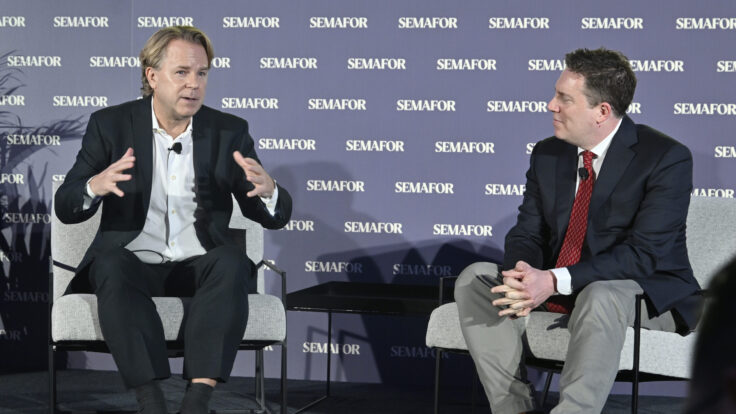
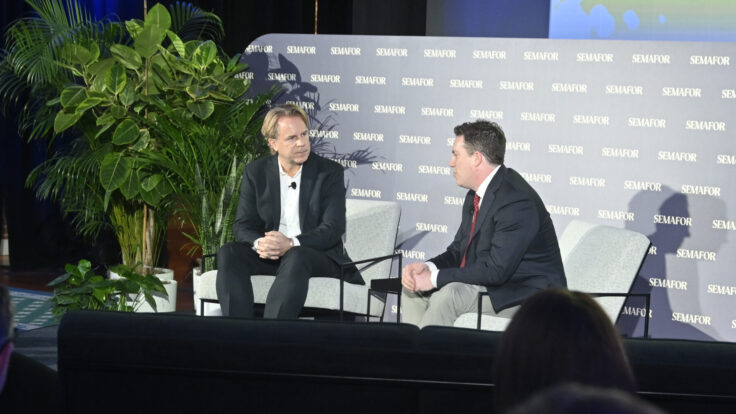
Anyway, earlier this week, Semafor co-founders Justin Smith and
Ben Smith whispered into The Wall Street Journal that they’d raised $30 million at a $330 million post-money valuation—a staggering 8x multiple on trailing revenue for the events-driven media company that has now raised approximately $70 million to $75 million to date. It all sounds great, and will certainly extend Justin’s runway and ambition on his quest to build his own Davos.
Indeed, the public disclosure in the Journal was a clever way to
signal strength to a political marketplace that’s less experienced with dealmaking—one that might not collectively wonder why a 3-year-old events company needed another cash infusion, or recognize that the largely inside round was led by existing investors who refined their position on the cap stack. As I noted earlier this week, these sorts of raises can make great headlines but inadvertently cause headaches down the line, such as providing constraints for the management team to get in the
money while narrowing the field of credible acquirers.
In any event, the flurry of activity has certainly created an atmosphere—the sense of a moment, if not necessarily a moment itself. In truth, the Ellison–Bari deal was very sui generis: A young media mogul with seemingly limitless capital was inheriting a legacy news network and needed someone to run it. But the Semafor raise appears to confirm that we’ve entered a Bari multiple era, which, presumably, is
great for those limited prestige assets.
As was the case with the Ellisons, perhaps a future acquirer of Semafor might feel like Ben and Justin could credentialize and revive their own legacy portfolio asset. Antenna’s Theo Kyriakou, who participated in this round and holds many media assets across Europe, might have this in mind. (Small world: Kyriakou is advised by Patrick Steel, the former C.E.O. of Politico who ran the company during
its sale process.) After all, Jim VandeHei’s years of experience were invaluable to the Cox team that acquired Axios. And Bill Simmons has a strategic role at Spotify years after the company paid nine figures for The Ringer in 2020. Either way, after a fallow period, an emerging view is dawning on some bankers that the recent activity could spur that small but motivated group of buyers into action. Or so the thinking goes… |
So, who might be next? In conversations with media bankers this week, the focus invariably turned
to Punchbowl, the high-metabolism, Congress-obsessed media company founded by Politico alumni Jake Sherman and Anna Palmer. In recent months, I’m told, Jake and Anna have been courted by at least four potential investors: Chernin, Stephen Royer’s Shamrock, Jeff Zucker’s RedBird IMI, and even Versant, the Mark Lazarus–led cable business that was recently spun off from NBCUniversal.
Presumably, Jake and Anna have had to have some heart-to-heart conversations about where they want their business to go from here, and weigh the pros and cons of ceding control—although I’m told that, at present, they are not selling the business.
Whatever the case, the Punchbowl heat offers a window into the class of potential buyers for the current crop of media startups, with the exception of Peter Chernin, who appears to be winding down his investment vehicle
and has decided not to raise a new fund. Then there’s Mathias, who, as one media executive delicately put it, “would hump anything.” In truth, Mathias once coveted the Financial Times and appears to be hunting for more transformative deals. He recently told the Journal that Axel had been looking for acquisition opportunities in U.S. media—and considered TED, TechCrunch, 1440, and more—but didn’t deem them sufficiently compelling.
Then there are the legacy incumbents.
Presumably, Punchbowl would fit quite nicely into The New York Times’s increasingly diversified bundle of products. If Justin doesn’t succeed in building his own empire, his sepia-toned fiefdom might transition nicely into the pink hue of the FT, which needs to rethink its own events offering. In a world where Ellison didn’t inherit CBS, it’s not hard to imagine Dow Jones folding in The Free Press. Indeed, Rupert took a look.
Of course, the sports
analogy works only up to a point. Sports franchises are underwritten by future cashflows that are locked in and growing. The media business is subject to a whole lot more volatility. And, in some ways, that explains the prevailing mood around the Semafor announcement. Back in the day, the knives were out whenever Vice or BuzzFeed announced a boffo funding round. Now, even Smith player haters were moved by the same feeling: Good for them. |
|
|
A professional-grade rundown on the business of sports from John Ourand, the industry’s preeminent journalist,
covering the leagues, players, agencies, media deals, and the egos fueling it all. |
|
|
Join Puck’s chief political columnist, John Heilemann, as he roams the corridors of power and influence in America on
this twice-weekly interview show, taking you beyond the headlines with the people who shape our culture: icons and up-and-comers, incumbents and insurgents, moguls and machers in the overlapping worlds of politics, entertainment, tech, business, sports, media, and beyond. The conversations are rich and revealing, unrehearsed and unexpected… and reliably impolitic. A Puck-Audacy joint, new episodes drop every Wednesday and Friday. |
|
|
Need help? Review our FAQ page or contact us for assistance. For brand partnerships, email ads@puck.news. You received this email because you
signed up to receive emails from Puck, or as part of your Puck account associated with {{customer.email}}. To stop receiving this newsletter and/or manage all your email preferences, click here. |
Puck is published by Heat Media LLC. 107 Greenwich St., New York, NY 10006 |
|
|
|