 |
|
Happy Wednesday. Welcome back to In The Room.
|
|
Tonight, we go inside the G.O.P. debate negotiations, and what’s at stake for Fox News, CNN and upstarts like NewsNation and Newsmax. Plus, some observations on Jen Psaki’s impressive first outing at MSNBC.
But first, some other media developments:
- On Wednesday, Jimmy Finkelstein’s forthcoming news startup The Messenger announced that it had acquired Grid, the small fellow Washington-based digital news startup. The deal moves Finkelstein & Co. a little closer to their goal of having 175 staffers by launch, in May, as well as a little additional funding from Grid’s Abu Dhabi-based investor, IMI. It’s not clear what else it gets them. Or if actual money changed hands. The Grid, founded just over a year ago by Politico veteran Laura McGann and ABC News alum Mark Bauman, was arguably just a less well-capitalized concept that answered neither a consumer need nor an advertiser desire, nor even a real curiosity. Like other ill-fated mediacos, it may have been founded simply because its founders didn’t like their own jobs. Anyway, it’s likely Finkelstein’s own money, and he’s entitled to burn it as he sees fit.
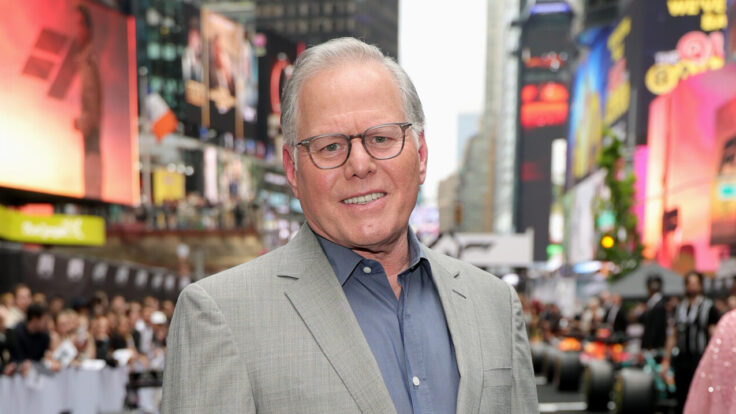
- Also, I’m hearing that lobbyists for Major League Baseball have started soliciting lawmakers to help them in their fight with Warner Bros. Discovery over the fate of regional sports networks. The MLB says it has offered hundreds of millions of dollars in concessions to WBD, but that the company is nevertheless threatening to put them into bankruptcy on Opening Day in April. The MLB is asking lawmakers from relevant states and districts to call David Zaslav on their behalf, and even offered the number for WBD headquarters in New York.
|
|
|
| Even by the absurd and tragicomic standards of Trump-era American politics, the 2024 presidential race is off to an unconventional start. President Biden’s impending re-election campaign has been overshadowed by Democratic angst over his approval ratings, age, and running mate’s political abilities; Trump, the de facto Republican frontrunner, may effectively start his campaign in handcuffs upon indictment by a Manhattan grand jury; Ron DeSantis, still largely unproven nationally, is only just starting to spar with his aforementioned G.O.P. adversary, and may be more of a donor fantasy than real primary threat. Finally, but for Nikki Haley and Vivek Ramaswamy, most of the would-be candidates have yet to declare. We are heading toward campaign season, no doubt about it, but we seem to be slouching there, with no clarity about what the next nineteen-and-a-half months will look like. That’s tragic, politically, but it’s media gold.
For the media, after all, the presidential campaign season really coalesces around the debates, which can materially impact the race while delivering NFL-level ratings. In 2015, the first Republican presidential debate, hosted by Fox News, drew a record-high 24 million viewers thanks, in part, to the vicious sparring between Trump and a game Megyn Kelly. The following debate, on CNN, drew 23 million viewers. Needless to say, these ratings were inflated by the novelty of the Trump phenomenon. Nevertheless, the debates, like the campaign generally, are a massive boon to all of the television networks—and especially to cable networks like Fox News and CNN, which so far this year are averaging about 2.2 million and 560,000 total viewers in primetime, respectively.
This time around, the Republican primary debates will kick off in August, in Milwaukee, with a debate on Fox News. Republican National Committee chair Ronna McDaniel and David Bossie, the party’s presidential debates chief, are currently in late-stage negotiations with all the major broadcast and cable networks, minus the avowedly liberal MSNBC, to determine the allocation of the remaining contests. The rough plan, sources familiar with those discussions tell me, is to host about one debate per month, with anywhere from 8 to 11 debates in total, leading up to the Republican National Convention, also in Milwaukee, in August 2024.
There are a few notable details coming out of these discussions. First, it’s clear that Fox News will get the majority of the debates, possibly as many as four, the sources said. In an upfront presentation this week, Fox News President Jay Wallace said the network would have “a few” of the debates. The rest, or the majority of the rest, will likely be split up between CNN, ABC News, CBS News and NBC News, with some co-hosted by Latino media outlets like Univision and Telemundo (the latter is a division of NBCUniversal) and print or digital partners, like The Washington Post. Semafor co-founder Ben Smith recently noted the Post’s apparent conflict of interest here, given that its publisher, Fred Ryan, is also chairman of the board of the Ronald Reagan Presidential Library, a favored site for Republican debates.
Meanwhile, there is an outstanding question about whether or not the RNC will give a debate to a non-traditional media partner, like NewsNation, OAN or Newsmax, the sources said. NewsNation, which counts Dan Abrams, former ABC News executive producer Michael Corn, and Fox News vice president Cherie Grzech among its leadership ranks, won rights to the only debate between John Fetterman and Dr. Mehmet Oz during last year’s Pennsylvania Senate race. Newsmax has positioned itself as a hard-right alternative to Fox News and, at least momentarily, drew away some of Fox’s audience after the 2020 election—a source of anxiety for Fox executives and talent, as evidenced by the recent Dominion lawsuit.
The R.N.C. wants to keep both these networks happy, the sources said. At the same time, their top priority is ensuring that the debates reach as many viewers as possible, and neither NewsNation nor Newsmax are likely to deliver the audiences that the legacy networks can.
Now that we’re going through this Trump debate circus for a third time, it will be genuinely interesting to see whether party chairs and network executives opt for more staid programming or subtly encourage the sort of berserk made-for-TV warfare that dominated 2016 and that, though memories fade fast, we all regret. The networks need the R.N.C. now more than ever, and it may be harder to resist cashing in a ticket for the Trump reunion tour. |
|
|
| For CNN, the jolt of the presidential campaign season can’t come soon enough. Last week, the network averaged just 383,000 viewers in prime time, and a mere 84,000 in the advertiser-relevant 25-to-54-year-old demo—its worst performance in the demo in nearly three decades.
Barring any earth-shattering historical events in the next ten days, CNN is on track to have its lowest-rated quarter in the primetime demo in at least 30 years. The ratings lows can only partly be explained by the broader decline of linear television. MSNBC is currently widening its lead over CNN in total viewers—MSNBC draws roughly double CNN’s audience—and, in a true sign of the times, the network has outperformed CNN in the demo in prime time for three straight weeks.
Of course, both CNN chief Chris Licht and his boss, Warner Bros. Discovery C.E.O. David Zaslav, have stressed that ratings don’t matter, or at least are not the metric by which they measure their success. “Ratings be damned,” Zaslav told CNN managers during his recent visit to the network’s headquarters. Instead, he spoke about the need to re-establish CNN’s journalistic credibility and nonpartisan bona fides. He noted that it was CNN’s mission to be a “purveyor of facts and truth in journalism,” and a bulwark for democracy, which was “under assault everywhere.” Zaslav described this mission as CNN’s “rendezvous with destiny.”
Zaz is right, although you could put it another way. Cable news is a highly profitable but eroding business, and the industry’s future relies on economically efficient programming and the steady recurring fees from cable operators who carry the network. Endorphin-crazed executive producers trying to win the hour, and the pathologically narcissistic hosts that drive them, are increasingly a thing of the past.
ESPN, which was once a star-filled enterprise, has been a forebear of this gradual pivot. The network used to be chockablock with multiple multi-million dollar talents within every hour, if not every segment. But in one of his last masterstrokes during his first tenure as C.E.O., Bob Iger trimmed the talent roster, made the programming less ambitious, and focused on sports rights, while still handsomely paying his last remaining megatalents, like Stephen A. Smith and the PTI guys. ESPN isn’t the zeitgeist darling it was in the early and mid aughts, but it has largely held its value. It’s still the worldwide leader in sports, just as Zaz and Licht hope that CNN can come out of this slide remaining the worldwide leader in news.
Licht and Zaz’s CNN journey has been more complex, of course, in small part because the decline from the Zucker era has been so stark, even if the forces were secular and inexorable. No one would quibble with Zaz’s noble ambitions; in fact, they are actually quite similar to the way the network marketed itself under Zucker. And yet, as I have pointed out on myriad occasions, their challenge lies in preserving the value of their reputational asset when fewer and fewer people tune in. The campaign, and the debates specifically, will undoubtedly provide CNN with a much-needed boost over the current ratings nadir, but it will take something more structural to bring about a sustained reversal of fortunes. |
| Jen Psaki’s Promising Start |
|
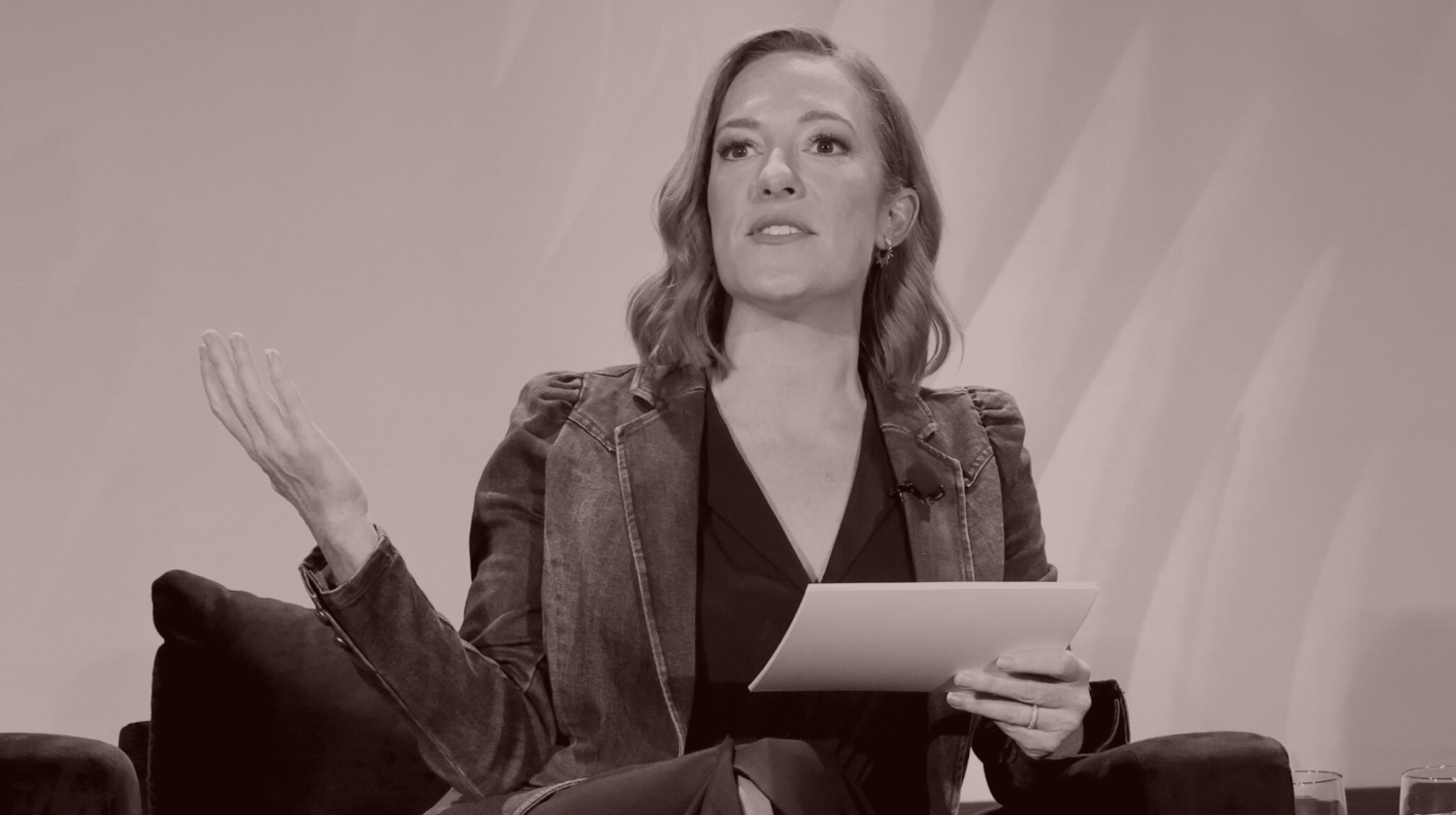
| One possible beacon of hope in the television news industry’s long slide toward insignificance was Jen Psaki’s maiden voyage on MSNBC. The debut of the former White House press secretary’s new weekend show drew 1.1 million viewers—far more than any CNN show for the entire week—and notched 137,000 in the demo, besting even Fox News. With her West Wing bona fides and poise, Psaki’s performance was well received by veterans across the television news industry, one of whom observed that she was “better than Stephanopoulos was at that point in his career,” and “could definitely be better than Alex Wagner at some point.”
NBC does not intend to keep Psaki on Sunday afternoons for long. When I first reported on Psaki’s TV ambitions, more than a year ago, I noted that 30 Rock saw her as an eventual marquee star, potentially capable of reversing the network’s post-Trump, post-Maddow fortunes. After providing her with some time to get comfortable in the chair, it’s reasonable to assume that MSNBC will start thinking about how to move her to prime time.
On the other hand, Psaki isn’t Maddow, and anyway no single talent is strong enough to reverse the decline of an entire industry. Besting CNN is a low bar to clear, as is taking over the current iteration of MSNBC prime time. And, of course, it’s entirely possible that Psaki will get sucked into the same black hole of ratings declines and irrelevance that her new colleagues are all too familiar with. Anyway, now that she’s impressed in her debut, the pressure is on to make sure the numbers go up, not down. |
|
|
|
| FOUR STORIES WE’RE TALKING ABOUT |
 |
|
 |
|
 |
| Tiger’s Legal Snafu |
| Dissecting the legal ramifications of the star golfer’s $30 million breakup. |
| ERIQ GARDNER |
|
 |
|
|
|

|
 |
|
|
|
Need help? Review our FAQs
page or contact
us for assistance. For brand partnerships, email ads@puck.news.
|
|
|
|
Puck is published by Heat Media LLC. 227 W 17th St New York, NY 10011.
|
|
|
|