 |
|
Welcome back to In The Room. I’m Dylan Byers.
|
|
In tonight’s email, news and notes on Alex MacCallum’s flight from The Washington Post to CNN, a move that highlights the opportunities and challenges facing two of America’s most storied news businesses. And included within, some really, really devastating Post engagement metrics that expose the Herculean task facing the paper’s new C.E.O., Will Lewis.
But first…
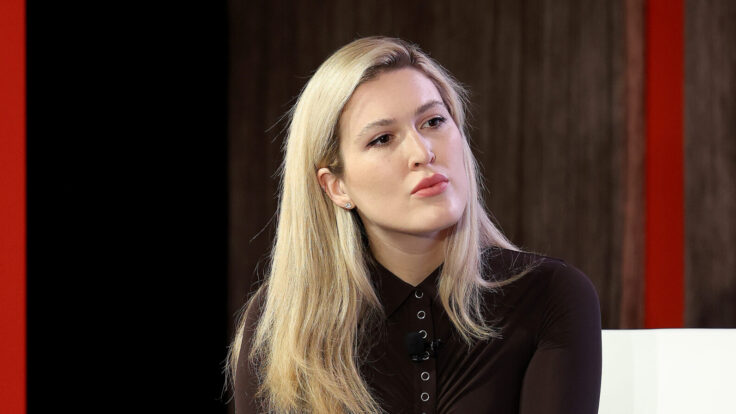
🚀 Massive news on the home front: Puck has tapped Sarah Personette, the veteran digital executive who previously served as Twitter’s chief customer officer in the pre-Elon regime, as its next C.E.O., leading our revenue growth across existing and future channels. In an interview with WSJ, Puck co-founder and editor-in-chief Jon Kelly said Personette “will help Puck continue to grow through expansion of existing products including events and podcasts and possible new categories like the art business.” On that note, a reminder for all you sports fans: The incomparable John Ourand will be launching his private email on the business of sports some time in the next few weeks. Sign up here.
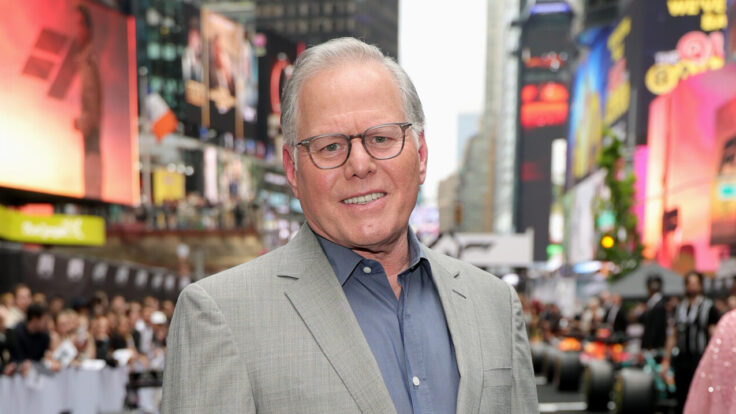
🛫 Zaz loses comms chief: Nathaniel Brown, the Warner Bros. Discovery communications chief who has served as David Zaslav’s P.R. consigliere for nearly five years, is exiting the company. The split is being described as amicable, which is probably trueish, but belies the friction that metastasized between these two as Zaz’s public reputation went through the ringer over the last year. Sources familiar with the matter say Zaz frequently refused to heed Brown’s advice but was nevertheless quite vocal about his frustrations with the increasingly negative press.
One notable dispute centered on Zaz’s memorable decision to co-host a lavish party at Hotel du Cap while Hollywood was on the picket line—and invite a New York Times reporter to chronicle the whole haute monde affair. Brown apparently advised against this decision, and others like it, but to no avail. In any event, Zaz’s troubles— staggering debt, accelerating linear decline, the alienation of Hollywood, etcetera—go well beyond optics, and are unlikely to be solved by turnover on the comms team. As one industry veteran texted sarcastically, “One thing I am looking forward to learning in ’24 is that all of WBDs problems were because of Nathaniel Brown.”
💸 The Messenger mess: The Messenger, the digital news startup that Jimmy Finkelstein and Richard Beckman launched last year with $50 million in funding from the likes of Apollo’s Josh Harris and other well-heeled pals, now has just $1.8 million in the bank after losing $38 million and generating just $3 million in revenue last year, according to a new report from the Times. Beckman has announced his resignation, and the company is laying off more than two dozen employees while raising new money from investors.
The Messenger never sounded like a good idea: dated business model, dated founders, and a dated notion of what the world needed. (Alas, if someone had pointed Beckman and Jimmy to the many nonpartisan, consumer-facing national news organizations that already existed, from the AP to Yahoo, the FT to Reuters, we might have been spared this adventure.) Indeed, no one is surprised by this turn of events. The idea of launching a heavily staffed, disintermediated traffic and display advertising business in 2023 was illogical on its face, and ran against all conventional wisdom about the post-BuzzFeed digital media landscape. And the first tell that this project was doomed was the frothy pablum of Finkelstein himself, who promised to deliver the glory of 60 Minutes and Vanity Fair—two very different businesses—and to do so in just a year. At launch, the target for 2024 was a newsroom of 500 and more than $100 million in annual revenue.
The whole thing sounded batshit crazy. As does the notion, floated in the press, that a consortium of conservative investors (including Tucker financier Omeed Malik) will rescue the business by buying a controlling share at a $60 million valuation. Why throw good money after bad?
Anyway, now for a digital media crisis of another order of magnitude…
|
 |
| Post Modernism Theories |
| Does Will Lewis, the Brit who just took over The Washington Post, have the hardest job in media? One week in and Alex MacCallum is off to CNN, and it turns out that his company’s traffic has dipped by more than 50 percent in the past few years. |
|
|
|
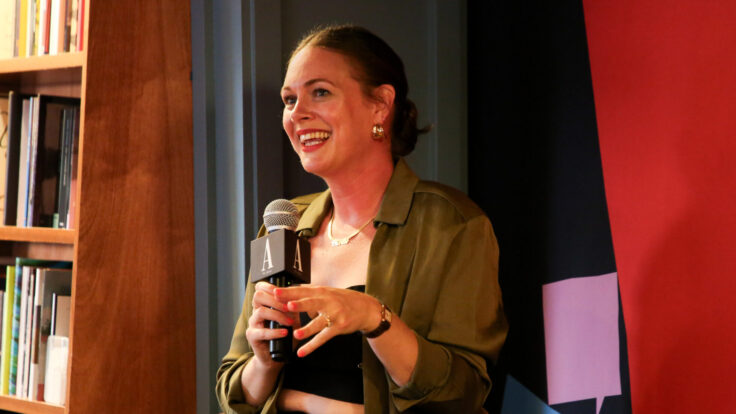
| On Wednesday night, Alex MacCallum, The Washington Post’s newish chief revenue officer, informed colleagues that she would be resigning from Jeff Bezos’s beleaguered newspaperco less than six months after joining and a mere two days after the arrival of its new C.E.O., Will Lewis. The rush announcement was precipitated by my earlier report that MacCallum, a digital product wunderkind previously involved in both The New York Times’ and CNN’s subscription growth efforts, had been in talks to return to CNN, where she would be reunited with her former Times boss Mark Thompson. In her new remit, MacCallum will oversee his ambitious effort to restructure the 24/7 news network into a multiplatform, semi-subscription-supported, digital-first brand—a mega mega-midmarket Times of sorts. Her appointment is now likely to be announced in a matter of weeks, if not days.
This game of musical chairs is illustrative of the broader moment in news media. The Times, the Post and CNN are, along with NBC News, the most influential legacy newscos in the mainstream media space and, by virtue of either scale or ownership, among the best positioned to extend their influence in the post-print, post-linear era via the sort of digital strategies in which MacCallum is well versed. The Times has already achieved that distinction, having transformed itself over the last decade—under Thompson’s leadership, and with MacCallum’s help—into a multifaceted digital news and lifestyle brand with more than 10 million paying subscribers. For the last several years, in fits and starts, its competitors have been trying, with varying degrees of success, to engineer similar strategies. Hence Thompson’s appointment at CNN, and Lewis’s appointment at the Post.
In this context, MacCallum’s abandonment of the Post for CNN is revealing, and indicative of the opportunities and challenges facing two of America’s most storied news businesses. Both the Post and CNN have suffered from years of mismanagement: Under Fred Ryan, the Post’s former publisher and C.E.O., the paper never pursued an ambitious digital growth plan or diversified its product, à la the Times, a problem further exacerbated by executive editor Sally Buzbee’s failure to distinguish the paper’s political and policy coverage in an already crowded market. At CNN, David Zaslav jettisoned the network’s post-linear subscription play, CNN+, the moment he took control of the asset—for better or for worse—and enlisted an ill-equipped C.E.O., Chris Licht, whose foibles are already well-known among this crowd. In both cases, the Post and CNN jettisoned audiences and revenues following years of record growth fueled by Trump.
The scale of the Post’s challenges, however, are of an entirely different magnitude. In addition to churning subscribers and losing $100 million a year, the Post is also failing to engage audiences. Four years ago, the Post boasted 139 million monthly visitors. By the end of last year, it had less than 60 million, according to sources familiar with its internal numbers. Of that audience, less than one in five read more than a single article per month, while less than one in 500 actually convert to a paying subscription.
The data—yes, it really is that bad—suggests that the Post is not only suffering from the absence of a coherent business plan, but it is also suffering from a profound product problem. Its top engineers, executives, and editorial leaders apparently haven’t been able to find a way to connect the Post’s innumerable talented journalists to the meaningful, addressable marketplace willing to pay for their reporting and insights. This is a considerably deep hole out of which Lewis must dig, and from which MacCallum may have wanted to extricate herself. |
|
|
| Of course, Lewis’s challenge is further compounded by the relatively limited ambitions his boss has for the paper. In the Trump-Marty Baron heyday, when subscriptions were growing 50 percent year over year, Bezos pledged to go head-to-head with the Times and make the Post “the new paper of record.” His aspirations for the paper today, however, seem considerably more modest.
Bezos has given Lewis a mandate to return the Post to profitability—beyond that, though, there appears to be no grand ambition to do much more, nor a promise of new capital to fuel a run on the Times. Bezos, understandably distracted by his very ambitious pursuits elsewhere (expanding Amazon’s dominance over every facet of our lives, going to space, getting jacked, etcetera) seems less focused on empire-building with his asset than preserving a historic institution. (By the way, Bezos already built an actual media empire with Prime Video…) . And, indeed, the recent headaches created by the Post Guild—yet another challenge for Lewis—probably reaffirmed that belief.
In any event, given the Post’s dilemma, it’s not hard to imagine the appeal of Thompson’s pitch to MacCallum. Sure, CNN has fallen on hard times, and, yes, it remains plagued by linear television’s decline and perhaps limited by the broader objectives for Zaslav’s debt-saddled Warner Bros. Discovery. Moreover, it’s by no means guaranteed that the Times digital-pivot playbook can be so easily applied to a 24/7 television news network. Indeed, when all is said and done, turning a storied paper into a news and puzzles and recipes platform for the wealthy liberal elite may prove far easier than restructuring a global television network into a mass-market digital business.
That said, CNN remains a highly lucrative business at $700 million-$750 million in annual profits, and its digital product continues to reach more than 160 million monthly users around the world. And Thompson has made it very clear that he intends to pursue an ambitious digital-first strategy without wasting time on assuaging the anxieties of linear natives. CNN needs to think of itself as an “entirely digital organization,” he said on a staff call earlier this week.
In that regard, the choice before MacCallum was probably pretty clear: did she want to help a new boss navigate a beleaguered paper to profitability, or help her former boss transform an iconic global news brand into one suited for the digital era? It turns out MacCallum never left New York for Washington, and now she won’t have to. |
|
|
|
| FOUR STORIES WE’RE TALKING ABOUT |
|
|
|

|
 |
|
|
|
Need help? Review our FAQs
page or contact
us for assistance. For brand partnerships, email ads@puck.news.
|
|
You received this email because you signed up to receive emails from Puck, or as part of your Puck account associated with . To stop receiving this newsletter and/or manage all your email preferences, click here.
|
|
Puck is published by Heat Media LLC. 227 W 17th St New York, NY 10011.
|
|
|
|