Greetings from the San Juan Islands, where life is analog and we keep time by the ship
traffic. Welcome back to In the Room.
In tonight’s issue, a riveting conversation with Puck’s in-house A.I. sage, Ian Krietzberg, on how L.L.M.s are transforming journalism. We discussed the value and limits of automation, how models are hollowing out the industry, and the fate of brands on the wrong side of the fault line.
Mentioned in this issue: Mathias Döpfner, Jonathan Greenberger, John
Harris, James Bennet, John Micklethwait, Katie Kingsbury, Alex Burns, Goli Sheikholeslami, Peter Spiegel, David Crow, Nick Lichtenberg, Alex Heath, Casey Newton, Tom Petty, and more…
But first, some notes on this week’s big leadership change at
Politico…
|
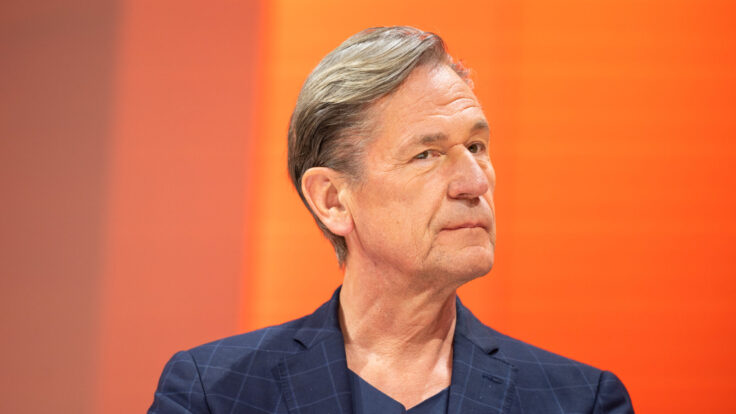
- Politico gets its man: Mathias Döpfner has tapped Politico executive vice president and former TV news veteran Jonathan Greenberger to take over as global editor-in-chief, an unconventional choice that underscores Politico’s ambition to reposition itself as a truly multiplatform media company. Jonathan will take over for Politico co-founder John Harris starting on May 1.
The internal promotion surprised many,
given that Mathias and Axel Springer leadership had spent weeks courting more-traditional print-raised editorial leaders at the Post, Journal, AP, and elsewhere who would’ve been in step with Politico’s tradition of hiring newspaper vets to lead the newsroom. Jonathan joined Politico in 2024 from ABC News, where he served as Washington bureau chief and executive producer of This Week.
Whether a former TV news producer is any better suited to lead
a newsroom in the digital era remains to be seen, but Greenberger’s promotion is viewed as a victory by those who feel that the site has long failed to keep pace with alumni-led upstarts like Axios and Punchbowl. These folks wanted a leader who could straddle editorial and commercial, and felt the Spencer Stuart search firm had built a candidate pipeline that could’ve filled the top L.A. Times job in 2002. Of the traditional journalists, the strongest potential contender was
probably James Bennet, though he exited the conversations early. (As did John Micklethwait and Katie Kingsbury, I’m told.)
In any event, at the encouragement of Alex Burns, Politico C.E.O. Goli Sheikholeslami ultimately turned to Jonathan. He wrote a long memo reinterpreting the global editor-in-chief role as a position overseeing not just editorial, but also brand building, talent
development, and product and platform strategy. This resonated with Mathias, who, I’m told, has been impatient with Politico’s progress in audio and video, A.I. adoption, and international growth. In the end, Jonathan proved to be that rare bird: a slightly external-thinking inside candidate—a guy who made the parentco leadership feel that they had made an expansive selection, even though they actually picked a person who wasn’t going to rock the boat. (Brand building, talent development, and
strategy have always been part of the job, after all.)
Of course, Mathias didn’t really have any better options. After going the distance with candidates like Post managing editor Peter Spiegel and Journal deputy editor-in-chief David Crow, Axel Springer considered scrapping the existing field and starting the search over entirely. Mathias may have also realized that Politico has a history of eating its
own children—outside of Harris, most of its top editors found themselves outnumbered in the asylum. It’s hard to responsibly fathom that a newbie would have fared better. Meanwhile, Springer was busy closing its surprise acquisition of The Telegraph, which may have incentivized Mathias to stick with a known quantity like Jonathan rather than risk the flagship U.S. asset on a newcomer.
Anyway, it’s his responsibility now and he’s got his work cut out for him, trying to maintain
profitability while satisfying Mathias’s aforementioned global, multiplatform ambitions. Good luck, Jonathan!
|
|
|
|
An essential conversation with Puck’s in-house A.I. sage, Ian Krietzberg, on the
value and limits of automation, the audience and trust that A.I. can never reproduce, and yes, that Fortune reporter using A.I. to post hundreds and hundreds of articles. |
|
|
|
Last week, the Journal published a
story about an unconventional Fortune editor named Nick Lichtenberg, whom you might describe as an A.I. maximalist. Lichtenberg is capable of pounding out a half-dozen stories or more per day by feeding press releases and analyst quotes into A.I. tools. And while he’s not exactly carrying the
mantle of Bob Woodward or Carl Bernstein, the Journal noted that Fortune now unapologetically relies on A.I.-assisted work for about a fifth of its traffic—thanks, in large part, to Lichtenberg.
Indeed, in many ways we’ve reached the Lichtenberg era in the slow but steady A.I. disruption of the media industry. There’s no point clutching our collective pearls here. Ever since the newspaper and magazine industries began to undergo the
pangs of disruption a quarter-century ago—the result of Craigslist, Facebook, the consumer web, the death blow of the Great Recession, and now “Google Zero”—legacy companies have largely been hollowed out: Seasoned pros have been steadily replaced by inexperienced twentysomethings cranking out largely human-generated slop, even at a Lichtenbergian pace. The sweatshop of digital journalism, propelled by the false prophecy of traffic and hyperscale, also purged most legacy brands of their identity
and reputation—a dark road that many trod too far down to successfully reverse.
All this got me thinking about the emerging discourse in the industry about the adoption of A.I., which was also recently captured in a provocative Wired story about how a generation of tech journalists are producing their own work—yes, often with the assistance of
A.I. tools. It prompted me to get my newest partner, Puck A.I. expert Ian Krietzberg, on the horn to work through my personal list of questions: How profoundly can we expect these early models to transform journalism? How deeply will the models hollow out the industry? What will happen to the brands on the wrong side of the fault line? And, of course, can we predict any of this with even a modicum of certainty? |
Dylan: Is Nick Lichtenberg the future of journalism? In other words, are we still
in the “power tool” phase, where A.I. is essentially a productivity enhancer, or are we already staring down the barrel of a full-stack disruption of reporting and writing, itself?
Ian: It sort of depends on the business model. For the top writers, we’re nowhere near the point where the content is better. The Lichtenberg approach is much more radical than how tech journalists like Alex Heath and Casey
Newton are reportedly using A.I. to help with transcriptions, research, and even drafting copy—you know, the standard-ish optimizations. For media companies that rely on traffic—clicks and page views, etcetera—there will be a real temptation, maybe even a business necessity, to optimize for higher revenue and lower costs. After all, A.I. is almost the perfect tool to feed that impulse for more, faster, cheaper, and hookier content. I don’t think it’s crazy to imagine a world where A.I.
incentivizes some startups or diminished legacy brands to take another shot at the content-farm model, even if it depletes user trust.
Dylan: So is the real story here about individual journalists experimenting with A.I. to give themselves more leverage, or institutions quietly redesigning their workflows to lower costs?
Ian: It is absolutely the latter. Heath’s approach to his work—as detailed in that Wired piece—may surprise
people. He noted that he begins writing, for instance, by dictating his story into Claude. But Heath is making a judgment call, and he has a ton of credibility and a remarkable track record to back it up. The process works for him, and his audience doesn’t seem to mind if his work is A.I.-supported. Most importantly, it’s great that it’s his choice to make. Good journalism isn’t cheap or easy, which is one of the reasons the industry is in trouble. Maybe there’s a reason to be
optimistic that A.I. can help lower some of the back-office costs—admin, legal, marketing, web services, etcetera—and allow small businesses and operators to focus more on the journalism itself.
But you can imagine how scaling that approach, with lesser talent and less discernment, would be bad for the industry writ large and our information ecosystem. More importantly, I remain worried that large news organizations will be tempted to return to the worst instincts of the S.E.O. and social
media era. |
Dylan: Which parts of the journalistic process are most vulnerable to automation:
reporting, writing, editing, distribution, or audience targeting?
Ian: There’s a difference between what we can do right now and what we should do with these technologies. From a sheer capability perspective, pretty much everything that doesn’t include picking up the phone or meeting a source for coffee is vulnerable to automation. It’s kind of like self-driving cars—the cars today are definitely good enough to drive themselves, but everything
gets more complicated when you start dealing with edge cases and judgment calls and risk allocation in the real world.
Anyway, some of these things are easier than others. Audience targeting is easy for A.I., and automation has been accelerating in that domain for years. Journalism is more complicated. Large language models are quite literally designed to generate text. Does that mean they’re good writers? I would say no. Since they were trained on such a vast trove of writing, can you
ask an L.L.M. to edit a piece along certain guardrails? Also yes. Will the result be better than not editing at all? Depends on how clean the writer is. Will it be better than a human editor? Almost certainly not. Are they good for fact-checking? Definitely not. Could they point a reporter in different directions? Maybe, so long as the reporter genuinely understands the vulnerabilities of the system they’re dealing with.
A nontrivial concern of mine here is not just in potentially
offloading cognitive work, but in subtly beginning to cede decision-making and judgment calls to products owned and operated by the large technology companies. Silicon Valley has already put a lot of money and effort into owning and controlling the collective conversation—think of all the social and legacy media platforms owned today by tech billionaires. I’d be wary of giving them another lever of control.
Dylan: If A.I. dramatically lowers the cost of content
production, what happens to the economics of media? Does it hollow out the middle and concentrate value at the very top?
Ian: If readers actually want more rather than better journalism, then you can imagine a world in which the cost of content production essentially becomes equivalent to the cost per token charged by OpenAI or Anthropic. But the reality, of course, is that that’s not what most people want. So there’s going to continue to be a
floor cost to produce quality journalism. The real question is, how much cheaper can newsrooms get without sacrificing their brand, mission, or, most importantly, audience? That’s a much harder question to answer.
Dylan: What does this do to the newsroom itself—especially entry-level jobs and the traditional pipeline for developing reporters?
Ian: They’ll likely keep getting smaller. Entry opportunities will get even thinner on the
ground—but again, this is not a new problem. The traditional pipeline died when local news died.
The silver lining is that there’s a world in which the cost-savings would allow more companies to invest more in meeting market demands, like local news, rather than racing A.I. to the bottom. In this way, A.I. and the enshittification of everything is potentially a massive opportunity for new orgs to pop up and new (old) pipelines to be established. I am not without hope
here, but achieving that future takes money, time, and ultimately conviction—not just in media as a business, but in journalism as a service. That’s gotten rarer as time goes on. |
Dylan: Are licensing deals going to save news organizations? And who on the media
side is navigating those deals the best?
Ian: I think it’s dangerous to play for short-term Band-Aids when the problems ahead require long-term approaches. That said, I don’t know that anyone is doing it better than anyone else; data is absolutely vital for A.I., especially high-quality data. I think a lot of brands got in bed with the startups too soon, before they understood the value of their data, and before the fundamental I.P. questions were answered by the
courts. In 2023, OpenAI had the fastest-growing app in history and all the cards; in another year or two, that might not be the case. But, in the words of Tom Petty, the waiting is the hardest part.
Dylan: Five years from now, what will feel most different about journalism—and what, if anything, will prove surprisingly unchanged?
Ian: If my crystal ball were that effective, I would become a V.C. But if I must guess: I’ll
start with the audience, which has largely been ignored in this debate. The demand for high-quality, trusted journalism will continue to grow, especially as more organizations and platforms take the easy, clicks-first, A.I.-aided approach and A.I. continues to proliferate—further reducing our capacity to trust what we see online. The people and organizations delivering on that demand will, even five years from now, not have automated that process of journalism. We’ll see A.I.
being used when it makes sense—the way we email or text sources today whom, 30 years ago, we would’ve called on the phone, or the way we spend 10 seconds on Google instead of a few hours in the library. We’ll have another tool in the arsenal, a tool that’s great for data analysis, quick transcription, and targeted web searching.
I think it’s fair to say that real reporting—source building, researching, conversations, relationship building, trust—will continue to get rarer. Fewer
organizations will invest the money or time in that process, but the ones who do will win. |
|
|
|
A professional-grade rundown on the business of sports from John Ourand, the industry’s preeminent journalist,
covering the leagues, players, agencies, media deals, and the egos fueling it all. |
|
|
|
Join Puck’s chief political columnist, John Heilemann, as he roams the corridors of power and influence in America on
this twice-weekly interview show, taking you beyond the headlines with the people who shape our culture: icons and up-and-comers, incumbents and insurgents, moguls and machers in the overlapping worlds of politics, entertainment, tech, business, sports, media, and beyond. The conversations are rich and revealing, unrehearsed and unexpected… and reliably impolitic. A Puck-Audacy joint, new episodes drop every Wednesday and Friday. |
|
|
|
Need help? Review our FAQ page or contact us for assistance. For brand partnerships, email ads@puck.news. You received this email because you
signed up to receive emails from Puck, or as part of your Puck account associated with {{customer.email}}. To stop receiving this newsletter and/or manage all your email preferences, click here. |
Puck is published by Heat Media LLC. 107 Greenwich St., New York, NY 10006 |
|
|
|
|