 |
|
Welcome back to The Best & The Brightest.
|
|
Happy Wednesday, I’m Dylan Byers, filling in with an inside look at the shakeup atop one of Washington’s most iconic media institutions. John Harris is back in charge of the Politico newsroom, heralding a return to the company’s roots and the next stage of Mathias Döpfner’s global ambitions.
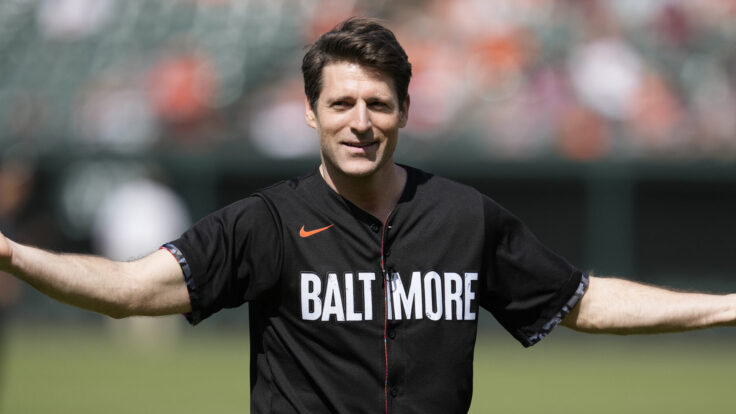
Meanwhile, be sure to check out my partner Teddy Schleifer’s surprising and engrossing behind-the-scenes reporting on why federal prosecutors are scrutinizing whether crypto lobbyist Michelle Bond and her boyfriend, former FTX executive Ryan Salame, may have violated election law last year—an inquiry that may also serve a higher purpose for the feds as they turn the screws on S.B.F. Teddy has followed the inside story of the FTX fallout at every turn, and this is a subplot only insiders know.
But first, a few words from Puck’s own Capitol Hill correspondent, Abby Livingston…
|
| The Capitol Hill Cafeteria Report |
|
| An utterly indispensable, high-minded, and, yes, occasionally dishy readout of what our lawmakers are really legislating behind closed doors.
By Abby Livingston
- Santos Unshocker: New Yorkers are getting sick of the sideshow that is George Santos’ political career. A half-dozen House Republicans came out Wednesday in favor of censuring the serial fabulist—most of them from Santos’s own delegation. While the move was initially led by Ritchie Torres, the influential Bronx-based Democrat who pushed for the censure earlier this week, the movement picked up momentum on Wednesday after Axios named five New York Republicans who said they would back the effort: Anthony D’Esposito, Nick Langworthy, Mike Lawler, Nick LaLota, and Marc Molinaro.
The composition of this group is even more troubling for Santos than their numbers. These are all young Republican 2022 classmates of Santos, and two of them (LaLota and D’Esposito) also represent Santos’s home base of Long Island. Meanwhile, three of them (D’Esposito, Lawler, and Molinaro) have tough races ahead, just like Santos; and most share the same local New York City media and newspaper markets, where Santos is a perpetual piñata. Also of interest: Upstater Langworthy is a recent former state G.O.P. chairman.
Despite all the chaos and polarization of politics, state delegations still tend to be respites from intra-member strife. Natural disasters and shared economic interests often makes it a political necessity for in-state colleagues to maintain cohesion, even across party lines. But nothing is ever politics as usual with Santos.
- Kelly Ayotte Déjà Vu: Kelly Ayotte, the former New Hampshire senator and Romney 2012 veep shortlister, appears to be flirting with a political comeback. Upon the news Wednesday that beloved New Hampshire governor Chris Sununu won’t seek a fifth term, Ayotte released a conspicuously glowing statement about his tenure while teasing a potential gubernatorial run, herself. (“I look forward to announcing some big news in the coming days,” she tweeted.)
Ayotte was one of the brightest Republican stars in the pre-Trump era, popular among both parties during her single term in the Senate, but she lost re-election in 2016, having been caught up more than any other G.O.P. incumbent in the chaos surrounding the Access Hollywood video. She publicly broke with Trump after the tape went viral, disavowing the behavior as misogynist and un-presidential—a term whose broad definition we were only beginning to explore at the time.
- Trone Time: Meanwhile, over in Maryland, Democratic Rep. David Trone surprised no one when he loaned $9.7 million last quarter to his campaign to succeed retiring Senator Ben Cardin. Trone, after all, is one of Capitol Hill’s most prodigious self-funders, having made a fortune in the retail alcohol business (he founded and co-owns Total Wine & More, with locations across the country). Over the course of his political career, Trone has spent about $44 million of his own money on his four House campaigns, three of which were successful.
Of course, money isn’t everything, especially in an open Democratic primary. While Prince George’s County Executive Angela Alsobrooks lagged Trone in fundraising, bringing in only $1.7 million since her May campaign launch, she has better allies, including Steny Hoyer’s leadership PAC and Emily’s List, both of which donated to her campaign. Another eye-catching name on Alsobrooks’ campaign finance report? Naomi Aberly, a quiet force in Democratic Senate politics and a much sought-after donor-bundler, known for bringing other powerful friends to the table—particularly for female candidates.
|
 |
| The Politico Animal |
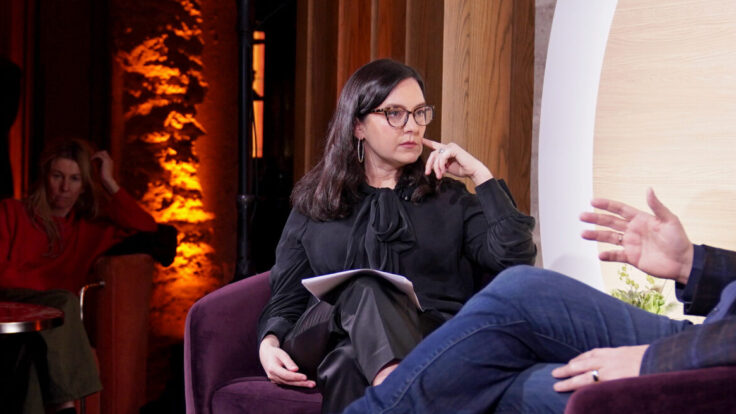
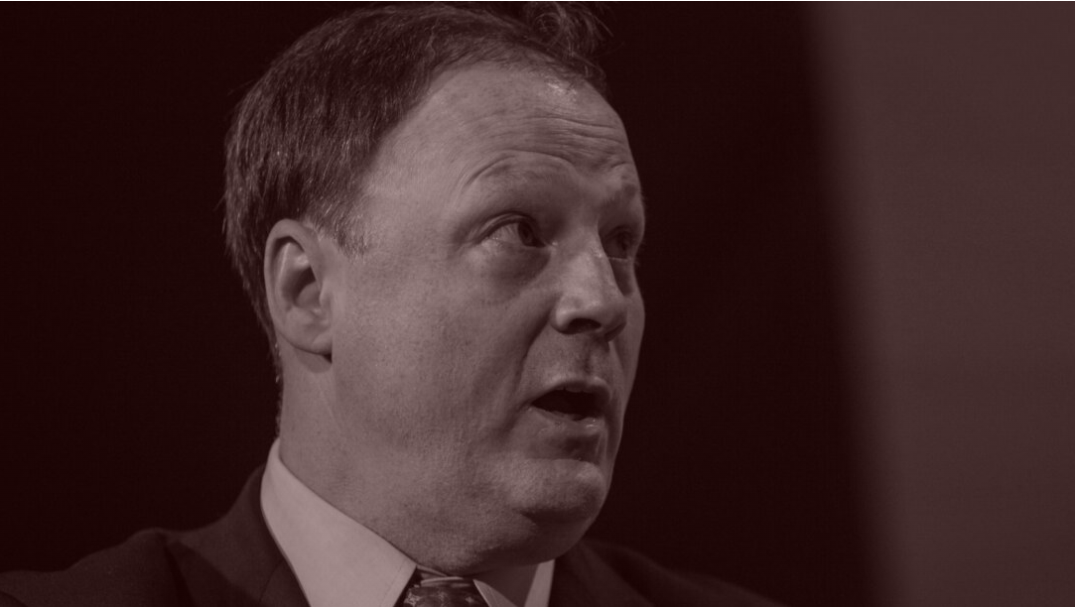
| The return of John Harris to the top of Politico signals that the scrappiness and the ambitions of the old days may be back again—and now turbo-charged by Axel Springer’s war chest, and their own deep desire for influence. |
|
|
|
| Ten years ago, John Harris, the ever-insightful, affable, and slightly disheveled co-founder of Politico, was standing in the foyer of his company’s Rosslyn headquarters while conveying some sage advice about journalism to one of his young reporters. In order to set the agenda on any given beat, Harris ruminated, an ambitious journalist needed to think of oneself as the narrow throat of an hourglass—the impartial funnel through which all information must necessarily pass from sources to readers.
It was quintessential Politico-ese—high-minded, direct, philosophical, self-important—from the co-author of many of the mantras that defined the joint, particularly in its early years: “win the morning,” “drive the conversation,” etcetera, all of which helped the company upend Washington’s complacent media scene in the 2008 election cycle and forever accelerated the pace of political journalism. By this point, however, Politico still maintained some of that scrappy, start-up spirit, but it had also swelled into a full-fledged institution, the likes of which it initially set out to disrupt. Some of its earliest stars had moved on—Jonathan Martin to the Times, Ben Smith to BuzzFeed—and others were loose in the saddle.
Meanwhile, the company had taken on hundreds of new employees to build out the organizational apparatus that, while necessary for growth, can also create maddening layers of bureaucracy and sap a startup of its competitive, entrepreneurial spirit. As Harris spoke, a young couple came down the escalator from a gym on the second floor and waved to the reporter. Harris cut himself off mid-thought. “Do they work for us?” he asked. No, the reporter responded, they were friends from college. “Hmmm,” he said, biting his lip. “That’s how big we’ve gotten.” |
|
|
| Politico has gone through quite a few iterations since then, of course, and experienced more than its fair share of growing pains—the abrupt departure of Harris’s co-founders Jim VandeHei and Mike Allen amid their barnstorming Axios adventure; the Susan Glasser drama; the Punchbowl exodus—while losing much of that early startup luster. At the same time, it has matured into an impressively profitable and sustainable business, with dual Washington and Brussels outposts, a lucrative subscription enterprise, and roughly a quarter of a billion dollars in global revenue that teed it up for its game-changing, $1 billion sale to Axel Springer, the German media conglomerate, in 2021.
From both an exit and influence standpoint, Politico was by far the most successful digital journalism company of its generation—a counterpoint that proved that the Allbritton family’s slow and steady growth plans (despite some headaches, too, admittedly) were perhaps a better way to build media businesses than multiple rounds of venture capital financing, which led to large cap stacks where investors tried to waterfall one another into smithereens and founders lost the plot in pursuit of a gangbusters exit. Anyway, Harris was there for all of it, first as a leader, then in the background as the sage patriarch and editorial chairman, with an erudite monthly column; and here and there as a stabilizing force in times of turmoil.
Now, he’s back in charge. On Monday, Politico C.E.O. Goli Sheikholeslami announced that Harris would return to the top editorial leadership role as Politico’s first-ever global editor in chief. “To be clear: John is not returning to a job he once had,” Sheikholeslami said in her memo. “To the contrary, he is stepping into a new role as the single top editorial executive in the company, with newsrooms in the United States and Europe reporting to him.”
Matt Kaminski, the U.S. editor-in-chief and current top editorial executive, will become editor-at-large and focus on writing. The stated reason for his sinecure coalesced around the notion that he sought “a new professional challenge.” Yet Harris’s own memo to his staff alluded, ever so delicately, to the fact that something seemed lacking—there was, he conceded, a “significant gap between what we are and what we could be.” |
|
|
| Harris’s willingness to take on this responsibility was due, at least in part, to his belief that Axel’s ambitions will give him the opportunity to restore Politico’s reputation for impact and influence in ways that never would have been possible under Allbritton rule. As I’ve noted before, Allbritton was ultimately a Washington player who couldn’t afford to commit the financial resources necessary for global domination, and who, in 2017, refused to write an $8 million check to cover the company’s budget deficit. “With new owners, a new strategic plan, a new C.E.O.—there’s magnetism again,” Harris told me this week.
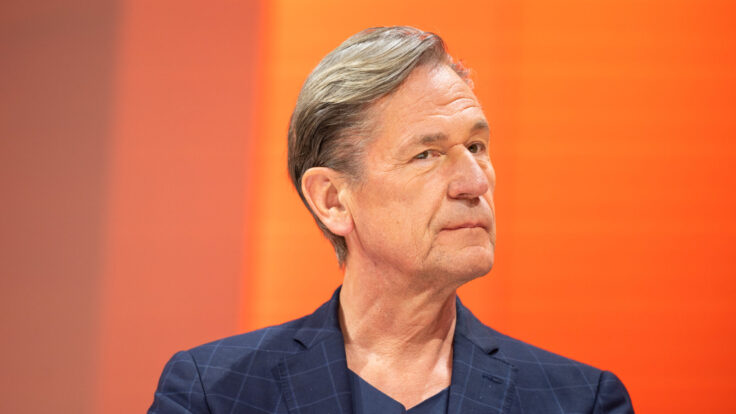
Mathias Döpfner, Axel’s C.E.O. and co-owner, told me that he sees Politico as being “at the absolute core of Axel Springer’s activities,” and its ambition to become “the most important journalistic medium for thought leaders in democracies around the world.” He said he has three priorities for Politico: increasing the number of “agenda-setting stories and investigative scoops,” accelerating both its international expansion (it recently launched new editions in England, France and Germany) and regional expansion (it launched a California edition, in Sacramento), and expanding aggressively into video and audio.
And though Döpfner dismissed this timeline, sources familiar with his thinking say Axel aims to double Politico’s valuation by the end 2027, turning it into a $2 billion company, presumably by doubling its advertising revenue and lucrative B2B subscription services business. Ultimately, these sources say, Döpfner wants to take Axel’s non-media businesses public and use the cash to take full, private ownership of the media business. (In 2019, KKR purchased around 43 percent of Axel for $3.2 billion, setting the company up with a valuation around $7 billion.)
Döpfner believes Harris is the perfect leader to help Axel realize this global vision, especially now that he and Sheikholeslami have put together a team of trusted managers. In recent months, Politico has hired Francesca Barber, a top newsroom executive from The New York Times, to oversee global strategy; hired both a chief data officer, Beth Diaz, and a chief technology officer, Jeremy Bowers, from The Washington Post; and lured back a few of the early Politico alumni, including Danielle Jones, who oversees talent recruitment, and Alexander Burns, a Harris protégé who is helping to cohere Politico’s global coverage areas. (And, of course, Jonathan Martin has also returned to Politico and is, once again, its most notable political journalist.) Not to be overlooked, the Politico integration was led by Axel Springer deputy C.E.O. Jan Bayer, one of the smartest media operators in the space.
In conversation, Harris sounds genuinely excited by what’s ahead. He says he’s committed to this role through the culmination of Axel’s strategic plan to double the company, and described it as “another big executive chapter in my career.” Still, for all of Axel’s global ambitions, Harris seems most incentivized by the opportunity to get back into the scrum of another presidential campaign season—his bread and butter, and the focus of Politico’s earliest, halcyon days—and re-establish Politico’s U.S. arm as the agenda-setting funnel of the hourglass. The global ambitions are real, he said, but “we’re gonna have a big rumble in Washington. We need to compete vigorously in the Washington market.” |
|
|
|
| FOUR STORIES WE’RE TALKING ABOUT |
|
|
|

|
 |
|
|
|
Need help? Review our FAQs
page or contact
us for assistance. For brand partnerships, email ads@puck.news.
|
|
You received this email because you signed up to receive emails from Puck, or as part of your Puck account associated with . To stop receiving this newsletter and/or manage all your email preferences, click here.
|
|
Puck is published by Heat Media LLC. 227 W 17th St New York, NY 10011.
|
|
|
|